From Mountain Cams worldwide and Avalanche Forecasting to Sending Money, here are a few sites I’ve come across lately
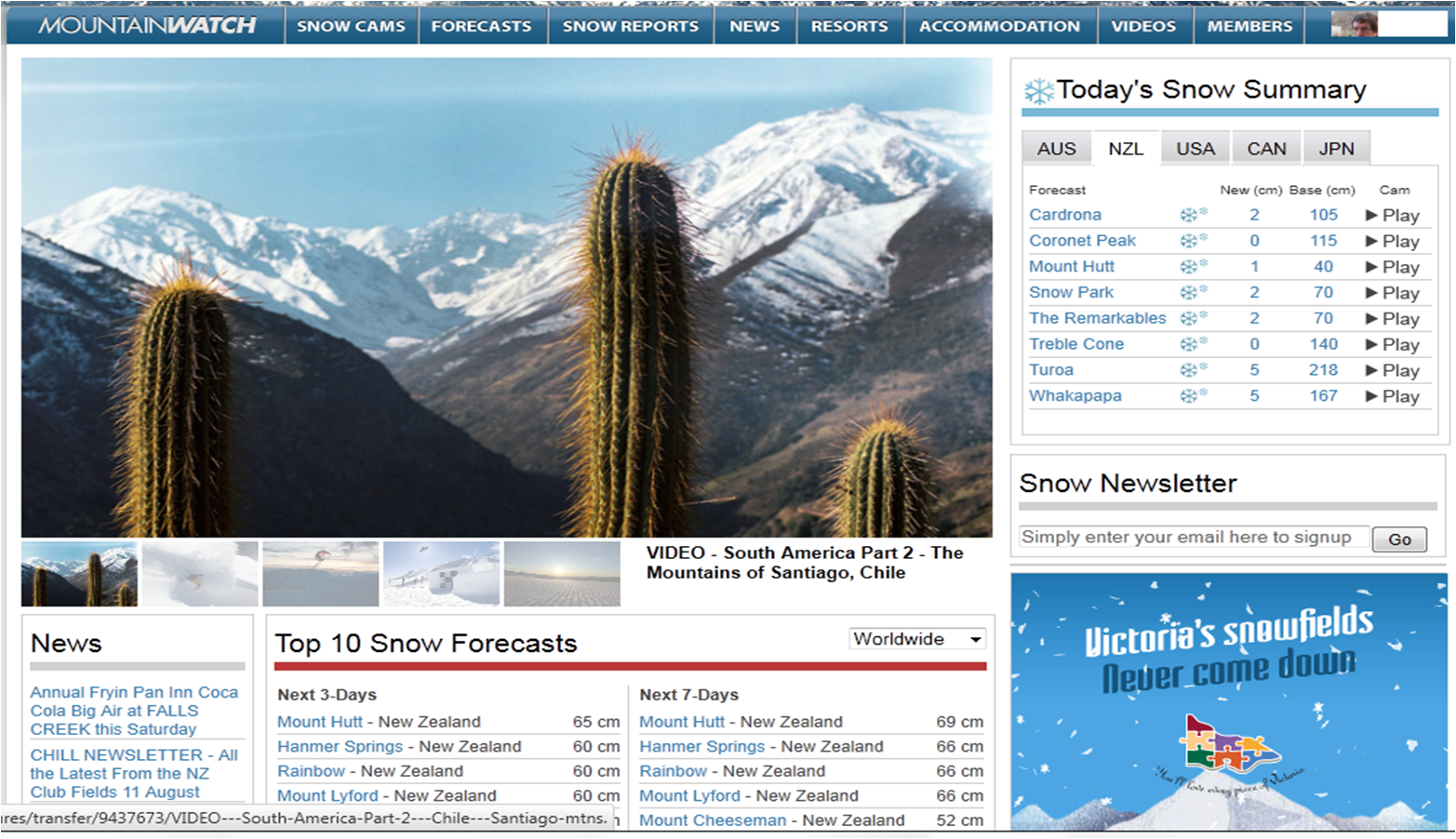
While it’s a bit too focused on the frontcountry scene, the worldwide reports and list of snowcams can’t be beat. Check out MountainWatch.com for snow conditions, news and forecasts.
Avalanche.org
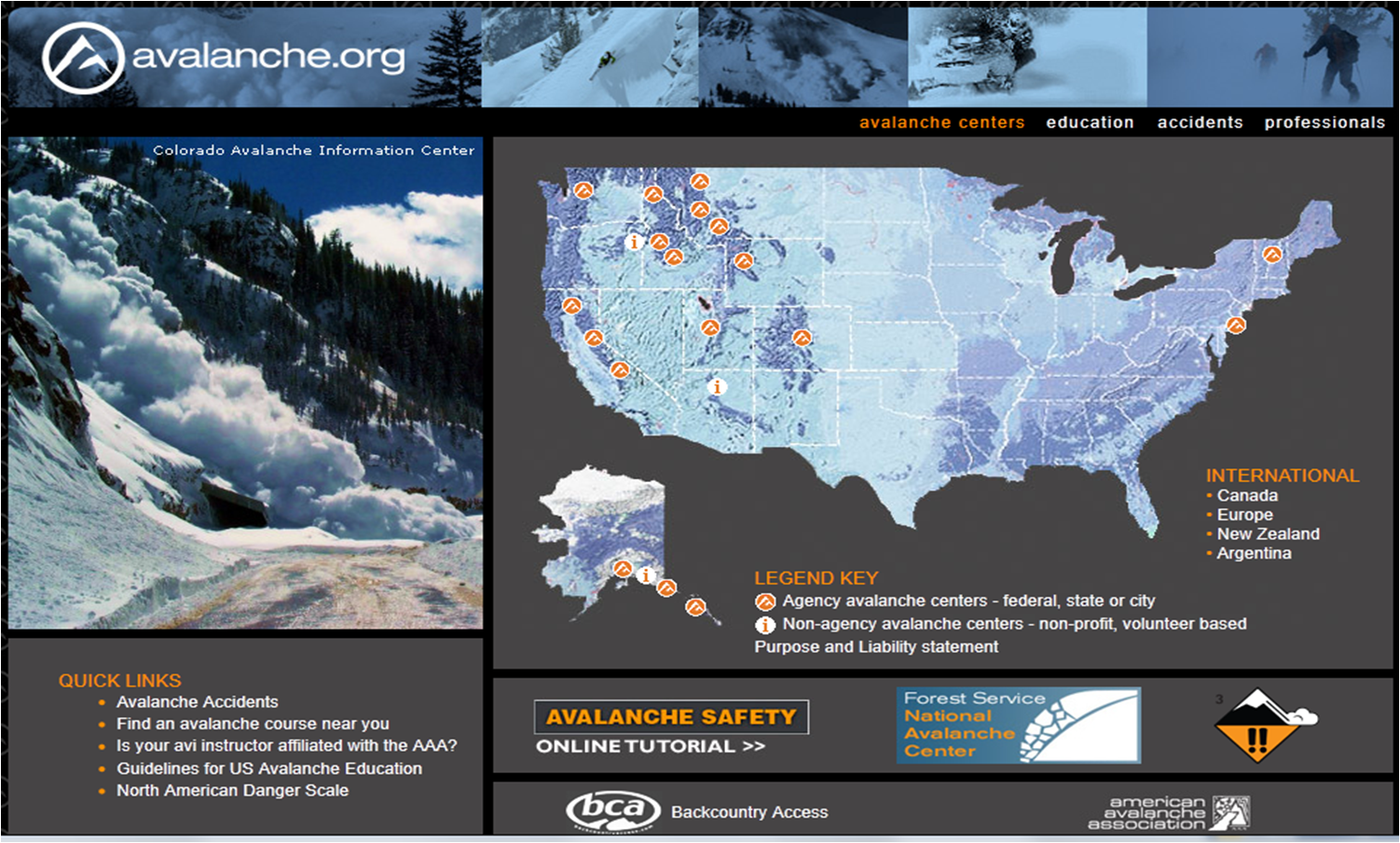
Avalanche.org is what your really want to get access to local avi conditions worldwide. With a click, you can jump from North America to New Zealand and zero in on your region before you head out.
Xoom.com
On a completely different note, I just stumbled upon what appears like a good site for transferring money. MoneyGram only works if you’re in the U.S and God bless Western Union for being around longer than Greyhound, but their online system has never worked for me, and by god, they’re expensive. So check out Xoom.com, it’s who I’ll be using the next time I need to send some funds across the ocean blue.
A few days after the storm, the snow will melt to the 500-900m level, leaving the lakeside green and lush as if no storm had ever passed this way.
The South Island at 300m does have snowstorms, – we’re in the middle of one now, see the video shot a few moments ago. But in a few days, a week at the most, this scene will probably be a distant memory. There will be green grass and sunny days – like a schizo change from dug-in to hanging out. It’s a little like the western Washington’s winters.
Last month however, we had a good storm, that sent cars skidding off the Queenstown lakeside road and as well as points south to Lumsden. The road in both directions was closed for 24hrs due to the storm, with travelers stuck at our local Kingston store/cafe, reminiscent of a treacherous day I’d had on I-80 west of Laramie, Wyoming, where I ended up waiting it out in a truckstop near Elk Mountain or Rawlins. Maybe this storm will be the same.
I was geared up, mentally, when the last one hit. I was digging in for the long haul and getting wood in near the stove, keeping ahead of the accumulation by shoveling and keep the van cleared off. It was reminding me of New Hampshire, or when I lived in Albion Basin in Alta, Utah. But then it all changed. I was all dressed up and ready for winter, and it all melted, but it didn’t in adjacent higher elevations..
There will be good skiing up high, that’s for sure.
Hiram Bigham, “the discoverer” of Machu Picchu was a amateur archeoligist and worked at Yale. Many artifacts have been finally returned to Peru.Cusco’s Casa Concha opens doors for Machu Picchu exhibition
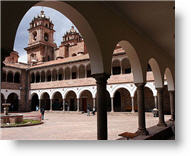
From: Andean Air Mail and Peruvian Times Cusco’s Casa Concha, owned by the Universidad Nacional San Antonio Abad de Cusco (UNSAAC), has opened its doors for two weeks to exhibit more than 360 artifacts from Machu Picchu that were recently returned by Yale University. The artifacts will be displayed in two rooms in the Casa Concha, located about half a block from Cusco’s main plaza, state news agency Andina reported.
The opening was inaugurated by UNSAAC’s rector, Victor Raul Aguilar. In the first two hours of the opening, which is free for locals and tourists, the exhibition attracted about 100 visitors, read the rest of this story..
When the Mountain Bites Back, And What Are the Lessons To Be Learned
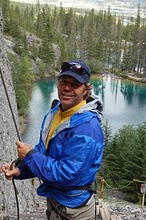
Mountain guide, writer and longtime friend from Outward Bound days, Ken Wyle is writing a book about his accounts the day he was caught in the La Traviata avalanche in Canada that killed seven people. I had heard through the grapevine that Ken had been caught in a big one, and I felt a wrench in my gut. Mountaineering accidents, in which friends are involved affect me more than most things in life. Alan Bard was one of my ski-guiding mentors, and he goes and dies on the Grand Teton. One’s teacher isn’t supposed to do that. There was a cloud over me for a time after I had heard the news, and I did’t feel comfortable on the rock for a time too. There have been other friends too that are no longer with us, and I ask myself the same questions that we all do about events like this, and the meaning of it all.
Reading a few of Ken’s Facebook posts and on his blog, give me the impression, he too has been asking some questions. And while the answers are secondary, the questions he’s asking have weight, at least from my humble perspective. While compassion is one of outcomes of teaching an Outward Bound course, it looks like Ken is living it.
I caught up with Ken on Facebook last week, and he suggested I check out his blog The Energies of Adventure. Some glimpses of what will most likely be included his book can be seen on his blog.
Here’s the lead-in to his first post on that blog:
Seven Cairns
Chapter 1, “Lost in the Fog”
January 20th 2003, deep in the Selkirk mountains of Canada’s British Columbia. It is overcast and white out. Snow flakes are lightly falling from the clouds. The air is moving softly out of the southeast. Two groups of backcountry ski tourers collect at the frozen, snow covered, Tumbledown Lake for our first tea break of the day. My smaller group of read the rest of this story..
South America Unites Against “Irresponsible Debtors” in the North By: Mario Osava, Inter Press Service
North American Funny Money
Default, insolvency, fiscal irresponsibility, debt crisis and similar terms form part of the vocabulary used to describe countries in the developing South in the 1980s and 1990s. A decade later, the world seems to have turned upside down.
The “irresponsible debtors” are now in the industrialized North, and the countries of South America, victims of the “lost decade” of the 1980s and the subsequent financial crises, are now working hard to protect themselves against contagion from the crisis in the United States and Europe.
Peru’s Environment Minister Ricardo Giesecke said Monday that tackling social conflicts in the country will be an “urgent” task in his portfolio, state news agency Andina reported. Social conflicts sky-rocketed during the Alan Garcia’s administration.
When Garcia took office in 2006, Peru’s ombudsman – the Defensoria del Pueblo – reported about 80 social conflicts in the country. Towards the end of his term, which wrapped up last Thursday, there were over 200 social conflicts, of which an overwhelming number are related to socio-environmental issues in the extractive industries.
In addition to delaying projects and investments, the conflicts have cost numerous lives and cost millions of dollars in collateral damage Read the rest of this story…
Peru Gov’t looks to increase visitor limit to Machu Picchu From: Andean Air Mail & PERUVIAN TIMES
Peru’s Ministry of Tourism and Foreign Trade said Tuesday that a recent study supports more than doubling the number of visitors to Machu Picchu, the ancient Inca citadel perched on a mountain top in Cusco region.
Currently, the daily limit on tourists that can enter the Machu Picchu site is set at 2,200. According to state news agency Andina, the ministry’s study suggests the citadel can withstand 5,479 visitors a day. This would allow Machu Picchu, a World Heritage Site, to receive approximately 2 million tourists a year.





 Mountain Spirit's Blog