Archive for the ‘Books’ Category
05/04/2012

Predictive Programming
THE HUNGER GAMES: Dystopian fiction & Predictive Programming
The following piece is by Richard Louv, Author of Last Child in the Woods. I’m glad he’s weighed in on the Hunger Games. One might also google Predictive Programming to learn more about why such movies are made. (ed.)
Stuck Inside Apocalypse with Dystopic Blues Again
By Richard Louv
“The Hunger Games,” the book, is a page-turner and the movie is gripping. Some of my colleagues, working hard to reconnect young people to nature, believe the popularity of the book and movie will, like the film “Avatar,” stimulate a deeper interest in the natural world. I hope they’re right, but after leaving the movie theater on Friday (having already read the book), I was, well, ambivalent.
In this story, there are two forests. The first forest is as natural as a forest can be with an electrified fence to keep the largest carnivores out of District 12, Katniss Everdeen’s starving Appalachian homeland.
At the beginning of the book, she describes sitting in a nook in the rocks with her hunting partner, Gale, looking out at a forest that sustains them: “From this place we are invisible but have a clear view of the valley, which is teeming with summer life, greens to gather, roots to dig, fish iridescent in the sunlight.” This forest keeps her family alive. (more…)
Tags:Dystopian Fiction, Last Child in the Woods, Mountain Spirit, predictive programming, Richard Louv, The Hunger Games
Posted in Books, Film/DVD, Health, Holistic Living, Indigenous Wisdom, Inner Work, Leadership, Spiritual | 4 Comments »
30/03/2012
Downtown in The Lost Cities of the Amazon
by Andean Air Mail & PERUVIAN TIMES ·
By Nicholas Asheshov
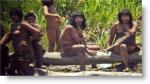
A "Lost" people?
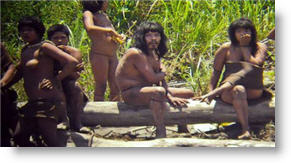
Some weeks ago two events, one of them startling, came together to pin-point the mysterious new conundrum of the Amazon. The first was the appearance on a busy riverbank in the Madre de Dios of a few dozen members of a previously-isolated group of Indians. They killed someone who had been trying to help them. The naked Indians, seen on TV screens around the world, were described by anthropologists as descendants of an unbroken line of hunting and gathering savages, living fossils of our neolithic past.
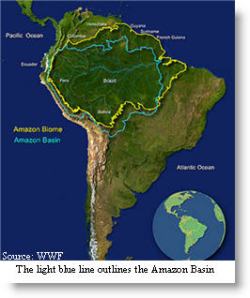
Area of Coverage
This is, according to new Amazon thinking, incorrect. These Indians are the sad, socially degenerated remnants of nations and tribes that were productive, sophisticated and stable just a few centuries ago.The other event was an article in The New York Times that reported on the discovery in Acre, only a few hours travel from the Madre de Dios Indians, of extensive, deep straight, or sometimes circular, trenches, ridges and mounds dating back to pre-Columbian times, indicating a large, well-developed society. This was just the latest evidence that the Amazon, or at least parts of it, was heavily populated by well-organized societies in much the same way as the high Andes were remodelled by the Tiahuanuco, the Chavin, the Chachapoyas, the Huari, and the Incas.
Over the past couple of decades the pre-history of the Americas has been revolutionized, setting off poison-tipped academic and ecological vendettas. First of all, the Americas were populated much earlier, at least 33-35,000 years ago, double the time previously calculated. That is back to Neanderthal epochs.
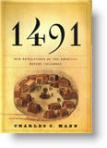
An Excellent Read
Second, there were many more people here when Columbus arrived than was earlier thought. And, most important, the societies and nations of the Americas were much more sophisticated and structured than was previously understood. They were agriculturalists, not the war-whoopers of the movies. Their mode of life and agriculture had massive, long-term effects on the original pre-human forests. Fire was a basic control mechanism.
Today the evidence of genetics, linguistics and archaeology is clear that the Amazon was not just an impenetrable green hell populated by primitive hunters and fishermen eking out an unchanging, culturally marginal existence. The same applies to North America. Here most of the descriptions of primitive Indians come from 18th and 19th century travelers who were seeing only the sorry leftovers of great nations that had been obliterated by smallpox, viral hepatitis, influenza and other European and African diseases. The Conquest set off the Dark Ages in the Americas. read the rest of this story…
Tags:Acre, Amazon, Archeology, Indians, indigenous rights, Madre de Dios, Mountain Spirit, Pre-Columbian, Pre-history
Posted in Archeology, Books, Conservation, Environment, Indigenous Wisdom, Peru, Power of Place, South America | Leave a Comment »
24/03/2012
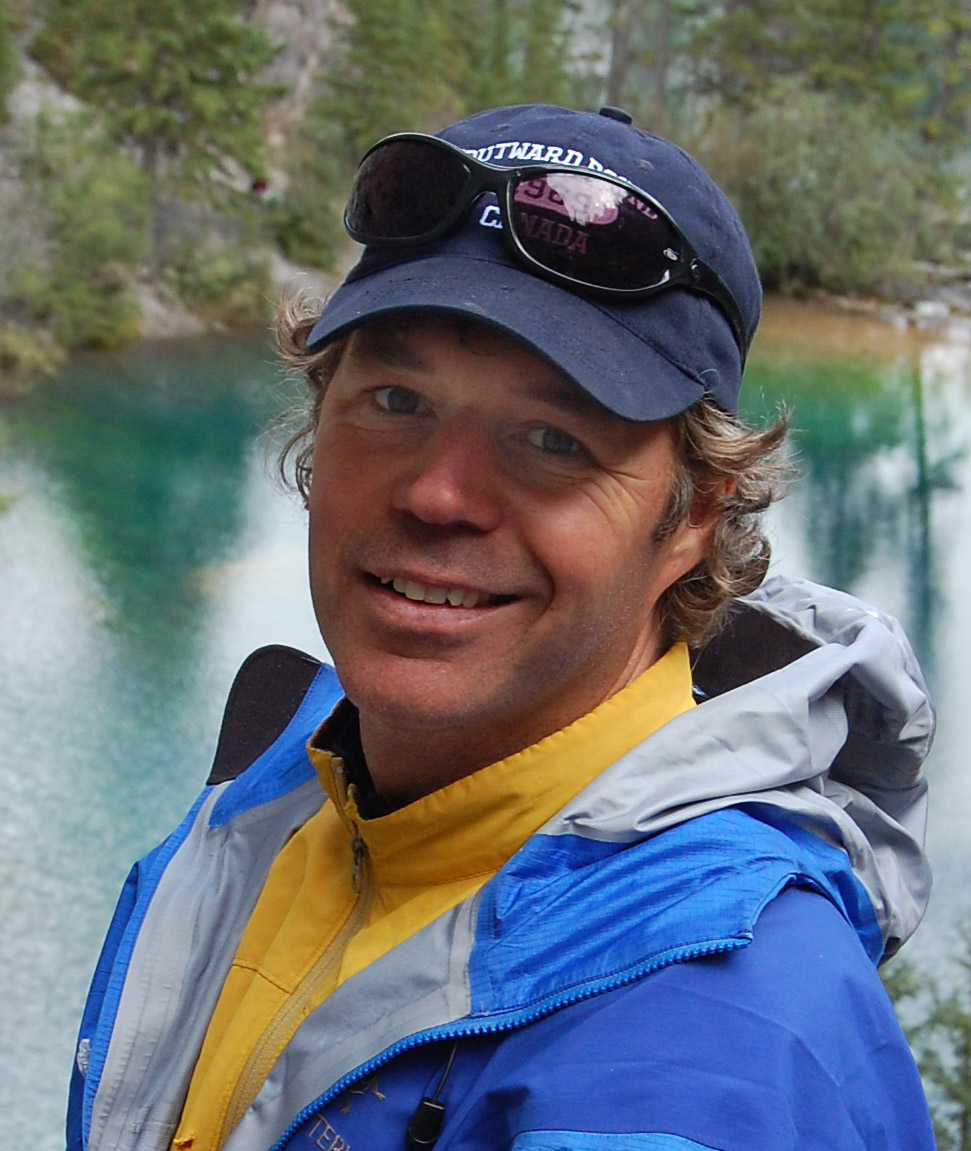
Mountain Spirit Institute names Ken Wylie to Board of Directors

Ken Wylie
Ken Wylie, a veteran certified mountain guide from Cochrane Alberta, Canada with years as an experiential educator and program manager at Canadian universities as well as Outward Bound Canada and the Outward Bound USA, has recently been named to the board of directors at Mountain Spirit Institute based in the U.S. and New Zealand. In addition to helping guide the U.S. organization, Wylie has plans to launch a Mountain Spirit Institute Canada where he will create mountain programs based on the mission statement. Mr. Wylie and founder Randall Richards along with fellow board members are in discussions about also collaborating on mountain programs in the U.S, New Zealand and possibly the Alps.
Says Wylie, “I am drawn to Mountain Spirit Institute because of the organization’s vision. MSI has the vision for the 21st century in my estimation, and is what I have been searching for in my career.” Adds Wylie, “The mountains are an experience that can change people’s lives, but are more often than not just another consumable, another peak to check off the list. What people need now more than ever, is to connect and MSI helps them do that.” (more…)
Tags:ACMGA, Alberta, Association of Canadian Mountain Guides, Board of Director, Book, Buried, Canada, Climbing, Cochrane, Experiential Education, Ken Wylie, Mount Royal University, Mountain Spirit, MSI, New Zealand, Outward Bound, Randall Richards, Thompson Rivers University, UIAGM, University of Calgary
Posted in Books, Climb/Ski/Mntneering, Experiential Education, Focus on MSI People, Inspirational People, Leadership, Mountain People, MSI News | 1 Comment »
19/02/2012
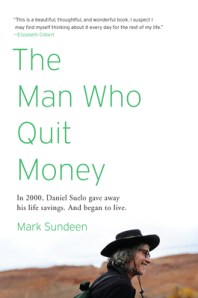
What? Quit Using Fed Notes??
What Money Is & What Money Is Not – Living Without Money
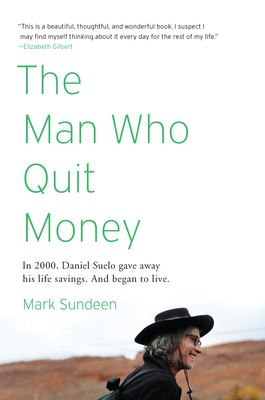
A Walden for the 21st century, the true story of a man who has radically reinvented “the good life”.
In 2000, Daniel Suelo left his life savings-all thirty dollars of it-in a phone booth. He has lived without money-and with a new-found sense of freedom and security-ever since.
The Man Who Quit Money is an account of how one man learned to live, sanely and happily, without earning, receiving, or spending a single cent. Suelo doesn’t pay taxes, or accept food stamps or welfare. He lives in caves in the Utah canyonlands, forages wild foods and gourmet discards. He no longer even carries an I.D. Yet he manages to amply fulfill not only the basic human needs-for shelter, food, and warmth-but, to an enviable degree, the universal desires for companionship, purpose, and spiritual engagement. In retracing the surprising path and guiding philosophy that led Suelo into this way of life, Sundeen raises provocative and riveting questions about the decisions we all make, by default or by design, about how we live-and how we might live better.
Editor’s note: It sounds like we have another Outward Bound success story here. I read that Suelo has been an OB instructor. Good to see he’s living the dream, and it looks like some of the OB values rubbed off, but I’m sure he had influences from more than just Outward Bound.
Tags:Daniel Suelo, Mountain Spirit, Outward Bound, Sundeen
Posted in Books, Conservation, Experiential Education, Health, Inspirational People, Leadership, Mountain People, Spiritual, Sustainable Living/Communities, Sustainable Travel | Leave a Comment »
23/01/2012
By: R. Richards

The wonder of a palm frond in the morning sun, nz.
I’ve often been thinking how having a child is like teaching an 18-yr Outward Bound course, for the parents. The bus arrives when the baby is born and it may leave when the teen turns 18, but maybe not. Of course, no one wants to hear the worn our phrase, “you learn through your children” but I’m reminded of the Kogi tribe (see the BBC film Elder Brother’s Warning) in the Colombian Sierra Nevada mountains who hide their shamans-in-training in a darkened hut, never seeing the light of day until their 18th birthday. Then, after years of preparation, after telling them what the world looks like, they see their world for themselves, for the first time with their own eyes. As the wonder of a baby, with new eyes, but with training, so they can see their world more clearly to do their shamanic work.
Seeing our baby boy look with glee at the morning sunrise, and the light shining through some palm leaves this morning is an eye opener. I felt “more aware” after I survived being tossed around in a van roll-over in 1988. “Everything looked new and pristine”, as Eckhart Tolle put it after his awakening experience. I felt like lucky to still be on the planet. That default feeling subsided after a few weeks, and now I have to work at being present by doing what I call “remembering my spiritual practice”. For me it’s meditating and listening to Eckhart Tolle’s Power of Now. Reminders can take almost any form as long as it helps

An Eye Catcher - Are you watching though?
bring one back to their center. In recent talks with newly elected Mountain Spirit Institute board member and mountain guide/instructor Ken Wyle, he’s been relating how writing his book on being buried in an avalanche which killed seven people, is a catharsis. Tolle says that people who are more conscious in their lives have usually had some tragic loss in their life that shook them out of the dream state we call normal life.
Our baby boy, laughing as he looks out the window of our van whizzing down main street in Kingston New Zealand, is a reminder to me – “What am I missing? I want to see like he sees!” The good news, it’s wholly possible. I’ve been seeing, more than dreaming during the last ten years. And it’s obivous when I’m not present. I might go a whole morning or day and realize I’ve not been present until something catches my eye, like a detail of a stem in a vase, or the bustle in supermarket, or of course, a sunset.
Learning to see and live in the moment sure beats the alternative, and I’m not going back. When you beat your head against a wall long enough, you finally decide you’ve had enough of that, and make the choice to stay in peace, no matter what happens. A side benefit of being at peace is your mind isn’t filled with crap, so you are free to see such things as the morning light shining through some palm fronds.
Images: R. Richards, taken this morning
Tags:Awareness, Echart Tolle, Learning to see, love, Meditation, Mountain Spirit, Mountains, Open Hearted Listening, Shamanic Studies
Posted in Books, Experiential Education, Film/DVD, Indigenous Wisdom, Inner Work, New Zealand, Power of Place, Spiritual | Leave a Comment »
16/01/2012
Many of us fear death. We believe in death because we have been told we will die.
Editor’s Note:
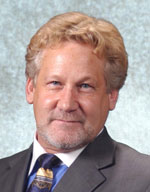
Dannion Brinkley
For some reason, death has not been a stranger in my life. Western society is almost totally ignorant of death, it is something to be brushed under the rug, and feared. Stay tuned for a posting on “Death, The Funny Side” a talk by Dannion Brinkley, author of Saved by the Light. I heard Brinkley speak at a Whole-Life Expo in Seattle in the late ’80’s – he was promoting his book. I liked his half-hour talk so much that I bought a copy of it andeventually converted it mp3 format. I plan on posting it here, once I have Brinkley’s permission of course. It’s a classic, that has changed my understanding of what death is, and what it means to be fully alive. His sense of humor perspective, depth and compassion, after having died more than once and come back to talk about it, is remarkable, especially after having been a hit man for the U.S. government. Ykes.
At Mountain Spirit Institute, one of our core values is addressing our “ultimate concerns”. We believe that by helping to reconnect people to the natural environment, each other and a deeper connection to one’s self, we can help participants start looking beyond the veil. Eckhart Tolle writes” The secret to death is to die before you die, and realize there is no death.” Hmm. Maybe he’s onto something. Dannion Brinkley is, as well.
R. Richards
Does Death Exist? New Theory Says ‘No’
From: KipNews (Open your mind, Prepare)

A case for staying no death - Biocentrism
We associate ourselves with the body, and we know that bodies die. But a new scientific theory suggests that death is not the terminal event we think.
One well-known aspect of quantum physics is that certain observations cannot be predicted absolutely. Instead, there is a range of possible observations each with a different probability. One mainstream explanation, the “many-worlds” interpretation, states that each of these possible observations corresponds to a different universe (the ‘multiverse’).
A new scientific theory – called biocentrism – refines these ideas. There are an infinite number of universes, and everything that could possibly happen occurs in some universe. Death does not exist in any real sense in these scenarios.
All possible universes exist simultaneously, regardless of what happens in any of them. Although individual bodies are destined to self-destruct, the alive feeling – the ‘Who am I?’- is just a 20-watt fountain of energy operating in the brain. But this energy doesn’t go away at death. One of the surest axioms of science is that energy never dies; it can neither be created nor destroyed. But does this energy transcend from one world to the other?
Consider an experiment that was recently published in the journal Science showing that scientists could retroactively change something that had happened in the past.
Particles had to decide how to behave when they hit a beam splitter. Later on, the experimenter could turn a second switch on or off. It turns out that what the observer decided at that point, determined what the particle did in the past. Regardless of the choice you, the observer, make, it is you who will experience the outcomes that will result. The linkages between these various histories and universes transcend our ordinary classical ideas of space and time. Think of the 20-watts of energy as simply holo-projecting either this or that result onto a screen. Read the rest of this story…
Tags:biocentrism, CW Metcalf, Dannion Brinkley, death, Eckhart Tolle, funny side, Hospice, humor, kipnews, life, life after death, Mountain Spirit, Power of Now, R. Richarfds, Randy, Saved by the Light, ultimate concerns
Posted in Books, Health, Holistic Living, Inner Work, Inspirational People, Leadership, Sense of Humor Perspective, Spiritual | Leave a Comment »
06/01/2012

Cultural shackles?
I’m in the middle of a book called “A Man’s Country? The image of the Pakeha Male“ by Jock Phillips. It’s a well-known fact that the New Zealand male, and Aussie as well, has a “She’ll be right” attitude. All is well and good, but what happens when things go wrong, or life events happen that one didn’t plan for, doesn’t want and has no intention of participating in. Is “opening up” an idea who’s time has come?
A Man’s Country? From the back cover:
” A rugged practical bloke – fixes anything, strong and touch, keeps his emotions to himself, usually scornful of women. Yet at heart a decent bloke, loyal to his mates, provides well for the wife and kids…
Few Pakeha (white) men grow up in New Zealand without a strong sense of the Kiwi bloke they are expected to become. Jock Phillips’ book is a penetrating, provocative history of that stereotype.
Where did that stereotype come from? How has it changed? What truths does it hide? At what costs? The book begins with the Pakeha colonial society of the nineteenth century – the absence of women, the harsh physical conditions, the growth of an exclusively male ethic. It then examines in detail the image of the Pakeha male, as booze, as rugby player, as soldier, as family man, in the 1980’s, says Phillips, the stereotype has been well and truly exposed as a role model. We now know the costs we have paid as both men and women. After reading this book, no New Zealand man will quite be the same.
Published by Penguin
For another take, see my post on the movie The Men’s Group
Tags:A Man's Country?, bloke, Book, conditioning, history, Jock Phillips, Male roles, Mountain Spirit, New Zealand, southern male, stereotypes
Posted in Books, Health, Holistic Living, Inner Work, New Zealand | Leave a Comment »
28/11/2011
Scientists Prove DNA Can Be Reprogrammed by Words and Frequencies
By Grazyna Fosar and Franz Bludorf at Wakeup-world.com
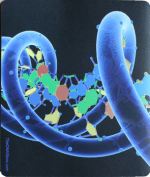
- DNA
THE HUMAN DNA IS A BIOLOGICAL INTERNET and superior in many aspects to the artificial one. Russian scientific research directly or indirectly explains phenomena such as clairvoyance, intuition, spontaneous and remote acts of healing, self healing, affirmation techniques, unusual light/auras around people (namely spiritual masters), mind’s influence on weather patterns and much more. In addition, there is evidence for a whole new type of medicine in which DNA can be influenced and reprogrammed by words and frequencies WITHOUT cutting out and replacing single genes.
Only 10% of our DNA is being used for building proteins. It is this subset of DNA that is of interest to western researchers and is being examined and categorized. The other 90% are considered “junk DNA.” The Russian researchers, however, convinced that nature was not dumb, joined linguists and geneticists read the rest of this story..
Tags:affirmation techniques, clairvoyance, DNA Reprogrammed, Garjajev, intuition, Mountain Spirit, Russian scientific research, Scientists, self healing
Posted in Blogs, Books, This Just In Department | 2 Comments »
07/09/2011
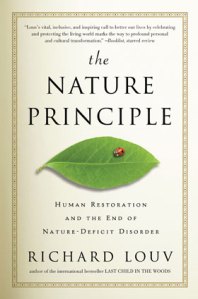
Louv's second book
“The future will belong to the nature-smart—those individuals, families, businesses, and political leaders who develop a deeper understanding of the transformative power of the natural world and who balance the virtual with the real. The more high-tech we become, the more nature we need.”
—Richard Louv
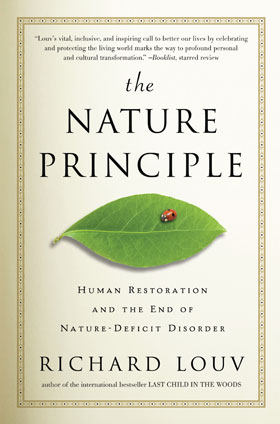
The immediacy of Richard Louv’s message in Last Child in the Woods: Saving Our Children from Nature-Deficit Disorder galvanized an international movement to reconnect children with nature. We’ve touched base about his first book here on MSI’s blog.
Now, in The Nature Principle, Louv reaches even further with a powerful call to action for the rest of us.
Our society, says Louv, has developed such an outsized faith in technology that we have yet to fully realize or even adequately study how human capacities are enhanced through the power of nature. Supported by groundbreaking research, anecdotal evidence, and compelling personal stories, Louv shows us how tapping into the restorative powers of the natural world can boost mental acuity and creativity; promote health and wellness; build smarter and more sustainable businesses, communities, and economies; and ultimately strengthen human bonds. As he says in his introduction, The Nature Principle is “about the power of living in nature—not with it, but in it. We are entering the most creative period in history. The twenty-first century will be the century of human restoration in the natural world.”
Richard Louv makes a convincing case that through a nature-balanced existence—driven by sound economic, social, and environmental solutions—the human race can and will thrive. This timely, inspiring, and important work will give readers renewed hope while challenging them to rethink the way we live.
Editor’s note: I saw Mr. Louv speak in Park City about three years ago. He was a down-to-earth, (one would hope with a subject such as he covers) and passionate speaker. If you get a chance, go hear him speak, you can see his schedule on his website’s Appearances Page and if you can hear him speak, do so. Better yet, read his three books.
We’re honored to see that Mr. Louv has started to follow Mountain Spirit Institute‘s Twitter account. We’ve been at it since 1998, and started this blog in 2008 with 64,000 views since. We feel a kindred spirit with Louv, with our mission “to facilitate one’s connection to the natural environment, to each other and a deeper connection to one’s self”. Mr. Louv has had great success in spreading the word about getting kids of all ages outside, and we’re effectively joining him in that cause.
Tags:Last Child in the Woods, Mountain Spirit, Nature Deficit disorder, Richard Louv, The Nature Principle, Twitter
Posted in Blogs, Books, Experiential Education, Health, Holistic Living, Leadership, MSI News, Power of Place | Leave a Comment »
10/08/2011
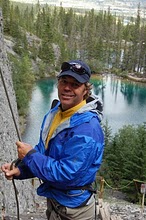
Mtn Guide & Writer, Ken Wyle
When the Mountain Bites Back, And What Are the Lessons To Be Learned
Mountain guide, writer and longtime friend from Outward Bound days, Ken Wyle is writing a book about his accounts the day he was caught in the La Traviata avalanche in Canada that killed seven people. I had heard through the grapevine that Ken had been caught in a big one, and I felt a wrench in my gut. Mountaineering accidents, in which friends are involved affect me more than most things in life. Alan Bard was one of my ski-guiding mentors, and he goes and dies on the Grand Teton. One’s teacher isn’t supposed to do that. There was a cloud over me for a time after I had heard the news, and I did’t feel comfortable on the rock for a time too. There have been other friends too that are no longer with us, and I ask myself the same questions that we all do about events like this, and the meaning of it all.
Reading a few of Ken’s Facebook posts and on his blog, give me the impression, he too has been asking some questions. And while the answers are secondary, the questions he’s asking have weight, at least from my humble perspective. While compassion is one of outcomes of teaching an Outward Bound course, it looks like Ken is living it.
I caught up with Ken on Facebook last week, and he suggested I check out his blog The Energies of Adventure. Some glimpses of what will most likely be included his book can be seen on his blog.
Here’s the lead-in to his first post on that blog:
Seven Cairns
Chapter 1, “Lost in the Fog”
January 20th 2003, deep in the Selkirk mountains of Canada’s British Columbia. It is overcast and white out. Snow flakes are lightly falling from the clouds. The air is moving softly out of the southeast. Two groups of backcountry ski tourers collect at the frozen, snow covered, Tumbledown Lake for our first tea break of the day. My smaller group of read the rest of this story..
Tags:Alan Bard, Grand Teton, Ken Wyle, La Traviata avalanche, Lost in the Fog, Mountain Spirit, mountaineering accidents, Outward Bound, Randy Richards, Selkirk Mountains
Posted in Books, Climb/Ski/Mntneering, Experiential Education, Holistic Living, Inner Work, Inspirational People, Leadership, Mountain People, Spiritual | 3 Comments »





 Mountain Spirit's Blog