Archive for the ‘Spiritual’ Category

Buddhism & Mindfulness in the Mountains

01/04/2012

Lama Willa Miller, the spiritual leader of a Natural Dharma Fellowship branch in Massachusetts, talks about a new refuge center, and the importance of mindfulness in the mountains. Part 1

Lama Willa Miller

By R. Richards
Mountain Spirit Institute
The Dartmouth Lake Sunapee region of New Hampshire, USA has the good fortune of seeing a new Tibetan Buddhist Refuge open in the tiny town of Springfield. After a recent open house, we learned about what Lama Willa Miller, the leader of the  Cambridge Mass based branch of The Natural Dharma Fellowship, has in mind for the new retreat center called Wonderwell, as well as the link between Buddhism and the mountains. Learn more, check out this first in series of interviews we conducted on location. See Part II

The Power of Vulnerability

27/03/2012

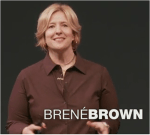
Brené Brown:TED Talk

Vulnerability and Connecting, A TED Talk with Brené Brown
Mountain Spirit Institute’s newest board member Ken Wylie has been expressing the vital requirement of vulnerability in which to build a foundation of compassion and connection (which is our mission) to the natural world, each other and a deeper connection to ourselves.  It appears that like great minds think alike –  Brené Brown states in her TED talk: The power of vulnerability.
Brown studies human connection – our ability to empathize, belong, love. In a poignant, funny talk at TED in Houston, she shares a deep insight from her research, one that sent her on a personal quest to know herself as well as to understand humanity. See Brene’s talk here or click on the image at right.

Special thanks to Lindy Roberts in Auckland, NZ for sending this our way.

Meditation Helps the Brain

23/03/2012

Researchers Build Evidence that Meditation Strengthens the Brain
By Science Daily

Meditation strengthens Brain

Earlier evidence out of UCLA suggested that meditating for years thickens the brain (in a good way) and strengthens the connections between brain cells. Now a further report by UCLA researchers suggests yet another benefit.

Eileen Luders, an assistant professor at the UCLA Laboratory of Neuro Imaging, and colleagues, have found that long-term meditators have larger amounts of gyrification (“folding” of the cortex, which may allow the brain to process information faster) than people who do not meditate. Further, a direct correlation was found between the amount of gyrification and the number of meditation years, possibly providing further proof of the brain’s neuroplasticity, or ability to adapt to environmental changes.

The article appears in the online edition of the journal Frontiers in Human Neuroscience.

The cerebral cortex is the outermost layer of neural tissue. Among other functions, it plays a key role in memory, attention, thought and consciousness. Gyrification or cortical folding is the process by which the surface of the brain undergoes changes to create narrow furrows and folds called sulci and gyri. Their formation may promote and enhance neural processing. Presumably then,  Read the rest of this story…

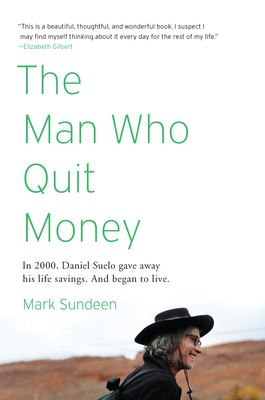
The Man Who Quit Money

19/02/2012

What? Quit Using Fed Notes??

What Money Is & What Money Is Not – Living Without Money
A Walden for the 21st century, the true story of a man who has radically reinvented “the good life”.

In 2000, Daniel Suelo left his life savings-all thirty dollars of it-in a phone booth. He has lived without money-and with a new-found sense of freedom and security-ever since.

The Man Who Quit Money is an account of how one man learned to live, sanely and happily, without earning, receiving, or spending a single cent. Suelo doesn’t pay taxes, or accept food stamps or welfare. He lives in caves in the Utah canyonlands, forages wild foods and gourmet discards. He no longer even carries an I.D. Yet he manages to amply fulfill not only the basic human needs-for shelter, food, and warmth-but, to an enviable degree, the universal desires for companionship, purpose, and spiritual engagement. In retracing the surprising path and guiding philosophy that led Suelo into this way of life, Sundeen raises provocative and riveting questions about the decisions we all make, by default or by design, about how we live-and how we might live better.
Editor’s note: It sounds like we have another Outward Bound success story here. I read that Suelo has been an OB instructor. Good to see he’s living the dream, and it looks like some of the OB values rubbed off, but I’m sure he had influences from more than just Outward Bound.

Taking Time to Enjoy Life..And Music

18/02/2012

A concert, but do you have the time to listen?

I play music professionally, and I too have noticed that the only population that really is open, I mean REALLY open to the music are the little kids. They stop,  stare, dance and get enthralled, no matter where, or who’s watching, or even what music it might be..

A man sat at a metro station in Washington DC and started to play the violin; it was a cold January morning. He played six Bach pieces for about 45 minutes. During that time, since it was rush hour, it was calculated that 1,100 people went through the station, most of them on their way to work.

Three minutes went by, and a middle aged man noticed there was musician playing. He slowed his pace, and stopped for a few seconds, and then hurried up to meet his schedule.

A minute later, the violinist received his first dollar tip: a woman threw the money in the till and without stopping, and continued to walk.

A few minutes later, someone leaned against the wall to listen to him, but the man looked at his watch and started to walk again. Clearly he was late for work.

The one who paid the most attention was a 3 year old boy. His mother tagged him along, hurried, but the kid stopped to look at the violinist. Finally, the mother pushed hard, and the child continued to walk, turning his head all the time. This action was repeated by several other children. All the parents, without exception, forced them to move on.

In the 45 minutes the musician played, only 6 people stopped and stayed for a while. About 20 gave him money, but continued to walk their normal pace. He collected $32. When he finished playing and silence took over, no one noticed it. No one applauded, nor was there any recognition.

No one knew this, but the violinist was Joshua Bell, one of the most talented musicians in the world. He had just played one of the most intricate pieces ever written, on a violin worth $3.5 million dollars.

Two days before his playing in the subway, Joshua Bell sold out at a theater in Boston where the seats averaged $100.

This is a real story. Joshua Bell playing incognito in the metro station was organized by the Washington Post as part of a social experiment about perception, taste, and priorities of people. The outlines were: in a commonplace environment at an inappropriate hour: Do we perceive beauty? Do we stop to appreciate it? Do we recognize the talent in an unexpected context?

One of the possible conclusions from this experience could be:

If we do not have a moment to stop and listen to one of the best musicians in the world playing the best music ever written, how many other things are we missing?

Thanks to Mills Chapman for the post

Learning to See

23/01/2012

By: R. Richards

The wonder of a palm frond in the morning sun, nz.

I’ve often been thinking how having a child is like teaching an 18-yr Outward Bound course, for the parents. The bus arrives when the baby is born and it may leave when the teen turns 18, but maybe not.  Of course, no one wants to hear the worn our phrase, “you learn through your children” but I’m reminded of the Kogi tribe (see the BBC film Elder Brother’s Warning) in the Colombian Sierra Nevada mountains who hide their shamans-in-training in a darkened hut, never seeing the light of day until their 18th birthday. Then, after years of preparation, after telling them what the world looks like, they see their world for themselves, for the first time with their own eyes. As the wonder of a baby, with new eyes, but with training, so they can see their world more clearly to do their shamanic work.

Seeing our baby boy look with glee at the morning sunrise, and the light shining through some palm leaves this morning is an eye opener. I felt “more aware” after I survived being tossed around in a van roll-over in 1988. “Everything looked new and pristine”, as Eckhart Tolle put it after his awakening experience.  I felt like lucky to still be on the planet. That default feeling subsided after a few weeks, and now I have to work at being present by doing what I call “remembering my spiritual practice”. For me it’s meditating and listening to Eckhart Tolle’s Power of Now.  Reminders can take almost any form as long as it helps

An Eye Catcher - Are you watching though?

bring one back to their center.  In recent talks with newly elected Mountain Spirit Institute board member and mountain guide/instructor Ken Wyle, he’s been relating how writing his book on being buried in an avalanche which killed seven people, is a catharsis. Tolle says that people who are more conscious in their lives have usually had some tragic loss in their life that shook them out of the dream state we call normal life.

Our baby boy, laughing as he looks out the window of our van whizzing down main street in Kingston New Zealand,  is a reminder to me – “What am I missing? I want to see like he sees!”  The good news, it’s wholly possible. I’ve been seeing, more than dreaming during the last ten years.  And it’s obivous when I’m not present. I might go a whole morning or day and realize I’ve not been present until something catches my eye, like a detail of a stem in a vase, or the bustle in supermarket, or of course, a sunset.

Learning to see and live in the moment sure beats the alternative, and I’m not going back. When you beat your head against a wall long enough, you finally decide you’ve had enough of that, and make the choice to stay in peace, no matter what happens. A side benefit of being at peace is your mind isn’t filled with crap, so you are free to see such things as the morning light shining through some palm fronds.

Images: R. Richards, taken this morning

Does Death Exist? New Theory Says ‘No’

16/01/2012

Many of us fear death. We believe in death because we have been told we will die.
Editor’s Note:

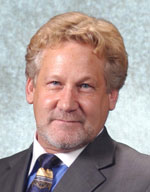
Dannion Brinkley

For some reason, death has not been a stranger in my life. Western society is almost totally ignorant of death, it is something to be brushed under the rug, and feared. Stay tuned for a posting on “Death, The Funny Side” a talk by Dannion Brinkley, author of Saved by the Light. I heard Brinkley speak at a Whole-Life Expo in Seattle in the late ’80’s – he was promoting his book. I liked his half-hour talk so much that I bought a copy of it andeventually converted it mp3 format.  I plan on posting it here, once I have Brinkley’s permission of course. It’s a classic, that has changed my understanding of what death is, and what it means to be fully alive.  His sense of humor perspective, depth and compassion, after having died  more than once and come back to talk about it,  is remarkable, especially after having been a hit man for the U.S. government.  Ykes.
At Mountain Spirit Institute, one of our core values is addressing our “ultimate concerns”. We believe that by helping to reconnect people to the natural environment, each other and a deeper connection to one’s self, we can help participants start looking beyond the veil. Eckhart Tolle writes” The secret to death is to die before you die, and realize there is no death.” Hmm. Maybe he’s onto something.  Dannion Brinkley is, as well.
R. Richards

Does Death Exist? New Theory Says ‘No’
From: KipNews (Open your mind, Prepare)

A case for staying no death - Biocentrism

We associate ourselves with the body, and we know that bodies die. But a new scientific theory suggests that death is not the terminal event we think.
One well-known aspect of quantum physics is that certain observations cannot be predicted absolutely. Instead, there is a range of possible observations each with a different probability.  One mainstream explanation, the “many-worlds” interpretation, states that each of these possible observations corresponds to a different universe (the ‘multiverse’).

A new scientific theory – called biocentrism – refines these ideas.  There are an infinite number of universes, and everything that could possibly happen occurs in some universe. Death does not exist in any real sense in these scenarios.

All possible universes exist simultaneously, regardless of what happens in any of them. Although individual bodies are destined to self-destruct, the alive feeling – the ‘Who am I?’- is just a 20-watt fountain of energy operating in the brain.  But this energy doesn’t go away at death. One of the surest axioms of science is that energy never dies; it can neither be created nor destroyed. But does this energy transcend from one world to the other?
Consider an experiment that was recently published in the journal Science showing that scientists could retroactively change something that had happened in the past.

Particles had to decide how to behave when they hit a beam splitter. Later on, the experimenter could turn a second switch on or off. It turns out that what the observer decided at that point, determined what the particle did in the past. Regardless of the choice you, the observer, make, it is you who will experience the outcomes that will result. The linkages between these various histories and universes transcend our ordinary classical ideas of space and time. Think of the 20-watts of energy as simply holo-projecting either this or that result onto a screen.  Read the rest of this story…

A Restored Mountain Hut Getaway with Good Energy

11/01/2012

A New Zealand Farmer Does Good by Following His Passion

Tom O'Brien of High Country Walks

Tom O’Brien, owner of Blackmore Farm and founder of High Country Walks has followed his passion by offering up a little hut on the back side of his 5000 acre farm. Called the Chinaman’s Hut, it was restored some years ago, by local volunteers, Tom and his father. The hut is situated on the rolling mountains of the Slate Range,  just south of the Remarkables Mountains, on the border of Otago and Southland. Tom took the afternoon to show me his farm, the backcountry and the Chinaman’s Hut. below is a short piece on the hut, and a chat with Tom about his philosophy and passion of sharing this part of the world with others.We’re in hopes, here at Mountain Spirit Institute of collaborating with Tom by running some programs on the Slate Range and Blackmore Farm. We chatted about providing Solo’s and other types of programs.
Thanks for the time you took to show me around Tom!
Note: I’ve met one of the volunteers who helped restore the Chinaman’s Hut, a neighbor of ours here in Kingston named Dusty, who I’ll see if I can get on tape in the next few days. He has an interesting story to tell of not only this restoration project by many others.

How do You Move?

29/11/2011

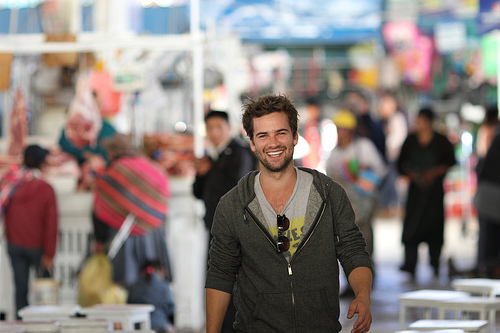
Andrew Lees - Moves!

3 guys, 44 days, 11 countries, 18 flights, 38 thousand miles, an exploding volcano, 2 cameras and almost a terabyte of footage… all to turn 3 ambitious linear concepts based on movement, learning and food ….into 3 beautiful and hopefully compelling short films….. = a trip of a lifetime.

MOVE from Rick Mereki on Vimeo.

Help People Meditate & Be Mindful

21/11/2011

An Interesting Website, Pass it on..

The Mindful Revolution

The Other Revolution