If you grew up in the Televised Vietnam War Era as I did, one photograph stands out among many. That is the image of the helicopter airlifting people off the top of a building during the last hours of the fall of Saigon.
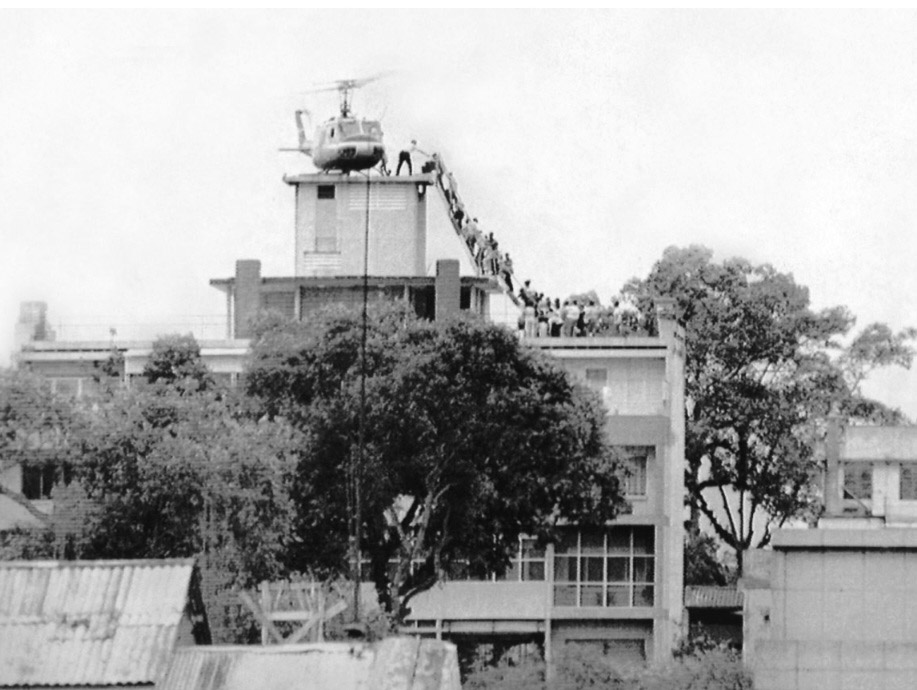
My family and I recently went to Vietnam for seven weeks, and frankly, I almost had a nervous twitch flying into Hanoi, which lies in the northern part of the country. It was something visceral, something in my programming from watching night after night of death tolls and visuals of bombs being dropped from B-52 planes. Those daily kill tolls was akin to a football tally – Bonkers in hindsight.
I’ve already posted a couple of entries when we were traveling. But now I’m going to tick off a few articles I have in the hopper. And where to start? Well, not at the beginning this time. I’ll start at the end with the Fall of Hanoi and this image above.
My main thrust of the pieces I’ll post, are not touristy, rather, to show what I learned while there, and how it pertains to the ol’ “People and countries who don’t learn from the past, are doomed to repeat it.” mantra. So the themes and points I’ll be writing about, pertain just as much about today’s political shenanigans as they did during the “Vietnam War,” which forthwith I’ll be calling “The American War”. Because, it’s all about perspective.
Vietnam was my first trip to Asia. A typical U.S. Citizen, I had traveled, but to South America and Europe. So I had my eyes opened by the wonderful proud people of Vietnam, the museums and history of this nation, and a glimpse of what makes Vietnamese people who they are and how they see the world and themselves in it. But more on that in later articles.
Back to this helicopter image: While in Ho Chi Min (Saigon), I kept wondering if the building featured in the image still stood, and if so, where might i find it.
After doing a little research I was able to find an address. When the taxi dropped us off, the building looked like all the the others. Only when I stepped back into an adjacent park, could I see the recognizable elevator housing and even the sign that said “Landing Zone”.
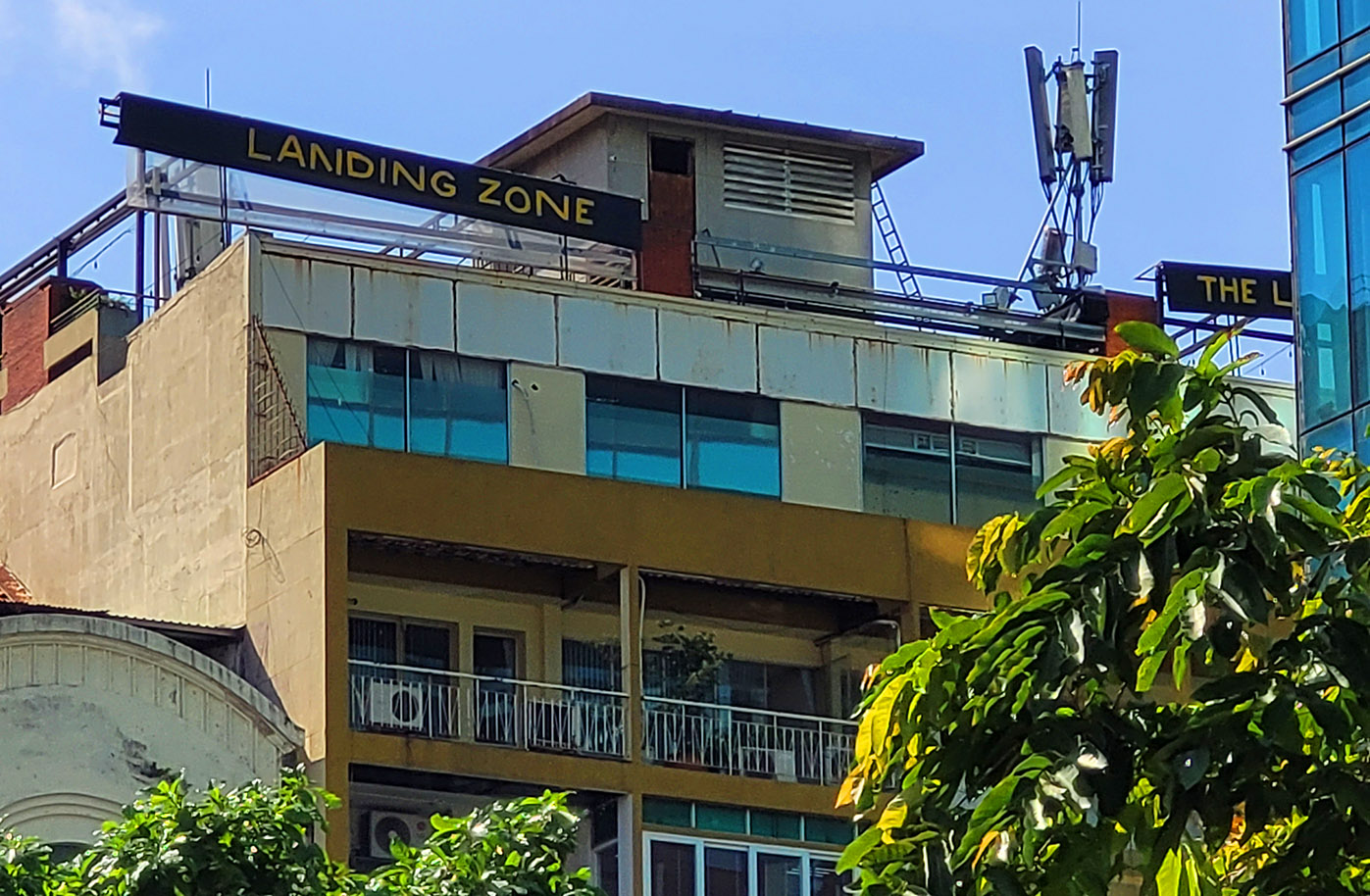
So why write about this image and building in the first place? More on that in a minute.
Once I discovered this was indeed the right building, I ventured inside. Aside from the sign on the roof, there was nothing at street level to indicate anything special was here. In fact I had read on a post, the site has been intentionally left under the radar.
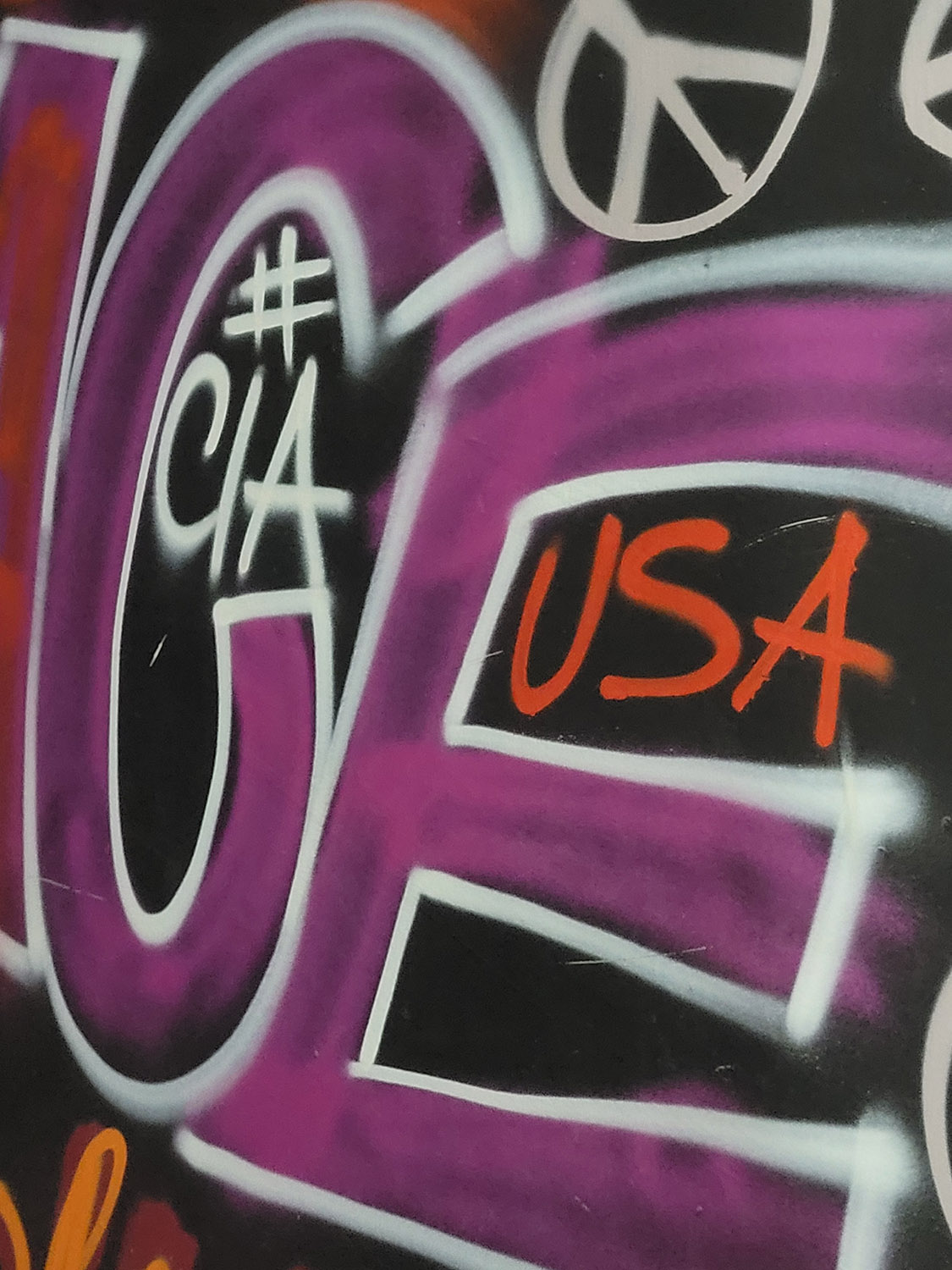
I approached a security guard behind a desk and asked if it were possible to get to the roof. “Sure” he said, “But you’ll have to give me $10 to gain access.” I’m not sure if he got the money, if it went to the building’s fund, or the tea chest. Anyway, I took the rickety elevator to the top floor, and was greeted by a narrow graffitied cement staircase But the artwork was well done, and there were some great messages in the artwork.
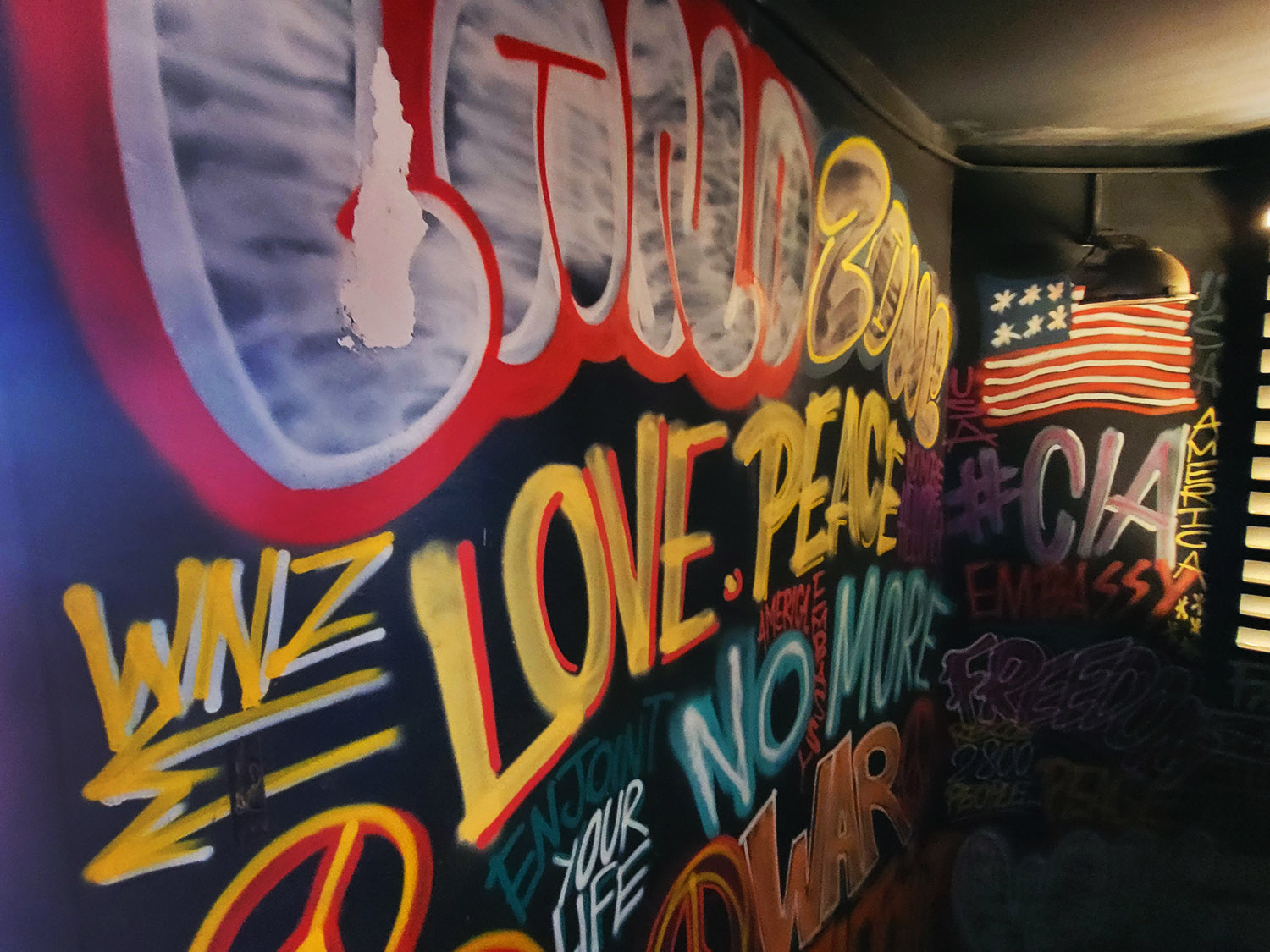
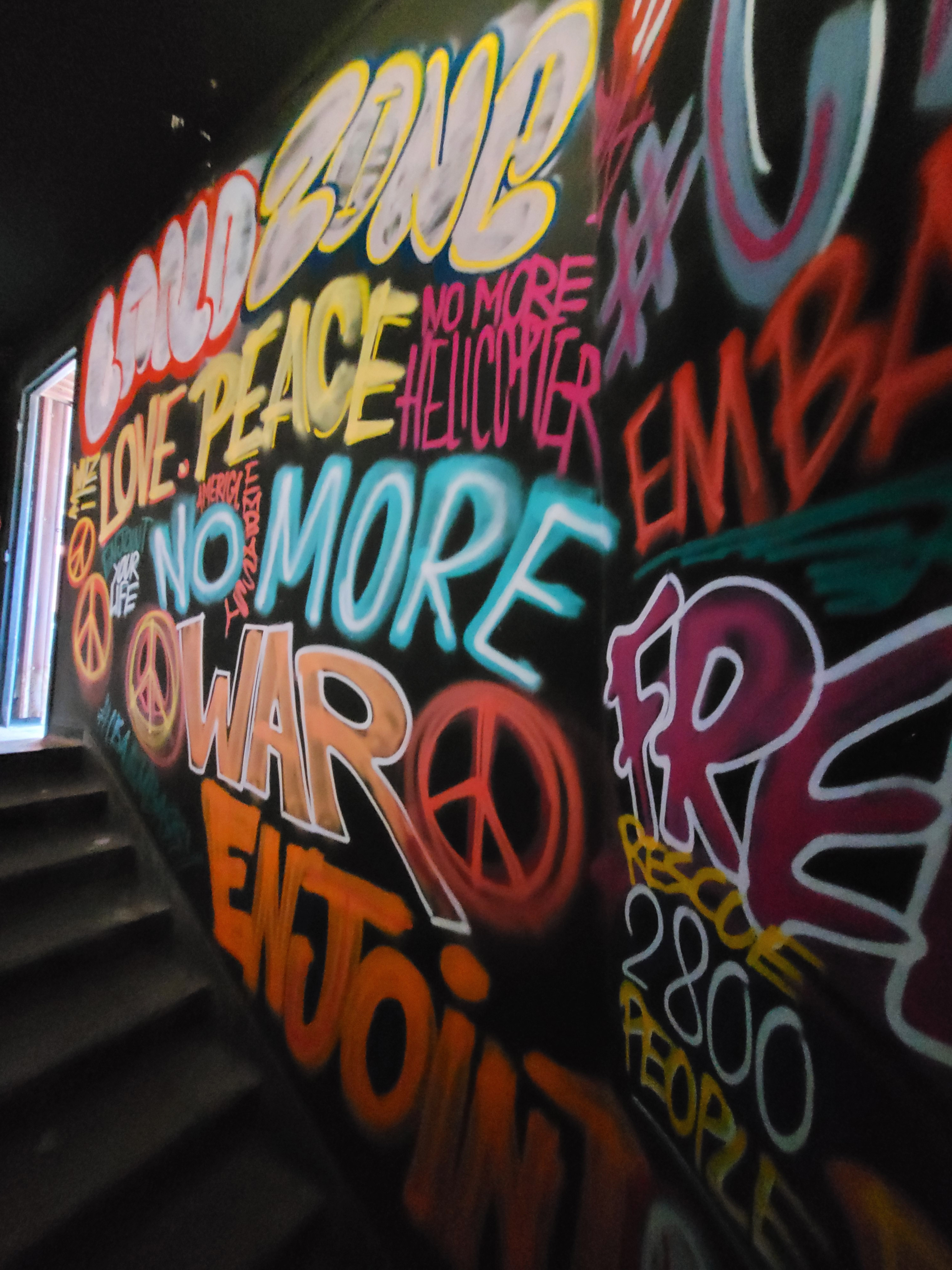
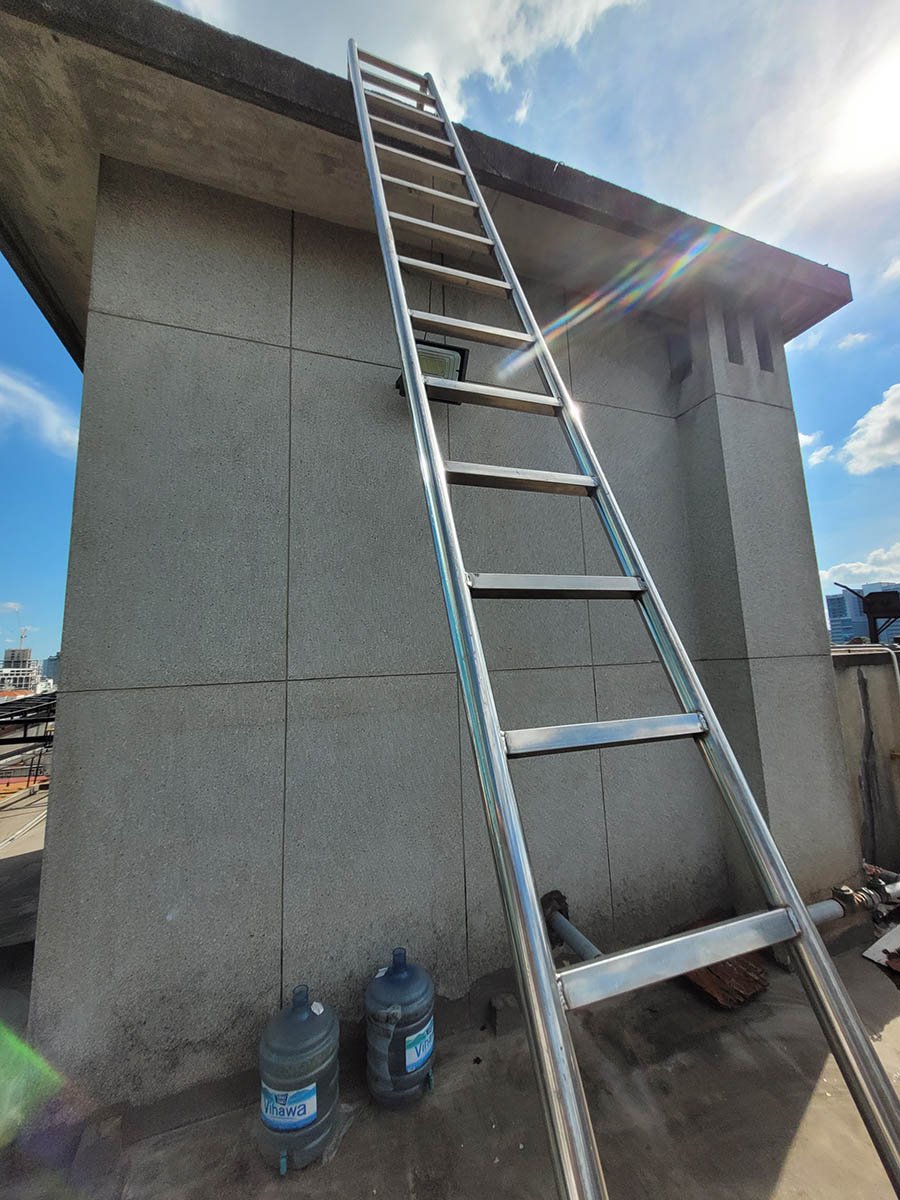
Up I went, and get to the top of the building, where a newer replacement ladder substitutes, (I assume) for the original. I may be wrong, but it looked new to me.
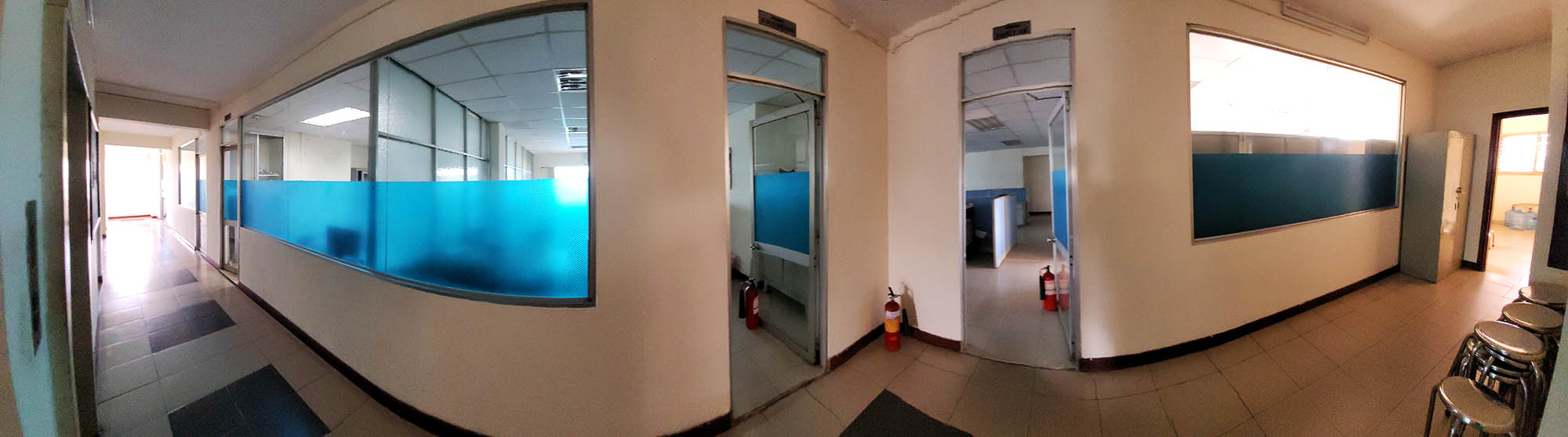
At the time the original image was taken by Dutch photographer, Hubert Van Es, the caption which accompanied the image, that went “over the wire services” at the time said the landing zone was that of the US Embassy, but in fact was that of the CIA Station Chief, Thomas Polgar’s apartment on the top floor. You can read more here on that. What was his apartment, is now an empty office.
The roof had been reinforced with steel and concrete before the fall of the city, to support a helicopter in the event it were needed for an evacuation. That, it turns out, was a good call.
My main takeaway from tracking down this heli-pad site was the story behind the image. It appears that those boarding the helicopter were South Vietnamese, that had been on the U.S.’s side of the war. Not all made it out, and others only made it by luck, which I’ll cover in another post. Another takeaway was that artwork. It posed more questions than it answered. Who made it? The messages are almost cryptic in the words they chose. But no doubt, the message of peace and ‘no more war’ prevails. Haunting, especially for a kid that grew up watching the war on television.
Author’s Pop Quiz: Are there any undeclared US wars in the last 20 years that you can recall where the U.S. left suddenly, in some cases leaving millions of dollars worth of military equipment behind.
Bonus Question: Besides needing a quick evac, can you think of any other reasons equipment might be left behind? Stay tuned for more on these questions in future posts.
Image credits: Randall Richards, except for the one by Hubert Van Es
Check out www.mtnspirit.nz/msm for more on Randall’s bio.
 Mountain Spirit's Blog