“Some people are born to make great art and others are born to appreciate it. It is a kind of talent in itself, to be an audience, whether you are the spectator in the gallery or you are listening to the voice of the world’s greatest soprano. Not everyone can be the artist. There have to be those who witness the art, who love and appreciate what they have been privileged to see.” — Ann Patchett in Bel Canto.
Thanks to Michael Thoma for sending this quote.
I add that music performances are about entrainment rather than entertainment. Whether you are the audience or the performer, it’s the energy between the two that make the event happen. A lot of new performers hesitate, or would-be performers never get up on stage, because they think they have to be perfect. Yes, having some technical expertise to make it sound kind of good is important, so the audience enjoys the sound, but far more important is the intention of whoever is on stage. For that reason I say, stand up and be counted as a musician, regardless of your ability.
When I show new guitar players a few chords to get them going, I always tell them the first rule in music is to have fun. The second rule is to make is sound good if you can, just so the cat doesn’t climb the walls. And the third rule is never let a grouchy music teacher, or someone that criticizes you because they don’t get the entrainment principle, ruin rule number one. More on entrainment in music or sound? For more, read this , or this.
Difficult to see from the ground,geoglyphs go unnoticed by locals
With the aid of satellite imagery from Google Earth, soon archeologists in Brazil will be finding more and more large geometric designs carved into the ground in the Amazon rainforest. The geoglyphs are believed to have been sculpted by ancient people from the Amazon region around 700 years ago, though their purpose is still unknown. So far, nearly 300 geoglyphs have been identified, but with advances in satellite imaging–and increased clearing of the jungle coverage–scientists are hoping to discover many more of these strange, geometric designs. Read the rest of this story Photo via Diego Gurgel
Josh Wilson a Singer/Songwriter signed to Sparrow Records was stuck in an airport recently.
“I’m always saying, “This is your life, enjoy it — even if you’re stuck at an airport!” HP:It looks like you know how to do just that based on your popular video that’s making the rounds. So where were you traveling to the day of the Newark Security Breach? JW:I was headed to Mumbai, India with my wife and some others.
I saw the video after someone forwarded it to me. They actually found it on Alyssa Milano’s Twitter Feed. HP: What inspired you to do the sing-along?
JW:Things had gotten really tense in the terminal. We were at about the six hour mark in terms of the delay. Some kids were crying near us and I wanted to cheer them up and maybe get everyone else to relax a little. Someone in our group said I should break out my guitar, and after a little convincing I did. But in that situation, it’s only safe to play the Beatles. Anything else would have led me to being pelted by luggage HP: Have you ever played for a crowd of passengers before?
You know, as a musician at some point you feel you’ve played every possible type of gig. But I do think it was my first airport performance. Read the rest of this story
Heather Poole is a flight attendant for a major US carrier. She lives in California and works in New York.
By R. Richards
If you’re looking for a good website which has, among other things, a good list of human anatomy in Spanish, (it comes in handy when visiting a doctor in Peru), visit this: Intro2Spanish.com. This link (which is actually rcaguilar.com, whatever that is) takes to you the Human Anatomy page. On the left look for titles that will take you any direction you wish to head: Pronunciation Lessons, Numbers, Time, Date, Verbs, Verb Tenses, Verb Conjugation, Grammar, Gender, Grammar Terms, Pronouns, Reflexive, Vocabulary, Adjectives, Noun Cognates, Prepositions, as well as Verb Lists, and Vocabulary Lists
I need all the help I can get. Even after 12 years of working in South America my Spanish has been called “Tarzan Spanish” by a friend of mine. The two-week Spanish school in Baños, Ecuador wasn’t a complete education. In fact, my Spanish is probably a bit worse than it was earlier because I come and go for a few months at a time. Icommunicate OK, but I need drastic help with my verb tenses and sentence structure. There is hope, however.
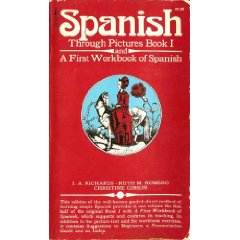
Spanish Through Pictures, my favorite
Other resources which have help me in the past: Spanish Through Pictures, by I.A. Richards, (no relation) which is out of print. We may publish this as an online version, pending permissions. I have a hunch that the Rosetta Stone computer program (which is excellent) may have gotten its ideas from the book series by Richards published in the 1950’s.
Putting World Hunger Into Perspective
From: The Huffington Post By Princess Haya Bint Al Hussein
Hunger now scars the lives of over 1 billion people — a new record. Today, Monday the 16th, world leaders will gather at a UN food summit in Rome to debate what to do about it. As a former Goodwill Ambassador for the World Food Program, I sense how the meeting may go.
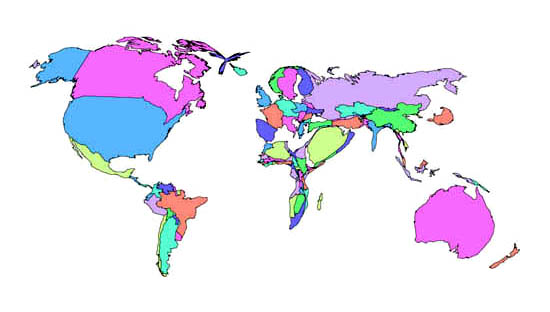
Per capita calorie consumption, nation by nation. By: World Food Program
There will be more media attention on the politicians than on the issues, an abundance of speeches, and a series of oddly fancy luncheons — with more speeches. At a similar luncheon, I remember wondering: Read the rest of this article
I recently received a flyer in the mail from Food and Water Watch, with the title: “America’s water should belong to each of us, not the companies that bottle and sell it. Not the corporations that want to privatize is. Take the pledge to protect your right to clean safe drinking water. Here’s what I’ve learned.
American consumers drink more bottled water every year, in part because they think it is somehow safer or better than tap water. They collectively spend hundreds or thousands of dollars more per gallon for water in a plastic bottle than they would for the H20 flowing from their taps.
Rather than buying into this myth of purity in a bottle, consumers should drink from the tap. Bottled water generally is no cleaner, or safer, or healthier than tap water. In fact, the federal government requires far more rigorous and frequent safety testing and monitoring of municipal drinking water. Read more
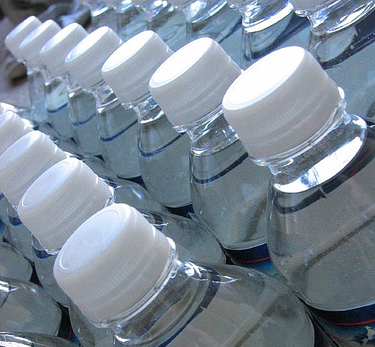
Bottled Water: Illusions of Purity : Not safer than tap water
Bottled water manufacturers are good at implying things. With glossy ads and labels depicting quiet mountain streams, a consumer is led to believe what they’re drinking is healthier than what comes from the tap. But chances are it’s not. In fact, municipal water is more tightly regulated than bottled water. (more…)
I picked up an excellent book on the week-end – one that I hope you will read. It’s an oldie but a goodie. This book is a magical and inspiring tale about a man who planted trees. It is also known as The Story of Elzéard Bouffier, The Most Extraordinary Character I Ever Met.
It was first published in 1953 and is a timeless eco-fable about what one person can do to restore the earth. The hero of the story, Elzéard Bouffier, spent his life planting one hundred acorns a day in a desolate, barren section of Provence in the south of France. The result was a total transformation of the landscape-from one devoid of life, with miserable, contentious inhabitants, to one filled with the scent of flowers, the songs of birds, and fresh, flowing water.
I found myself at a store called Eastern Mountain Sports the other day here on the east coast, of the U.S., and at the front door, the following letter was predominantly posted on a display board at the stores entrance for all customers to see. It was written by the chain’s president and shows that this corporation has the intention of not only making a profit but also to remind its customers what’s really important in the end.
The Gift of Time Well Spent The holiday season always involves a tremendous amount of planning, coordination, and giving of one’s time and effort. With so much to do and so little time to do it, it’s easy to get stressed out.
My wish for you and your family is that after all the parties are over and all the presents are unwrapped, you take some time to unplug from the madness and enjoy each other’s company. Get outside, take in the new season, and appreciate the greatest gift of all – a healthy life:
Crash through a pile of dry leaves on your mountain bike.
Breath deeply on the first day below [-5 Celsius].
Feel the burn of a cold-weather trail run.
Watch the first ice form on the banks of a fast-moving stream.
Grab a handful of snow with your gloves off.
Watch the first winter sunrise from the top of a mountain.
Most important[ly], appreciate the outdoors and take good care of it.
From all of us at EMS – Happy Holidays!
Sincerely, Will Manzer,
President & CEO
Eastern Mountain Sports
Kudos goes to E.M.S. I bought my first 60/40 mountaineering jacket there for our Proctor Academy winter mountaineering course. It must have been in 1975. For a while the store struggled but these days, not only is its president’s writing good letters like the one above, but the store seems to be on track environmentally as well as with its education and customer service focus. Well done E.M.S. – keep it up. Editor’s note: This letter was given to me by one of the employees at EMS when I explained I’d like to reprint it on our blog. Edits are in brackets.
A Plastic Soup That Stretches from Hawaii to Japan From: The Independent
Image: The Independent
By Kathy Marks, Asia-Pacific Correspondent, and Daniel Howden
A “plastic soup” of waste floating in the Pacific Ocean is growing at an alarming rate and now covers an area twice the size of the continental United States, scientists have said.
The vast expanse of debris – in effect the world’s largest rubbish dump – is held in place by swirling underwater currents. This drifting “soup” stretches from about 500 nautical miles off the Californian coast, across the northern Pacific, past Hawaii and almost as far as Japan.
Charles Moore, an American oceanographer who discovered the “Great Pacific Garbage Patch” or “trash vortex”, believes that about 100 million tons of flotsam are circulating in the region. Read the rest of this story






 Mountain Spirit's Blog