Archive for the ‘Books’ Category

Gold Mining in Peru

14/11/2009

By Randall Richards

Peru-Barrick Mine

Barrick's Pierina Gold Mine, Peru

I know relatively little about the issues that surround open pit gold mining, but my instincts tell me, aside from what I’ve read over the years, that it’s not a good thing, something similar to  nuclear testing – not the best for the planet,  nor the surrounding communities. There are certainly the headlines about gold mining, about toxic tailings and the havoc wreaked on local rivers and communities.  I debated whether to do more research before writing this post, and decided to simply point you in the direction of two websites, and tell an anecdote of my observations in Peru over the past 12 twelve years.

Peru-Barrack Mine Far

Barrick Mine viewed from our land near Huaraz

We’ve just purchased some land in Huaraz Peru, and within 10 or 15 miles, line of sight, to the north is the Canadian company Barrick Gold open pit gold mining operation. It just looks wrong. A whole mountain on the Corillera Negra side of the Cayllon de Huaylas (Huaylas Valley),  has been transformed into a mammoth sand pit/mound.  Aside from  the blight it produces, all natural grasslands and campasino’s (country farmers), pastures/farms have been eradicated.   I hear consistently that the Japanese are, or are about to run mines in the Cordillera Huayhuash, (scene of Joe Simpson’s Touching the Void).

Peru-Barrick Mine Settlement

Barrick's Planned Community - employee housing, Peru

On the east side of the valley, sits Barrick’s planned employee community. It’s relatively well hidden from the center of Huaraz, over a hill with newly planted pines.  But the whole thing seems abusive, elitist,  and completely out of place, in a country where there are stark differences between classes of the “haves and have nots”. This “suburb looking for a city”, looks like something outside of Toronto, or a development near Montreal, rather than a village in the Andes.

Then, there’s the taking of Peru’s natural resources, for the price paid from the highest bidder. If that’s what the goverments mean by “free trade”, they can have it. (As you may know, Peru and the U.S. have a “free trade” agreement as of a few years ago.) For more information on third world exploitation, be sure to read John PerkinsConfessions of an Economic Hit Man, or see his website, which also has a good bit on Free Trade with Columbia, which might shed some light on free trade agreements.  More on John Perkins in another entry.

As promised, here is the link for Barrick Mines and, one for Mining Watch Canada, with an interesting page entitled, Transnational Mining Tribunal: The Case of Barrick Gold Corporation in Latin America (Chile, Argentina and Peru). Barrick has multiple pages on “Environmental Responsibility, Biodiversity, Rock and waste management”, etc etc..  However, are we being hoodwinked?

For those up to speed on these issues, forgive my lack of knowledge on the subject, but take my observations at face value, especially if you’ve not been to Peru. If you agree with my take, please forward this blog to friends,  and get the word out about the abuse in Peru and other Latin American countries, its people and resources.

Why We Need Live Music – Part 1

17/10/2009

By Randall Richards

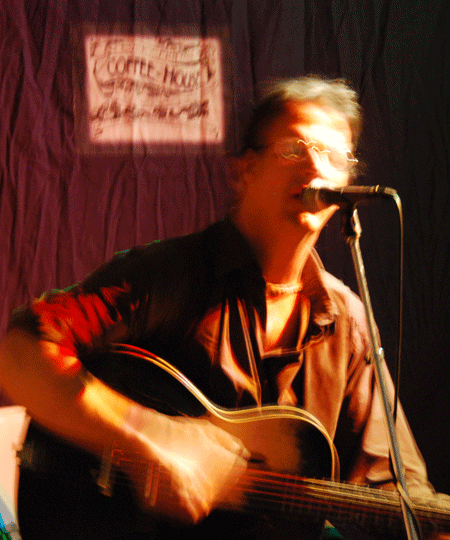
Joel Cage prior to taking the stage

Joel Cage prior to taking the stage

Tonight, I just heard my good friend Joel Cage play an evening at our local Sunapee Community CoffeeHouse. This will be one of the harder posts to write because no words will justify the experience. You had to be there.  Nevertheless…

Joel played to a small audience tonight. He’s always been the consummate professional. When I first heard him during our early days, when the CoffeeHouse was just starting out in Sunapee Harbor, he blew us all away with his style and technical know how.  But hearing him tonight was like hearing a different person. He seems wise beyond his years, and presents an affable, grounded style.

Joel in action at SCC

Joel in action at SCC

Aside from his stunning guitar playing and vocals, he’s really made a major shift skyward. His whole energy, the way he takes the stage, the feeling put into every note, brings the audience, (at least those willing to go), to a new level of warmth and community.  It seems he’s been on a long journey in a short time. He’s making the most of his journey with the time he’s given – that is clear.

The first thing I noticed immediately, was his total commitment to the performance, right from the first note. The second thing I noticed about Joel, was his guitar.
At first I thought, “That’s an interesting sound hole placement for a *guitar”, and “what a cool finish and woodwork.”  Then I realized what I was seeing. It wasn’t a sound hole. Joel had actually worn away the finish, and then the wood just above the strings with his strumming, until he created the hole after years of playing .”  That in itself might be a curiosity, but it’s how he plays the thing, and how he and the guitar are one. The guitar is an extension of Joel. (*see image)

Joel Cage consciously creates a space, for himself, the audience, and each person in the room. He’s got the technical skills to pull off an amazing performance, but more importantly has put the heart behind his craft that puts him at the cutting edge, leading the way.

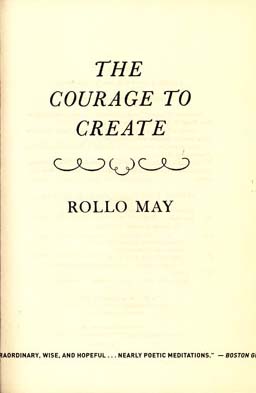
Read this book.

Read this book.

Often I talk about leadership in these posts, and the “Courage to Create” comes to mind (Read Rollo May’s book about this, with the same title). Joel is a true leader. It takes courage to present and show a new way, and break the mold of what we think music should or shouldn’t be. The gift that Joel brought to the audience tonight, was his ruthless walk to the edge and his skill in bringing us with him on his journey. Thanks Joel, we’ll be making the trip to see you tomorrow night, at The Mill. Keep up the good work.

This is why we need live music. Unplug the computer, the TV and get out to hear someone play this weekend, or pick up a guitar and play it. To be continued.

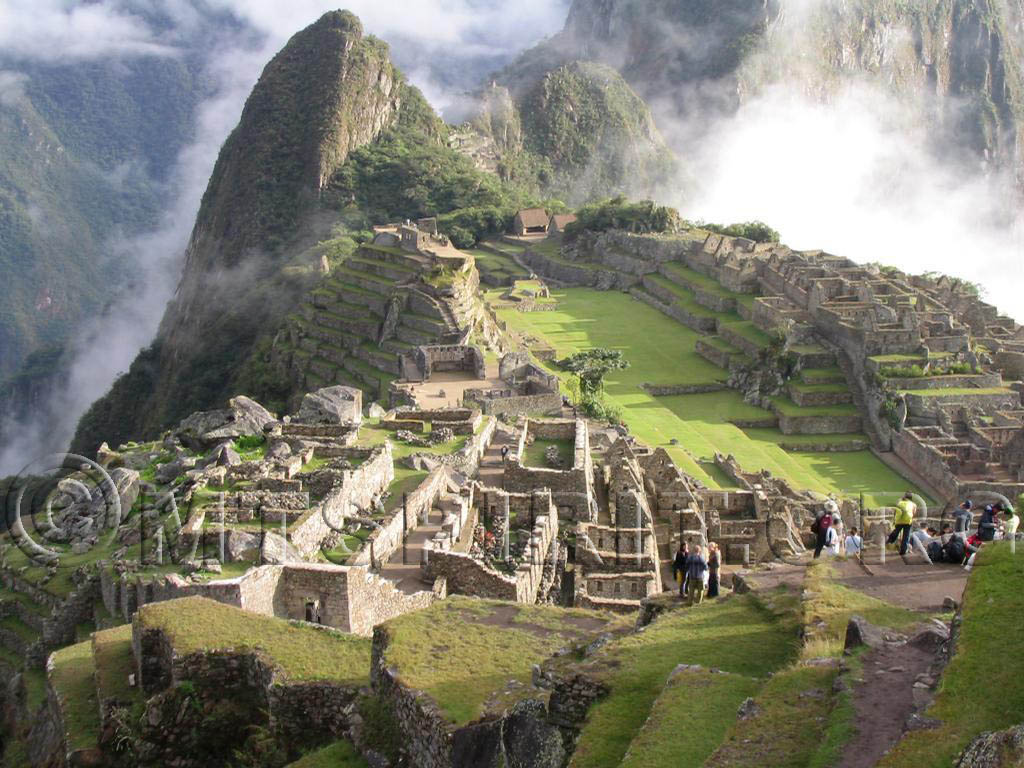
‘Rebuilding’ the ruins of Machu Picchu

26/08/2009
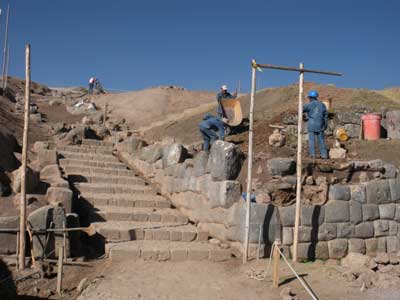
Inca ruins get 'The Treatment'

Inca ruins get 'The Treatment'

By Amanda Richards

Peruvian authorities in charge of archaeological sites seem to have a voracious appetite to ‘rebuild’ the Inca ruins. They seem to think that the ruins need to be ‘reconstructed’ in order for them to become worth something more – ‘puesta en valor’ as the signs tell us.  The ruins in themselves are just not enough.

As we explored the ruins,we realized just how much had been ‘reconstructed’ and continues to be.  At Macchu Pichu for example, you can’t even see the ‘most beautiful wall in the world’ (as described by Hiram Bingham) as it is currently under ‘reconstruction’ and the area is only open to workers carrying bags of cement. It felt strange to watch the ‘ruins’ being rebuilt and made to look ‘tidy and new’.

Building a 'new' Inca wall

Building a 'new' Inca wall

Peter Frost raises this issue in his book ‘ Exploring Cusco’ hoping to ignite some discussion as he argues that there has never been a debate in Peru about this.  No one has ever questioned the authorities. And so the rebuilding of the old ruins – ‘The Treatment’ as Frost describes it, continues unimpeded.

I have to admit that on one hand there is something nice about seeing the ruins ‘new and rebuilt’ like the beautiful, big terraces at Moray for example.  However, I agree with Frost that this theme park approach takes away the ‘mystery, allure and enchantment’ that only our own imaginations can add to the experience of being there at these intriguing and mystical ruins.

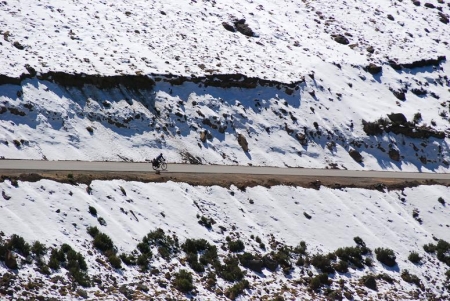
Peru by Bike

17/08/2009

By Amanda Richards
Eva and I met while we were both  studying at Copenhagen University about 5 years ago. We were both  sad when we said our good-byes because  neither of us had any idea when we would  see each other again as she was heading home to Germany and I was returning to Australia.  Yet, now here we are in South America!

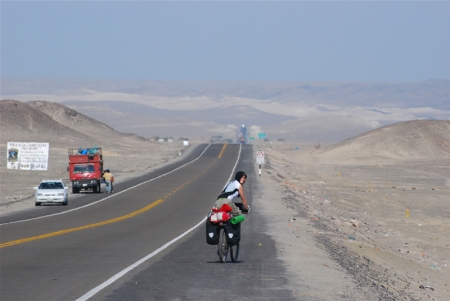
Eva is traveling with Sebastien and they  arrived here in Peru intent on cycling  and  hoping to explore `a strange new world, its countryside, people, cultures and languages for 2.5 months…´ Their adventures began in Lima  and they first  headed down  south to Nazca (a desert area) and then up to Cusco.

On the way to Nazca

On the way to Nazca

They have both been surprised at just how many other cyclists there are on the road – their expectation was that they would be almost the only ones on this big adventure!

After the chaos of Cairo (where they are both currently working) they are particularly enjoying the times when they are higher  up in the mountains (sometimes above 4,000m) where there are fewer people.

Up up up and down down down

Up up up and down down down

Eva and Sebastien are at Machu Picchu today and will continue with their cycle tour when they return to Cusco tomorrow. Once again Eva and I  will sadly say our good-byes and who knows when or where we will meet again. Somewhere fun!

The Enigma of the Nazca Lines

26/07/2009

The Enigma of the Nazca Lines
By Amanda Richards

Trapezoid Designs

Trapezoid Designs

Peru is an incredibly beautiful, diverse and historically rich country. The Peruvian people are an upbeat, warm and friendly culture, with a sense of optimism. The country is a magical place, considered the spiritual center of the Americas. Cusco, the outlying Sacred Valley, and Machu Picchu all have a special feeling to which no picture can do justice, not to mention the physical beauty of the land and the warmth of its people.
The Mountain Spirit Peru ’09 program is in its 11th day and the group are in Ica, having spent the day at the famous Nazca Lines. The Nazca Lines are an enigma. No one has proof who built them or why.
I came across a great article by Holly Hayes on her website
Sacred-Destinations.
Writes Hayes, “The Nazca Lines are giant sketches drawn in the desert of western Peru by ancient peoples. The drawings were created on such a large scale is such that the shapes can be readily discerned only from the air, leading to a variety of theories about their purpose.”
 “Since their discovery, the Nazca Lines have inspired fantastic explanations from ancient gods, a landing strip for returning aliens, a celestial calendar created by the ancient Nazca civilization — putting the creation of the lines between 200 BC and 600 AD, used for rituals probably related to astronomy, to confirm the ayllus or clans who made up the population and to determine through ritual their economic functions held up by reciprocity and redistribution, or a map of underground water supplies. To read the rest of this article on Hayes’s website click here.

Cultural Immersion, The Creative Way

16/07/2009

By Amanda Richards

Machu Picchu

The Mountain Spirit Peru 2009 cultural immersion trip is already into Day 4 of the exciting program. The group  of 7 clients with Randy Richards and Guillermo Seminario as their facilitators,  are currently at Ollantaytambo, staying with Anna Sequiros and her family. Today is a day to learn more about local customs, sustainable agriculture, women’s issues and visit the local school. The group will also help prepare their own meal, which for some will include preparing and eating guinea pig – a national dish of Peru. Tomorrow they will set off for Machu Picchu and discover more about the richness of the Inca Empire. An excellent book to learn more about the ruins is by Peter Frost, ‘Exploring Cusco’.

I am here in Cusco, my fourth day in Peru. Randy has always spoken so fondly of the Peruvian people and I am experiencing what he means.The people are so open and gentle and kind, its a delight to be here. The group will be back in Cusco on Saturday and we will spend some time with the very special Chimu Inkas – Guillermo, Mario and WachChimu Inkasi.

Inspirational People

20/06/2009

One Boy’s Passion for Wilderness Survival Skills

Marco & Jelena Wells

Marco & Jelena Wells

One never knows when an inspirational person will cross one’s path. Today, for me,  it came in the form of Marco Wells, all of 12 years, who visited us in Piha, with his sister Jelena, mother and father Tina and Steve and grandmother Helen from the former republic of Yugoslavia, (who recently attended our wedding a few weeks ago.) From the start, it’s a bit hard to determine who’s the biggest inspiration in this family, whether it’s Helen for starting her journey to New Zealand from eastern Europe years ago, or Marco’s dad who fosters his son’s love of the outdoors and wilderness survival. Then there’s his mother, who gets just as excited as her son, when we got the compass out and starting shooting bearings off the nearby peaks. It could also be his wonderful sister who’s eyes lit up during our day hike, when she looked over the edge of the windy cliff, which dropped a few hundred metres down to the Tasman sea. But this story leads me back to Marco.

A few weeks ago at our wedding, “Grandmother Helen” (we’ve also adopted her as our own), told us about her grandson who “is interested in the out-of-doors”.  Well, when I started talking to Marco today at our home, “interested” was an understatement. Marco is passionate about wilderness skills, wild edibles, feeling the wind, and even a bit of climbing and just being out there. He’s got it in his blood.

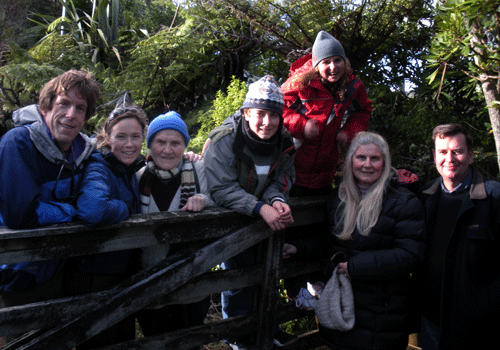
Today's Hiking Buddies

Today's Hiking Buddies

My wife and I later wondered aloud, after they had left back for the  Auckland area, what makes one boy passionate about the outdoors and the next, not. I was that boy which started with my romping and winter camping trips around the John F Gile Memorial Forest and Morgan Pond in New Hamsphire. Marco, his dad and I talked about “nature deficit disorder” and, stating the obvious, I mentioned the threat of video games, technology and kid’s lack of nature time.
(Image: L-R:Randy & Amanda Richards, Grandmother Helen, Marco, Yelena, Tina and Steven Wells)

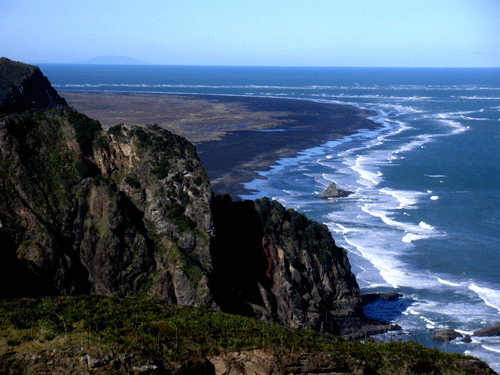
Kare Kare Beach from our Hike Today

Kare Kare Beach from our Hike Today

Not Marco! He’s out back building different types of fires, constructing snares and assembling survival kits in a can. OK, I’m sure he puts his own time on the computer too, but he sure knows quite a few native plants and is working on lots of survival skills. On our walk today he was naming a number of plants and their their uses. He taught me a number of things today, but one stuck in my mind. When collecting and using silver ferns for a emergency shelter, be sure to turn the ferns belly up, otherwise, the tiny seeds, adhered to the bottom sides of the fern, will drop off on you during the night causing irritation and itching. He showed me the tiny seeds. Marco, just so you know, I’ll not forget that. (more…)

The Global Student

11/06/2009
Global Student Alyssa Lanz

Global Student Alyssa Lanz*

Forget the SATs. Forget the “top college” rat race and high-priced American schools.
Writer Maya Frost says it’s time for American students to go global, look abroad, and get a global education, for less.   Everybody knows the straight and narrow, up-and-out formula for American success: good grades, good scores, good college, big debt … good luck.
Many in countries throughout the world know the value of thinking and behaving in terms of “global community” as evidenced by the numbers of foreign students, but American’s have tended to be more insular compared with our global neighbors.

Recent guests on NPR’s On Point in WBUR in Boston with Tom Ashbrook’s, were Maya and Tom Frost, who say “Forget it. There’s a better way. And the path leads abroad — early.”
Stay home studying for SATs and taking on college debt, and you’re guaranteed nothing in this topsy-turvy economy. Go abroad — as early as high school, especially for college, they say — and you’ll find low tuitions, big adventures, and the future.
Listen to the interview: A new American way in the world. Going global, right from the start.

Global Student
Global Student

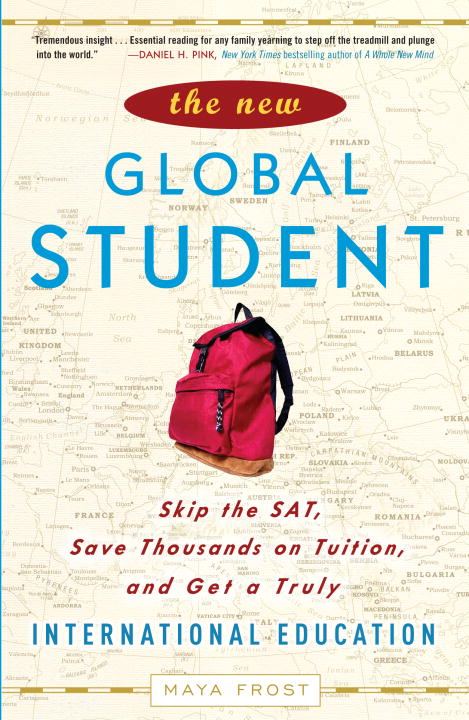
The book is called: The New Global Student: Skip the SAT, Save Thousands on Tuition, and Get a Truly International Education
Chapter One’s title is: “Creative, Not Crazy, Our Family’s Story”,
It starts with a quote from Thomas A. Edison – “If we did all the things we are capable of, we would literally astound ourselves.”

Frost’s opener starts, “In the summer of 2005 my husband and I decided to sell everything and move abroad. There’s nothing too unusual about that these days-except that we had four teenage daughters at the time, and the youngest of three were about to enter their freshman, junior and senior years of high school. This book is about the lessons they learned, and the loopholes we discovered –while shepherding our kids through high school, into college and beyond.”  She goes on, “Luckily, we stumbled upon a number of affordable, accessible, and stunningly advantageous strategies that American parents anywhere can use to help their kids get both an enriching education and perspective-shifting international experience. Sweet bonus: they add, “We saved a couple hundred thousand dollars in the process.”

She writes, “We’re not on a crusade of any kind and our exodus wasn’t spurred by fear, exasperation or legal problems; it was simply a matter of following our instincts in order to give our kids what we felt would be a series of amazing opportunities for learning and creativity.” Frost says that when others hear their story, “they can’t help but make assumptions about us. Some we found hilarious.” She adds,  “We had a ton of money and/or serious connections.” Their answer..”Hoo-boy! That’s a good one.” They had “no bonus, corporate cushion, windfall or an uncle who died.”

Mt Spirit students in Peru

Another assumption was that “we were oddball parents”, Their response is: “Quirky, They think we must have been the kind of people you whisper about at parent meetings or avoid when you run into them in the grocery store.” They add, “The boring truth is that we were nice, normal people, leading ordinary lives.”
Another assumption was that they were disconnected or just plain miserable where they were.  Their response: “Well, no more than most people living in suburban America. Another assumption they encountered:  “Our girls were enmeshed in a scandal at school that necessitated a quick exit to protect their social standing.”  Their response was “Sorry- no gossip here.”

Frost says in her book that they had two  “harebrained” ideas.
One,  that they needed to become “flexible and innovative in order to be prepared for an exciting future full of all kinds of impossible-to-predict opportunities.” Harebrained idea number two was that “we wanted our daughters to develop empathy and responsibility in order to become upstanding global citizens.”

Mountain Spirit Institute’s experiential programs in the USA, Peru and New Zealand are about getting students out into the world. Our webpages devoted to Peru cultural immersion for university students have information on college credit, logistics, curriculum  and connections.

Check out some blogs written by young Americans spending time abroad here.
Read Maya Frost’s special message to students here.

Image#1, Credit: mayafrost.com
Alyssa Lanz poses for a snapshot in Egypt while studying at the American University in Cairo, taking classes in Arabic and political science, and working with New Women’s Foundation, a research center in Cairo focusing on women’s rights.

Entertainment’s New Direction

07/06/2009

Tolle & Carrey Headline “The Global Alliance For Transformational Entertainment”
Eckhart Tolle, Jim Carrey and Friends Opt for Consiousness-Raising over Lakers

By Los Angeles Times writer James Rainey
Some might say that spirituality and Hollywood go together like sensitivity and pro wrestling.

Ekhart Tolle
Eckhart Tolle

But that’s just the kind of habitual/stereotypical thinking that more than 500 entertainment industry types vowed to vanquish at a conference Thursday night as they came together for the first meeting of the Global Alliance for Transformational Entertainment (GATE).

Spiritual teacher Eckhart Tolle and movie star/seeker Jim Carrey headlined the more-than-three-hour session at an auditorium on the Fox lot in Century City. Along with singer Melissa Etheridge and several other speakers, they urged their colleagues in film, television, music and other media to transcend the tawdry and mundane with higher-minded fair.

It must have been important to those packed into the meeting. They missed the Lakers’ opening championship-round game to be there. (more…)

Mammoths and Pole Shifts

07/06/2009

Is there a link between Frozen Woolly Mammoths and Pole Shift?

When I first read parts of John White’s 1980 book,  Pole Shift,  what left an indelible mark on me, was reading the link between the green veggies found the stomachs of frozen woolly mammoths and possibility of relatively rapid shiftings of the earth’s magnetic poles called “pole shift”.  Then again, maybe I didn’t read correctly, as the excerpts from an old nhne.com article indicate below, where White is interviewed by David SunFellow.

Pole Drift
Pole Drift

I’m not well versed on the subject, but from what limited knowledge I do have on the subject, I find the the correlations interesting.  Also, the way that the poles are “drifting” more every year, (also according to NASA scientist turned author/mystic Gregg Braden)  has my attention. According to Braden, airports are having to repaint their runway compass coordinates so often, that some have stopped the procedure. (Check out his books, two of which are The Isiah Effect and Awakening to Zero Point.)

Pole Shift Torpedoed by Author
By David Sunfellow

When John White first published “Pole Shift” in 1980, his book sent re-affirming shocks waves through the earth changes community. Many (including this reporter)

White mentions Mammoths

believed White’s book “proved” that Edgar Cayce, and a host of others, had correctly foreseen a global catastrophe that would destroy much of the planet along with major portions of the human race. White’s book was particularly powerful because it was written by a man with serious professional credentials and, perhaps more importantly, because it seamlessly wed modern scientific data with contemporary psychics and ancient myths and prophecies. While White refused to say in “Pole Shift” that he was absolutely certain that a pole shift was coming, he left no doubt that he thought one might strike sometime near the year 2000.

Now, however, White has publicly said that he doesn’t believe there is going to be a pole shift — at least the kind of cataclysmic variety envisioned by Cayce, Gordon-Michael Scallion, and others. (more…)