Archive for the ‘Climate Change’ Category

Global Meditation to Heal Waters

07/05/2010

If Group Meditation reduced violent crime in Washington DC, what could a massive healing meditation do for the world’s waters?
Startling & Postive Results

Below is a writeup on the now-oft quoted meditation event in Washington DC.  Then read further, about a worldwide meditation event scheduled for May 18th at 15:38 EST to send healing prayers to the world’s waters.

From alltm.org
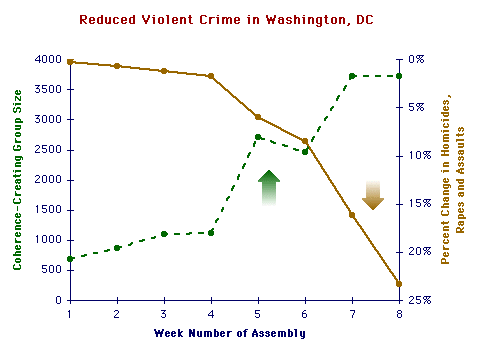
A study published in the peer-reviewed journal Social Indicators Research reports on one of the most dramatic sociological experiments ever undertaken. Researchers predicted in advance that the calming influence of group meditation practice could reduce violent crime by over 20 percent in Washington, D.C., during an 8-week period in the summer of 1993.

In fact, the findings later showed that the rate of violent crime–which included assaults, murders, and rapes–decreased by 23 percent during the June 7 to July 30 experimental period. The odds of this result occurring by chance are less than 2 in 1 billion. Rigorous statistical analyses ruled out an extensive list of alternative explanations, according to John Hagelin, (more…)

A Sea Change

06/05/2010

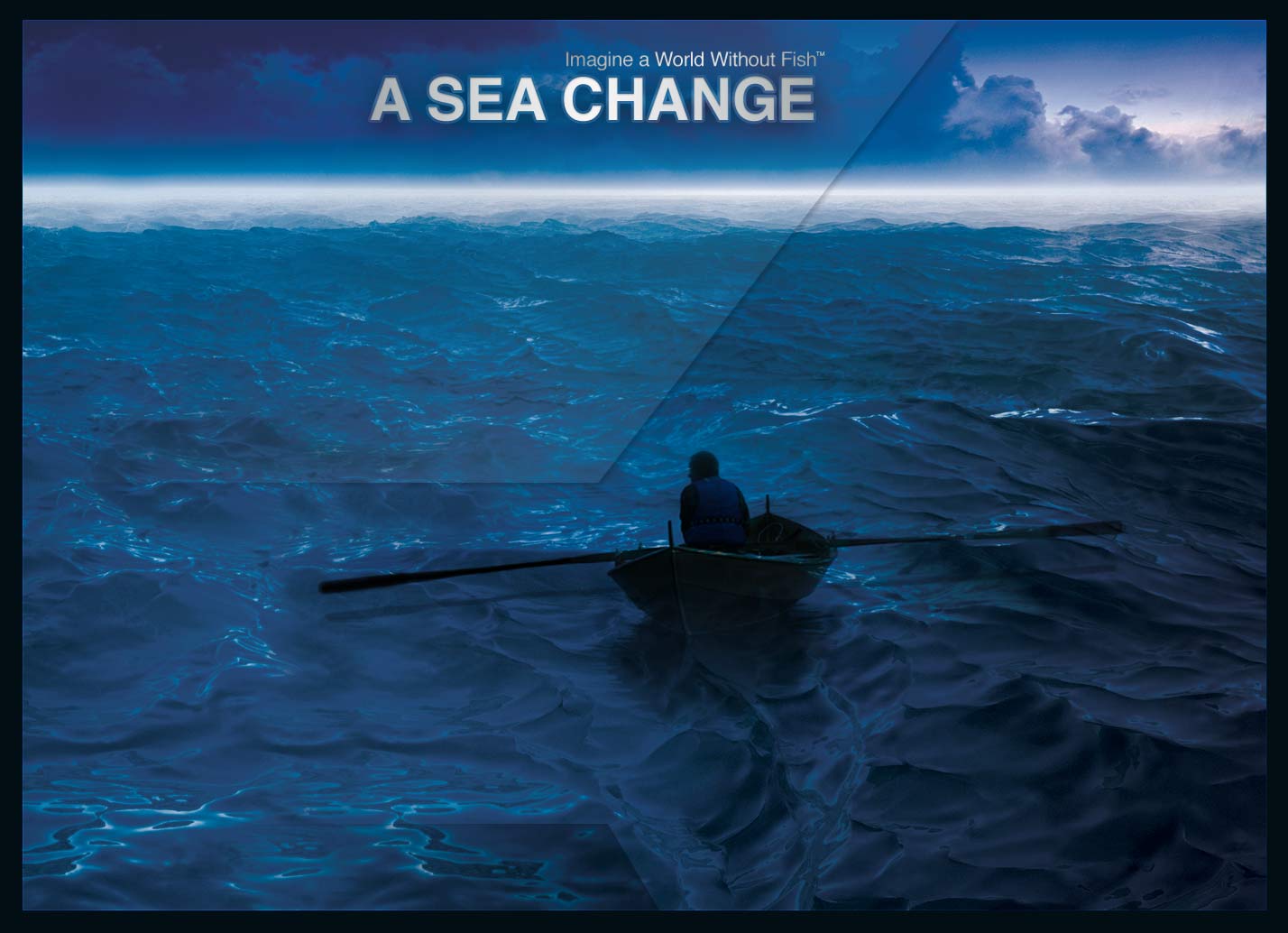
Imagine A World Without Fish
Ocean acidification threatens over one million species with extinction–and with them, our entire way of life.

Time for Course Corrections

DVD: Directed by Barbara Ettinger
Recipient of the NOAA 2010 Environmental Hero Award

A Sea Change documents how the pH balance of the oceans has changed dramatically since the beginning of the Industrial Revolution: a 30% increase in acidification. With near unanimity, scientists now agree that the burning of fossil fuels is fundamentally reshaping ocean chemistry. Experts predict that over the next century, steady increases in carbon dioxide emissions and the continued rise in the acidity of the oceans will cause most of the world’s fisheries to experience a total bottom-up collapse–a state that could last for millions of years. Read more..

Directed by Barbara Ettinger
Produced by Barbara Ettinger, Sven Huseby, Susan Cohn Rockefeller

Music by Joel Goodman

Time to Break the Oil Addiction

06/05/2010

Sign the Petition

Now is a Good  Time to Break the Oil Addiction
From Greenpeace
On March 31st, President Obama announced a plan to allow oil and gas exploration and drilling in 167 million acres of coastal waters that have been protected for decades. Obama’s plan would expose the waters off southern Atlantic states and the eastern Gulf of Mexico to oil spills and other dangers, threatening many tourism and fishing-dependent communities. The news is even worse for Alaska’s Beaufort and Chukchi Seas, which are especially sensitive to oil drilling because they provide critical habitat for polar bears, whales, seals and other important Arctic species.

And of course, opening more areas to drilling only prolongs our dangerous addiction to oil, which is pushing us closer and closer to runaway climate change.

It’s time to quit oil, get clean, and make a permanent switch to renewable energy. Tell our President to just say no to offshore drilling.

We’ve Really Done It Now

03/05/2010

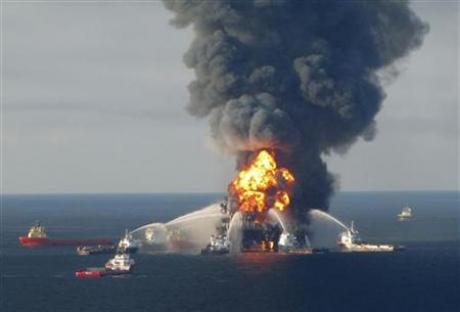
Gulf Oil Spill 2010, Image: Reuters, UK

I can’t help but think, with the Gulf oil spill, that we’re simply fleas on the back of a living organism that’s about to shake us off.  The spill is big. A retired expert mentioned this morning on The Power Hour internet radio show with Joyce Riley said there is not an easy way to stop such a huge oil spout, which is under such high pressure. It’s escaping the man-made hole created thousands of feet under the ocean’s surface. The expert actually said the only way he knew of containment, was to use an atomic blast, placed just in the right way, to seal the hole.

In any event, Chief Sealth from the Pacific Northwest was right, “We do not own the earth.”  This latest mishap by us, seems to really be screwing things up.  To be more informed on a culmination of “the perfect storm” read Richard Heinberg’s Peak Everything which addresses a number of issues which are peaking on our planet today.
Below if from Amazon’s page on Peak Everything.

Heinberg is Brilliant

From Publishers Weekly
In his latest, “Peak Oil” expert Heinberg (Oil, War and the Fate of Industrial Societies) puts that theory in place alongside corresponding peaks in population, food production, climate stability and fresh water availability to paint a grim future of overlapping and accelerating global crises. For an introduction to Peak Oil, the idea that coming fossil fuel shortages will be sudden and drastic, readers should seek Heinberg’s earlier works; this volume assumes familiarity and addresses the challenges a post-carbon world poses for a global community “as reliant on hydrocarbons as it is on water, sunlight, and soil.” The worst-case scenario, “global economic meltdown” read more

Description of Peak Everything
The twentieth century saw unprecedented growth in population, energy consumption, and food production. As the population shifted from rural to urban, the impact of humans on the environment increased dramatically.

The twenty-first century ushered in an era of declines, in a number of crucial parameters:

* Global oil, natural gas, and coal extraction
* Yearly grain harvests (more…)

Why No Posts for 14 Days?

01/05/2010

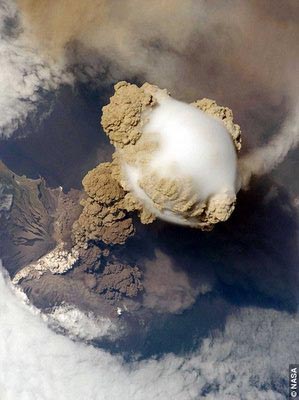
Iceland Ash, NASA

You may have noticed we’ve not been been posting for almost 14 days. We were stuck in Paris. Tough duty but someone had to do it. Due to Iceland’s volcanic ash event, what had meant to be a 5-day trip, turned into a 13+day one.  I hadn’t brought my computer, and if you know anything about Paris, everything including computer time is expensive, (and not readily available).

My wife headed over to support her twin sister who was running the Paris Marathon. (Congrats to Lindy Roberts by the way for completing the marathon in good style!) I caught a later flight (thanks Priceline) to support Lindy as well, and spend a few days there with Amanda. Since there was an apartment anyway, I couldn’t miss the opportunity.

I’ve also been delayed on postings because,  right before I left, I mistakenly re-formatted a portable drive which contained all my images. No big worries though, I had other back-ups of almost everything, but I’m still shuffling files around since my delayed return stateside.

The good news? We were stuck in Paris. It was good be back in France. We had extra time to see the Louvre, speak my second language (of five) again, be away from the computer, (isn’t that what MSI is about anyway?) and play some guitar and sing on the streets in the evening.

I brought my guitar in order to practice for a gig back in New Hampshire, which I had to cancel because of the ash cloud. So instead of practicing for the gig, I decided to throw my guitar case open and see what I could earn to help pay for the trip. I earned a total of 2.24 Euros (about $1.75), one cigarette (I don’t smoke), one cigar in a small tin, (cigars either, but nice tin), and some flowers placed in my case by a nice fellow. I guess I’m a little rusty on my busqing skills.

Anyway, thanks for your patience. I’m back, and expect to see more postings soon, and maybe even a few images and thoughts on Paris.
R. Richards

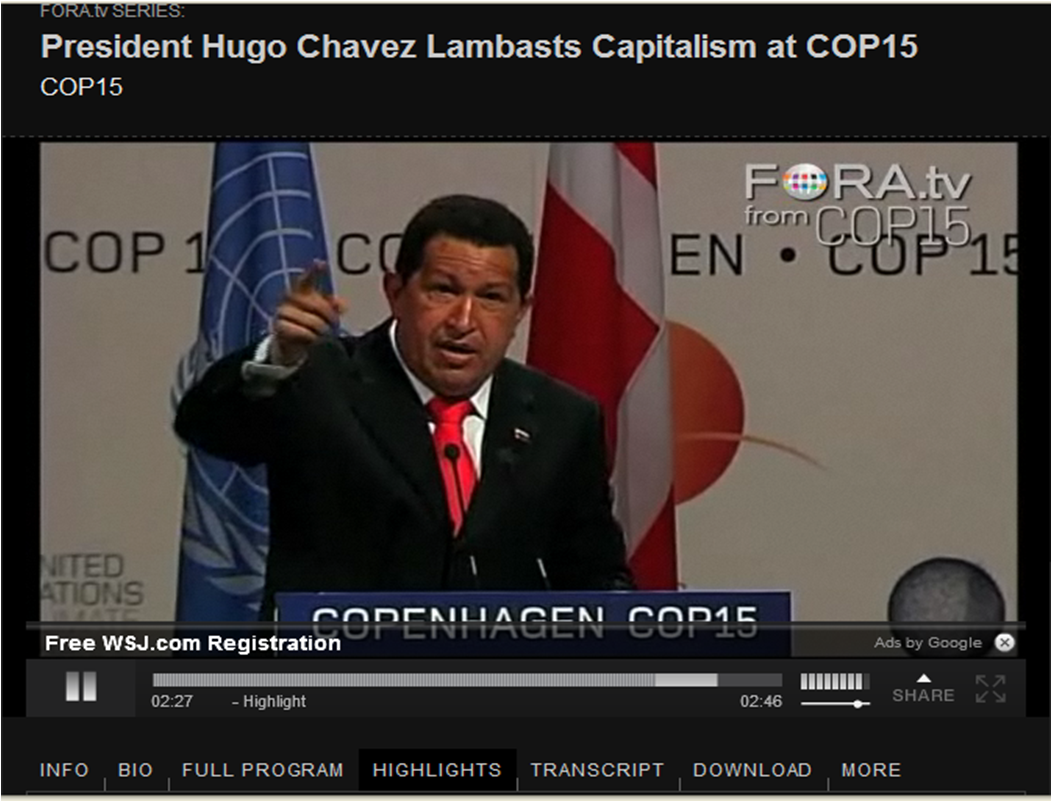
Hugo Chavez at Copenhagen Conference

17/03/2010

Chavez, calling it like he sees it

Venezuelan President Hugo Chavez links capitalism to the current state of global environmental degradation during an address on FORA.TV at the COP15 Climate Conference in Copenhagen.”A ghost is stalking the streets of Copenhagen…it’s capitalism, capitalism is that ghost,” says Chavez. He mentions in his address, a placard that demonstrators were holding up outside the conference building, which stated “Don’t change the climate, change the system”. He also stated, “If climate change were the banks, they would have saved it.”

Top 10 Green Universities

12/03/2010

Going Green U, Image: Trendhunter Mag

The Sierra Club has just released its new feature on green colleges, listing what they named the Top Ten Green Universities. It used to be that small, private colleges seemed to be the only ones that cared. Now the supersized universities are realizing that adopting green strategies is a smart move to reduce costs and attract students.

The ten schools that “get it” are (enrollment):
#1 Middlebury College (2350);
#2 University of Colorado-Boulder (29,000);
#3 University of Vermont at Burlington 10,750 students, Burlington, Vermont
#4 Warren Wilson College, 850 students, Swannanoa, North Carolina
#5 Evergreen State, 4400 students, Olympia, WA
Read the rest of this story

Ghost Towns, Above and Below Water

12/03/2010

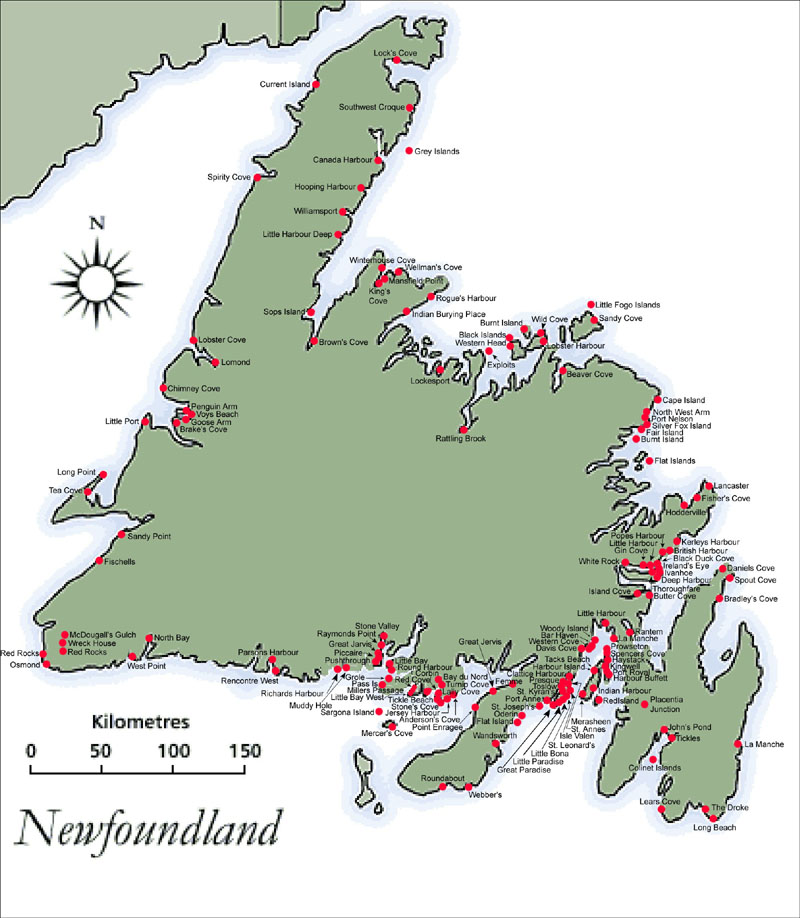
Newfoundlanders Abandon Villages, Cod Fisheries Gone

Child with Cod, circa 1895, from Greenpeace

After more than 400 years as the foundation of one of Earth’s great fisheries, cod are not coming back to Canada. The costs are more than environmental.

In the mid-20th century, cod supported more than 40,000 eastern Canadian fishermen. That’s when industrial catch techniques nearly tripled annual harvests. By the early 1970s, cod numbers plummeted.

Fishing stopped for a while. Cod came back. Fishing started again. Cod disappeared. In the early 1990s, the government halted fishing again, expecting the fish to return, just like before — but this time, they didn’t. They’ll likely vanish before mid-century.

Scientists can’t say for sure what’s going on under those cold gray waters, but they can speculate.

Newfoundland communities abandoned since 1960

There were likely too few cod to revive a population: individuals simply couldn’t find each other to reproduce. Some other species might have taken their spot in the web of life. The web itself has changed shape, and may no longer have room for them.

“You see this very rapid, drastic collapse of large predatory fishes that used to dominate, particularly cod,” said Boris Worm, a marine biologist at Dalhousie University in Nova Scotia. “You see a rapid collapse of those, and a shift of the ecosystem towards invertebrates and small pelagic fishes.”

Read the rest of this post

Airlifts from Machu Picchu Resume

28/01/2010

U.S. helicopters help Peru evacuate hundreds after rail line was cut
From AP
Image: Mountain Spirit Institute

Helicopter at Aquas Caliente, MP. MSI file photo

Helicopters ferried almost 600 more tourists from the Machu Picchu area after rains slackened Wednesday, leaving up to 1,600 travelers still stranded by mudslides blocking the only land route from the famed Inca citadel.

Authorities said airlifts would continue throughout the week because more tourists had shown up at the evacuation site on foot after completing treks along the Inca trail to Machu Picchu, the 15th century Incan fortress that is 8,000 feet above sea level.

Rain-fueled mudslides on Sunday cut the train line that is the only transport link to the remote region atop an Andean mountain ridge. Adding to the worries, tourists flown out Wednesday reported that a rain-swollen river had eroded the site where rescue helicopters are landing.

Stranded tourists charged they are being victimized by price-gouging because food, water and accommodations are scarce in the now isolated Machu Picchu Pueblo, a village of 4,000 residents.

Room for Improvement at Machu Picchu

28/01/2010

Tourists ‘bribe their way out of flooded Machu Picchu’
By Hannah Strange
From: MSNBC

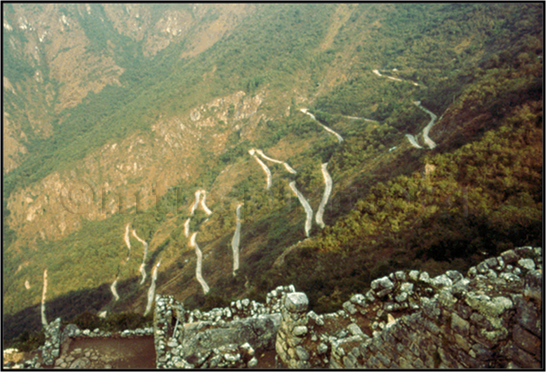
Bus Road to MP, Image: MSI File Photo

British backpackers were among 1,500 tourists trying to escape from Peru’s Inca citadel of Machu Picchu yesterday, which has been cut off by floods and landslides.

As food supplies dwindled and hostels ran out of space many tourists were sleeping in the railway station and the town’s main square while they waited to be rescued by helicopter.

“The situation is about to erupt,” Rudy Chalco, a tour guide with a group of elderly Europeans, told the Peruvian daily newspaper El Comercio. “We don’t have any more food, disorder is starting to reign, the soldiers and police don’t know what to do or how to organise the help that has arrived, people are getting desperate and no one is taking charge.”

Some tourists were paying up to $500 (£300) for a seat on one of the helicopters, he said.

Fernando Celis, one of 300 Chileans stranded in Machu Picchu, said that people were bribing rescuers. “A helicopter arrived yesterday to take out the elderly and the unwell and some tourists who had more money. There are almost no North Americans left, only the backpackers. People on tours who were waving their money about, they were all evacuated,” he said.

He added that local vendors had doubled their prices. Read the rest of this story