Archive for the ‘Environment’ Category

The Salatin Family’s Ripple Effect

30/11/2009

The Ripple Effect of One Couple’s Decision
By Randall Richards

Salatin Family Farm

Because William and Lucille Salatin decided to moved their young family to Virginia’s Shenandoah Valley, and purchase a worn-out  farm, they had the choice of how they were going to manage the farm.

Because they decided to “use nature as a pattern” in their farming practices, they established a way of farming that worked for them, the land, and the animals they raised.

Because they began using innovative ideas on how to farm sustainably in the early sixties, they knew what worked for them. (more…)

MSI Covered in Magazine Article

28/11/2009

“Vacations with a Purpose” Cover Story writes about Mountain Spirit Institute’s work in NZ/Peru
“To Travel is to Explore, Dream, Discover

"Vacations with a Purpose" Cover Story

An article recently appeared in New Hampshire’s Kearsarge Magazine about Mountain Spirit Institute by writer Deb McKew. It  can be read on our Press Clips Webpage, as an excerpt from the magazine. Click on the first listing at the top of the page.  We encourage you to purchase this good read of a magazine if you’re in the New Hampshire, USA area.  Publisher Laura Jean Whitcomb does a great job with the magazine.

The article has a shot of MSI founder R. Richards doing a bit of ice climbing on a glacier in Mt. Aspiring National Park, and covered Mountain Spirit’s core mission of getting people connected “with themselves, each other and the environment”,  where we “combine experiential wilderness programs with spiritual development”.

Richards near Mt. Aspiring, NZ

As the article states, “some programs are solely wilderness based while others are workshop based.”

The article informs readers of the educational programs and unique nature of  MSI mission of getting people out of their native countries and into the mountains and cultures abroad. Being a non-profit organization, MSI strives to bring people of different backgrounds and countries together, to learn about  new ways to work together, and to re-examine one’s role in the natural environment, and in the world community.


Gold Mining in Peru

14/11/2009

By Randall Richards

Peru-Barrick Mine

Barrick's Pierina Gold Mine, Peru

I know relatively little about the issues that surround open pit gold mining, but my instincts tell me, aside from what I’ve read over the years, that it’s not a good thing, something similar to  nuclear testing – not the best for the planet,  nor the surrounding communities. There are certainly the headlines about gold mining, about toxic tailings and the havoc wreaked on local rivers and communities.  I debated whether to do more research before writing this post, and decided to simply point you in the direction of two websites, and tell an anecdote of my observations in Peru over the past 12 twelve years.
Peru-Barrack Mine Far

Barrick Mine viewed from our land near Huaraz

We’ve just purchased some land in Huaraz Peru, and within 10 or 15 miles, line of sight, to the north is the Canadian company Barrick Gold open pit gold mining operation. It just looks wrong. A whole mountain on the Corillera Negra side of the Cayllon de Huaylas (Huaylas Valley),  has been transformed into a mammoth sand pit/mound.  Aside from  the blight it produces, all natural grasslands and campasino’s (country farmers), pastures/farms have been eradicated.   I hear consistently that the Japanese are, or are about to run mines in the Cordillera Huayhuash, (scene of Joe Simpson’s Touching the Void).
Peru-Barrick Mine Settlement

Barrick's Planned Community - employee housing, Peru

On the east side of the valley, sits Barrick’s planned employee community. It’s relatively well hidden from the center of Huaraz, over a hill with newly planted pines.  But the whole thing seems abusive, elitist,  and completely out of place, in a country where there are stark differences between classes of the “haves and have nots”. This “suburb looking for a city”, looks like something outside of Toronto, or a development near Montreal, rather than a village in the Andes.

Then, there’s the taking of Peru’s natural resources, for the price paid from the highest bidder. If that’s what the goverments mean by “free trade”, they can have it. (As you may know, Peru and the U.S. have a “free trade” agreement as of a few years ago.) For more information on third world exploitation, be sure to read John PerkinsConfessions of an Economic Hit Man, or see his website, which also has a good bit on Free Trade with Columbia, which might shed some light on free trade agreements.  More on John Perkins in another entry.

As promised, here is the link for Barrick Mines and, one for Mining Watch Canada, with an interesting page entitled, Transnational Mining Tribunal: The Case of Barrick Gold Corporation in Latin America (Chile, Argentina and Peru). Barrick has multiple pages on “Environmental Responsibility, Biodiversity, Rock and waste management”, etc etc..  However, are we being hoodwinked?

For those up to speed on these issues, forgive my lack of knowledge on the subject, but take my observations at face value, especially if you’ve not been to Peru. If you agree with my take, please forward this blog to friends,  and get the word out about the abuse in Peru and other Latin American countries, its people and resources.

Coal Country the Movie

13/11/2009

COAL COUNTRY tells of the dramatic struggle around the use of coal, which provides over half the electricity in America. For more information about the movie and to watch a preview click here

logo

Watch the Preview

In Appalachia, miners and residents are locked in conflict: is mining
and processing coal essential to providing good jobs, or is it destroying the land, water and air? What does this mean for the rest of America and the world?

ANOTHER CIVIL WAR
Passions are running high in the mountains of Appalachia. Families and communities are deeply split over what is being done to their land. At issue is the latest form of strip mining called ‘mountaintop removal’, or MTR. Coal companies blast the tops off mountains, and run the debris into valleys and streams. Then they mine the exposed seams of coal and transport it to processing plants. Coal is mined more cheaply than ever, and America needs coal. But the air and water are filled with chemicals, and an ancient mountain range is disappearing forever.

For more information about the movie, events,  and to watch a preview click here

International Day of Climate Action

07/11/2009

The 350 and 2030 Challenges
*By Harry Seidel, Owner
Alae Design

350org

Going Places: 350.org

Last Saturday, Oct. 24th was the International Day of Climate Action, the single most widespread day of political action about any issue, our planet has ever seen. To attract global attention to the “350 Challenge” over 4,000 events took place simultaneously in more than 175 nations. Rather than describe the multitude of events here I would encourage you to visit www.350.org and see for yourself how very big this event was. Most of the events were digitally recorded and collected electronically into a massive compilation. So, what’s the fuss all about? What is the 350 Challenge? And why should we care?

(more…)

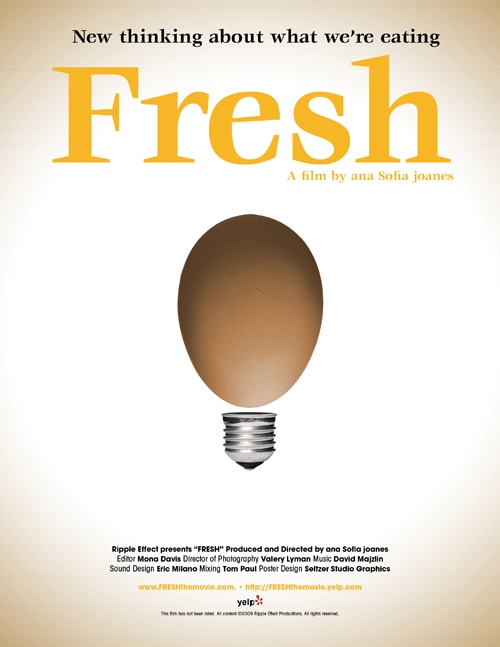
MSI Co-sponsors “Fresh-The Movie”

03/11/2009

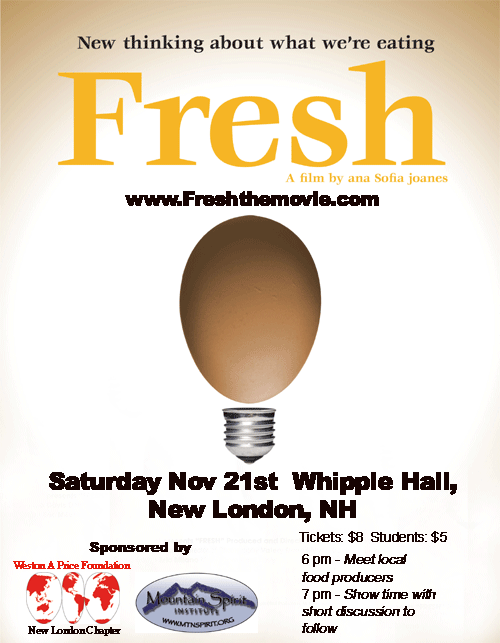
Film-Series-Fresh-Poster

"Fresh" Screening, in NH, USA

Mountain Spirit Institute is co-sponsoring the screening of the movie Fresh in New London, NH on Saturday November 21, at 7PM at the Whipple Auditorium on Main Street.

Says MSI director Randall Richards, “We saw the oportunity to get involved and help with the screening of this movie. We’re providing some desktop layout skills, and equipment for the showing.

Marketing and Development director Amanda Richards,  had heard about the movie Food.Inc, and having just arrived from New Zealand, had been concerned about what she was seeing in the U.S. food supply. When she heard that Linda Howes, CN, HHP, CBE was preparing to show the  movie Fresh, she decided to get involved. Howes is the local chapter representative of the Weston A Price Foundation and owner of Nourishing Wellness, in New London, NH. (more…)

Health Care or The Environment.

30/10/2009
Which Comes First?
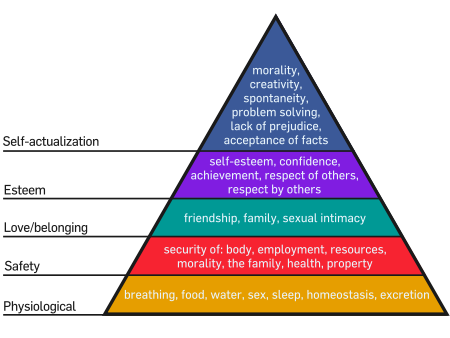
A look at Maslow’s Hierarchy of Needs
By: Craig Cimmons
450px-Maslow's_Hierarchy_of_Needs.svg

Maslow's Hierarchy of Needs

As an environmentalist, I paid close attention to the candidate’s environmental stances and solutions during the Presidential election of 2009. However, the more I listened, the more apparent something became. American citizens are not going to devote their full attention to the needs of the environment until their own needs are met. With America’s health care system in need of desperate repair, the average citizen is worrying about problems closer to home then the large scale, hard to understand, global environmental problems.

Families that are losing everything they own to fight a disease, (or live in fear of this happening) do not have any resources (time, energy and money) to devote to anything outside of these problems.  A family that is watching cancer slowly consume their loved one (and their life savings) should never be expected to fight enormous problems like global warming, peak oil and the steady decrease of drinking water.

(more…)

MSI Founder Purchases Land in Peru

28/10/2009

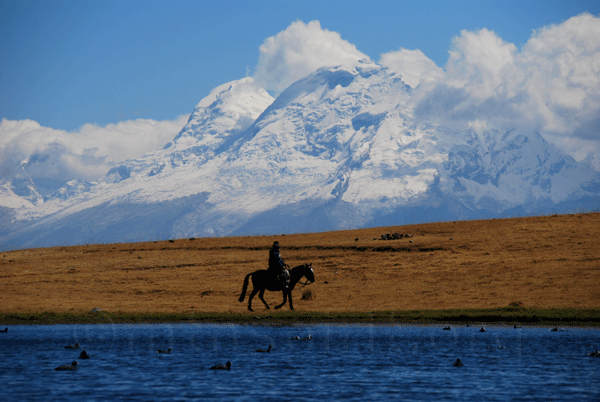
Randy and Amanda Richards have purchased a small parcel of land near Hauraz Peru, which if their plans come to fruition, could mean a basecamp for Mountain Spirit Institute. The couple would eventually like to build a small retreat center/basecamp on the spot which overlooks the Cordillera Blanca range in northern Peru, including the highest peak in Peru, Mt. Huascaran.

Huaraz'09Wilcacochasmlr

Possible MSI Basecamp, Peru

Richards first saw the site 12 years ago when we was taken up there by his godchild’s family. Richards was guiding Huasacaran at the time. He always had it in the back of his mind that the site would be ideal for either a small cabin or retreat where participants could come and take Mountain Spirit programs.

Peru'09-HuarazLandHrse

Huascaran from MSI's Basecamp(?)

The site had only been accessible by foot – a 1.5 hour hike from the valley floor below, but two years ago a dirt road was put in to access the area, and Richards thought it was better to act now than wait any longer.

Although Richards purchased the land, depending upon funding from Mountain Spirit, the organization could become involved if the board thinks it would like to expand operations in Peru by offering a basecamp. Regardless, The Richards will enact conservation  and stewardship practices, maintaining the protecting the area from further development by possibly purchasing additional acreage or seeking others willing to put the land into protection. The location is particularly special and deserves protection from hotel interests that have been interested in the area. The area us currently used for farming, and the couple will encourage their “Peruvian family”, the Sanchez family to add the parcel to their nearby fields.

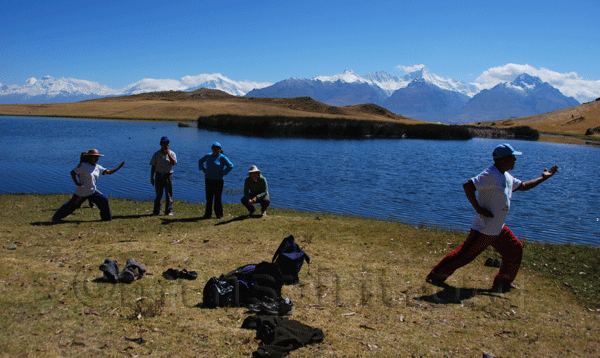
Peru'09-Huaraz-TaiChiLand

Tai Chi on Land near Hauraz, Peru

Says Richards, originally of Sunapee, NH, “I never thought I’d be purchasing land in Peru, but the time and situation seemed right.” He added, “It has a special spirit of the place,” which would be a appropriate for an organization called “Mountain Spirit”.

“Fresh- The Movie”, It’s Important!

14/10/2009

Sustainable food and a healthy future for all our children
By Amanda Richards

Fresh, The Movie

Fresh, The Movie

A friend of mine had just mentioned she’d seen a movie called Food Inc. , a film that documents where our food in the U.S. comes from. It shows how our food supply is seriously compromised. After seeing the film however, she was wondered what she could do for her family and community – what action steps could she take? She finds that she is still shopping in supermarkets and has felt a bit ‘powerless’ to change her buying habits. Answers to her questions can be found in a new film by Ana Sofia Joanes called ‘Fresh – New thinking about the way we are eating.’ It is an optimistic movie offering a ‘gateway to action.’ Exactly what my friend is looking for. ‘FRESH is a grassroots efforts for a grassroots movement’. Instead of being distributed in cinemas, it is being offered to communities as a way for people to get together and screen the movie for themselves. In this way, it can be used as a tool for action.
I have just signed on to help Linda Howes,CN,HHP,CBE, owner of Nourishing Wellness, organize a showing in the Kearsarge Region of New Hampshire. It’s important. Have a look at the website and get involved. The ‘FRESH movement is a constantly growing community striving to alter the way our food system works.’

“We all just watched FRESH…and we were mesmerized and empowered. Every American needs to see this. You will capture hearts with this. I can’t wait to sit in an audience watching this. It is absolutely masterful. “
Joel Salatin

“We all know about the problems with the American food system, but what about the solutions? FRESH is a bracing, even exhilarating look at the whole range of efforts underway to renovate the way we grow food and feed ourselves.”
Michael Pollan

New DVD on Peak Oil

25/09/2009

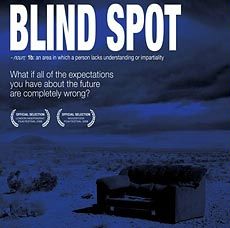
Blind Spot: DVD by Media Education Foundation

DVD on Peak Oil

DVD on Peak Oil

We’ve been impressed with information and resources available from The Media Education Foundation, and this new DVD seems just as important and well done as their other offerings.

In this haunting portrait of America’s oil-fueled excesses, director Adolfo Doring explores the inextricable link between the energy we use, the way we run our economy, and the multiplying threats that now confront the environmental health and stability of our planet.

Taking as its starting point the inevitable energy depletion scenario known as “Peak Oil,” the film surveys a fascinating range of the latest intellectual, political, and scientific thought to make the case that by whatever measure of greed, wishful thinking, neglect, or ignorance, we now find ourselves at a disturbing crossroads: we can continue to burn fossil fuels and witness the collapse of our ecology, or we can choose not to and witness the collapse of our economy. Refusing to whitewash this reality, Blind Spot issues a call to action, urging us to face up to the perilous situation we now find ourselves in so that we might begin to envision a realistic, if inconvenient, way out.

Certain to inspire debate in classrooms across a range of disciplines, especially in economics, environmental studies, the natural sciences, and political science. More info and view the trailer.