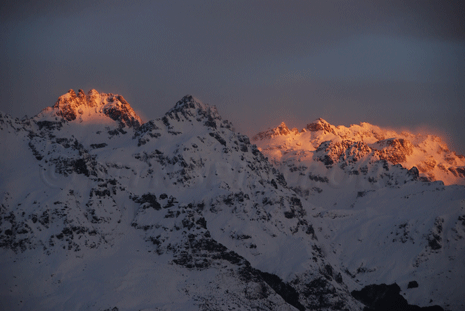
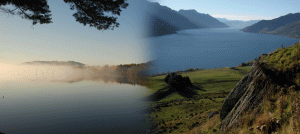
I shot most of these images within the last few days, the panorama was shot this afternoon.
Images ©Mountain Spirit Institute
Winter Scenes in Southern New Zealand
30/07/2011Super Full Moon
18/07/2011March 16, 2011: Mark your calendar. On March 19th, a full Moon of rare size and beauty will rise in the east at sunset. It’s a super “perigee moon”–the biggest in almost 20 years.
“The last full Moon so big and close to Earth occurred in March of 1993,” says Geoff Chester of the US Naval Observatory in Washington DC. “I’d say it’s worth a look.”
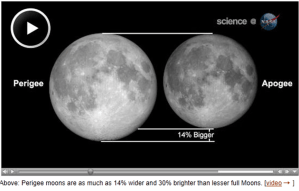
Full Moons vary in size because of the oval shape of the Moon’s orbit. It is an ellipse with one side (perigee) about 50,000 km closer to Earth than the other (apogee): diagram. Nearby perigee moons are about 14% bigger and 30% brighter than lesser moons that occur on the apogee side of the Moon’s orbit. Read the rest of this story…
A NZ Earthquake’s Lightshow
11/07/2011Fishermen See Flashes of Light as Quake Hits Port
Lyttleton, New Zealand,
From: The Press*
By Paul Gorman
Light show: While fishing on Lyttelton Harbour on June 13 Gary Vallance saw blue lights flashing in the water at the precise time the magnitude 6.3 earthquake struck.
Flashes of blue light in the deep waters of Lyttelton Harbour mystified the four occupants of a fishing boat on June 13.
Heading back to port after a largely unsuccessful trip in search of groper, Christchurch engineer Gary Vallance and three friends experienced the 2.20pm magnitude-6.3 earthquake from a different perspective in their seven-metre boat.
They did not feel the magnitude-5.6 quake at 1pm, when they were in deeper water near Pigeon Bay.
However, Vallance put their lack of fishing success down to the shake and unexpected swells.
“We were about halfway up the harbour between the heads and Lyttelton when the second one hit,” he said.
“I was looking out the front of the boat and I saw a couple of blue
flashes down in the water
was definitely a flash, a dim blue flash.
“Almost immediately, the boat shuddered and the guy driving it wondered what the bell it was. He thought he’d run into something.
“Then we saw all rocks coming down the hillsides.
“The blue flashes were about 100 metres to the side of the vessel and shot from left to right in a straight line across us. Then the next minute it was like the boat hit something.”
He wondered if the flickering blue light was the result of friction from rocks on the harbour bottom grinding together as the quake struck.
Canterbury University geological sciences professor Jarg Pettinga said what they saw was possibly the effects of the energy of the P-wave (primary wave) moving through the water.
“The shockwave may have released some bubbles of gas from sediment or it may be something to do with the way the light was interfering wiht the water as the seismic wave was coming through.”
* The Press is an excellent newspaper, and their coverage of the earthquake through it all, has been fantastic. If you’d like to keep up on the latest earthquake news please visit their website, or if you’re on the South Island, purchase a copy.
Loving Linquistics
07/07/2011By R. Richards
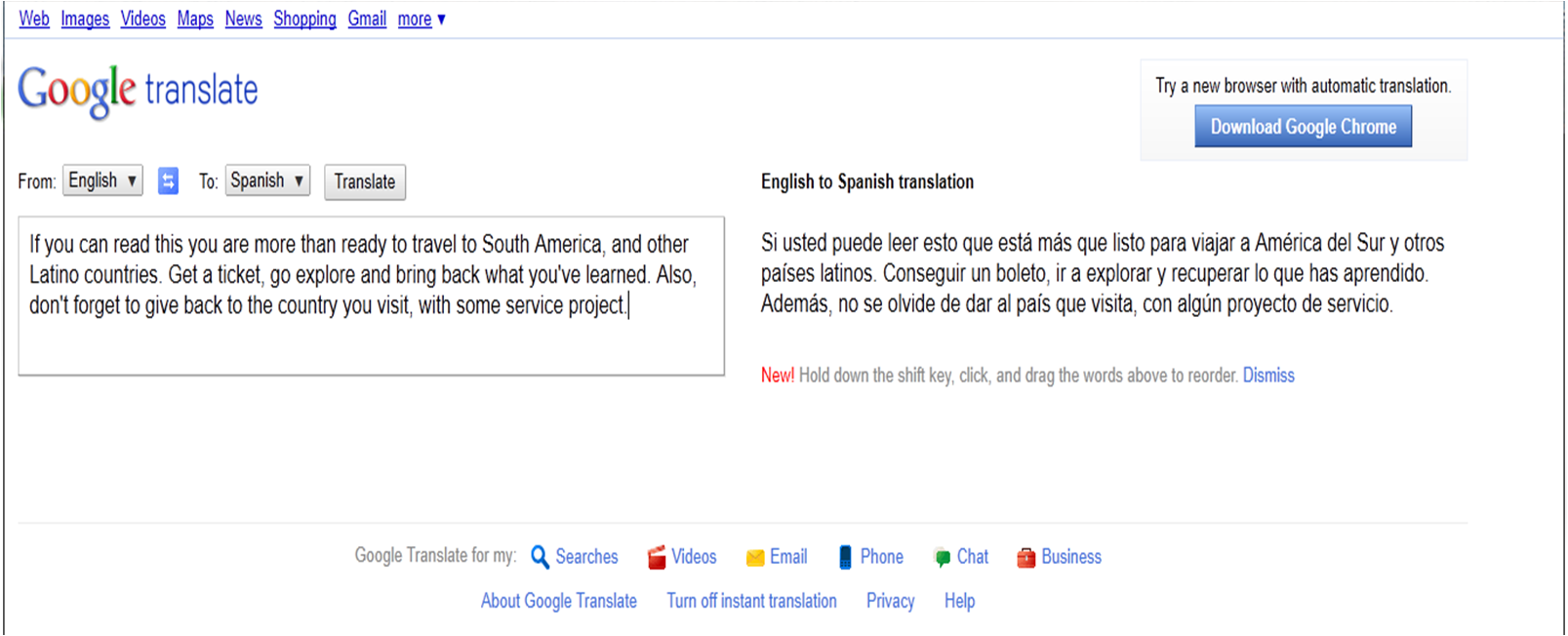
You probably know about Google Translator but I thought I’d briefly write about it here, just in case you’ve never used it. If you haven’t, check it out.
It’s a great tool for reaching out across cultures and languages to those you may have met while doing your overseas expedition, and kept their address but never wrote to them because of the language barrier. It also features on-the-fly translation for those using gmail, and for other email clients, quick cut and past from the website into emails works effortlessly.
I must admit, my Spanish grammar isn’t the best, (I’ve been told I speak “Tarzan Spanish”). One of these days, I’ll get my conjugations down, but for now, in order to write a somewhat grammatically correct email to my friends in Peru, I admit it, I often use Google Translator.
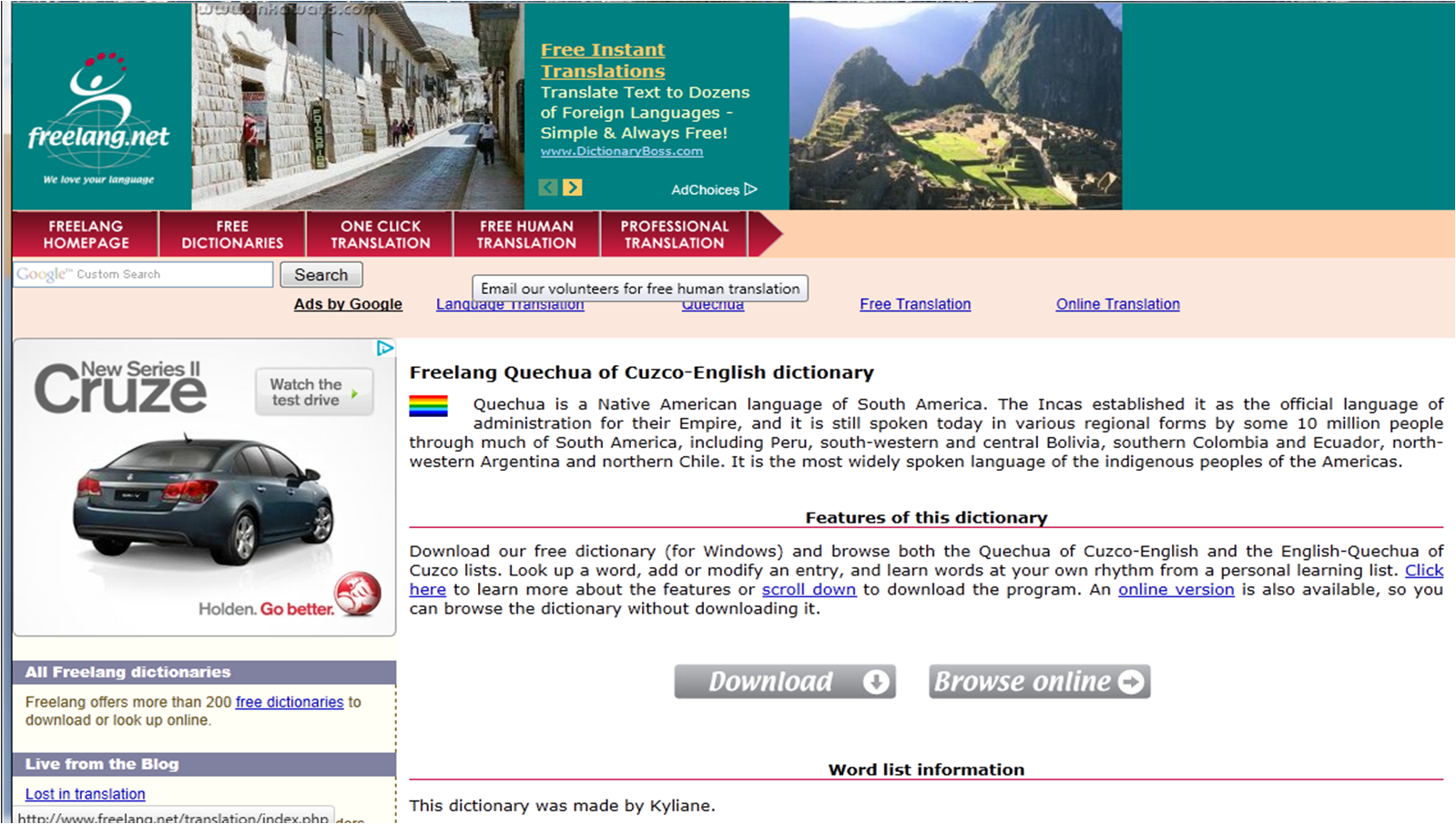
Another cool site I stumbled upon yesterday is Freelang.net where I found a free downloadable Quechua English Dictionary. How cool is that?
I’m sure this particular dictionary hasn’t been around that long, so I was excited to see and download it. It works quite well. I haven’t checked out the other languages but you can, at here.
So get out there and start writing to someone, anyone and bridge the language gap. Enjoy.
“Voluntourism”
04/07/2011Voluntourism Emerging as Fast Growing Niche for Outdoor Specialty Retailers
From: The Global Ripple
Clothes that can be worn a long time, not show dirt or stink, and be washed by hand: Rain gear. Sturdy, waterproof walking shoes suitable for mud. Duct tape. Bug repellent. Compact water filter. Headlamp. Pocket knife. Money pouch. Sun block. One-liter, reusable water bottle. Day pack…
These items could easily have been excerpted from a gear list provided by an outfitter, the National Outdoor Leadership School or a chapter of the Youth Conservation Corps, but they were not. They were found instead on gear lists published by — or on behalf of — the American Hiking Society (AHS), the Conservation Volunteers International Program (CVIP) and Wilderness Volunteers, which are among the growing number of non-profit conservation groups partnering with tour operators to fuel rapidly growing demand for voluntourism. Read the rest of this story..
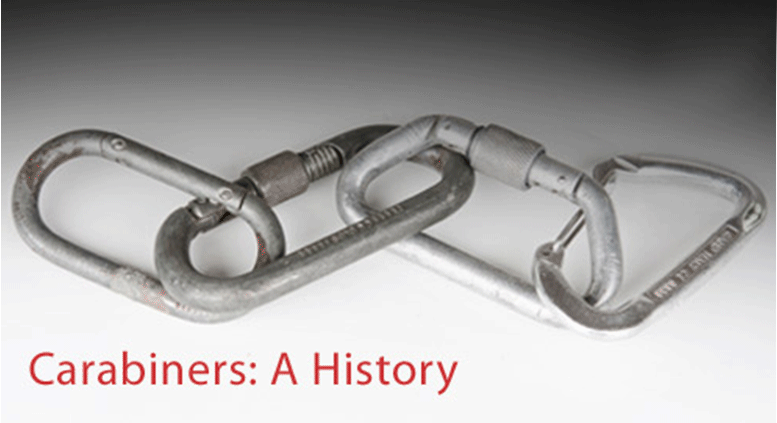
A History of the Carabiner
02/07/2011From: Alpinist
Working his bare-feet up the face, the climber takes a knotted sling from his shoulder and places it around a stone horn. He takes a second sling, deftly unknots it and feeds the cord carefully around his hempen lead rope and the slung rock. With the rope now connected to his natural protection he ties the second cord back into a sling and climbs on….
Before Otto “Rambo” Herzog first conceived using carabiners, climbers had only two options for connecting their ropes to protection: tie the rope and protection together, or untie and run the rope directly through the gear. Neither option was quick or especially safe.
In Alpinist 35 we examine the history of the carabiner; why Otto “Rambo” Herzog first thought of using the device, how it was modified over the last century and how the carabiner got its name.
Rambo
Otto “Rambo” Herzog earned his nickname seventy years before the Sylvester Stallone movies. “Ramponieren” in German means “to batter” or “to bash,” and Herzog got his nickname, “Rambo,” not for flailing up climbs but for the hours he spent ramponieren specific problems. Today, Herzog is remembered for introducing the carabiner and breaking Hans Dülfer’s grading system. In 1913, he climbed the south wall of the Schüsselkarspitze (2537m) with Hans Fiechtl, a route that reached the limit of grade V (5.8/9), the highest grade in Dülfer’s I-V scale. In 1921, Herzog, together with Gustav Haber, climbed the “Ha-He Verschneidung” on the Dreizinkenspitze (2306m). Today rated 5.10, Herzog and Haber’s climb was so difficult that grade VI had to be added onto the I-V grading scale.
Today all climbing carabiners are made from solid metal. But in the 1970s SALEWA introduced a hollow design, that weighed only forty grams. This model was not only revolutionary because of its form but also because of the safety testing done on every unit. For the first time, each carabiner was individually tested before hitting the market. The slight indent on the curve of the pictured ‘biner, is the mark left by the 1000kg test. Many climbers will look at the empty interior and imagine that hollow carabiners were unsafe. However, in a recent interview with Alpinist, SALEWA’s former General Manager Hermann Huber said the hollow designs were abandoned because of breakthroughs in cold forging that allowed for lighter and stronger designs from solid aluminum. Read the rest of this story…
Corn & The Advantage of Backwardness
02/07/2011Machu Picchu, Maize and the Advantage of Backwardness
June 30, 2011 by Andean Air Mail & PERUVIAN TIMES
By Nicholas Asheshov
Special for the Machu Picchu Centennial –
Machu Picchu and the Inca Empire were the creation of an import from Central America, maize, and a dramatic climate shift that turned the Andean highlands from inhospitable wet-and-cold to pleasant, as it is today, dry-and-warm.
For more than half a millenium before this shift the high Andes had been miserable. With the new dry-and-warm, starting around 1000 AD, a backwoods tribe, the Incas, put together the new climate and technology breakthroughs and by 1500AD had produced the world’s most go-ahead empire, heavily populated and larger, richer, healthier and better organized than Ming Dynasty China and the Ottoman Empire, its nearest contemporaries. Read the rest of this story…
Taking Time for the View
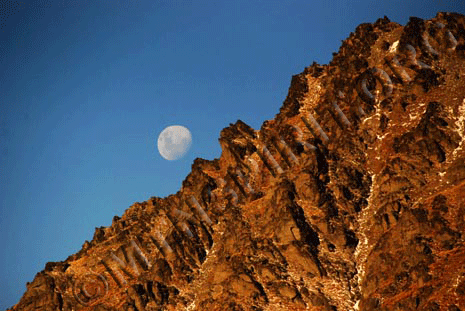
15/06/2011I had an hour available on my way home after running some errands in nearby Queenstown, and thought I’d take a quick drive up the access road to the Remarkables Ski Area. Although there’s no snow on the slopes, I thought I’d have a pretty good chance of getting some evening shots. I had missed out on the night before with an incredible red sky on the waters
of Lake Wakatipu, a hue created from the Chile volcano, so thought see what I could find tonight. It doesn’t take much to make a good photo here. Just show up and point the camera, the land and light do the rest.
You might have a busy day, but take the time to get out, bring your camera or better yet, a sketch book or some water colours, or go for a climb, and take a break.
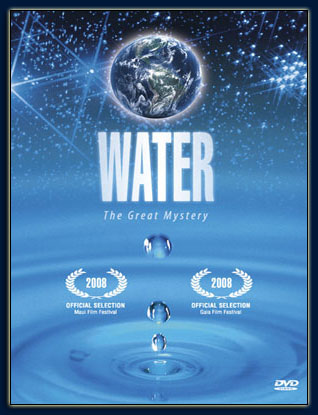
Water, The Great Mystery
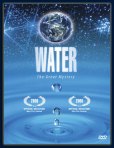
04/06/2011Austrian Researcher Alois Gruber states in the movie, Water – The Great Mystery, by Hopscotch Films, “At the level of thought, a person who thinks negative thoughts is polluting his own water of which his body is 75-90% composed, and giving it a negative charge.” The movie had my attention.
The film’s narrator continues, “As it records new information, water acquires new properties yet its chemical composition remains unchanged. The structure of the water is much more important than the chemical composition.

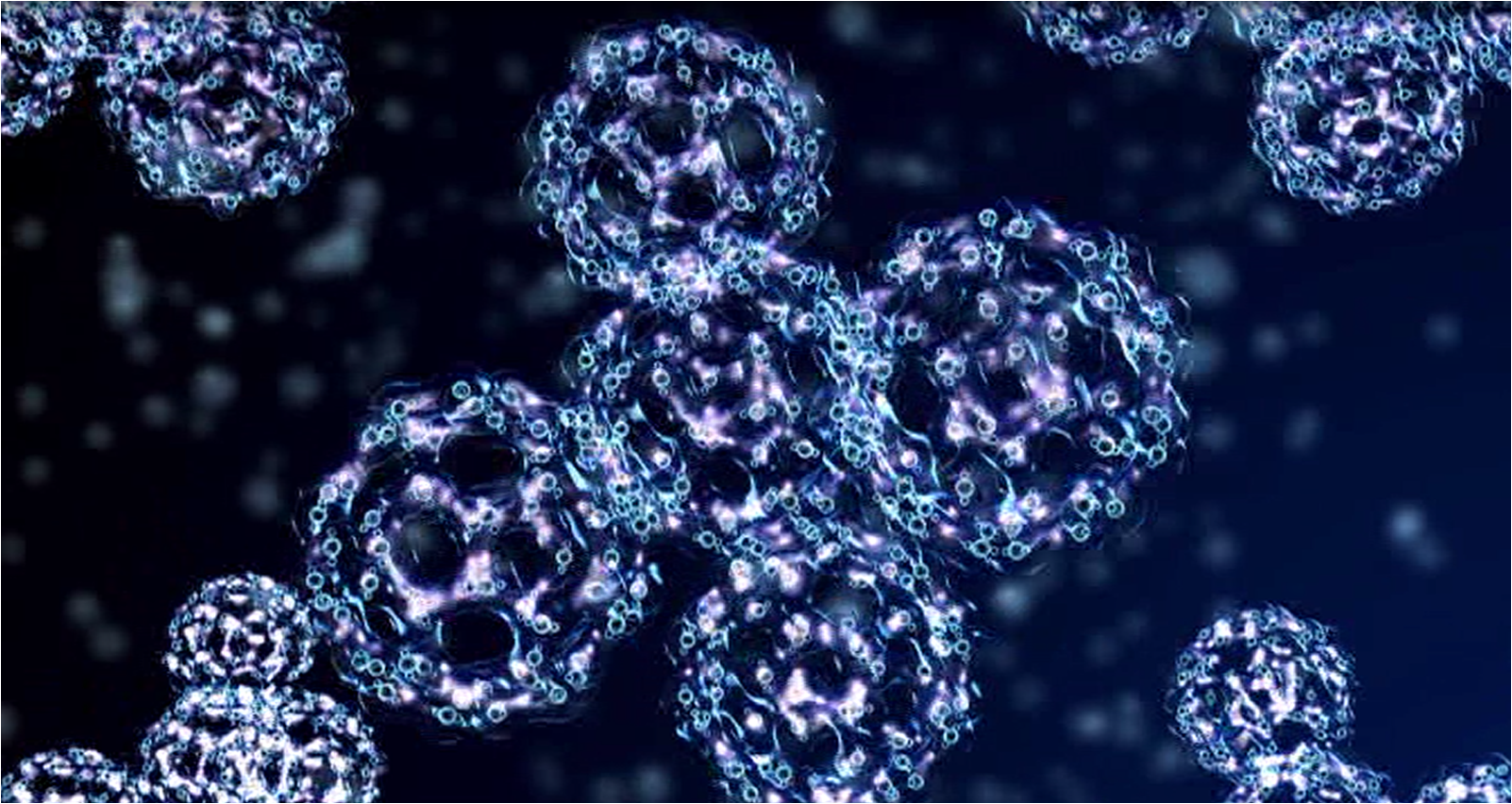
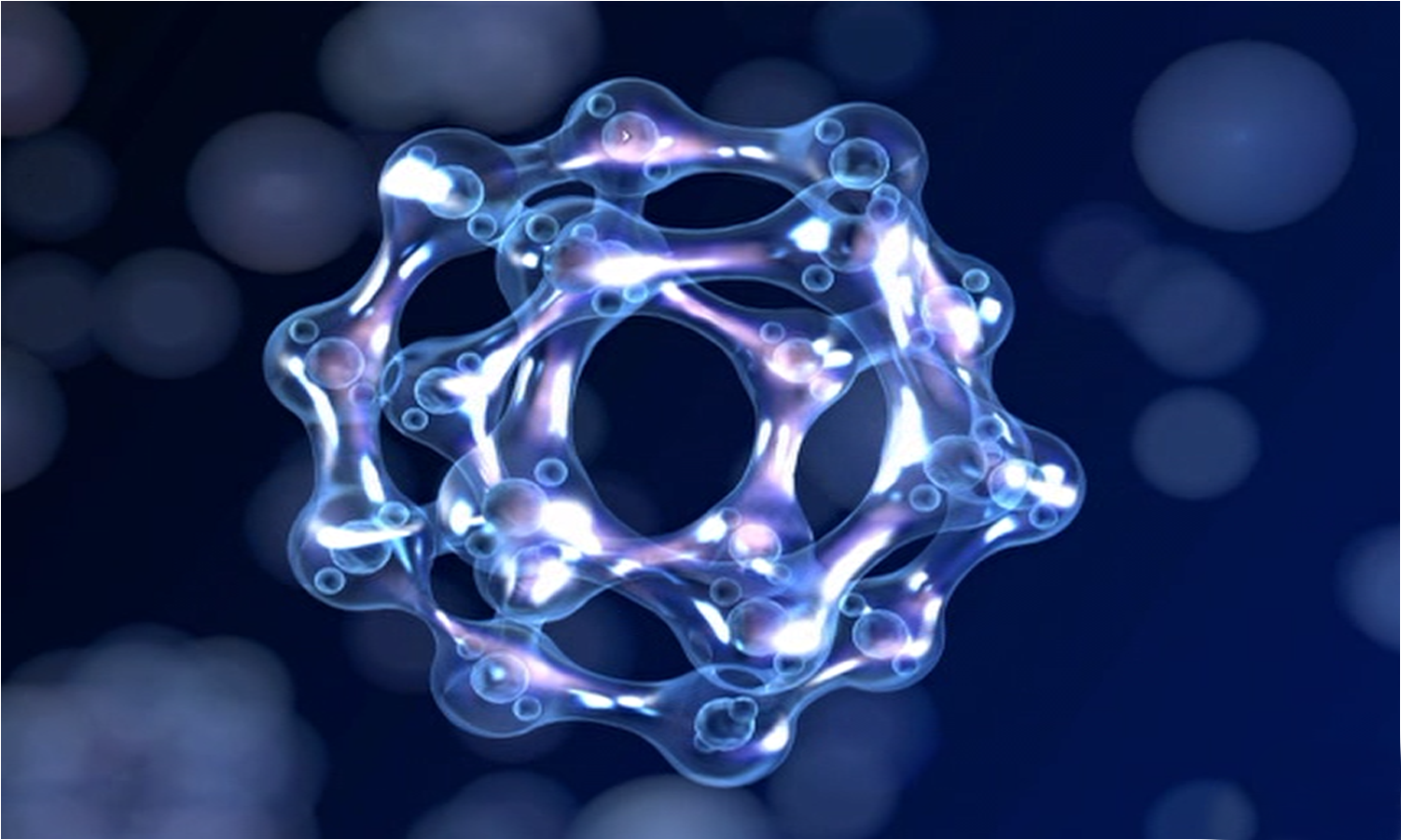
The structure of water means how its molecules are organized. Water molecules join together into groups which are called clusters. Scientists *theorize that these clusters work as memory cells of a
certain sort in which water records the whole history of its relationship with the world as if on magnetic tape.”

“Of course remains water, but its structure, like a nervous system reacts to any irritation. Modern instruments have made it possible to record the fact that within each of the water’s memory cells there are 440,000 information panels each of which is responsible for its own type of interaction with the environment. “
Marc Chaplin, Professor and Laboratory Chief of London University says, “If you consider a cluster as a specific group of molecules, then it can only survive a short amount of time, but if you consider it as a structure, whereby molecules can leave and other molecules come in, the cluster will survive in effect, for a very long time. Water can record and store information, like a computer memory.”
“Basically water has photographic memory and you can imprint it with very subtle energies, even from 10,000 km away” says Professor Rustum Roy, of Penn State University, and Member of the International Academy of Science. “Does that mean remote communication can happen between human beings who are structures essentially composed of water?” asks the film.
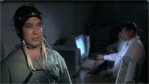
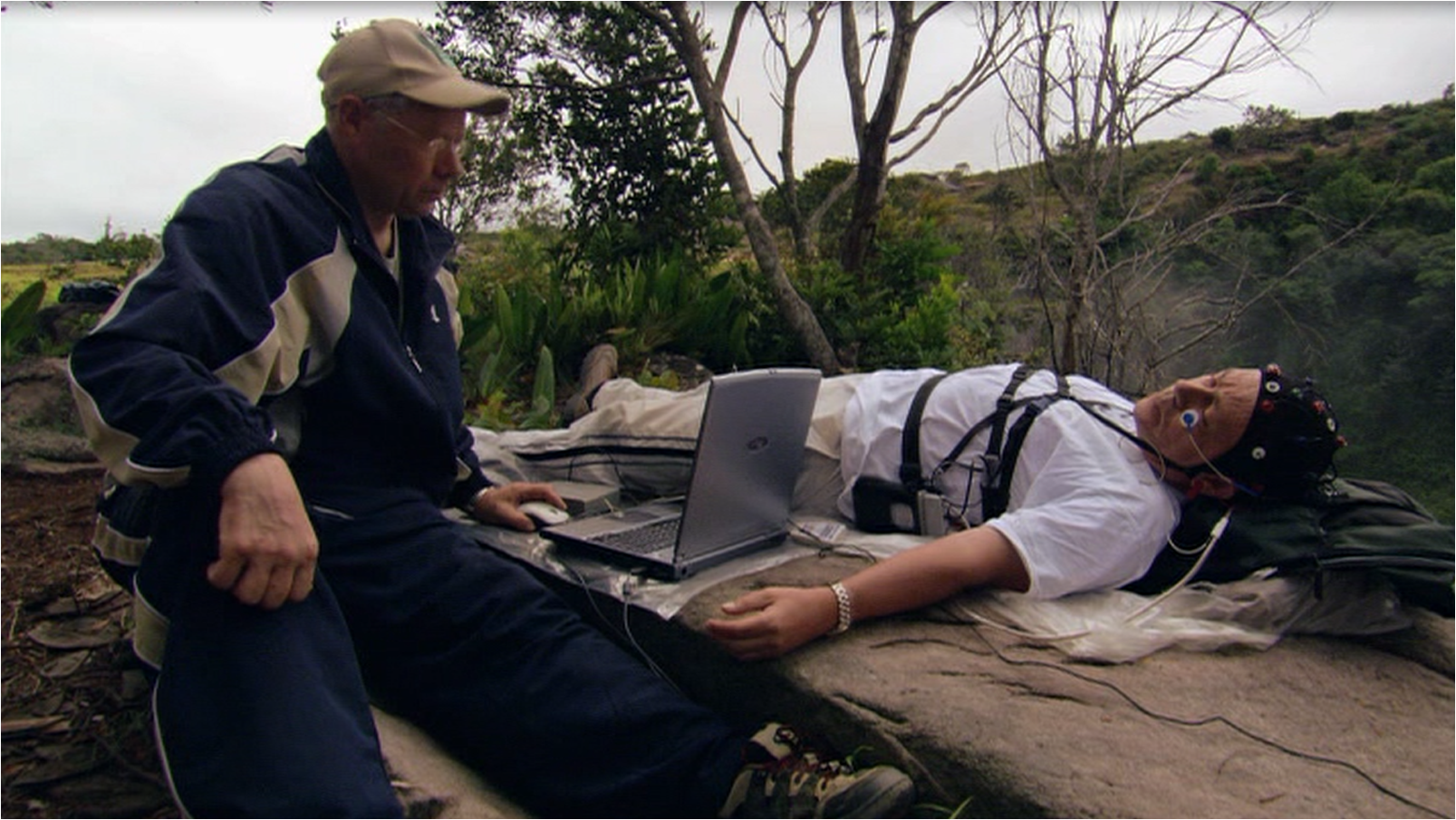
“In Februrary 2005 a professor and colleagues conducted an experiment to confirm or disconfirm the hypothesis that remote communication between people is possible. Two people were 10,000 miles apart, one in Moscow, the other in South America. The “virtual brain” of the experiment’s participants showed with EEG’s and EKG’s as well as other systems being monitored.
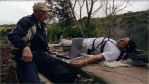
Suddenly the two people had tuned themselves to the same wave, synchronization of areas of their brain, breathing patterns, and pulses. The theory is, liquids in the body carry out an information transmission system.”
The book the Secret Life of Plants was one of the first early works exploring and describing the reactions and relationships of plants to external stimuli in their world. The author hooked up house plants in his office to a lie detector machine and to his surprise saw the plants react to his thoughts, regardless of whether he was in the same room or not, or the same city for that matter.
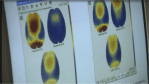
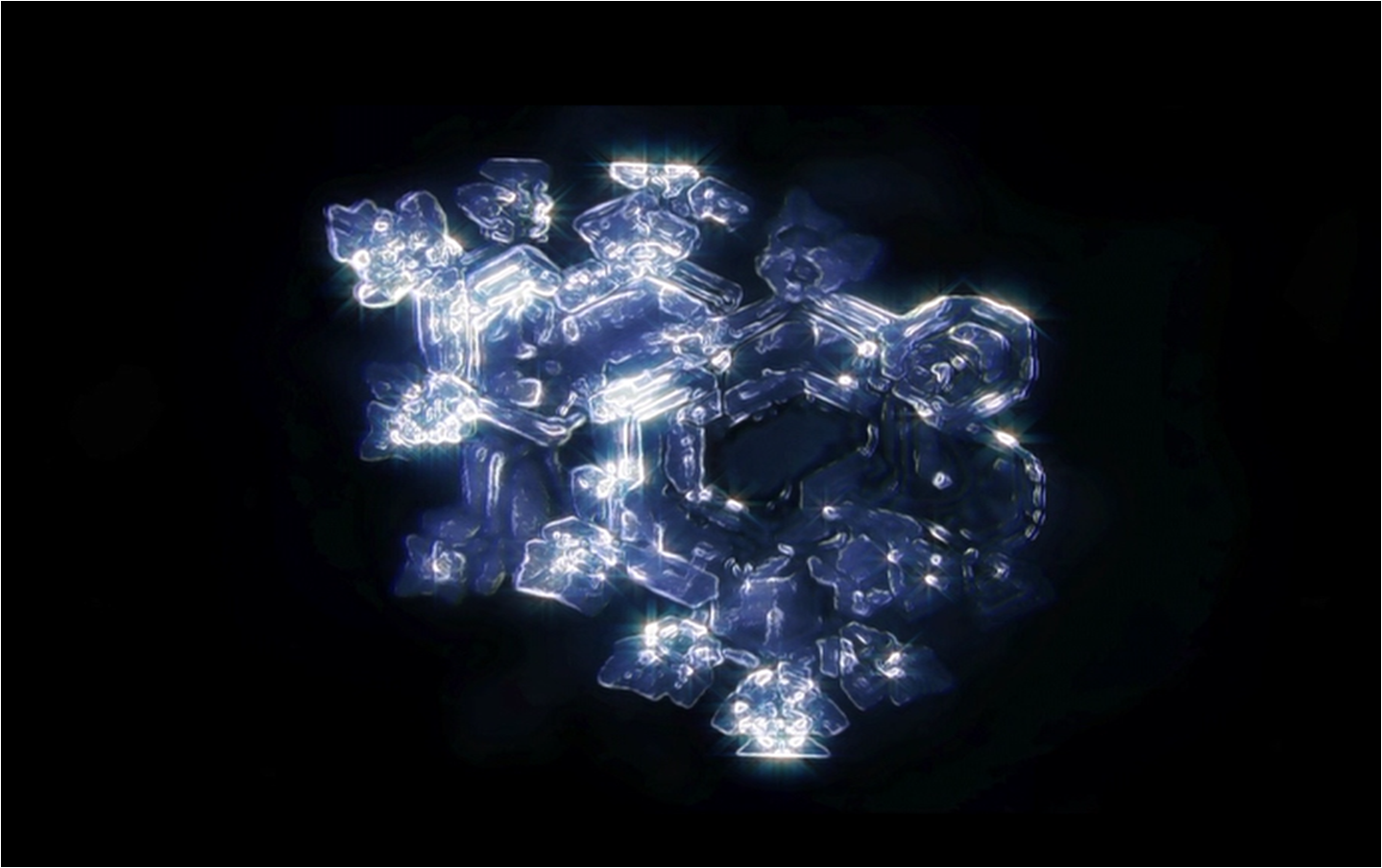
Dr. Masaru Emoto, author of “The Secret Life of Water” was also interviewed in the film. Emoto, in his experiments, exposed different water droplets to different thoughts, words and intentions.
These words and thoughts were directed at droplets before they were frozen, then images of the resulting water crystals were captured on film. The stunning results, such as “beautiful” or “ugly” depended upon whether the words or thoughts were positive or negative. Emoto claims this can be achieved through prayer, music or by attaching written words to a container of water. If you ‘re not familiar with his book or images, one of which is included here, check it out.
This led me to a logical conclusion from my shamanic studies in Peru, where the Inca and Quechua concept of Ayni, (reciprocity) runs throughout the mountain cultures in the Andes.
I learned to give words and form to what I had intuitively, (and most likely all of us have) had known all my life from growing up in woods of New Hampshire, and later, mountain guiding in the mountains of the world – that the mountains, streams and rivers, and other natural features give off a certain energy, and that we can interact with them as we would a person. We can exchange energy, ask for support from the mountain, or lake, and give back that support through emotional prayer, conservation protection and simple acknowledgement of the mountain’s energy and presence.
This might sound silly to the western logical mind, but the indigenous cultures who lived closer to the land knew and lived this life, and many still do, on a daily basis. The western mind is too busy, the channels are too clogged with data, to recognize the subtle signals that come from the old oak tree or the master mountain on the horizon.
The people of Cusco have twelve main “Apu’s “ or Mountain Spirits around their city, two of which are named Ausangate, Salkantay, Each main mountain or other geographic feature has its own characteristic such as male or female, strength, allowance, introspection etc.. and the spirit of Ayni pervades all interactions with these mountain spirits. As a side note, when I named our organization Mountain Spirit Institute in 1996, I had no awareness of the Andean “Apu’s”.
I took what I had learned, and melded it with my own intuition and experiences. When back in the U.S., I started to give more form to my relationships with the surrounding mountains and water features in my hometown of Sunapee, NH. I started to see Mt. Sunapee in a different light, and in fact, took a job as a ski patroller mostly because I wanted to interact with the mountain energy on a daily basis. I wanted to, protect it, be in on the mountain, feel its power, and ask for strength from it as well. Now that I think about it, maybe when Catherine Busheuff and I decided to move forward with those early meetings at the library, that later turned into the Friends of Mount Sunapee, maybe part of the seed that led to the mountain’s protection that exists today, came from those early interactions. Many individuals have since carried forward with their own passion to protect the mountain from abuse and over-development. I hope to think I may have had a small part in that.
I also started relating to Lake Sunapee in a different way as well. While I always felt the water was in my bones, this film, and Emoto’s book, gives me some credence that the water memory from where we come is actually part of us. So after seeing the movie, I spontanisouly meditated on the waters of Sunapee from here in New Zealand. I started feeling the healing power of the waters of Lake Sunapee, even though I’m down here on New Zealand’s south island, very long way away. I could feel the exchange of energy, of love and gratitude.
So what’s this all mean – from the shamanic studies in Peru, to experiments in Russia to meditation and communication with a body of water in New Hampshire from New Zealand, from one water body to another body of water? It means, at least to me, that we can interact more with trees, mountains, rivers, lakes and each other on a level far deeper than conventional society believes. Traditional societies know about this connection, and its knowledge may just mean we learn to survive as a species.
I started Mountain Spirit Institute because I feel I can contribute to helping people reconnect to the natural environment, each other and a deeper connection to themselves by setting the stage for powerful transformative experiences. This film is an affirmation that I, and our board of directors are on the right track. Visit our website for more information on our core values, and our mission, and do see the movie!
Chapters of the movie Water, The Great Mystery, include:
The Structure of Water
The importance of water,
Dead and Heavy Water
Natural and Artificial Water
The Effect of Water on the Body
Water as the Medium
The Power of Faith
A Water Crisis
Nature Disasters
Love and Gratitude
* While I didn’t look for footnotes to the research mentioned in the movie, nor check into the science, I decided to write this post to share my personal experience of the movie, and in life.
There was much more fascinating information in the movie than I was able to include here. Do see it to learn more about agriculture, hydro power, our public water supply and one of the world’s most pristine water supplies in Brazil. All images are screen shots from the movie and are intended and used for review purposes only.