Posts Tagged ‘Climate Change’

NZ Govt Signs up for New Emissions Controls Costing Thousands for Each Citizen

02/02/2025

By Peter Williams
It took everyone by surprise. I only got wind of this when I saw the Taxpayers’ Union media release (I’ve copied it to the end of this email) at lunchtime today. My heart sank.

I appreciate that reasonable minds can differ on the urgency of climate change – but I think you’ll agree that sacrificing New Zealand’s economy for no material effect in emissions is the ultimate own goal.

In short the Government has just locked in the Ardern/Shaw anti-farming legacy, and signed New Zealand up for a brand new (2035) commitment that will see thousands of dollars for every man, woman, and child sent overseas for climate credits.

First some background.

You will recall that back in 2021, former Climate Change Minister James Shaw and then Prime Minister Jacinda Ardern flew to Glasgow and signed New Zealand up to a climate change/emissions target of a net reduction in emissions of 50 percent (compared to 2005) by 2030.
At the time, no meaningful economic analysis, public consultation, or debate occurred. In fact, the Ministry of Business Innovation and Employment voiced their concerns saying we are concerned that insufficient analysis has been undertaken to understand the fiscal and social impacts of a 45 percent reduction target, let alone the 50 percent that Ardern and Shaw secretly agreed…

The politicians just took this decision because, in their gut, they just felt it was the right thing to do. 

And what caused particular angst, was that the targets NZ signed up to include agricultural emissions (i.e. methane, or cow farts). Short of culling cows (and tanking New Zealand’s largest export industry), those emissions are impossible to avoid.

No other developed country faces the same problem. Because of our small population and disproportionate reliance on agriculture, New Zealand’s emissions makeup is more akin to a developing country, which, under the UN Paris Agreement, doesn’t have to cut emissions in the same way as we have signed up to.

Even if we could cut agricultural emissions, it would be pointless in terms of improving global warming: New Zealand’s agricultural sector is the most emissions-efficient in the world. Any calories/meat/milk-powder New Zealand doesn’t produce will be done elsewhere, and likely result in an overall increase in emissions.

These were the points made by the ‘groundswell’ farming protests, Federated Farmers, and even the National Party when they were in opposition!

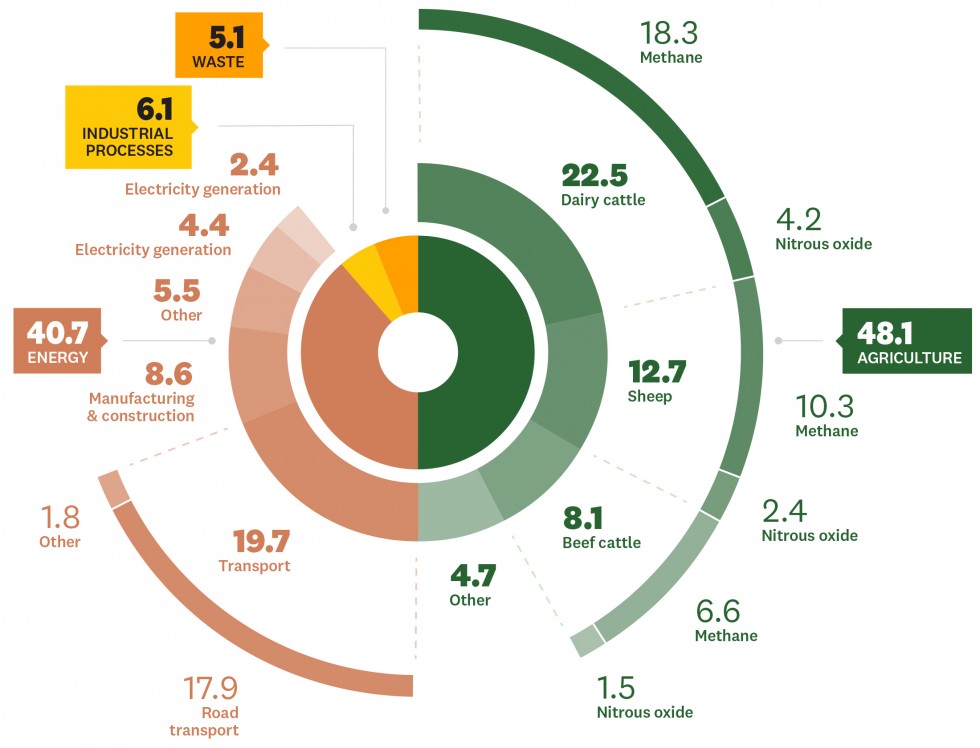
To put the 50 percent net reduction target into perspective, half of New Zealand’s emissions relate to agriculture!

So that leaves non-agricultural emissions.

Thanks to Covid, in 2020 New Zealand shut down most of the economy to lockdown for months. Despite the Covid shutdown, official data shows that emissions declined by only three percent that year!

So the idea New Zealand can or will get to a 50 percent reduction by 2030 is absolutely fanciful. To hit the 2030 target emissions would have to fall by five percent per year!

How much is the 2030 target going to cost households?

There are lots of variables that go into forecasting where New Zealand’s emissions are going to be in five year’s time (e.g. the strength of the economy, how many trees are planted, whether we get wet winters and hydro lakes get rain etc).

But what Ardern/Shaw signed us up for means that missing the target (and there is absolutely no doubt we will miss it) determines how much New Zealand is going to have to cough up and pay for international emission units.

Last year Treasury worked out what New Zealand is on the hook for. Are you sitting down?
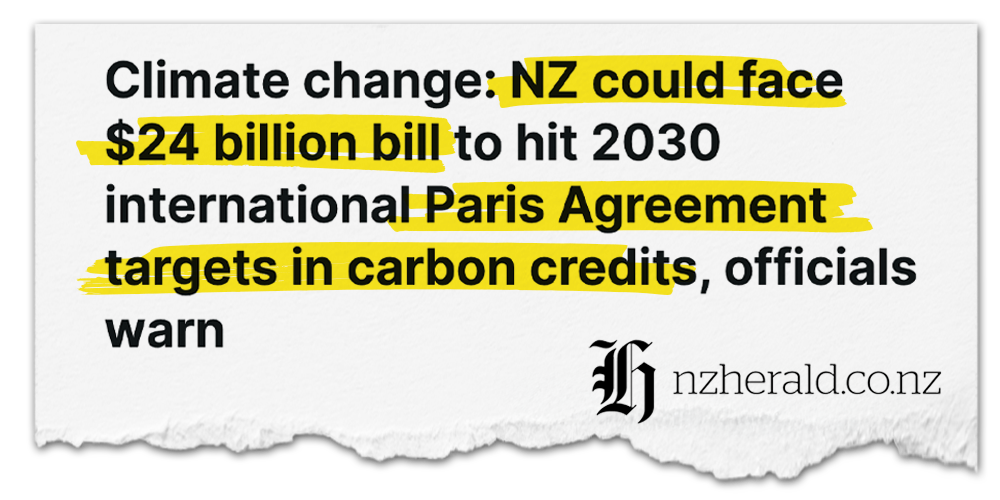
Up to $24 billion is the latest official estimate for the 2030 deadline.

To put that into perspective, $24 billion is more than the current cost of NZ Super. $12,000 per household!

And that’s not even counting the cost of lost economic growth, higher energy costs, and lost exports.

I know these numbers are unbelievable, and it’s been something the Taxpayers’ Union has been struggling to put into perspective and to communicate how on Earth to raise the alarm about the seriousness of what New Zealand faces. It’s a dozen Dunedin Hospitals. Or 34 times larger than the total new spending allowance Nicola Willis has set for this year’s Government budget.

Because the payment isn’t due until 2030, it’s just outside the Treasury’s “forecast horizon” so doesn’t yet appear on any of the Government’s fiscals. 

I don’t think it’s an exaggeration to say that it’s Ardern and Shaw’s ticking time fiscal time bomb.

Late last night, Climate Change Minister Simon Watts announced that he is committing New Zealand to even harder targets for 2035!

Simon Watts is set to sign NZ up for a second eye-watering bill for 2035.
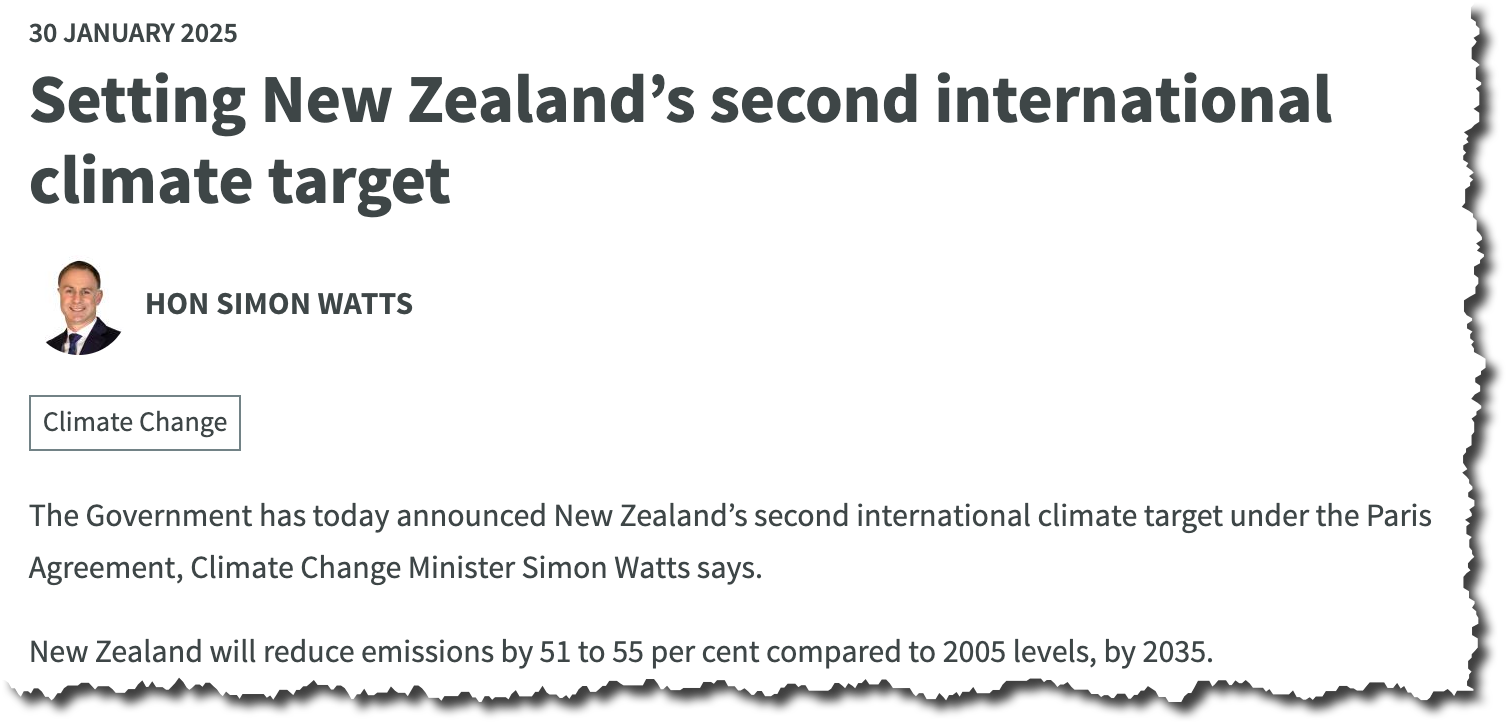
Beehive announcement

Once signed-up, it means New Zealand will have to pay a second time for a target that Christopher Luxon / the National Party have previously said is totally achievable!

It’s bad enough that New Zealand is hopelessly off track when it comes to meeting the existing 2030 target, and the $24 billion bill left by Ardern and Shaw, but to do it all over again is nothing short of economic sabotage.

Why haven’t the media covered this?

The media are in dire straits. Newsrooms are a fraction of the size they used to be, and those who are left are probably so young they either don’t understand the economics or are so committed to extreme views of ‘climate change mitigation at any cost’ that they just don’t care.

And, I’m sorry to be so blunt, but the only reason Simon Watts’ office would wait until 8:30pm on a Thursday night is so that the morning radio shows are already planned and there won’t be ‘breaking news’ style coverage.

It speaks volumes that Watts waited until after Parliament rose for the week, and with Parliament in recess next week, by the time political journos get back to work, the news will have moved on.

As far as I can see, with the exception of the Taxpayers’ Union, Federated Farmers, and other watchdog and industry groups, this announcement has been totally missed!

If there is any chance for the economy to get back on track, we must ensure Christopher Luxon, Winston Peters, and David Seymour, overrule Simon Watts and set a realistic target. 

Will you join me in emailing the Coalition’s Party Leaders?

While the USA has pulled out, and other countries hedge their bets, why is Luxon’s Government doubling down? 

Last week, the US pulled out of the Paris Agreement, and with the UK’s ‘net zero’ intentions in question (their Labour Government is ‘going for growth’ too!),  it makes no sense for the New Zealand government to sign up for a second round of ‘ambitious’, sorry, ‘impossible’ targets if they are serious about growing the economy.

Simon Watts has got this one wrong. Introducing more ambitious targets to smash the economy harpoons Christopher Luxon’s attempts to ‘Go for Growth’. Take 30 seconds to tell the Government that.

But something needs to be done about climate change, right?

New Zealand is already one of the most emissions-efficient countries in the world. More than 80 percent of our electricity comes from renewable sources. Our farmers are the most emissions-efficient at what they do. We already have an emissions trading scheme that covers more greenhouse gas emissions than any other country in the world. Of course, we need to keep up the momentum, but it’s not right to say we’re not already ‘doing our bit’.

Paying the rest of the world billions of dollars serves to make New Zealand poor – it doesn’t serve to solve global warming when the US, China, and Russia are not part of the same agreement/commitment.

Christopher Luxon gets this – well he did when he was Opposition Leader anyway.

The $24 billion dollar cheque could buy 12 Dunedin Hospitals. It could build 16 Transmission Gully Motorways. It could build 40,000 new school classrooms. It could even be used to fund more in-country climate initiatives!

Simon Watts just turned the $24 billion liability into a potential $48 billion liability. It’s economic sabotage on a grand scale. We need to stop him.

In a country cancelling infrastructure, health, and education investment due to the fiscal crisis can we really afford to burn billions on an unobtainable climate target?

Make no mistake, I want Christopher Luxon and his Government to succeed and deliver for New Zealand. I know the Taxpayers’ Union are committed to sensible climate change mitigation policy. But if last night’s decision stands, Mr Luxon (and the country) is destined to fail. We can’t let that happen.
Email the Prime Minsiter and Party Leaders

This is the media release the Taxpayers’ Union sent out reacting to Watts’ late night announcement:

MEDIA RELEASE
SIMON WATTS JUST HARPOONED THE PRIME MINISTER’S ‘GOING FOR GROWTH’ PLAN

FOR IMMEDIATE RELEASE

At 8pm last night – timed, presumably, to avoid pick up on the morning news shows – Climate Change Minister Simon Watts released New Zealand’s 2035 Nationally Determined Contribution to combatting climate change under the Paris Agreement.

The target, which locks unavoidable agricultural emissions into New Zealand’s international targets, are even more ‘ambitious’ than the 2030 targets made when Jacinda Ardern/James Shaw flew to Glasgow. They will cost future taxpayers literally tens of billions of dollars in penalties.

Taxpayers’ Union Executive Director, Jordan Williams, said “Ardern’s 50% emissions reduction by 2030 target was ludicrous. Treasury estimates that in just five years taxpayers will be on the hook for up to $24 billion – that’s $12,000 per New Zealand household. The Government has now signed us up for another bill for five years later.”

“To not only lock this cost in, but go even harder for 2035 is economic sabotage. Watts and his Cabinet colleagues are not going to be around in a decade to have to pay the bill, but are doubling down on Paris at the very time our trading partners are pulling back.”

“Half of New Zealand’s emissions are agricultural. To achieve the 51-55% reduction Simon Watts has put NZ on the hook for would mean we either must shut down parts of our agricultural sector, or just about everything else. To say this is fantasy does Mickey Mouse a disservice.”

“The only way New Zealand avoids paying tens of billions in international carbon credits is if every square inch of Otago and Southland is planted in pine.  But even the Government’s own experts advise that pathway is not credible.”

“So this decision will see New Zealanders having to stump up billions more to buy international credits in a decade’s time.”

“The Taxpayers’ Union has long supported sensible emissions reductions using our world leading Emissions Trading Scheme. But such a scheme can only operate with realistic targets and collective international action. Sacrificing our economic prosperity at the altar of good intentions when other countries are pulling back is nothing short of economic sabotage.”

“Minister Todd McClay was on radio this morning talking about how the Government want to ‘power up’ agricultural exports. He’s sure in for a shock.”

“Meanwhile, Simon Watts has just harpooned the Prime Minister’s ‘Going for Growth’ plan. Mr Luxon, Mr Peters, and Mr Seymour need to step in and overrule this decision.”

ENDS
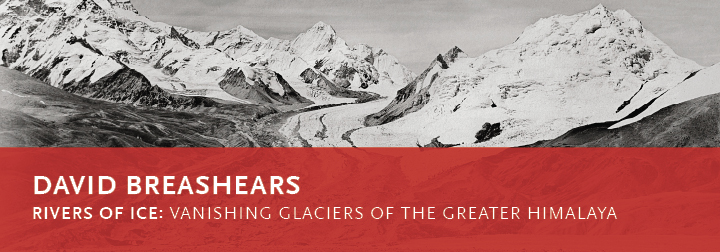
Vanishing Rivers of Ice – Dave Breashears

06/04/2012

Mountaineer and Filmmaker Dave Breashers presents Rivers of Ice, Vanishing Glaciers of the Greater Himalaya

Before and After Shots..Not Good.

The Greater Himalaya has the largest concentration of glaciers outside the polar ice sheets, providing vital fresh water for almost every major system  of Asia. Over the past five years, Breashears and the team of his nonprofit organization, GlacierWorks, has conducted ten photographic expeditions to the region, to study and document the effects of climate change on this delicate landscape.

Dave Breashears

Breashears presents at the Boston Museum of Science on April 12, but alas, tickets are sold out. Nevertheless we thought it was worth the post here. You might try to try the climber’s move and squeeze in somewhere.

Retracing the steps of pioneering alpine photographers and explorers George Mallory, Vittorio Sella and others, Breashears and the team have captured  high-definition photographs that  match those of the earliest expeditions. By comparing this contemporary imagery with the historic photographs, Breashears and his team are discovering staggering changes to the region—changes with potentially devastating consequences.

There is  debate in the scientific community about the rate and extent to which Himalayan glaciers are shrinking.  Nevertheless, scientists agree that there is a trend of melting beyond what is expected to occur naturally. Although future impacts of glacial melt cannot be known, any disruption to the water supply will inevitably present challenges to the millions of people living  downstream.
Breashears plans on sharing his work in a blend of first-person story telling and imagery.
More info: Mount Washington Observatory

Thursday, April 12, from 6:30 to 9:30 pm
Museum of Science, Boston

Bolivia: Fighting the Climate Wars

20/04/2011

From: The Guardian
John Vidal reports from La Paz where Bolivians are living with the effects of climate change every day. Their president has called for an urgent 50% cut in emissions – action that is essential for the country’s survival. Click on the image to view video.

Excellent Video on Bolivias Iniatives

Creating A Sustainable Lifestyle with MSI

10/04/2011

As our world moves closer to facing climate change and its consequences, MSI is doing our part to provide education and awareness on how to achieve some measure of personal sustainability.

We invite you to come to Vermont on June 10-12, 2011 for a weekend retreat to explore how to make healthier choices about food, relationships and navigating everyday life in a healthier and more conscious way.

In our upcoming Creating A Sustainable Lifestyle program, we feature some of New England’s most gifted teachers and facilitators.

Henry Homeyer


Henry Homeyer, author of four gardening books and New England garden columnist, will share insights from over 60 years of organic gardening experience.

Jen White


Jen White, Sustainability Coordinator at Colby Sawyer College, will help us understand the global impact of our choices, connect with our values and live sustainably from the heart.

Miles Sherts


Miles Sherts, author and founder of Sky Meadow Retreat in northern Vermont, has been teaching about conflict resolution and communication skills since 1990. Miles will lead a workshop on Conscious Communication.


So please think about joining us at Sky Meadow Retreat in June – at the very least it will get you thinking about what you can do to live more in alignment with the earth, and we guarantee, you’ll learn a few good things about Creating A More Sustainable Lifestyle.

Big Winters = Climate Change

04/03/2011

Extreme winter weather linked to climate change
By Deborah Zabarenko,
News Daily

Abandoned Cars, Chicago 2011

WASHINGTON, Mar. 1, 2011 (Reuters) — This winter’s heavy snowfalls and other extreme storms could well be related to increased moisture in the air due to global climate change, a panel of scientists said on Tuesday.

This extra moisture is likely to bring on extraordinary flooding with the onset of spring in the Northern Hemisphere, as deep snowpack melts and expected heavy rains add to seasonal run-off, the scientists said in a telephone briefing.

As the planet warms up, more water from the oceans is evaporated into the atmosphere, said Todd Sanford, a climate scientist at the Union of Concerned Scientists. At the same time, because the atmosphere is warmer, it can hold onto more of the moisture that it takes in. Read the rest of this story…

Glacier Melting & Time-Lapse Photography

27/09/2010

“More ice is released into the global ocean, from this glacier*, than from any other glacier in the Northern Hemisphere. If sea level rises, this is where it all begins. This is it, ground zero.”

EIS's James Balog

From: NPR’s Living on Earth
A photographer was one of this year’s Heinz environmental award winners. James Balog’s project — the Extreme Ice Survey — documents the rapid melting of glacial ice through time-lapse photographs from cameras in some of the world’s most remote areas. Host Bruce Gellerman talks with James Balog about the Extreme Ice Survey.

GELLERMAN: Winners of the prestigious Heinz environmental award have just been announced. This year the Heinz Foundation is honoring a wide variety of environmental innovators including a distinguished academic for his work in sustainable transportation, a pioneer in green chemistry, and a scientist who studies the suspected endocrine disrupting chemical BPA.

Awards and checks for a hundred thousand dollars will also be going to several winners who focus on climate change, among them James Balog. He’s director of Earthvision Trust and a one-time climate change skeptic. James Balog joins us from Boulder Colorado. Welcome to LOE…and congratulations.
BALOG: Well, thank you so much. It’s a wonderful week, and a wonderful honor and a privilege. I feel very blessed.

GELLERMAN: A climate change skeptic winning one of the premier environmental awards. Now, that’s an achievement.

Greenland ice sheet melting fast

BALOG: Well, I’m not a skeptic, and I haven’t been in a long time. Twenty years ago, I thought this whole science was based on computer modeling, and I’m a bit of a technological Luddite, and I thought that if it was all based on computer modeling, there could be something wrong with it. But then I took the time to learn about the evidence that was in the ice cores, and then I got out into the field and looked at what was happening to the glaciers, and I realized that this was not about models and projections and statistics. This was incredible concrete and real and immediate and happening really quickly.

GELLERMAN: In a sense, seeing is believing.

BALOG: Yeah, absolutely. As a photographer, my whole career and as a once-upon-a-time experiential educator for Outward Bound School, and as a mountaineer for forty years, I am quite keyed in to the feeling of experience. You know, seeing things, feeling things, touching things. Letting the vibrate in your chest, well when you are standing at the side of these glaciers and you’re watching huge masses of ice go away, you really get it.
Read the rest of this interview….

Send Chevron a Message

21/05/2010

Chevron's Logo?

Please sign this petition to Chevron’s CEO, Mr. Watson asking that Chevron finally do the right thing in Ecuador. (En español aquí)

Dear Mr. Watson:

As the new CEO of Chevron, climate change and the environmental and human rights impacts of Chevron’s operations are the two issues that will define your tenure at the helm of one of the world’s largest oil companies. Chevron has fallen behind other businesses and many political leaders already taking a leadership position on climate change. Furthermore, your company is drawing increasing criticism for failing to rectify its massive human rights and environmental disaster in Ecuador. Taking the following steps will demonstrate a true commitment to environmental responsibility and respect for human rights – which will only strengthen your company’s future.

We the undersigned call on Chevron CEO John Watson to:

* Clean up Chevron’s toxic legacy in Ecuador, compensate affected communities for health and environmental impacts, and provide affected people real access to health care and potable water.
* Develop a global environment and human rights policy that will prevent similar tragedies in the future.
* Adopt aggressive strategies to provide clean energy to a carbon-constrained world.

A Sea Change

06/05/2010

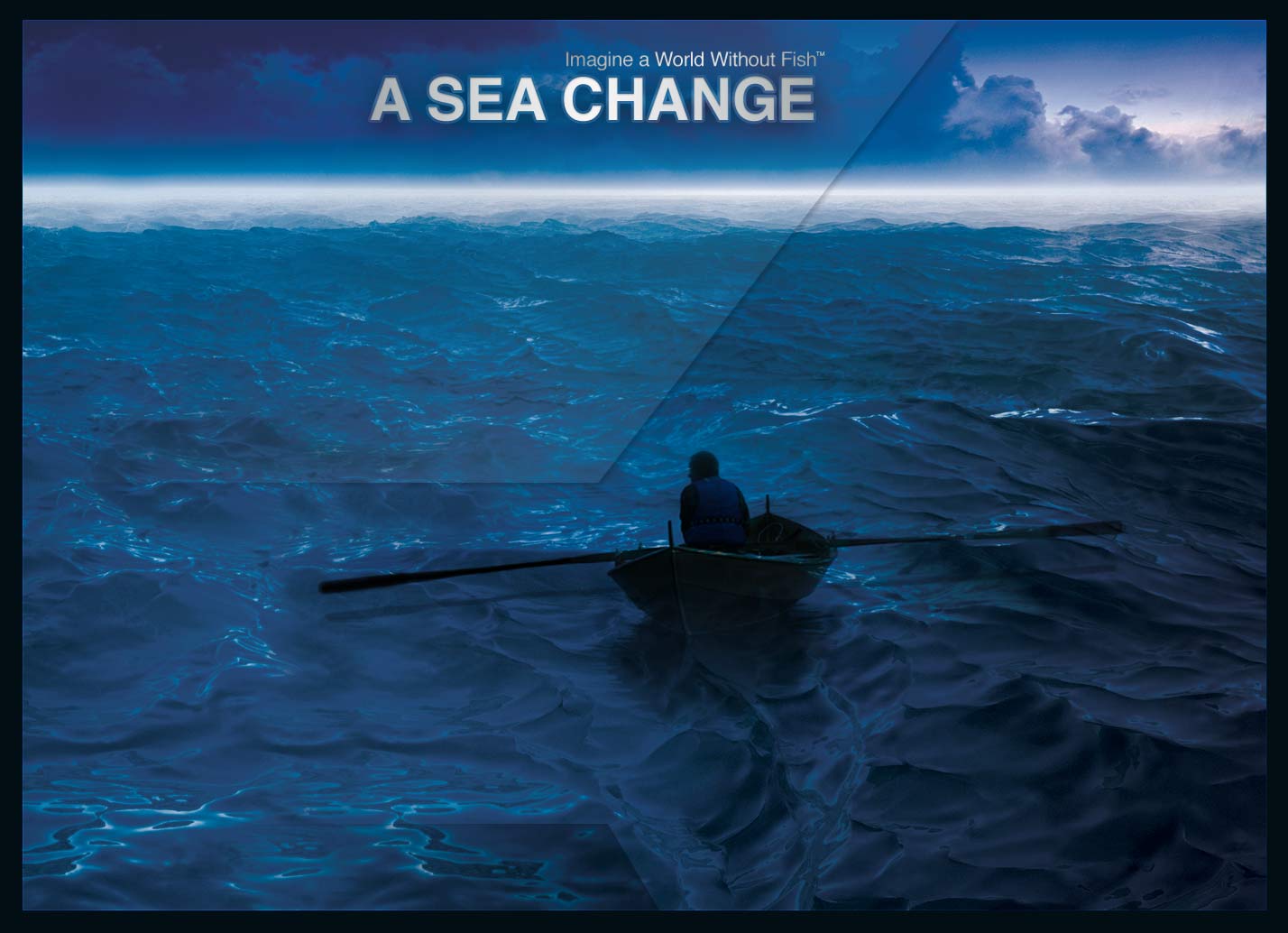
Imagine A World Without Fish
Ocean acidification threatens over one million species with extinction–and with them, our entire way of life.

Time for Course Corrections

DVD: Directed by Barbara Ettinger
Recipient of the NOAA 2010 Environmental Hero Award

A Sea Change documents how the pH balance of the oceans has changed dramatically since the beginning of the Industrial Revolution: a 30% increase in acidification. With near unanimity, scientists now agree that the burning of fossil fuels is fundamentally reshaping ocean chemistry. Experts predict that over the next century, steady increases in carbon dioxide emissions and the continued rise in the acidity of the oceans will cause most of the world’s fisheries to experience a total bottom-up collapse–a state that could last for millions of years. Read more..

Directed by Barbara Ettinger
Produced by Barbara Ettinger, Sven Huseby, Susan Cohn Rockefeller

Music by Joel Goodman

Hugo Chavez at Copenhagen Conference

17/03/2010

Chavez, calling it like he sees it

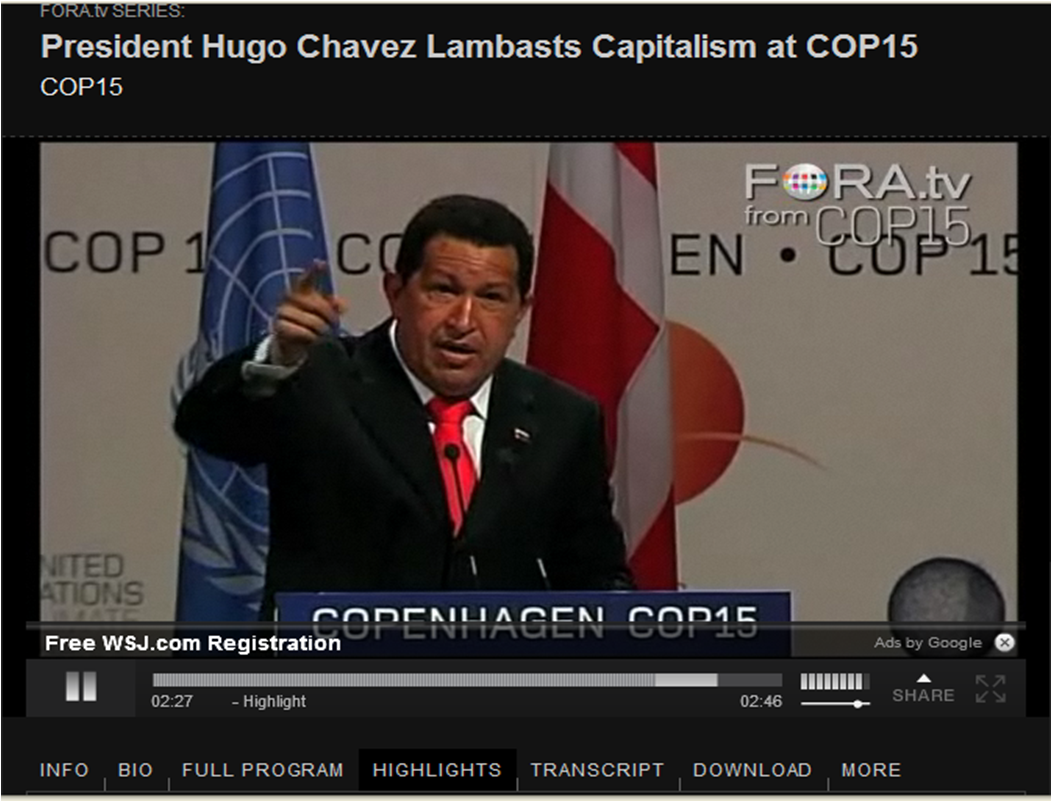
Venezuelan President Hugo Chavez links capitalism to the current state of global environmental degradation during an address on FORA.TV at the COP15 Climate Conference in Copenhagen.”A ghost is stalking the streets of Copenhagen…it’s capitalism, capitalism is that ghost,” says Chavez. He mentions in his address, a placard that demonstrators were holding up outside the conference building, which stated “Don’t change the climate, change the system”. He also stated, “If climate change were the banks, they would have saved it.”

Room for Improvement at Machu Picchu

28/01/2010

Tourists ‘bribe their way out of flooded Machu Picchu’
By Hannah Strange
From: MSNBC

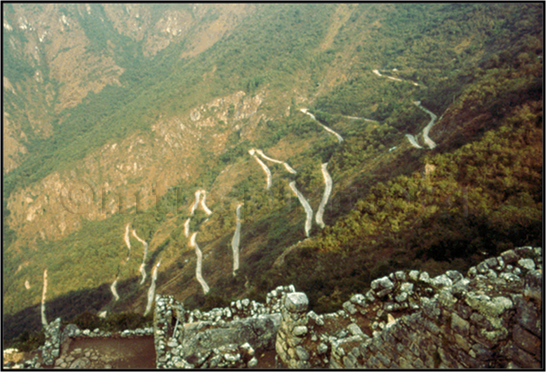
Bus Road to MP, Image: MSI File Photo

British backpackers were among 1,500 tourists trying to escape from Peru’s Inca citadel of Machu Picchu yesterday, which has been cut off by floods and landslides.

As food supplies dwindled and hostels ran out of space many tourists were sleeping in the railway station and the town’s main square while they waited to be rescued by helicopter.

“The situation is about to erupt,” Rudy Chalco, a tour guide with a group of elderly Europeans, told the Peruvian daily newspaper El Comercio. “We don’t have any more food, disorder is starting to reign, the soldiers and police don’t know what to do or how to organise the help that has arrived, people are getting desperate and no one is taking charge.”

Some tourists were paying up to $500 (£300) for a seat on one of the helicopters, he said.

Fernando Celis, one of 300 Chileans stranded in Machu Picchu, said that people were bribing rescuers. “A helicopter arrived yesterday to take out the elderly and the unwell and some tourists who had more money. There are almost no North Americans left, only the backpackers. People on tours who were waving their money about, they were all evacuated,” he said.

He added that local vendors had doubled their prices. Read the rest of this story