I couldn’t resist a great story.
Wally has always had the spirit of adventure and lightheartedness with his business building bindings, skis and boards. Good on ya Wally.
Good on ya Cowboy Kobernik for being tenacious with your idea.
Posts Tagged ‘Mountain Spirit’
The Story of the Splitboard, from Utah
15/10/2011Aqe of Aquarius: Right Around the Corner
04/10/2011
Meditation in Las Cajas Range, Ecuador
A few days ago, our family started doing a daily meditation which was suggested by an invitation from Snatam Kaur. The meditation leads up to 11/11/11, when astrologically (and astronomically) speaking, we end the Piscean age and enter the Aquarian age. I thought I’d include this article below for one take on the changeover. There are other perspectives as well.
The Aquarian Sadhana: Last 40 Days until the Aquarian Age
By Ravi Hari Singh Khalsa
We are forty days away from the historic date of November 11th, 2011 (11-11-11).
I’ve spent a large part of the past year researching Yogi Bhajan’s teachings about the Aquarian Age in preparation for writing the book We are the Aquarians, Yogi Bhajan’s Vision of the Aquarian Age. Yogi Bhajan spoke about the date 11-11-2011 repeatedly as a critical milestone marking the end of the cusp period that started on 11-11-1992 and the beginning of the transition to the Age of Nanak, which he also referred to as the Age of the Shabad Guru, and which officially begins in 2038. You might think of the period from 1991 up to the present as being the time during which changes have happened mostly on the level of vibrational frequencies. (more…)
Snatam Kaur on Yoga/Meditation
29/09/2011From: Snatam Kaur’s Blog

Snatam Kaur on Yoga
Life has such an ebb and flow. One minute you can be riding the wave, the next minute you are under the wave. One minute you can feel safe and secure in your life, and the next minute you can feel totally threatened by something.
I find that when I meditate it helps me to separate myself from the sting of something to realize that it is all coming from God’s Divine Will. Usually the most emotionally charged things aren’t really that big of a deal anyway. (more…)
Here’s an Idea: Shweeb
29/09/2011
The Shweeb: Where's the passing lane? Aside from that, sign us up!
Shweeb’s bike-powered 200 meter monorail, pitched as an adrenalin-fueled sky cycling adventure in Rotorua, New Zealand, may be headed for bigger tracks. Google, who found out about it a few years ago, has been so enamored with the system, in which users are suspended form the track in transparent pods to cycle around the landscape a t speeds of up to 45 km per hour, they’ve invested 1.05 million in developing the technology. I t could be the future for alternative transportation, so Google claims. What one would do about traffic jams is something to ponder, but that’s a minor speed-bump compared to running fossil fuels till we’re extinct.
The Bro Code
27/09/2011How Contemporary Culture Creates Sexist Men

An important documentary - see it.
The Media Education Foundation does it again with another solid documentary, although this one, The Bro Code, is a bit hard to watch. The sad fact, that we all know, is that men are indoctrinated from day one to act and behave a certain way, especially towards women. This film lays bare the ways in which men get trapped into the tunnel vision of how they fit into the world.
In MEF’s powerful new release, The Bro Code, filmmaker Thomas Keith takes aim at the forces in male culture that condition boys and men to dehumanize and disrespect women. Keith breaks down a range of contemporary media forms that are saturated with sexism — movies and music videos that glamorize misogyny; pornography that trades in the brutalization of women; comedy routines that make fun of sexual assault; and a slate of men’s magazines and cable TV shows whose sole purpose is to revel in reactionary myths of American manhood. The message he uncovers in virtually every corner of our entertainment culture is clear: It’s not only normal — but cool — for boys and men to control and humiliate women. By showing how there’s nothing natural or inevitable about this mentality, and by setting it against the terrible reality of men’s violence against women in the real world, The Bro Code challenges young people to step up and fight back against the idea that being a real man means disrespecting women. Featuring interviews with Michael Kimmel, Robert Jensen, Shira Tarrant, J.W. Wiley, Douglas Rushkoff, Eric Anderson, and Neal King. To see the trailer click here..
Learning to Snowboard Indoors and then.. Spreading the Wings
27/09/2011By R. Richards

Marco Wells, Coronet Peak, NZ - Image: R. Richards
Last Friday, I had one of the strangest, (but good) experiences of my outdoor career – I took a 14-year old friend snowboarding for the first time in the mountains. However, it wasn’t his first time snowboarding . He had learned at one of forty indoor ski facilities in the world, Snow Planet in Auckland, New Zealand. He learned to board over of a number of years, but had never been outside on natural snow on a mountain. At Snow Planet they have a Poma style tow-lift. He had been on a chairlift once with his family, but that was in the summer without a snowboard on his feet. So combining his indoor boarding skills and one-time on a chair lift ride, gave him a collection of skills to head outside. Taking him up Coronet Peak’s chair for the first run, was like watching someone who was putting all the pieces together. He kept saying, “Look at all this snow!” and, “We’re high up on this chair”. His skills were solid and it was quite an amazing experience to see someone come out of their shell or out of their building. The next days were filled with a trip in the backcountry, and an afternoon at the Remarkables Ski Area, where he was exposed to all sorts of terrain and conditions and handled them admirably. It reminded some obscure fact of how many indoor rock climbers never climb on real rock, or never end up placing a piece of rock gear for protection on a climb, (what they quaintly call “trad”, I call climbing)
Anyway, congrats to Marco for coming out of the indoors ski gym and joining me in the mountains. Come out again soon! We’ll be waiting.
A Bright Idea
21/09/2011
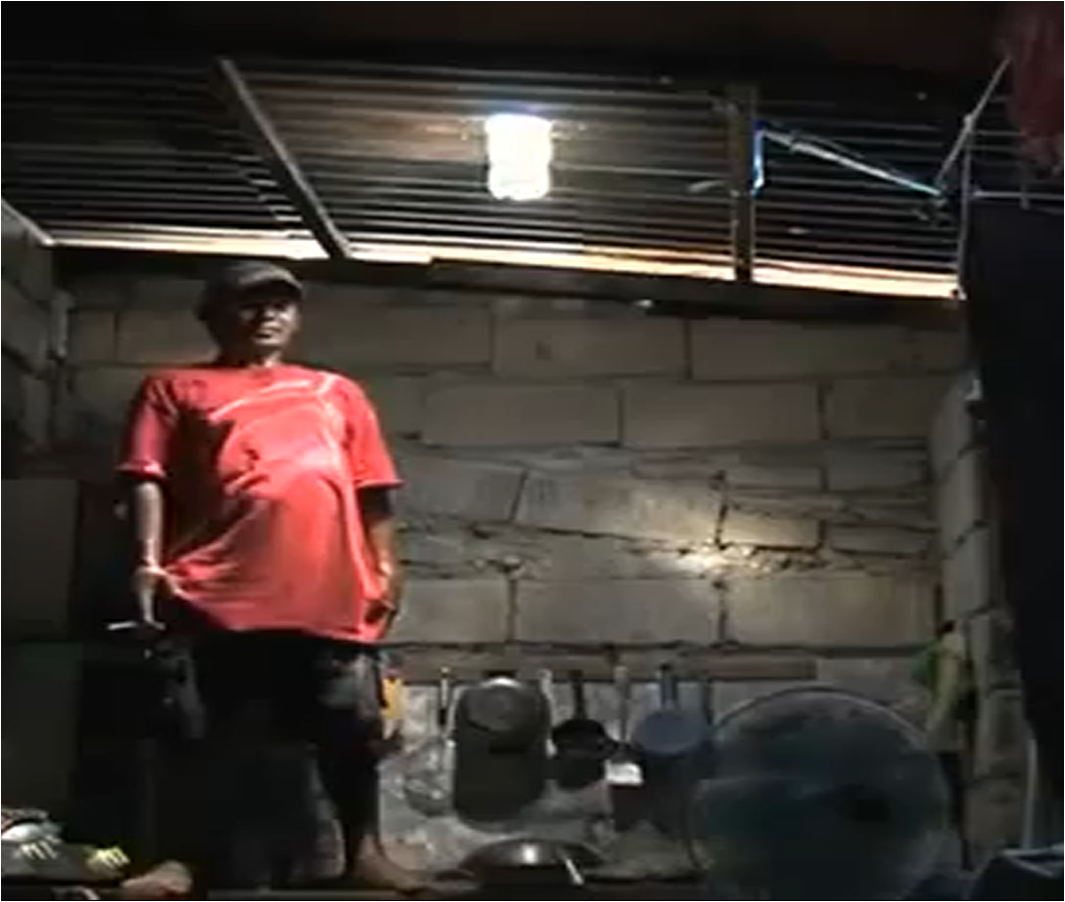
Waterbottle Light - A Bright Idea
In the slums of Manila, an innovative project is shedding light on the city’s dim and dreary shanties. Plastic bottles jut from the roofs, bringing light to the dark dwellings below. The technology is as simple as it could be. Each bottle contains water and bleach. When placed snugly into a purpose-built hole in the roof, the home-made bulb refracts and spreads sunlight, illuminating the room beneath. Eco-entrepreneur Illac Diaz is behind the project. “What happens is, the light goes through the bottle, basically a window on the roof, and then goes inside the water. Unlike a hole which the light will travel in a straight line, the water will refract it to go vertical, horizontal, 360 degrees of 55 watts to 60 watts of clear light, almost 10 months of the year.” The initiative, known as “A liter of light”, aims to bring sustainable energy practices to poor communities, an idea originally developed by students at Massachusetts Institute of Technology. The bottles are designed to emit clear light for about five years, as the bleach prevents algae from building up in the water. For Erlinda Densing, a mother of eight, the technology has made a big difference to her small home.
“‘That’s only water?!’ my neighbors were asking. ‘That’s only water!’ I said to them. Basically, the sun’s rays are really bright. A lot of neighbours came and got curious. They were like, ‘can we see? can we see?’. Maybe they also wanted to have lights installed. ‘It’s really bright,’ I said.” The device can be built and installed in less than an hour. A sheet of corrugated iron serves as a support structure to hold the bottle in place, and prevent any leakage. “Liter of Light, lights up the house, saves a lot, but at the same time improves the standard of living across the board, of the bottom 90 per cent of this country.” Working with low-income communities, local governments and private partners, the project has installed more than 10,000 bottle lights across Manila and the nearby province of Laguna. Rey del Mundo is a volunteer.
“This is very important. Because at present, we’re too dependent on fuel that we don’t produce. Although we have some local production, it’s not sufficient for our needs. So if we strive to develop alternative sources of energy, which are the energy sources, this will help our country a lot.” For residents, it means less money spent on electricity to power lights during the daytime, and more money on food. While for Diaz and his volunteers it’s quite simply a bright idea.
Living Well
15/09/2011
Summit Silouete - Mt Baker, USA
“We don’t beat the Grim Reaper by living longer, we beat the Reaper by living well and living fully, for the Reaper will come for all of us. The question is what do we do between the time we are born and the time he shows up. It’s too late to do all the things that you’re gonna kinda get around to.”
Randy Pausch
Turning Passion into Purpose
15/09/2011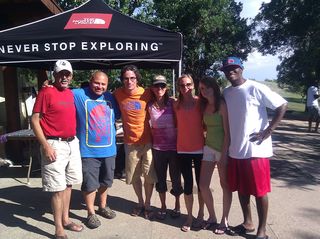
The North Face makes good
Cedar Wright on Turning his Passion into Purpose and an upcoming Expedition to Summit for Someone
By Cedar Wright, The North Face
This year I had the privilege and pleasure of attending several Outdoor Nation events to represent the North Face as a proud advocate of the movement to get more youth outside. I told my story of finding passion and direction through climbing in Yosemite, to hundreds of young people who are committed to turning the tide on the sad reality that at no time in human history have kids spent less time outdoors.
I spoke alongside Juan Martinez who is an Outdoor Participation ambassador for The North Face’s initiative to inspire more people everywhere to explore and push their personal limits in the outdoors. His story of growing up surrounded by the negativity, gangs, and crime in South Central LA and then having his life changed by getting the opportunity to camp out and see stars for the first time was truly inspirational. Juan’s journey reinforced what I have always believed; that these programs are invaluable for creating a bridge from the hustle and bustle of urban life to the quiet magic of Mother Nature. read the rest of this story..
Ed note: I take back everything I ever said about The North Face. Well, we still need to curb consumerism for consumerism’s sake, old stuff will do, and when that’s trashed, but durable goods. But I do commend the company for their initiatives in funding worthwhile orgs and projects under their grant program called the Explore Fund.
We Need Your Help, Spread the Word!
08/09/2011Mountain Spirit Institute’s Blog – Reader’s Appeal to Google News
If you like what you’ve been reading on Mountain Spirit’s blog since 2008, please help us spread the news by suggested they list us on their search site. Here’s how you can help.

Help our Non-Profit org, Suggest: blog.mtnspirit.org - Thanks!
Since we at Mountain Spirit Institute started our blog, 64,000 people have stopped by to read our posts and see our videos. By helping us build a broader base, we’ll not only get more readership and exposure, but possible needed revenue from advertising like-minded organizations on our site, as well as exposure to potential donors.
Started in 1998, Mountain Spirit’s mission is to facilitate one’s connection to the natural world, each other and a deeper connection to one’s self, through a wide variety of programs in the U.S. and abroad, ranging from wilderness programs to workshops.
 Mountain Spirit's Blog