Posts Tagged ‘Mountaineering’

Mountain People Who Inspire

31/01/2009

Greetings from New Zealand. You’ll start to see articles on this blog under the column named “Mountain People Who Inspire” whenever I or other authors should come across them. 
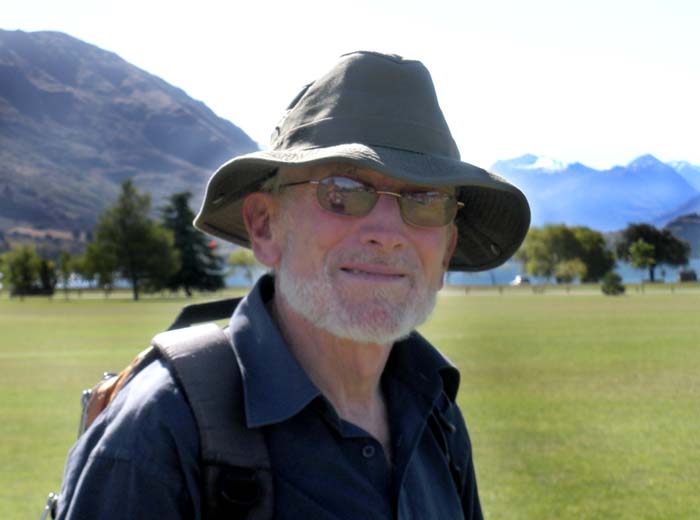
Londoner Mark Rosen, Wanaka, NZ

Londoner Mark Rosen, Wanaka, NZ

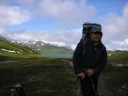
I’m starting this column with an entry on a retired man from England named Mark Rosen. Mark hails from Norfolk, Sheringham which is a fishing and vacation village on the east coast. We crossed paths in the Matukituki Valley when Mark was on his way to fulfill his annual volunteer stint at the French Ridge Hut near the base of Mt. Aspiring. He has been volunteering at this hut as well as Mueller hut at Mt Cook for a number of years.  He’s an inpsiration because of his great attitude about getting out in the mountains, and his ability to continue hitting the trail. He’s a mountain man in the true sense. Getting to the French Ridge Hut is not easy. Once you’ve hiked four hours along the Matukituki Valley, the trail climbs 3000′ in about a mile and a half, to arrive above treeline and at glacier’s edge at the small hut.

I only met him briefly on the trail, and later caught up with him in Wanaka, New Zealand where we asked him a few questions about his thoughts on hut wardening at Mt. Aspiring and Mt. Cook.  
MSI:What do you love most about your volunteering?
MR: I love relating to the people, and hearing about their first impressions. Especially at Mt. Cook when many of the visitors are seeing a large glaciated mountain for the first time. They’re enjoying the beauty of the mountains and for most, this is their first experience of going to a place like that. Their eyes are wide with wonder.  More though, I come back because of the place, the mountain environment, this special location.  I like the time alone too and can retreat to the hut warden’s quarters when need be.

MSI: What do you do in your spare time at the huts?
MR: I like to get out and hike the surrounding routes, read or plug into my ipod and conduct the London Symphony Orchestra or do my aerobic exercises.

MSI: What are some of the challenges of being a hut warden?
MR: Well, in a humorous vein, people tend to ask the same questions over and over, such as,  “How do you get your food and water up here?”, or “How do you get up here?” Depending on my mood sometimes, I like to make my answers more interesting.  I’ll tell a fibb by replying that I bring my food up in big boxes and haul water from the valley floor in buckets. Oh, and that “The outhouse poop needs to be hauled out in containers strung over my shoulders.” Sometimes I might say “I arrive by private helicopter.”
One thing that can bother me is when parties don’t clean up after themselves and leave the hut or toilet a mess. I almost feel as if I need to inquire about their toilet habits upon their arrival, hopefully stemming their bad behaviour. Of course, this is the minority of the visitors, but it does have a negative impact.

When I met Mr. Rosen the second time in Wanaka, I observed at how well grounded and at peace the man seemed. I guess part of it stems from all that time in the mountains. Keep going Mark.

The Power of Place

22/01/2009
Matukituki Valley, Mt. Aspiring Nat'l Park

Matukituki Valley, Mt. Aspiring Nat'l Park

The Power of Place
By Randy Richards, MSI Founder

I was debating how I was going to write my first entry from New Zealand. I have already written one article but don’t think it will make the grade. So I guess I’ll write about a magical valley. Oh, I can hear you say, “But all places are spiritual.”  Yes, but, I think there are places where the spirit of the place is so evident it comes over you like a wave.  I think this valley is one of those places. Places like these have a power that is unmistakable, people are drawn to them,  as Boyton Canyon, near Sedona Arizona, or Alta, Utah, and of course Machu Pichu.  All land has an energy, and some places are humming with energy, whether it’s the beauty of the place or the history or both.

NW Ridge, Mt. Aspiring

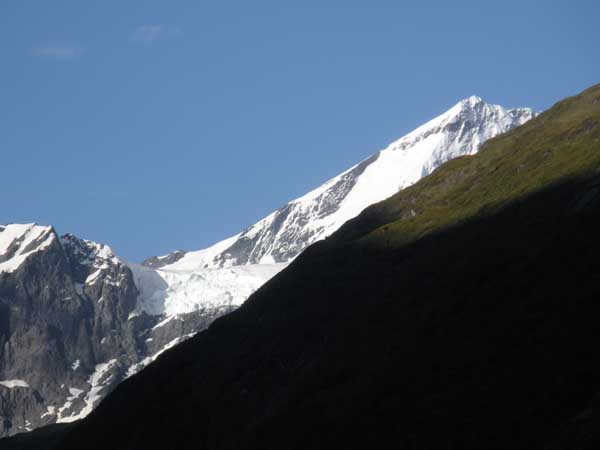
NW Ridge of Mt. Aspiring

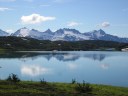
The Matukituki Valley is west of Wanaka , New Zealand in the Mt. Aspiring National Park. The hour drive from Wanaka changes by the mile. The long flat valley with cascading waterfalls begs superlatives.  Mt. Aspiring is the tallest and proudest peak near the back of the long valley. Climbers come from all over the world to do their best on the mountain. But others come to enjoy the valley and glacier edges high above.

In the US, Richard Louv’s book, Last Child in the Woods is gaining traction with his important coinage of the term, Nature

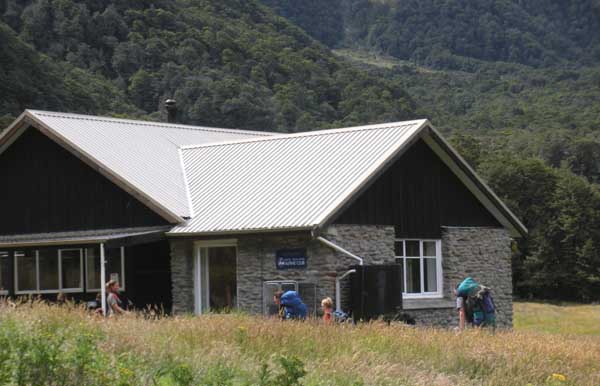
A family group arrives at Aspiring Hut

A family group arrives at Aspiring Hut

Deficit Disorder. Here I have observed many families in the valley for their summer vacations.  One group at right, consisted of  two families with a total of 10 children who hung out at the hut and environs for three days. They did steep day-hikes up to the surrounding ridge lines. The four-year-old didn’t make it all the way up on her daddy’s shoulders though.

The hut ranger at Mt. Aspiring Hut in the valley, and greets both climbers and “trampers”  of all ages.  It’s clear that the valley has its hold on many. One volunteer hut warden makes the annual pilgrimage from London, while others I met from New Zealand come back year after year, and others, after some 30 years away.

Amanda and Lindy

Hut Warden and her sister at Shovel Flat

One who has a special feeling for the place is a hut ranger going on her third season. The coveted position is shared by another Department of Conservation employee as well.  The former, divides her time between Aspiring Hut, French Ridge, precariously perched on the valley’s edge just below the glaciers near Mt. Aspiring,  and other huts in the region.  She beckoned me, “You’ll love the place”.  And I did.

The large trees have a way of calling to you.  The winds that caress the grasses on the valley floor seem to create a rhythm that makes us forget the traffic in town.

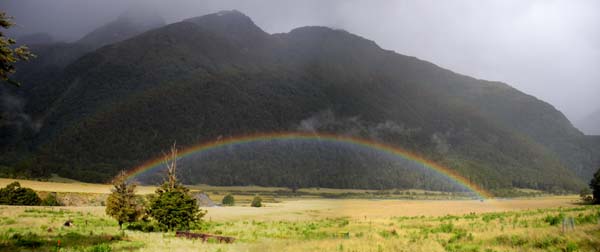
Double Rainbow from the warden's quarters

Double Rainbow from the warden's quarters

It’ s a good reminder of why we need to get to these places, and of course preserve them. Whether it’s Mt. Washington,  Mt. Shasta,  Alta, or the Matukituki,  get out while you still can. I will still post that previous article with tons of revisions, but here’s a start on my impressions of New Zealand and the power of the place.

Touching The Void in Alaska

11/12/2008

Going with the flow
Text and Images: Randy Richards

Last July I found myself sitting and staring at my stuff in a hot storage locker in Park City, UT. I had just moved out of my last relationship, and was practicing being in the moment. “Hmmm,” I thought, “I wonder what spirit may provide for the next big adventure.”  Keeping an open attitude, a sense of humor and staying light-hearted, I pondered.  Just then, I got a call from an old friend at Outward Bound, who I’d not heard from in years.

Denali, The Great One

Denali, The Great One

He was asking me if I’d like to teach a mountaineering program in Alaska. It’s been a while since I’ve been on the role call for OB Wilderness in the West. I’d been busy with Alpine Ascents International, Outward Bound Professional and now Mountain Spirit. He was also stepping back in temporarily at his old admin job. I only got the call because he knew me and had his old contact list out.  I wasn’t even in the OB computer system anymore. Regarding this Alaska proposal, I told him, “Let me think about that…. I’ve thought about it, when do I leave?”

Lost Lake just north of Seward AK

Lost Lake just north of Seward AK

Before long, I was on my way from Alta, Utah (thanks to Bob and Glenda Cottrill by the way), to Seward AK, packing bickies in the food room, checking tents and stoves,  and back in the OB swing. I was prepping to co-instruct a mountaineering segment of a sea/mountain combination program for Outward Bound Wilderness located at their Seward basecamp.  I’ve been pretty busy with Mountain Spirit Institute these days but decided to take a bus-man’s holiday and go back to what, in part,  inspired MSI in the first place. We had 10 bright and motivated kids who were eager to learn, climb and mix it up.

Students near Lost Lake

Students near Lost Lake

When I met the group, they had already been 12 days in kayaks. The thing that strikes me about Alaska is the sense of expansiveness, the “no thing ness”. Of course there is plenty there to see in all it’s splendor, but I wonder, after all these years and miles in the mountains, why this experience was so deeply different than my previous days. It wasn’t about the place as much as the experience I was perceiving.

I’ve spent literally years on the trail and backcountry. I learned to climb in the Alps, where I learned not to kill myself. I took classes with the Austrian Mountain Club, but that was only minimally effective as I missed half the lecture content. My Austrian  was pretty limited at the time. But I learned a few things. But I was young.

The author, Alaska backcountry

The author, Alaska backcountry

I think having gone through what life can throw at someone over a few years, has change my wilderness experience. I looked about me at my fellow instructors, and at my students. Of course I knew they were having their own “ah hah” moments as well, while out there,  but I felt as if I were “touching the void” (without having to go through Joe Simpson’s epic). I’m not sure why it was that way, but the silence which I’ve heard over the years had a depth to it that I’d not experienced before. Is it because of where I am in my life? I could lean into the wind’s howl, or its whisper, into the void…

Peaceful Rainbows at BaseCamp

Peaceful Rainbows at BaseCamp

Of course I can’t put it into words. It’s  similar to what Byrd Baylor’s writes in her story, “The Other Way To Listen” where she does a very solid job of telling the story of someone suddenly finding a mountain singing back to him while on a hike.

Alaksa’s Mt. Ascension was an admirable and beautiful peak, with spectacular 180 degree views, with the Harding Ice field to the south, and Lost Lake and a minor peak to the north. The north face of Ascension has couloirs and arrets dropping off directly to the valley floor below.

Summit view to SE from Mt. Ascension

Summit view to SE from Mt. Ascension

The students did well, gaining the upper slopes of the glacier, route finding, laying wands, and making the summit. The coastal fog rolled in, which made finding basecamp, on the eastern shelf of the range, a bit of a challenge.  Our back bearings could have been better.  Maybe more on that adventure another time.

I’ve been rambling on a bit about the mechanics of the climb, which are relatively important. But what was absolutely important for me, was my new and improved experience of the mountain vastness. Maybe it was just Alaska, but I doubt it.

You think you remember, after being out for a while. But you don’t. You can only be reminded of the vastness, of your place in it all, by going back out there. And not just climbing a damn peak, but coming to terms with the end of it all, the cold, the wind, the rocks and the snow.

Students heading south to Seward after their expedition

Students heading south to Seward after their expedition

Solo is a big part of Outward Bound and we at Mountain Spirit have our own twist on it as well. Getting out while you still can, stepping away from the machine just makes sense.  Whether with a group or solo. And as Willie Unsoeld used to say, when it’s time to come back to civilization, you’re better equipped to really contribute something to the cutting edge.

Willie Unsoeld and the Spiritual Values of Wilderness

01/11/2008

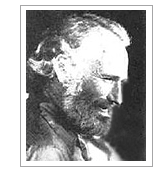
Willie Unsoeld, along with Kurt Hahn are some of the biggest influences on Mountain Spirit’s founder. There is large collection of material on Unsoeld at Evergreen State College in Olympia, Washington. Here is a snapshot of Unosoeld’s thinking, taken from a lecture.

The Spiritual Values of Wilderness
From Pacific Crest Outward Bound School Book of Readings

And so what is the final test of the efficacy of this wilderness experience we’ve just been through together? Because having been there, in the mountains, alone, in the midst of solitude, and this feeling, this mystical feeling if you will, of the ultimacy of joy and whatever there is. The question is, “Why not stay out there in the wilderness the rest of your days and just live in the lap of Satori or whatever you want to call it?” And the answer, my answer to that is, “Because that’s not where people are.” And the final test for me of the legitimacy of the experience is, “How well does your experience of the sacred in nature enable you to cope more effectively with the problems of mankind when you come back to the city?”

And now you see how this phases with the role of wilderness, It’s a renewal exercise and as I visualize it, it leads to a process of alternation. You go to nature for your metaphysical fix – your reassurance that there’s something behind it all and it’s good. You come back to where people are, to where people are messing things up, because people tend to, and you come back with a new ability to relate to your fellow souls and to help your fellow souls relate to each other.

Willi Unsoeld, Former Director of Northwest Outward Bound
Founding Board Member of Evergreen State College
[Edited: Male references replaced with non-gender specific terms]

Editor’s Note: February 2023
I was running through some of my old posts, and thought I’d hunt down the first one, which led me to this post on Willie Unsoeld. How fitting to have launched this blog with this post. Life, not just climbing, is an experiential adventure. I think what i learned most from being an Outward Bound instructor as how to, (as I asked my students to do) transfer what I’ve learned on course in the field, to my daily life. Now so many years later after this first post, I now have an 11 yr old, just turned old enough to receive a pension here in New Zealand, and and feeling my bones a bit more. I’m still Telemarking though.  There’s a lot of water under the bridge since this first post, what with Covid, lockdowns, and gender questioning in the recent years. Ah, but it’s all worth the game of life, isn’t it?
Randall Richards
Hawea, New Zealand