We’ve not seen this yet…but it looks good, at least from the trailer:
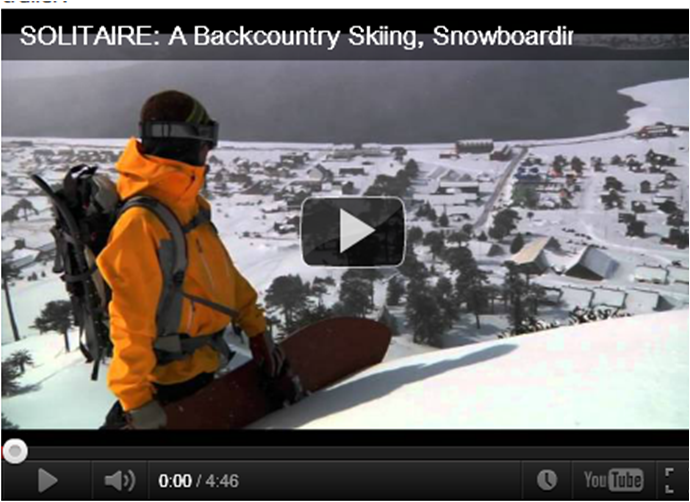
Solitaire BC Skiiing/Riding Movie
We’ve not seen this yet…but it looks good, at least from the trailer:
Solitaire BC Skiiing/Riding Movie
Alex shares what he likes about his role at head of Thompson Island Outward Bound Center just outside of Boston, MA. USA.
The center is located on a beautiful island reachable by shuttle boat for students and the public. Go check it out, meanwhile here’s what Alex has to say about TIOBC.
Pepsico, Quaker Oats & GMO: You’re On Your Own
From: Corporate Greed Chronicles

Pepsico...Just to Big for its Own Good
PepsiCo Inc. is a Fortune 500 global conglomerate with interests in the manufacturing, marketing and distribution of grain-based snack foods, beverages and other products. PepsiCo was formed in 1965 with the merger of the Pepsi-Cola Company and Frito-Lay, Inc. PepsiCo has since expanded from its namesake product Pepsi to a broader range of food and beverage brands, the largest of which include an acquisition of Tropicana in 1998 and a merger with Quaker Oats in 2001 – which added the Gatorade brand to its portfolio as well.
Since 1989 Pepsico has contributed more than $10 million to federal and state political campaigns, and since 1997 they have spent an additional $28 million on lobbying. Topping their politician recipient list is former Pennsylvania House Speaker John M. Perzel, the alleged mastermind of the $13 million “Computergate” scandal that pled guilty to corruption charges and is currently awaiting sentencing. Rick Perry comes in number two, with Ed Rendel, Barack Obama and George W. Bush rounding out the top five.
http://tinyurl.com/6ml7q2c
http://tinyurl.com/7ues4sh
http://tinyurl.com/6pwrqa2
We don’t know what Pepsico got from the money they gave to Perzel, but we do know at least one thing they are getting from their lobbying investment: So far, it has kept GMO warning labels off of their products.
“GMO” stands for “genetically modified organism”, i.e. organisms whose genetic material has been artificially altered using genetic engineering techniques. The USA is the largest commercial grower of genetically modified crops in the world, and at least 75% percent of the processed foods consumed in America contain GMO ingredients.
http://tinyurl.com/26xkpfd
GMOs are banned or significantly restricted in 30 other countries around the world, including Australia, Japan and all of the nations in the European Union. But here in the Corporate States of America, consumers aren’t even given the benefit of GMO warning labels.. Read the rest of this story..
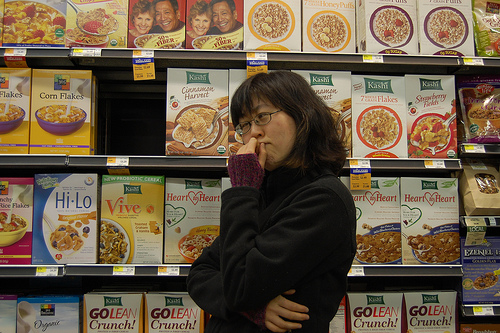
Confused about Labels in the U.S.? You should be!
How “Natural” Claims Deceive Consumers and Undermine the Organic Label—
From: Corporate Greed & Corruption Chronicles Chronicles
A Look Down the Cereal and Granola Aisle Companies’ Marketing Techniques Intentionally Blur Line Between Natural and Organic some companies that started out organic, and built consumer loyalty as organic brands, have switched to non-organic “natural” ingredients and labeling. Peace cereal® is an example. Companies that market “natural” foods to eco-conscious and health-conscious consumers benefit from widespread confusion between organic and “natural.” This section details various techniques that have been used by companies in their attempt to appear to be equivalent to organics, intentionally blurring the distinction to mislead shoppers.
Companies marketing “natural” products merely pay lip service to sustainability and eco-friendliness, while undercutting truly committed organic companies.
Bait-and-switch
Some companies that started out organic, and built consumer loyalty as organic brands, have switched to non-organic “natural” ingredients and labeling. Peace Cereal® is an example of “bait-and switch.” In 2008, the company that owned the Peace Cereal® brand, Golden Temple, switched from organic to cheaper conventional ingredients, without lowering its prices. At the time of the switch, the company also did not change its package design, other than eliminating the USDA Organic seal and the word “organic” from its
cereal boxes. Most egregiously, it did not change the barcode on the cereal boxes. Many retailers and shoppers were unaware of the switch until e Cornucopia Institute conducted an investigation in late 2010.
Some retailers continued to use “organic” read the rest of this story…
Rachael Umbriano is Taking a Big Bite Out of Life
I met Rachael at a recent wilderness emergency medicine refresher course in North Conway, NH where we were both participants. Rachael just finished a year-long stint studying in Italy and traveling to 40 countries in her spare time while in Europe. A rock climber and go-getter, Rachael has some cool ambitions – see her vid below.
Learn how getting out of the U.S. for an extended period can shift your perspective. The Aussie’s and Kiwi’s call it an O.E. (overseas expedition). Most Americans, due to our work and study schedules, plus our limited work reciprocity with other countries only take short visits abroad. Rachael doesn’t fit that stereotype.
Helping to keep Climbers, Skiers and Hikers Safer on Mt. Washington, NH, USA
Chris Josen of the US Forest Service is one of a small group of avalanche forecasters and safety personnel on Mount Washington’s east side, where Tuckerman’s Ravine sees thousands of backcountry skiers per season. Not all come well equipped or knowledgeable about how to safely travel in the winter snow-scape. Learn more about what Chris does on Mt. Washington, the highs and lows, and what motivates him.
Dr. Frank Hubbell started SOLO, (Stonehearth Open Learning Opportunities) in the mid-’70’s and is still going strong. I was recently at SOLO’s base in New Hampshire, renewing my Wilderness Emergency Medical Technician qualifications and thought I’d share some footage of the place that many outdoor professionals know so well. SOLO offers a wide variety of programs. I met some interesting folks attending this re-cert, and will post an interview or two here in the coming days.
From their website: SOLO took root in the early 1970s and grew out of the vision of its founders Frank Hubbell and Lee Frizzell (husband and wife). As Frank recalls, pre-hospital care  was in its infancy, and an organized EMS system didn’t exist yet in New Hampshire. The concept of providing emergency care to the sick and injured revolved around what is today referred to as the “Golden Hour.” “As skiers, climbers, and EMTs in the White Mountains of New Hampshire, we would respond to the call for injured hikers and climbers,” Frank remembers. “It very quickly became apparent that the skills that we had learned as “street EMTs” did not work in the wilderness environment. We had to learn how to provide care outside the golden hour. But, that information was not available—we had to learn it through experience.” Frank’s frustration with the lack of an appropriate “wilderness” standard led to the creation of one of the first, if not the first, wilderness emergency medicine courses in the country. By 1975, a basic “Mountain/Woods First Aid” course was taken on the road by Frank, and taught to the few folks who could see its value.. Read more..
In addition to SOLO, there are also a number of organizations offering Wilderness First Responder and EMT trainings. I’ll probably cover a few of them in this blog at some point
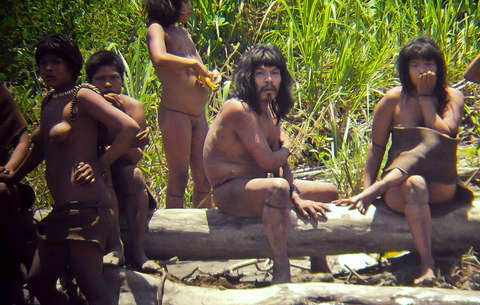
The Mashco-Piro
Survival International Releases Photos Of Uncontacted Tribe
From: Andean Air Mail and Peruvian Times
Survival International, the London-based indigenous rights group, has released up-close pictures of a family of the uncontacted Mashco-Piro tribe, known to live in the Manu National Park in in the Amazonian basin in south-east Peru.
The Mashco-Piro are one of about 100 uncontacted tribes in the world, according to Survival. “Today’s photos are the most detailed sightings of uncontacted Indians ever recorded on camera,” Survival says.
Survival says sightings of the Mashco-Piro have increased in recent months. “Many blame illegal logging in and around the park and low flying helicopters from nearby oil and gas projects, for forcibly displacing the Indians from their forest homes,” Survival says.
“But the danger of contacting tribes who choose to remain isolated was reaffirmed by the recent death of an indigenous Matsigenka man,” Survival says. Nicolas “Shaco” Flores had left food and gifts for the Mashco-Piro for some 20 years. However, he was recently killed by one of the tribe’s arrows. “In this tragic incident, the Mashco-Piro have once again expressed their adamant desire to be left alone,” wrote Glenn Shepard, an anthropologist and friend of Flores.

Leave well enough alone
Shephard says in a post on his blog that the Mascho-Piro are likely descendants of the Mashcos people, who in the late 19th century were “massacred and displaced” by Peruvian rubber baron Carlos Fermin Fitzcarrald. “Surviving Mashcos, including a group speaking a language similar to Piro—hence ‘Mashco-Piro’—abandoned their gardens and fled to the forest, subsisting on game and fruits and vigorously avoiding all contact with outsiders since then,” explains Shephard.
“First contact is always dangerous and frequently fatal – both for the tribe and those attempting to contact them,” says Stephen Corry, Survival’s director. “The Indians’ wish to be left alone should be respected.” Anthropologist Beatriz Huertas says authorities need to implement preventative measures to avoid similar incidents in the future. “Contact could happen at any time,” Huertas was reported as saying.
By: R. Richards

The wonder of a palm frond in the morning sun, nz.
I’ve often been thinking how having a child is like teaching an 18-yr Outward Bound course, for the parents. The bus arrives when the baby is born and it may leave when the teen turns 18, but maybe not. Of course, no one wants to hear the worn our phrase, “you learn through your children” but I’m reminded of the Kogi tribe (see the BBC film Elder Brother’s Warning) in the Colombian Sierra Nevada mountains who hide their shamans-in-training in a darkened hut, never seeing the light of day until their 18th birthday. Then, after years of preparation, after telling them what the world looks like, they see their world for themselves, for the first time with their own eyes. As the wonder of a baby, with new eyes, but with training, so they can see their world more clearly to do their shamanic work.
Seeing our baby boy look with glee at the morning sunrise, and the light shining through some palm leaves this morning is an eye opener. I felt “more aware” after I survived being tossed around in a van roll-over in 1988. “Everything looked new and pristine”, as Eckhart Tolle put it after his awakening experience. I felt like lucky to still be on the planet. That default feeling subsided after a few weeks, and now I have to work at being present by doing what I call “remembering my spiritual practice”. For me it’s meditating and listening to Eckhart Tolle’s Power of Now. Reminders can take almost any form as long as it helps

An Eye Catcher - Are you watching though?
bring one back to their center. In recent talks with newly elected Mountain Spirit Institute board member and mountain guide/instructor Ken Wyle, he’s been relating how writing his book on being buried in an avalanche which killed seven people, is a catharsis. Tolle says that people who are more conscious in their lives have usually had some tragic loss in their life that shook them out of the dream state we call normal life.
Our baby boy, laughing as he looks out the window of our van whizzing down main street in Kingston New Zealand, is a reminder to me – “What am I missing? I want to see like he sees!” The good news, it’s wholly possible. I’ve been seeing, more than dreaming during the last ten years. And it’s obivous when I’m not present. I might go a whole morning or day and realize I’ve not been present until something catches my eye, like a detail of a stem in a vase, or the bustle in supermarket, or of course, a sunset.
Learning to see and live in the moment sure beats the alternative, and I’m not going back. When you beat your head against a wall long enough, you finally decide you’ve had enough of that, and make the choice to stay in peace, no matter what happens. A side benefit of being at peace is your mind isn’t filled with crap, so you are free to see such things as the morning light shining through some palm fronds.
Images: R. Richards, taken this morning
Many of us fear death. We believe in death because we have been told we will die.
Editor’s Note:
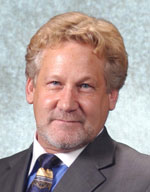
Dannion Brinkley
For some reason, death has not been a stranger in my life. Western society is almost totally ignorant of death, it is something to be brushed under the rug, and feared. Stay tuned for a posting on “Death, The Funny Side” a talk by Dannion Brinkley, author of Saved by the Light. I heard Brinkley speak at a Whole-Life Expo in Seattle in the late ’80’s – he was promoting his book. I liked his half-hour talk so much that I bought a copy of it andeventually converted it mp3 format. I plan on posting it here, once I have Brinkley’s permission of course. It’s a classic, that has changed my understanding of what death is, and what it means to be fully alive. His sense of humor perspective, depth and compassion, after having died more than once and come back to talk about it, is remarkable, especially after having been a hit man for the U.S. government. Ykes.
At Mountain Spirit Institute, one of our core values is addressing our “ultimate concerns”. We believe that by helping to reconnect people to the natural environment, each other and a deeper connection to one’s self, we can help participants start looking beyond the veil. Eckhart Tolle writes” The secret to death is to die before you die, and realize there is no death.” Hmm. Maybe he’s onto something. Dannion Brinkley is, as well.
R. Richards
Does Death Exist? New Theory Says ‘No’
From: KipNews (Open your mind, Prepare)

A case for staying no death - Biocentrism
We associate ourselves with the body, and we know that bodies die. But a new scientific theory suggests that death is not the terminal event we think.
One well-known aspect of quantum physics is that certain observations cannot be predicted absolutely. Instead, there is a range of possible observations each with a different probability. One mainstream explanation, the “many-worlds” interpretation, states that each of these possible observations corresponds to a different universe (the ‘multiverse’).
A new scientific theory – called biocentrism – refines these ideas. There are an infinite number of universes, and everything that could possibly happen occurs in some universe. Death does not exist in any real sense in these scenarios.
All possible universes exist simultaneously, regardless of what happens in any of them. Although individual bodies are destined to self-destruct, the alive feeling – the ‘Who am I?’- is just a 20-watt fountain of energy operating in the brain. But this energy doesn’t go away at death. One of the surest axioms of science is that energy never dies; it can neither be created nor destroyed. But does this energy transcend from one world to the other?
Consider an experiment that was recently published in the journal Science showing that scientists could retroactively change something that had happened in the past.
Particles had to decide how to behave when they hit a beam splitter. Later on, the experimenter could turn a second switch on or off. It turns out that what the observer decided at that point, determined what the particle did in the past. Regardless of the choice you, the observer, make, it is you who will experience the outcomes that will result. The linkages between these various histories and universes transcend our ordinary classical ideas of space and time. Think of the 20-watts of energy as simply holo-projecting either this or that result onto a screen. Read the rest of this story…
 Mountain Spirit's Blog