Check out the South Coast Environmental Society, and stay tuned for the video, “Welcome to the Food Forest”. There are tons of volunteer opportunities as well.
YOUR FOOD SUPPLY #31: A Modest Kiwi Environmental Centre Note: (This video series started in 2010, while listening to the audio version of the book, “The Omnivore’s Dilemma”, when Amanda and I were driving across the U.S. and were seeing the effects of industrial farming in real time while listening to the book.Here’s that first entry Your Food Supply #1To see the whole series, click on the category “Your Food Supply” in the category section of this blog on the right of your screen.
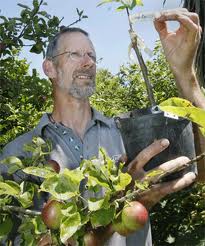
Robert and Robyn Guyton were determined to start a food forest instead of mowing a front lawn. And a forest did they grow, when in the mid-’90’s, they purchased some land and a house in the small coastal town of Riverton, New Zealand. Riverton along with its neighbor, Invercargill rank as one of the southernmost towns in the world, and back then Riverton was an affordable place to buy land. It still is compared to the northern resort towns of Wanaka and Queenstown, the latter which graces its runway with private jets, rivaling Aspen Colorado.
The Guytons worked in earnest on their two lots planting trees and plants based on permaculture practices. When they first started, they received some odd looks from the neighbors, as their front yard started to take on the forest look. There were no other like-minded people in Riverton when they arrived, but undeterred, they started a cooperative learning center called the South Coast Environment Society.
YOUR FOOD SUPPLY #30: Build it & They Will Come Note: (This video series started in 2010, while listening to the audio version of the book, “The Omnivore’s Dilemma”, when Amanda and I were driving across the U.S. and were seeing the effects of industrial farming in real time while listening to the book.Here’s that first entry Your Food Supply #1To see the whole series, click on the category “Your Food Supply” in the category section of this blog on the right of your screen.
Today the organization modestly states on its website it is an umbrella group for a “several” local environmental groups who have information,displays and meetings in the centre. Those several groups include:
Groups working for protection and enhancement of local ecosystems:
Riverton Estuary Care Society
Aparima Pest Busters
Aparima Nursery Enterprise
Seed Balls for Restoration projects
Groups working to promote sustainable lifestyles:
Riverton Natural Health Group
South Coast Permaculture
Sustainable Lifestyles project
Riverton Organic Food Co-op
Groups promoting sustainable growing methods
Riverton Organic Growers Gardeners Group
Southland Seed Savers
Riverton Organic Farmers Market
Riverton Community Orchard
Rivertonians for Alternatives to Toxic Substances (RATS)
Robert Guyton
My wife and I met the Guytons when they were giving a presentation on sustainability to the ultra small Garston School, (which deserves its own blog post), New Zealand. We were intrigued with their presentation, which included a movie (to be posted on this blog) called “Welcome to the Food Forest”. We decided to take our chances and take the hour and half drive from our place and show up unannounced. Even though we had a standing invitation, we happened to miss them, when we stopped by to say hi. Nevertheless, I decided to interview Mark Baily while visiting the centre. You can see the video on my adjacent post. We’ll have to get down there again when Robert and Robyn are home, so we can get the proper tour of their food forest!
YOUR FOOD SUPPLY #30: Build it & They Will Come Note: (This video series started 13 years ago, while listening to the audio version of the book, The Omnivore’s Dilemma, when Amanda and I were driving across the U.S. and were seeing the effects of industrial farming in real time while listening to the book.Here’s that first entry Your Food Supply #1To see the whole series, click on the category “Your Food Supply” in the category section of this blog on the right of your screen.
A New Zealand Farmer Does Good by Following His Passion
Tom O'Brien of High Country Walks
Tom O’Brien, owner of Blackmore Farm and founder of High Country Walks has followed his passion by offering up a little hut on the back side of his 5000 acre farm. Called the Chinaman’s Hut, it was restored some years ago, by local volunteers, Tom and his father. The hut is situated on the rolling mountains of the Slate Range, just south of the Remarkables Mountains, on the border of Otago and Southland. Tom took the afternoon to show me his farm, the backcountry and the Chinaman’s Hut. below is a short piece on the hut, and a chat with Tom about his philosophy and passion of sharing this part of the world with others.We’re in hopes, here at Mountain Spirit Institute of collaborating with Tom by running some programs on the Slate Range and Blackmore Farm. We chatted about providing Solo’s and other types of programs.
Thanks for the time you took to show me around Tom!
Note: I’ve met one of the volunteers who helped restore the Chinaman’s Hut, a neighbor of ours here in Kingston named Dusty, who I’ll see if I can get on tape in the next few days. He has an interesting story to tell of not only this restoration project by many others.
I’m in the middle of a book called “A Man’s Country? The image of the Pakeha Male“ by Jock Phillips. It’s a well-known fact that the New Zealand male, and Aussie as well, has a “She’ll be right” attitude. All is well and good, but what happens when things go wrong, or life events happen that one didn’t plan for, doesn’t want and has no intention of participating in. Is “opening up” an idea who’s time has come?
A Man’s Country? From the back cover:
” A rugged practical bloke – fixes anything, strong and touch, keeps his emotions to himself, usually scornful of women. Yet at heart a decent bloke, loyal to his mates, provides well for the wife and kids…
Few Pakeha (white) men grow up in New Zealand without a strong sense of the Kiwi bloke they are expected to become. Jock Phillips’ book is a penetrating, provocative history of that stereotype.
Where did that stereotype come from? How has it changed? What truths does it hide? At what costs? The book begins with the Pakeha colonial society of the nineteenth century – the absence of women, the harsh physical conditions, the growth of an exclusively male ethic. It then examines in detail the image of the Pakeha male, as booze, as rugby player, as soldier, as family man, in the 1980’s, says Phillips, the stereotype has been well and truly exposed as a role model. We now know the costs we have paid as both men and women. After reading this book, no New Zealand man will quite be the same.
Published by Penguin
For another take, see my post on the movie The Men’s Group
Graeme Dingle is fast becoming one of my role models, and I’ve never met the man. I intend to though. Maybe if I’m fortunate, we may collaborate on a co-venture project helping to connect people to the mountains, who knows. The more I learn about Mr. Dingle, the more I like and respect who he is, what he stands for, and what he’s accomplished in outdoor education.
Here’s an article from the Directions Magazine By Laura Crooks
Inspiring New Zealand teenagers to reach their potential was a plan born during a trip to the Arctic by adventurer Graeme Dingle and partner Jo-anne Wilkinson in the early ’90s.
Why did you think New Zealand needed a specific programme to help the country’s youth?
I set up the Sir Edmund Hillary Outdoor Pursuits Centre (OPC) in 1972 and I thought that was my contribution to New Zealand in terms of young people. But it was really just the start, because I learnt so much about youth development through it and I got to thinking about the business of dealing with harder kids than those we met at OPC. I felt that for kids who had low confidence and low self-esteem, a one week experience in the wilderness wasn’t enough – it needed to be a continuum of things that really built on what had been learnt in that first period. I then set out to do the first continuous circumnavigation of the Arctic and in the Arctic you get a lot of very unusual communities – they’re very isolated and they live in such extraordinary circumstances where it’s light half the year, then continuously dark the other half of the year. They have very high rates of suicide, the kids don’t have too much to look forward to, and that started us thinking. But it didn’t really hit home until we got back to New Zealand – that here we lived in paradise and yet we had one of the highest rates of youth suicide, youth incarceration, dropouts from school unplanned teenage pregnancy – the works. The main catalyst was going to see Once Were Warriors – that was the thing that finally made us say: “Let’s do something about this”. So, Jo-anne and I invented Project K. basically. The Project K Trust grew into the Foundation for Youth Development (FYD) with nearly 20,000 young people in programmes each year. The FYD runs programmes for kids aged 5 – 18, and Project K is one of these. (more…)
From: wakeup-world.com/ 1. Canned Tomatoes
The Expert: Fredrick vom Saal, PhD, an endocrinologist at the University of Missouri who studies bisphenol-A.
The Situation: The resin linings of tin cans contain bisphenol-A, a synthetic estrogen that has been linked to ailments ranging from reproductive problems to heart disease, diabetes, and obesity. Unfortunately, acidity (a prominent characteristic of tomatoes) causes BPA to leach into your food. Studies show that the BPA in most people’s body exceeds the amount that suppresses sperm production or causes chromosomal damage to the eggs of animals. “You can get 50 mcg of BPA per liter out of a tomato can, and that’s a level that is going to impact people, particularly the young,” says vom Saal. “I won’t go near canned tomatoes.”
The Answer: Choose tomatoes in glass bottles (which do not need resin linings), such as the brands Bionaturae and Coluccio. You can also get several types in Tetra Pak boxes, like Trader Joe’s and Pomi. 2. Corn-Fed Beef
The Expert: Joel Salatin, co-owner of Polyface Farms and author of half a dozen books on sustainable farming.
The Situation: Cattle evolved to eat grass, not grains. But farmers today feed their animals corn and soybeans, which fatten up the animals faster for slaughter. More money for cattle farmers (and lower prices at the grocery store) means a lot less nutrition for us. A recent comprehensive study conducted by the USDA and read the rest of this story..
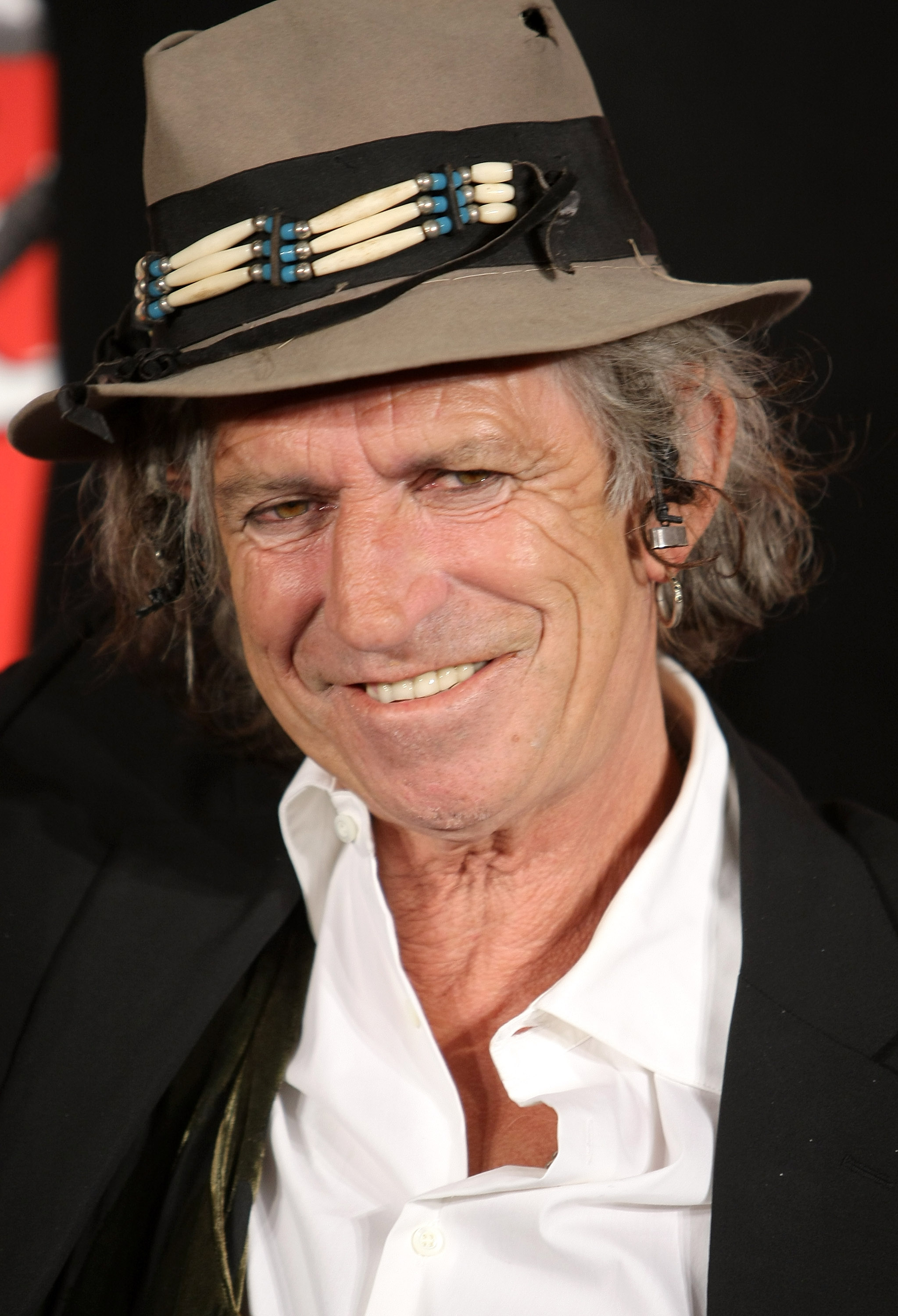
Quotes: “The best drug is breathing. I mean, heroin is fantastic, until you’ve had too much of it and then you’re likely to be dead.”
Keith Richards, The Rolling Stones interview, The Guardian, through the Otago Daily Times, New Zealand
Another study proves it, breathing ranks right up there with the best of drugs. According to Eckhart Tolle, the breath is one of the doorways to the present moment, the now. And being fully present means being conscious. Sounds like a great alternative to the heroin route.
Copper and gold mine project in Peru suspended in face of protests
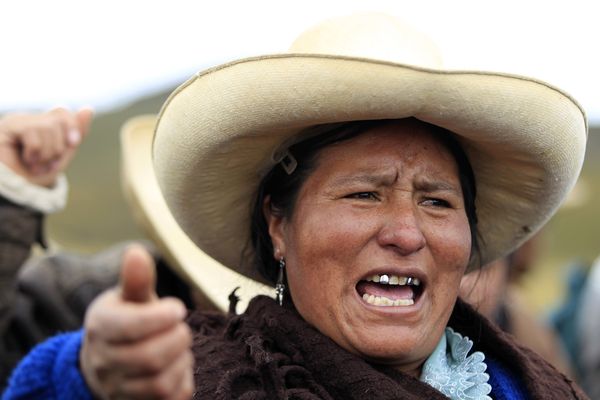
LIMA, PERU, AND BOGOTA, COLOMBIA — Faced with increasingly violent local opposition, the developers of the giant Conga gold and copper mine in northern Peru suspended the project late Tuesday night, saying they were bowing to a demand from the government of President Ollanta Humala.
Much of the northern district of Cajamarca has been paralyzed the last six days by general strikes called by Conga opponents that closed businesses and schools. Residents were concerned that the massive gold and copper mine could pollute the region’s water supply, a charge the mine’s operators, led by Colorado-based Newmont Mining, strenuously denied.
The situation became more violent Tuesday, as protesters burned an office at the site of the proposed mine and clashes between protesters and police in the area left 17 injured and two arrested. Thousands of demonstrators massed in the central square of Cajamarca, the region’s largest city.
As proposed, Conga would be a giant open pit gold mine similar to the Yanacocha mine 20 miles to the north, which is also operated by Newmont. But it would include a copper mine and smelter.
Newmont has proposed investing $4 billion in the new project, which could produce between 580,000 and 680,000 ounces of gold a year. The government had projected it would receive royalties and taxes totaling $800 million annually once the mine was fully operational after 2014, income the left-leaning Humala government was counting on to finance social and infrastructure project. Read the rest of this story..
Obama Legalizes Horse Slaughter for Human Consumption By Madeline Bernstein
Horse slaughter plants are legal again in the United States. Restrictions on horse meat processing for human consumption have been lifted. courtesy of Google Images
In a bipartisan effort, the House of Representatives and the United States Senate approved the Conference Committee report on spending bill H2112, which among other things, funds the United States Department of Agriculture. On November 18th, as the country was celebrating Thanksgiving, President Obama signed a law, allowing Americans to kill and eat horses. Essentially, one turkey was pardoned in the presence of worldwide media while in the shadows, buried under pages of fiscal regulation, millions of horses were sentenced to death.
Horse slaughter has been prohibited in the United States as funding for inspections of horses in transit and at slaughter.. Read the rest of this story..




 Mountain Spirit's Blog