Author Archive
16/05/2009
From New Zealand to Utah, From Alaska to New Hampshire – Ice bergs to Honeycombs
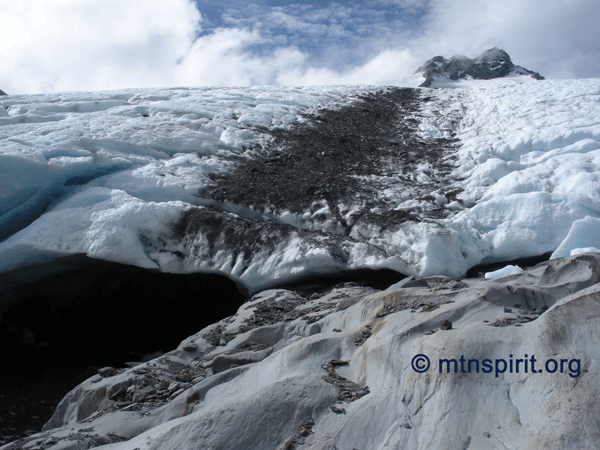
It’s called calving, when a glacier’s edge dramatically breaks off. Many cruise ships take the tour along Alaska’s shores. From Seward and other harbors along the coast, one can sign on for a daily round-trip to get up close views.
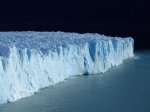
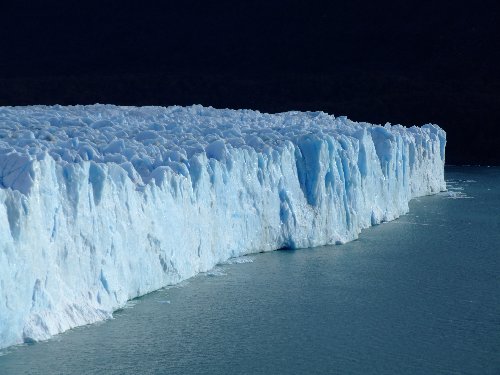
Perito Mereno Glacier, Argentina
The dramatic Perito Mereno Glacier in Argentina’s Southern windswept Los Glaciares National Park has many visitors.and is possibly the most famous rivers of ice in the world because. It was declared a World Heritage site by UNESCO in 1981. Amanda and I stopped at Tasman Lake in New Zealand’s Mt. Cook National Park to see the floating ice bergs in the grey-green water thick with rock flower. We hiked up to the top of an old terminal moraine and saw the bergs as the sun was setting.
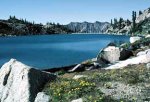
White Pine Lake, Utah
More than a few times, I’ve jumped into such frigid waters, after a run or back country mountain sleep, just to wake me up. While at University of Utah, when I was still learning about the mountains, I did an overnight up White Pine Canyon in the late fall and jumped into White Pine Lake near Snowbird. A few minutes later, it had a skim of ice on it. That’s chilly, but there were no icebergs or calving going on, just shivering.

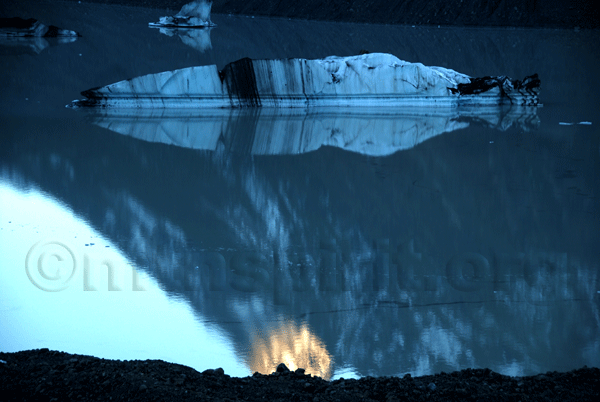
Lake Tasman, Mt. Cook
The Tasman Glacier regularly claves ice bergs but the evening we were there it was calm and each iceberg gave us a show of *“petreflections” of various sizes and patterns.
When the ice goes out in Lake Sunapee, NH, the reader may be curious to know that there usually aren’t big ice bergs. Then again, I didn’t grow up on the west side of the lake, where the whole lot piles up on a windy afternoon leaving dramatic piles of ice, as if the town dump truck and just deposited its backlog for the winter. On the east side of the lake, we observe the ice gradually thinning from the spring melt, and as it thins, darkens to almost a black. It turn into “honeycomb ice” we call it, where its transformed from the meter-thick solid sheet that runs the whole lake, to fragile, loosely held together elongated splinters that fall apart when scooped up in your hand. Those of us that grew us as kids along the shore of a lake will know what I mean. Daily we watch the progression.
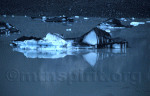
*Petreflections Galore
Official Ice Out day is declared when Artie Osborne can take his boat from the north tip at George’s Mills to Newbury, some 10-13 miles distant without obstruction. To my knowledge, he still makes the trip, and in the process, closes the informal town bets for the season. Go swim in an ice-berg filled lake sometime. It’s the right thing to do.
Author’s Note: Also see my earlier entry on largest iceberg breaks off of Tasman Glacier in 100 years.
*Petreflections: A term coined by Kathy Lowe. See her link above.
Tags:adventure travel, Alaska, Argentina, Arthur Osborne, Dexter R. Richards, ecospiritual psychology, Experiential Education, Georges Mills, Holistic Living, Ice Bergs, Kathy Lowe Bloch, Little Cottonwood Canyon, Los Glaciares National Park, Mountain Spirit, Mountaineering, Mt. Cook National Park, mtnspirit.org, New Hampshire, New Zealand, Newbury NH, Petroflections, Randy Richards, Sunapee NH, Sustainability, UNESCO, Utah, White Pine Canyon
Posted in Environment, Glaciology, New Zealand, Power of Place, South America, Traveling | Leave a Comment »
16/05/2009
Mountain Spirit expresses its condolences to the family, friends, and fellow staff at North Carolina Outward Bound, of Matthew Lizotte of Aspen, Colorado, 25, who died Sunday while leading a group up 11,411-foot Mount Tronador in Argentina’s Nahuel Huapi National Park. Lizotte was a senior instructor for NCOBS and was one of three experienced instructors leading a semester course in Patagonia. To know more about the circumstances, Read the AP Article.
Tags:Aspen Colorado, Huapi National Park, Matthew Lizotte, Mt. Tronador, North Carolina Outward Bound School
Posted in Milestones | Leave a Comment »
15/05/2009

R. Richards and A. Hamilton at Mt. Cook, NZ Ceremony set for 30th May near Auckland
Executive Director Randall Richards is getting married to Amanda Hamilton. Randy 51, is a native of Sunapee New Hampshire, USA, and Amanda, 40, born in South Africa, who has been living in New Zealand for a number of years, are planning a simple ceremony at the end of the month. Neither have been married before, nor have any children.
It took their mutual friend Lizbeth Asserhoj from Denmark, living in Copenhagen, to put them together. Richards knew Asserhoj from travels in Peru, and Hamilton first met her in Australia, and later traveled with her in India. Lizbeth thought the two would get along, and went so far as to invite Richards on the India trip in hopes the two would cross paths and hit it off.
What started with some emails and Skype video calls, soon developed into a trip to New Hampshire, USA for Amanda, and month later, a trip for Randy to NZ. The two will be having the ceremony on the 3oth of May at Piha Beach near Auckland, New Zealand, Amanda’s twin sister, mother and friends will be present. The two will also plan celebratory gatherings in the U.S. when they eventually return.

Ceremony on N. end of Piha Beach, NZ
Both are lovers of the mountains. Hamilton has been a ranger for the Aspiring National Park for the last few seasons on New Zealand’s South Island, and has enjoyed trekking in Nepal, the Alps and other areas. Richards has been climbing, skiing and mountain guiding most of his life.
Tags:adventure travel, Amanda Hamilton, Dexter R. Richards, ecospiritual psychology, Experiential Education, Holistic Living, Hut Ranger, Mountain Spirit, Mountaineering, Mt. Aspiring National Park, mtnspirit.org, New Hampshire, New Zealand, Peru, Piha Beach, Randy Richards, Spiritual, Sunapee, Sustainability
Posted in Holistic Living, Mountain People, New Zealand, Spiritual | 1 Comment »
15/05/2009
Traveling in Lima and other Peruvian Cities

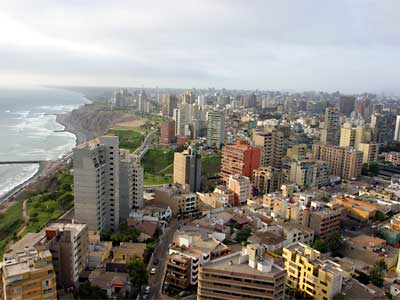
Friendly Lima, Peru
The below commentaries come from entries on virtualtourist.com, which I thought was useful information that mirrors my own perspective of traveling in Lima. I remember my boss, Willie Prittie of Alpine Ascents International cursing Lima for the time he lost a bags of climbing gear at the Airport, when it was stolen from him. From his horror story, I came to Peru armed to the hilt with mace, chicken wire around my backpack and yes, even a machete. I was traveling south on the Pan American Highway and was still a little uneducated about travel in South America. Within minutes of entering Peru, and catching a ride I realized I could throw away all the armaments. I’ve been in love with Peru ever since.
Hints on Traveling in Lima
Of course, no crime is petty when it happens to you, so take precautions against (more…)
Tags:adventure travel, Alpine Ascents International, Dexter R. Richards, ecospiritual psychology, Experiential Education, Holistic Living, Lima, Lima Airport, Mountain Spirit, Mountaineering, mtnspirit.org, New Hampshire, Peru, Randy Richards, Spiritual, Sunapee, Sustainability, travel safety, traveling safely, Willie Prittie
Posted in Peru, South America, Traveling | Leave a Comment »
15/05/2009
MSI and Family Cari
A Son Helps Build a Family Lodge on a Remote Island
There are times in my life when I’ve returned to a wonderful place in the world that I’m still getting to know, and by chance, I’ve end up camping in the same field or returning to the same hostel. Only when I walked into the place, do I remember having stayed there before.
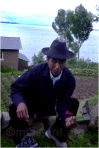
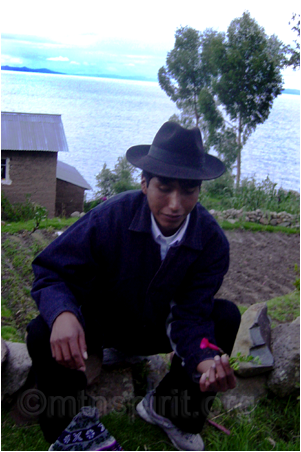
Richard Cari with a Kantuta, National Flower of Peru
Richard Cari’s home and the Kantuta Lodge is one of those places. Since I’m on the subject of “chance travel”, the reader might be interested my entry on a similar instance where I was hitch hiking across France and ended up sleeping in the same field I had slept in 15 years prior. But for now, more on Amantani Island on Lake Titicaca.
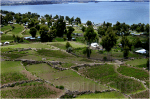
I’d come to Amantani Island a few times during my travels in Peru. The place and people drew me in. No cars, electricity only a few hours a day, not even cats or dogs, which made the place seem peaceful. There is hardship on Amantani. The small population living on the 3 mile by 1.5 mile island on Lake Titicaca live at 13000 feet in stunning but somewhat harsh environment. There sustainable crops of Quinoa, potatoes and herbs are rain dependent. There is no irrigation of the crops. People do go hungry, despite the tourism dollars that trickle in from visitors taking boats from the nearby (4 hours!) harbor or Puno, Peru. Most visitors stay at family homes on the island’s west side, who have formed a cooperative rotating schedule that spreads the wealth and visitor’s dollars so no one family is reaping the homestays.
At Outward Bound we learned as instructors the metaphors of community, and here on Amantani, the population, because of its environment is a clear example of community. The island people work together with the resources they have to create the best possible outcome for all.

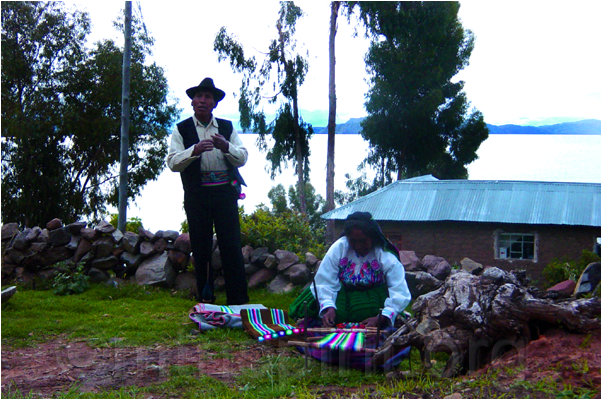
Segundino & Marcelina Cari of Amantani Island
Segundino, the island’s vice-Shaman, if you will, and his wife Marcelina have what was once a small home like the other villagers near the boat docks. But their son Richard went to University in Puno and majored in Tourism. He has come back with a plethora of “tools” and ideas he learned at school, that have transformed their home into the Kantuta Lodge, complete a separate building dining room, with longer beds for Gringos and Gringas and the only hot shower on the island.
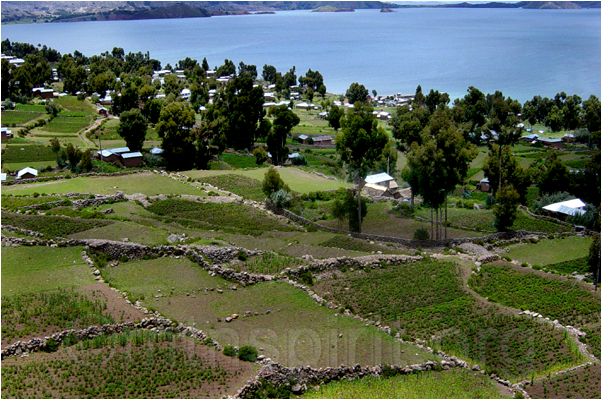
Amantani Island, Lake Titicaca
Richard has done a spectacular job with his new skills making a better life for his family. He is creating a market. I told him I would submit the family lodge Lonely Planet, and even though I’ve not followed through I suspect the word has already gotten out about his good work.
The last time I visited Family Cari, I enjoyed the stay thoroughly. I got to help Richard’s sister Wilma do some cooking and plant potatoes by digging trenches in the garden below the house. I didn’t do very well by the way. Wilma, showing me the digging technique with a short handled hoe, giggled as I’d dig for a few feet before feeling breathless from the altitude. Her mother and father looked on from the house with a wry smile. (more…)
Tags:adventure travel, Amantani Island, David Mamani, Dexter R. Richards, ecospiritual psychology, Experiential Education, Holistic Living, Kantuta Lodge, Mountain Spirit, Mountaineering, mtnspirit.org, New Hampshire, Peru, Randy Richards, Richard Cari, Segundino Cari, Service, Spiritual, Sunapee, Sustainability, Tourism, weaving, Wilma Cari
Posted in Environment, Experiential Education, Focus on MSI People, Holistic Living, Leadership, Mountain People, MSI News, Peru, South America, Sustainable Living/Communities, Traveling | 4 Comments »
14/05/2009
Chance Encounters with Campsites

The most likely scene of the tresspass
I was hitching through France on my way to Brittany from Chamonix. I vaguely remembered being in a similar situation before as the day progressed. My ride was approaching the southern outskirts of Paris, and I had to make a decision on where to get dropped off. It was getting late in the afternoon, I had a sleeping bag and a bivy sack, and decided to get out at the next major motorway intersection near Paris. Maybe I’d find a youth hostel, or even a field to throw my sleeping bag on. When we arrived at the interchange, it was a busy place, but it looked a good spot from which to start hitching in the morning for Western France. After hopping the guardrail, I found a an unused grassy path that took off from the motorway, that led to a small field. (more…)
Tags:adventure travel, Brittany, Camping, Dexter R. Richards, ecospiritual psychology, Experiential Education, Hitch Hiking in France, Holistic Living, Mountain Spirit, Mountaineering, mtnspirit.org, New Hampshire, Paris, Paris autoroute, Peru, Randy Richards, Safety, Spiritual, Sunapee, Sustainability
Posted in Alps, Traveling | Leave a Comment »
06/05/2009
Secrets of 37,000 year old baby mammoth revealed
By Paul Rincon – BBC
Baby Mammoth
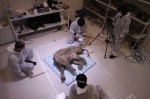
Perfectly preserved, the baby mammoth looks like she has been asleep only for a moment – not for the 37,000 years she has spent locked in the rock hard permafrost of the Arctic tundra.
Clumps of brown hair still cling to the three foot tall body, hinting at the coarse coat that would have once covered the infant. Even her eylasahes are intact.
These extraordinary images show why scientists are so excited by the discovery of Lyuba – the most complete body of a woolly mammoth ever found
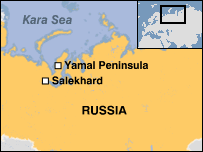
Area where Mammoth was Found
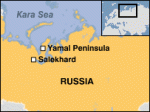
Discovered at the side of a river by reindeer herders on the Yamal Peninsula in northwest Siberia, the bone month old female is helping scientists to unravel how the extinct ice age giants once lived.
The contents of her stomach have provided scientists with valuable clues about what she and her fellow mammoths ate.
The baby’s layers of fat and minerals in her teeth have provided an unprecedented insight into her health and the health of her herd.
Palaeontologists now believe the information they have gleaned from the remains can help them understand what led to the woolly mammoths’ ultimate extinction around 10,000 years ago.

Mammoth Mummy
It is thought that mammoths died out as they were unable to adapt to the changing world around them as temperatures soared at the end of the last ice age, although some experts believe they may have been hunted to extinction by humans.
The findings have shown that the baby mammoth was in good health and well fed before its death, suggesting that its herd was able to find plenty of food at the time it was alive.
(more…)
Posted in Animals, Archeology, Environment, Glaciology | 6 Comments »
06/05/2009
New Zealand glacier findings upset climate theory
Mt. Brewster Glacier, Image:R.Richards
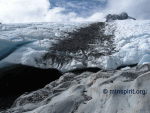
Research by three New Zealand scientists may have solved the mystery of why glaciers behave differently in the Northern and Southern Hemispheres. Geologist David Barrell of GNS Science, Victoria University geomorphologist Andrew Mackintosh and glaciologist Trevor Chinn of the Alpine and Polar Processes Consultancy have helped provide definitive dating for changes in glacier behaviour. They were part of a team of nine scientists, led by Joerg Schaefer of the Lamont-Doherty Earth Observatory at Columbia University in New York, who used an isotope-dating technique to get very precise ages for glacial deposits near Mt Cook.
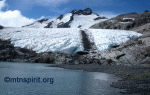
Mt. Brewster, glacier's tongue
They measured the build-up of beryllium-10 isotopes in surface rocks bombarded by cosmic rays to pinpoint dates when glaciers in the Southern Alps started to recede. The technology is expected to be widely applied to precisely date other glaciers around the world. Glaciers are sensitive indicators of climate changes, usually advancing when it cools and retreating when it warms. The first direct confirmation of differences in glacier behaviour between the (more…)
Tags:Climate Change, Fox Glacier, Mt. Brewster
Posted in Climate Change | Leave a Comment »
02/05/2009
1st May 2009
Is it safe to travel?
WHO is not recommending travel restrictions related to the outbreak of the influenza A(H1N1) virus. Today, international travel moves rapidly, with large numbers of individuals visiting various parts the world. Limiting travel and imposing travel restrictions would have very little effect on stopping the virus from spreading, but would be highly disruptive to the global community.
Influenza A(H1N1) has already been confirmed in many parts of the world. The focus now is on minimizing the impact of the virus through the rapid identification of cases and providing patients with appropriate medical care, rather than on stopping its spread internationally. Furthermore, although identifying the signs and symptoms of influenza in travellers can be an effective monitoring technique, it is not effective in reducing the spread of influenza as the virus can be transmitted from person to person before the onset of symptoms. Scientific research based on mathematical modelling indicates that restricting travel will be of limited or no benefit in stopping the spread of disease.
Historical records of previous influenza pandemics, as well as experience with SARS, have validated this point.
Travellers can protect themselves and others by following simple recommendations related to travel aimed at preventing the spread of infection. Individuals who are ill should delay travel plans and returning travellers who fall ill should seek appropriate medical care. These recommendations are prudent measures which can limit the spread of many communicable diseases and not only Influenza A(H1N1).
Tags:Influenza, Influenza A(H1N1), Mountain Spirit, Peru, SARS, Scientific research, Travel, World Health Organization Travel Advice
Posted in Health, Traveling | 2 Comments »
29/04/2009

Moving Years of Energy
Breaking with Convention of Pent-Up Emotions
More than ever, men are seeking help to get in touch with their feelings. In the wake of the 7-Award winning Australian film, “Men’s Group”, Phil Taylor of the New Zealand Weekend Herald, reports on the trend in men to seek emotional health. View the article in a pdf document on MSI’s website.
In general, American’s are thought of as a bit “touchy feely” by Australia and New Zealand standards, however I believe that Americans are confronting, and are confronted by their past, their situation in the world, and everything from the excessive materialism, Manifest Destiny and greed, to the huge per capita use of the world’s non-renewable resources. The US is at a turning point, in which, I believe, the mainstream population is becoming more compassionate and in the moment. A calm and lighter spirit is quietly arising, and people are taking action to change the world by changing themselves.
-

- Men’s Group Movie
The fruits of inner work are starting to show through society’s fabric in every day life, on the sidewalks or commutes to work. People are awakening to the higher possibilities of who they can be. It’s my observation that New Zealand and Australia’s men have an opportunity to dip their toe in the water of healthy expression, and jump in. It’s a natural evolution from the stark existence that, less than a generation ago was the only allowed behavior. Likewise, not more than 200 years ago, one could get burned at the stake for stating one’s true feelings, if they deviated from the social norm in any way.
Regarding the Movie, Men’s Group – The author saw the movie last night here in Auckland. Be prepared for witnessing the stark extreme of the dark age of men’s pent-up emotions. Both my wife and I think it is an important movie detailing the most difficult cases of men’s situations, and at the same time, portraying the hope of change.
Mountain Spirit addresses this need in our communities by offering programs for both men, women and families in mountain and natural settings in the U.S., Peru, and New Zealand.
Tags:Communication, Dexter R. Richards, Dmaiona Stansfield, Men's Group, Men's Health, Mountain Spirit, Phil Taylor, Randall Richards
Posted in Experiential Education, Health, Holistic Living, Inner Work, Leadership, MSI News, New Zealand, Spiritual | 1 Comment »








 Mountain Spirit's Blog