Archive for the ‘Environment’ Category

Don’t Buy It

17/06/2011

Selling Success Thru Consuming

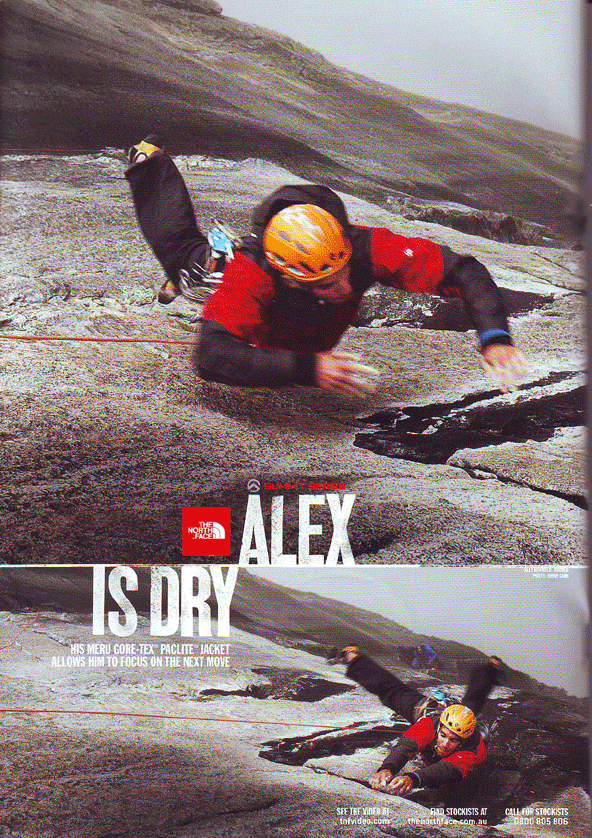
A recent full page ad on the inside front cover of New Zealand Alpine Club‘s The Climber* Magazine shows a truly burly shot of climber Alex Honnold in Borneo, doing a dyno move on what looks like a long potential fall on a big wall. Granted the sequence is impressive, (let’s be clear, I can’t do that), but the ad states, “ALEX IS DRY, His Meru Goretex Paclite Jacket allows him to focus on the next move.”

OK, ok, stop the music. Does this make we want to rush right out and buy a Meru Paclite Jacket? Not. But if  the Meru Paclite jacket allows him to focus on that dyno, maybe it will allow ME to focus on my next move too, just like the ad in the picture.  My criticism is albeit a cliche, nevertheless, I don’t buy it.

Kiwis are known for being a self-depreciating, humble bunch. They seem to buy used whenever possible, plus it blends into the backcountry better. Have you ever heard the saying, “Don’t go climbing with someone who has new gear?”  This doesn’t mean to avoid climbing and teaching new to the sport, but more it means watching out for a poser.

The Kiwi quietude is making me, in my conditioned Americanism,  feel downright goofy. I feel I may be tooting my own horn without even knowing . Mind you, I consider myself on the humble side, but New Zealanders make me look like Donald Trump.   I wonder however, how many climbers reading that magazine are taken by the ad. I would suspect a few more of my fellow Yankees stateside might be taken in. What do you think? Comment below.

Don’t buy it – buy used. Even though I’m able to buy on pro-purchase programs, I just bought a pair of Karhu BC skis on Craigslist, and it feels good. Did I even need them in the first place, yes. Maybe a step further, and a pair from the Salvation Army here in Queenstown for $40 would have sufficed. We can always improve.

Buying this Book? Share it.

Nope, I wouldn’t buy a used rope, or even cams,  but buying  most other stuff used just helps the planet, and you look better in a used jacket anyway. It’s another dirtbag move for the planet. Madison Avenue and the big corps who now own The North Face, (and now Karhu) don’t like guys like us. We’re terrible consumers – Have you joined the crowd?

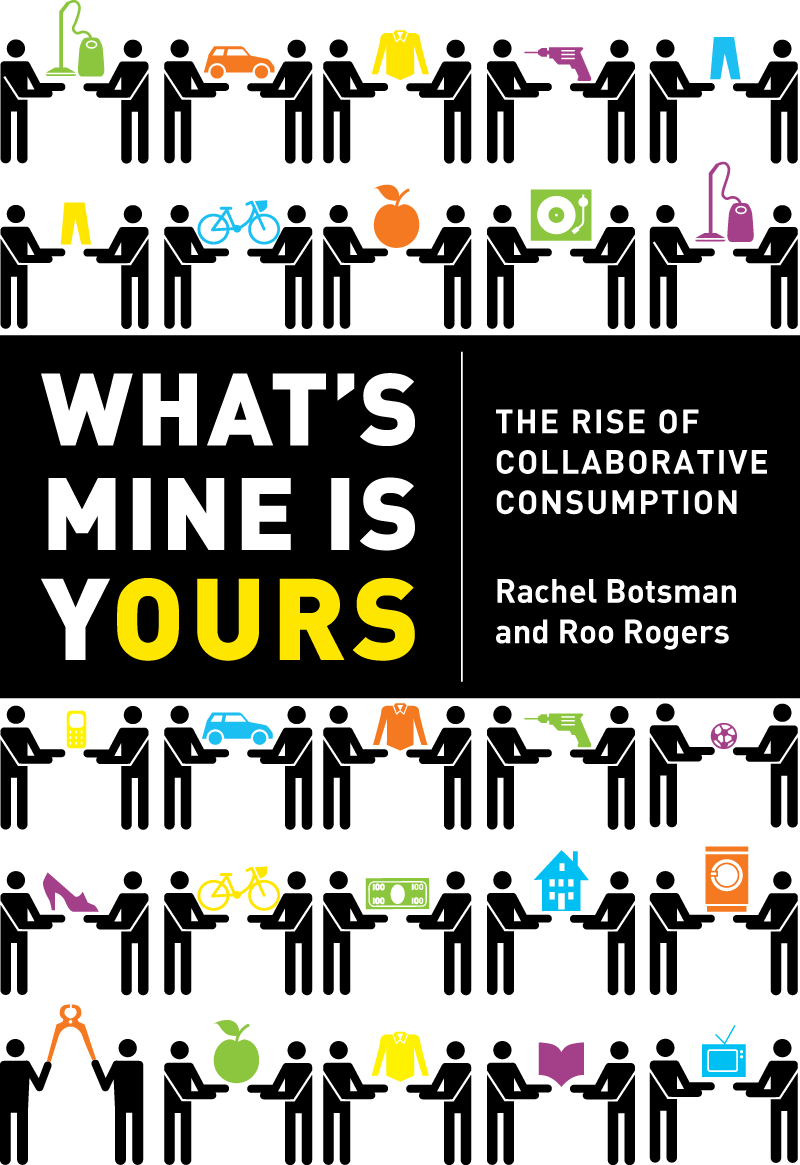
According to a new book by Rachel Botsman and Roo Rogers, What’s Mine is Yours, The rise of Collaborative Consumption, the trend is huge – to buy less, buy used and share. I’ll write more about this book after I finish it. So far it’s fascinating.

*This is no way meant to be a slam on The Climber advertising policies, in fact the author encourages readers to support the magazine by supporting its advertisers, appropriately. A tricky one, eh?

By the way, nice move Alex.

Water, The Great Mystery

04/06/2011

Water, Check it out.

Austrian Researcher Alois Gruber states in the movie, Water – The Great Mystery, by Hopscotch Films, “At the level of thought, a person who thinks negative thoughts is polluting his own water of which his body is 75-90% composed, and giving it a negative charge.”  The movie had my attention.
The film’s narrator continues, “As it records new information, water acquires new properties yet its chemical composition remains unchanged. The structure of the water is much more important than the chemical composition.

H2O

The structure of water means how its molecules are organized. Water molecules join together into groups which are called clusters. Scientists *theorize that these clusters work as memory cells of a

certain sort in which water records the whole history of its relationship with the world as if on magnetic tape.”

Water's structure in clusters

“Of course remains water, but its structure, like a nervous system reacts to any irritation. Modern instruments have made it possible to record the fact that within each of the water’s memory cells there are 440,000 information panels each of which is responsible for its own type of interaction with the environment. “

Molecules coming and going

Marc Chaplin, Professor and Laboratory Chief of London University says, “If you consider a cluster as a specific group of molecules, then it can only survive a short amount of time,  but if you consider it as a structure, whereby molecules can leave and other molecules come in, the  cluster will survive in effect, for a very long time. Water can record and store information, like a computer memory.”

H2O has "memory panels"

“Basically water has photographic memory and you can imprint it with very subtle energies, even from 10,000 km away”  says Professor Rustum Roy, of Penn State University, and Member of the International Academy of Science.  “Does that mean remote communication can happen between human beings who are structures essentially composed of water?” asks the film.

Subject A in Russia

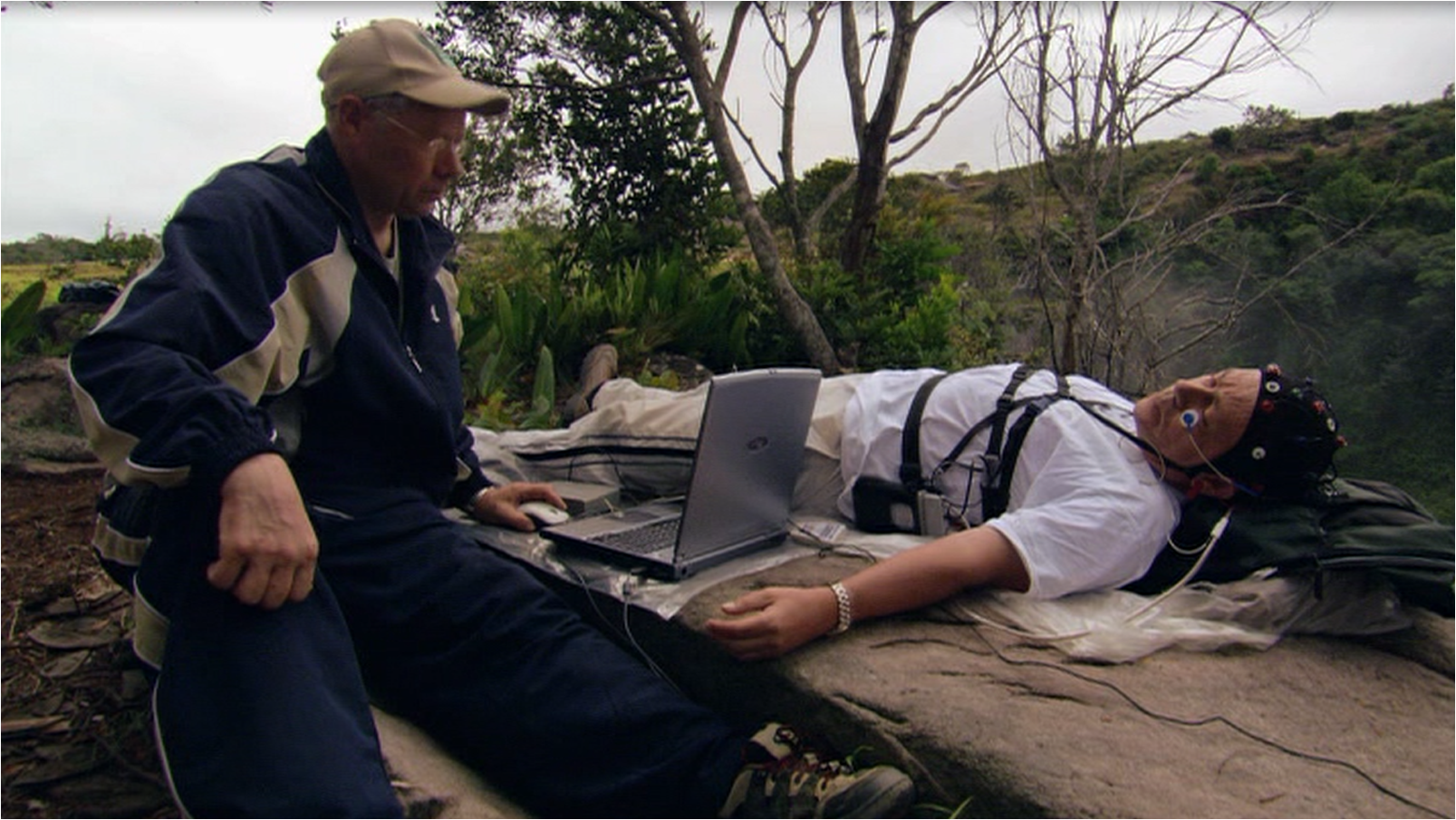
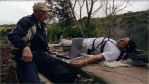
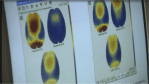
“In Februrary 2005 a professor and colleagues conducted an experiment  to confirm or disconfirm the hypothesis that remote communication between people is possible.  Two people were 10,000 miles apart, one in Moscow, the other in South America. The “virtual brain” of the experiment’s participants showed with EEG’s and EKG’s as well as other systems being monitored.
Subject B in S. America

Suddenly the two people had tuned themselves to the same wave, synchronization of areas of their brain, breathing patterns, and pulses. The theory is, liquids in the body carry out an information transmission system.”
The book the Secret Life of Plants was one of the first early works exploring and describing the reactions and relationships of plants to external stimuli in their world.  The author hooked up house plants in his office to a lie detector machine and to his surprise saw the plants react to his thoughts, regardless of whether he was in the same room or not, or the same city for that matter.
Subject A & B's synchronized scans

Dr. Masaru Emoto, author of “The Secret Life of Water”  was also interviewed in the film. Emoto, in his experiments, exposed different water droplets  to different thoughts, words  and intentions.

Water Crystals presented with Bach

These words and thoughts were directed at droplets before they were frozen, then images of the resulting water crystals were captured on film. The stunning results, such as  “beautiful” or “ugly” depended upon whether the words or thoughts were positive or negative. Emoto claims this can be achieved through prayer, music or by attaching written words to a container of water.    If you ‘re not familiar with his book or images, one of which is included here, check it out.

This led me to a logical conclusion from my shamanic studies in Peru, where the Inca and Quechua concept of Ayni, (reciprocity) runs throughout the mountain cultures in the Andes.

Q'ero Priests in the Andes

I learned to give words and form to what I had intuitively, (and most likely all of us have) had  known all my life from growing up in woods of New Hampshire, and later, mountain guiding in the mountains of the world –  that the mountains, streams and rivers, and other natural features give off a certain energy, and that we can interact with them as we would a person.  We can exchange energy, ask for support from the mountain, or lake,  and give back that support through emotional prayer, conservation protection and simple acknowledgement of the mountain’s energy and presence.
This might sound silly to the western logical mind, but the indigenous cultures who lived closer to the land knew and lived this life, and many still do, on a daily basis.  The western mind  is too busy, the channels are too clogged with data, to recognize the subtle signals that come from the old oak tree or the master mountain on the horizon.
The people of Cusco have twelve main “Apu’s “ or Mountain Spirits around their city, two of which are named Ausangate, Salkantay, Each main mountain or other geographic feature has its own characteristic such as male or female, strength,  allowance, introspection etc.. and the spirit of Ayni pervades all interactions with these mountain spirits.  As a side note, when I named our organization Mountain Spirit Institute in 1996, I had no awareness of the Andean “Apu’s”.
I took what I had learned, and melded it with my own intuition and experiences. When back in the U.S., I started to give more form to my relationships with the surrounding mountains and water features in my hometown of Sunapee, NH.  I started to see Mt. Sunapee in a different light, and in fact, took a job as a ski patroller mostly because I wanted to interact with the mountain energy on a daily basis. I wanted to, protect it, be in on the mountain, feel its power, and ask for strength from it as well.  Now that I think about it, maybe when Catherine Busheuff and I decided to move forward with those early meetings at the library, that later turned into the Friends of Mount Sunapee, maybe part of the seed that led to the mountain’s protection that exists today, came from those early interactions.  Many individuals have since carried forward  with their own passion to protect the mountain from abuse and over-development. I hope to think I may have had a small part in that.
Communication w/Lake Sunapee from NZ's Lakes District

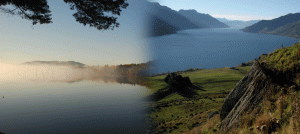
I also started relating to Lake Sunapee in a different way as well. While I always felt the water was in my bones, this film, and Emoto’s book, gives me some credence that the water memory from where we come is actually part of us.  So after seeing the movie, I spontanisouly  meditated on the waters of Sunapee from here in New Zealand. I started feeling the healing power of the waters of Lake Sunapee, even though I’m down here on New Zealand’s south island,  very long way away. I could feel the exchange of energy, of love and gratitude.
So what’s this all mean – from the shamanic studies in Peru, to experiments in Russia to meditation and communication with a body of water in New Hampshire from New Zealand,  from one water body to another body of water? It means, at least to me, that we can interact more with trees,  mountains, rivers, lakes and each other on a level far deeper than conventional society believes. Traditional societies know about this connection, and its knowledge may just mean we learn to survive as a species.
I started Mountain Spirit Institute because I feel I can contribute to helping people reconnect to the natural environment, each other and a deeper connection to themselves by setting the stage for powerful transformative experiences. This film is an affirmation that I, and our board of directors are on the right track. Visit our website for more information on our core values, and our mission, and do see the movie!

Water's structure as important as chemical make-up

Chapters of the movie Water, The Great Mystery, include:
The Structure of Water
The importance of water,
Dead and Heavy Water
Natural and Artificial Water
The Effect of Water on the Body
Water as the Medium
The Power of Faith
A Water Crisis
Nature Disasters
Love and Gratitude

* While I didn’t look for footnotes to the research mentioned in the movie, nor check into the science, I decided to write this post to share my personal experience of the movie, and in life.

There was much more fascinating information in the movie than I was able to include here. Do see it to learn more about agriculture, hydro power, our public water supply and one of the world’s most pristine water supplies in Brazil.  All images are screen shots from the movie and are intended and used for review purposes only.
Bolivia Enacts Law of Mother Earth

20/04/2011

Law of Mother Earth expected to prompt radical new conservation
and social measures in South American nation
From: The Guardian

Bolivian President Evo Morales

Bolivia is set to pass the world’s first laws granting all nature equal rights to humans. The Law of Mother Earth, now agreed by politicians and grassroots social groups, redefines the country’s rich mineral deposits as “blessings” and is expected to lead to radical new conservation and social measures to reduce pollution and control industry.

The country, which has been pilloried by the US and Britain in the UN climate talks for demanding steep carbon emission cuts, will establish 11 new rights for nature. They include: the right to life and to exist; the right to continue vital cycles and processes free from human alteration; the right to pure water and clean air; the right to balance; the right not to be polluted; and the right to not have cellular structure modified or genetically altered.

Controversially, it will also enshrine the right of nature “to not be affected by mega-infrastructure and development projects that affect the balance of ecosystems and the local inhabitant communities”.

“It makes world history. Earth is the mother of all”, said Vice-President Alvaro García Linera. “It establishes a new relationship between man and nature, the harmony of which must be preserved as a guarantee of its regeneration.”

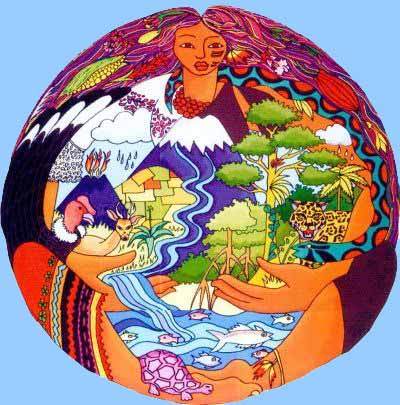
The law, which is part of a complete restructuring of the Bolivian legal system following a change of constitution in 2009, has been heavily influenced by a resurgent indigenous Andean spiritual world view which places the environment and the earth deity known as the Pachamama at the centre of all life. Humans are considered equal to all other entities.

The Pacha Mama, Earth Mother

But the abstract new laws are not expected to stop industry in its tracks. While it is not clear yet what actual protection the new rights will give in court to bugs, insects and ecosystems, the government is expected to establish a ministry of mother earth and to appoint an ombudsman. It is also committed to giving communities new legal powers to monitor and control polluting industries. (more…)

Bolivia: Fighting the Climate Wars

20/04/2011

From: The Guardian
John Vidal reports from La Paz where Bolivians are living with the effects of climate change every day. Their president has called for an urgent 50% cut in emissions – action that is essential for the country’s survival. Click on the image to view video.

Excellent Video on Bolivias Iniatives

MSI Adds Advisory Roles, Two Named

18/04/2011

Jen White, Kathleen Hurley join Mountain Spirit Institute in Advisory Role

Jennifer White of New London, NH and Kathleen Hurley of Portsmouth, NH, have been recently named advisors to Mountain Spirit Institute. In the newly created advisory role, both White and Hurley will contribute expertise and advice to the organization based on their respective fields of experience. Mountain Spirit Institute, founded in 1998,  runs wilderness based programs both domestically and internationally, as well as a wide variety of workshops and retreats.  The newly created advisory role broadens the scope of the institute while providing support to the  board of directors.  The role also engages those individuals in the community who are interested in, and have strong skill-sets and knowledge related to, MSI’s mission.Kathleen Hurley

Kathleen Hurley

Kathleen Hurley brings a wealth of corporate and online communications skills plus enthusiasm, writing and publishing acumen and keen business management experience to MSI’s advisory board. Kathleen has been a contributing writer to various New England magazines, and a director-level Marketing and Communications executive for almost a decade.  Hurley was also a founding member of the steering committee for the successful Sunapee SunFest, a holistic health, alternative energy, and sustainability festival which Mountain Spirit Institute created and ran for a number of years in Sunapee. Hurley currently serves as the Director of Corporate Communications for Actio Corp, Boston, MA.

Jennifer White brings a purpose-driven, holistic approach to sustainability education at MSI. White has been an educator for over fifteen years in a wide variety of academic and community settings, and has a multidisciplinary

Jennifer White

background in physics, psychology, systems science, permaculture design, and sustainability.  She served as the Executive Director of a national nonprofit called the Simplicity Forum, and was the Co-Founder and Director of Education for the Green Heart Institute which was created to help people “understand the global impact of their choices, connect with their values and live sustainably from the heart.”White has a long history of dedicated volunteerism with community based organizations including being a founding member of the Rocky Mountain Earth Institute and Transition Town Lyons, both in Colorado. She is currently the Sustainability Coordinator and an Assistant Professor of Environmental Studies at Colby-Sawyer College, New London, NH and founder of the Root Systems Institute.

Creating A Sustainable Lifestyle with MSI

10/04/2011

As our world moves closer to facing climate change and its consequences, MSI is doing our part to provide education and awareness on how to achieve some measure of personal sustainability.

We invite you to come to Vermont on June 10-12, 2011 for a weekend retreat to explore how to make healthier choices about food, relationships and navigating everyday life in a healthier and more conscious way.

In our upcoming Creating A Sustainable Lifestyle program, we feature some of New England’s most gifted teachers and facilitators.

Henry Homeyer


Henry Homeyer, author of four gardening books and New England garden columnist, will share insights from over 60 years of organic gardening experience.

Jen White


Jen White, Sustainability Coordinator at Colby Sawyer College, will help us understand the global impact of our choices, connect with our values and live sustainably from the heart.

Miles Sherts


Miles Sherts, author and founder of Sky Meadow Retreat in northern Vermont, has been teaching about conflict resolution and communication skills since 1990. Miles will lead a workshop on Conscious Communication.


So please think about joining us at Sky Meadow Retreat in June – at the very least it will get you thinking about what you can do to live more in alignment with the earth, and we guarantee, you’ll learn a few good things about Creating A More Sustainable Lifestyle.

Maple Syrup Builds Up in Trees

01/04/2011

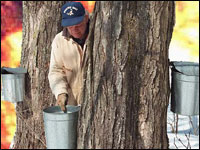
A downturn in the maple syrup market is having harmful side effects for trees in northern New England. For the first time in decades, the maples are remaining untapped, with sometimes-dangerous results.

At right: Maple-syrup maker Ryan Tilley braves a forest aflame with exploded maple to tap his trees.
Hear the mp3 story here.

World Population Video

31/03/2011

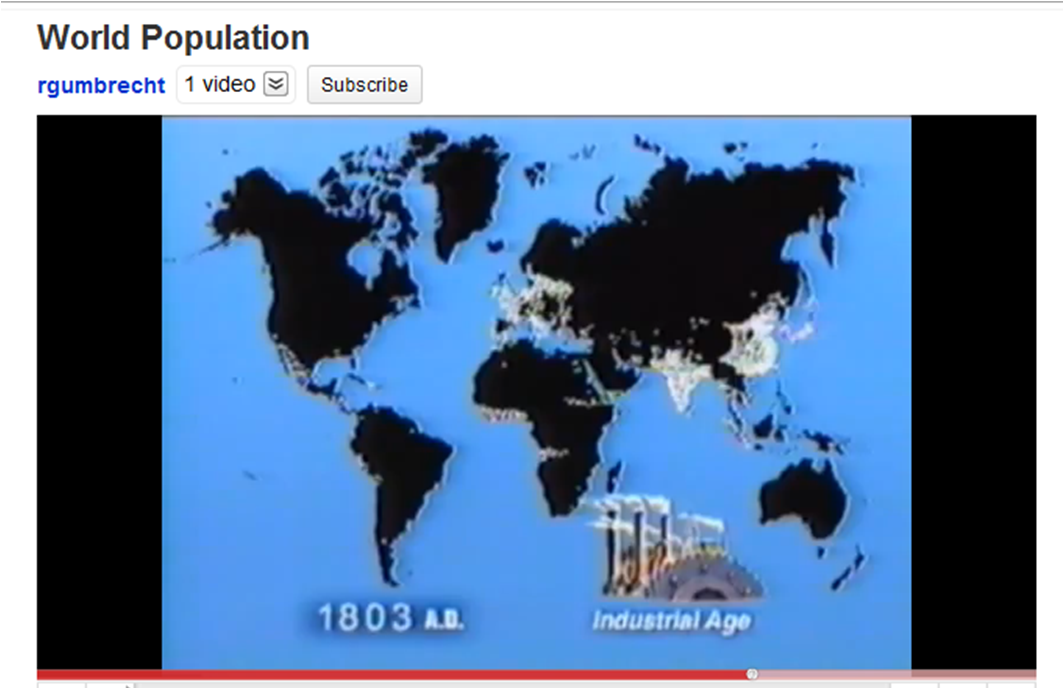
"The Dot Map", Hard to forget

“The Dot Map” as it’s commonly referred to is a video that stuck with me. I vowed to track it down on the internet today after having seen it some twenty years ago on VHS.

The DVD version can be purchased here for $20.00 which goes to a good cause: www.populationeducation.org
Highly recommended if you want a look at our population growth. It’s hard to get our head around it, but this video helps with an indelible visual.
Ed Note: This online version doesn’t do the original justice. The dots are hard to make out, consequently the experience isn’t quite as impactful. Buy the video for best results.

Obama approves GMO Crops

04/03/2011

The Revolution will begin our food supply
Over the past 12 days, the Obama administration has unbelievably chosen to approve two biotech crops, Roundup Ready genetically modified (GMO) alfalfa and Roundup Ready genetically modified (GMO) sugar beets. Obama’s recent approval of them will allow them to be planted as early as this spring, despite widespread acknowledgment that these crops are certain to contaminate both conventional and organic farmers non-GMO crops. Their approval only benefits one company — Monsanto.

These decisions are a devastating blow to our democracy and the basic rights of farmers to choose how they want to grow food on their land and the rights of consumers who increasingly choose organic and sustainably grown food for its positive health and environmental impacts. Click here to join us in telling President Obama that it’s time to stand up to Monsanto and reject these GMO crops today.

This Way of Life.. An Inspiring Film

09/02/2011

Don't Miss This Dose of Inspiration

The film This way of  Life is as inspiring as it gets. Filmed in the Hawkes Bay region of New Zealand’s North Island, this documentary is about a Maori family: a good and strong man and his wife who bring up their kids in the out-of-doors, raising wild horses. Peter, the father, is someone this writer admires for his steadfast adherance to what is right action in the midst of some people around him who act very badly.  We happened to pick up the movie at the library the other day, and were wowed by it.
A lot of what we strive for here at Mountain Spirit Institute is encapsulated in the documentary, and how this family lives their lives. No nature deficit disorder here. But the hardships, and even the new house where the kids get their own rooms, don’t sugarcoat the difficulties faced by the family.  We are about to bring a child into this world, and this film has added fuel to our fire to continue to head for the mountains. A cure for affluenza, for sure.

Director: Thomas Burstyn
New Zealand, 2010, 84 min.
Against the stunning beauty of New Zealand’s rugged Ruahine Mountains, Peter Karena and his wife Colleen instill in their children the values of independence, courage, and happiness. The family is poor in possessions but rich with a physicality and freedom within nature that most of us can only dream of. The children ride bareback, hunt, and play in the wild. Shot over four years, this film is an intimate portrait of a Maori family and their relationship with nature, adversity, horses, and society at large. Special mention at Berlin International Film Festival, 2010 Hotdocs, New Zealand’s Oscar shortlist.

You can learn a bit more about the family and the film on their Facebook page.
See the Movie Trailer