Archive for the ‘Environment’ Category
07/04/2010
Another Tear-Down

Seminario, performing in Keene, NH
Guillermo Seminario, the director of Chimu Inka, the Peruvian band came to the U.S under invitation from Mountain Spirit Institute to run a program to perform and teach about Peruvian folklore music in 2008. In one Vermont town, we were being housed in a very nice old residence in one of the more ritzy parts of town. At one point during the evening, Guillermo turned to me, shaking his head, saying, “In Peru, there are children without food, and a place to sleep.” He queried, “It confusing me, seeing such wealth in your country when Peru is so poor in many parts of my country.”
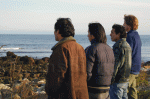
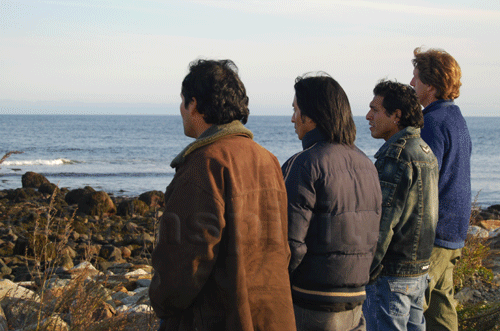
Our Peruvian Guests on the Coast, NH
We have thought and discussed this much since that day. Tearing down a perfectly good house just doesn’t seem right.
It’s more than, “Finish your broccoli, there are people starving in other countries,” but it stems from the same disconnect. It’s true the U.S and other 1st world country’s inhabitants are happily oblivious to our role in contributing to The Empire’s excesses. It’s time to think small, and stop the waste. I have a gut feeling this level of living will not continue, mostly due to peak oil. It’s actually quite obvious.
Tags:Confessions of an Economic Hitman, Guillermo Seminario, Imperialism, Lake Sunapee, NH, Peru, Rebuilding, Sunapee, Sustainability, Teardowns, Tearing down homes, Waste
Posted in 1- Video Posts, Conservation, Environment, Peru, Room For Improvement, Sustainable Living/Communities | Leave a Comment »
29/03/2010
An interesting account of the fate of Atlantic Salmon caught off the coast of Norway

Salmon, after a long trip
By Sarah Murray
Orion Magazine
For ordinary humans, the extraordinary migration of salmon is difficult to imagine. Take Chinook salmon. Some of these fish swim from the Columbia River up to Canada and beyond, covering up to sixteen miles a day. Calculated as body lengths per second, that would be the equivalent of a human swimming more than 160 miles a day—fast enough to circumnavigate the equator in 150 days. Migrating fish also cover vast distances. In its trans-Pacific migration, a tagged bluefin tuna was found to have covered an amazing twenty-five thousand miles—a distance greater than the Earth’s circumference.
If the mileage clocked by these fish sounds impressive, it is nothing compared to the journeys some of them take after their death. Read the rest of this article.
Tags:Atlantic Salmon, Chinook Salmon, Columbia River, Fish Processing, Norway, Sarah Murray
Posted in Animals, Conservation, Environment, Sustainable Living/Communities | Leave a Comment »
17/03/2010
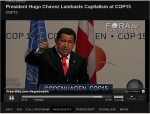
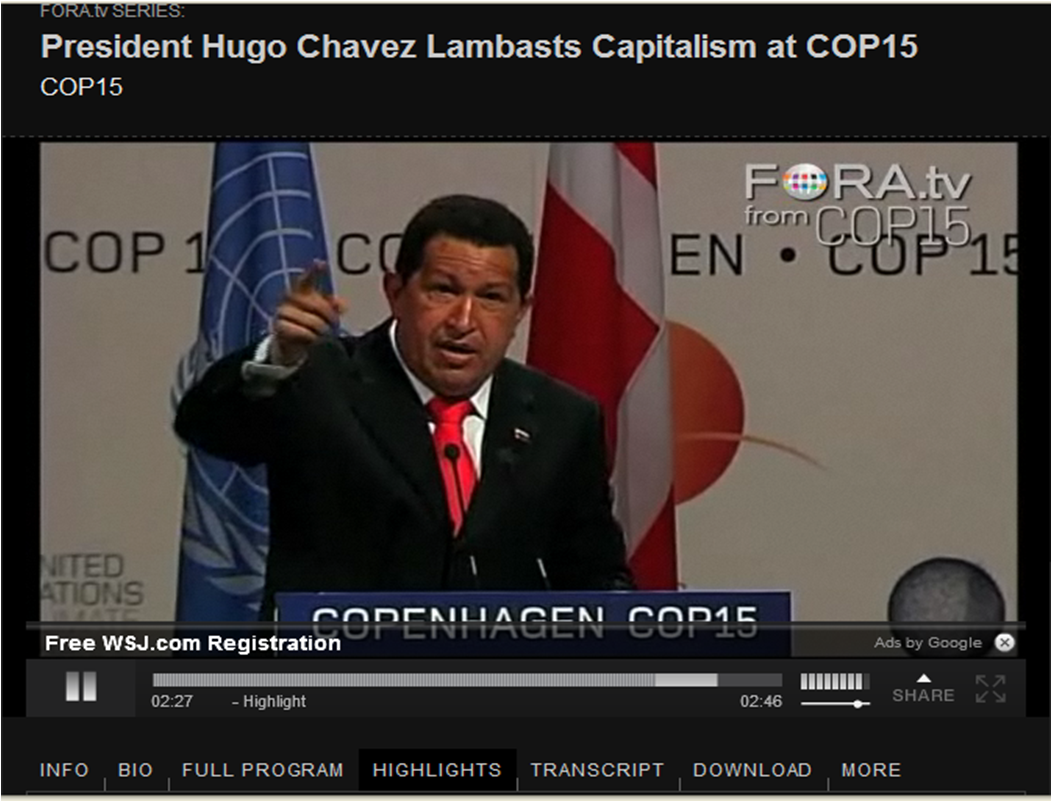
Chavez, calling it like he sees it
Venezuelan President Hugo Chavez links capitalism to the current state of global environmental degradation during an address on FORA.TV at the COP15 Climate Conference in Copenhagen.”A ghost is stalking the streets of Copenhagen…it’s capitalism, capitalism is that ghost,” says Chavez. He mentions in his address, a placard that demonstrators were holding up outside the conference building, which stated “Don’t change the climate, change the system”. He also stated, “If climate change were the banks, they would have saved it.”
Tags:Climate Change, Copenhagan, Hugo Chavez
Posted in Climate Change, Environment, Leadership, Sustainable Living/Communities | Leave a Comment »
12/03/2010
Newfoundlanders Abandon Villages, Cod Fisheries Gone
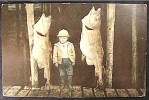
Child with Cod, circa 1895, from Greenpeace
After more than 400 years as the foundation of one of Earth’s great fisheries, cod are not coming back to Canada. The costs are more than environmental.
In the mid-20th century, cod supported more than 40,000 eastern Canadian fishermen. That’s when industrial catch techniques nearly tripled annual harvests. By the early 1970s, cod numbers plummeted.
Fishing stopped for a while. Cod came back. Fishing started again. Cod disappeared. In the early 1990s, the government halted fishing again, expecting the fish to return, just like before — but this time, they didn’t. They’ll likely vanish before mid-century.
Scientists can’t say for sure what’s going on under those cold gray waters, but they can speculate.
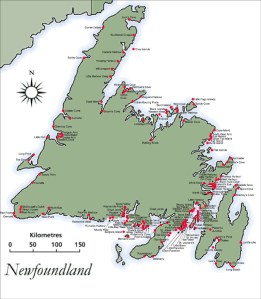
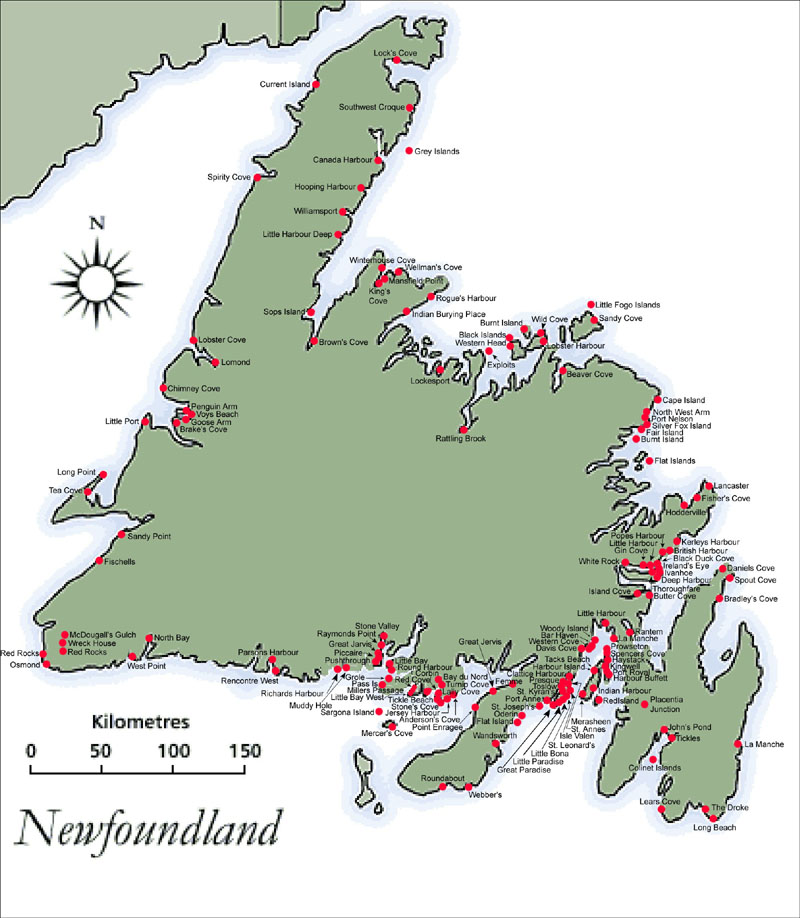
Newfoundland communities abandoned since 1960
There were likely too few cod to revive a population: individuals simply couldn’t find each other to reproduce. Some other species might have taken their spot in the web of life. The web itself has changed shape, and may no longer have room for them.
“You see this very rapid, drastic collapse of large predatory fishes that used to dominate, particularly cod,” said Boris Worm, a marine biologist at Dalhousie University in Nova Scotia. “You see a rapid collapse of those, and a shift of the ecosystem towards invertebrates and small pelagic fishes.”
Read the rest of this post
Tags:Boris Worm, Canada, Cod, Dalhousie University, Fisheries, Newfoundland, Nova Scotia
Posted in Climate Change, Conservation, Environment, Sustainable Living/Communities | Leave a Comment »
13/02/2010
Keeping Land Developers in Their Box
By D.R. Richards,
I remember that particular afternoon, when a friend and I talked about trying to do something to help save Mount Sunapee from the dread of slope-side condo development. Sullivan county, New Hampshire had no history* of activism, none, zero, zip. Being a native, of a conventional, conservative county, I had to really watch my thoughts of not wanting to make waves in my home town. I didn’t want to stand out. Besides, people I talked to said there was “nothing that could be done”, “it was already a done deal”, or they were “going to develop the mountain and what could anyone do anyway”. That particular afternoon, the friend and I decided to call a few people, and set up a meeting at the Abbott Library in Sunapee to see what could be done. That first meeting eventually led to the formation of Friends of Mount Sunapee. (*Current FOMS Vice President Linda Dennis was a founding member of a previous Mt. Sunapee land protection group, but at the time we convened, it was not active).

Mt. Sunapee has Friends
Never underestimate what the efforts of a few committed people can do in the face of deep pockets and driven land developers. Thanks to many, (too many to mention here) the word spread about the threat to our State Park, and eventually it spread to the candidate for New Hampshire governor, John Lynch. Lynch has been the most popular Governor New Hampshire has seen, and because of his courageous stance to defend the state lands of Mount Sunapee, the developers decided to sue him, and the state of NH, because their imaginary back-door deal wasn’t honored. Now I read the owners are threatening to sue again. This time they’re stomping their feet at the U.S. Forest Service in Colorado, for again, not getting their desires met to expand their ski area. (For more info click here)
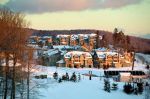
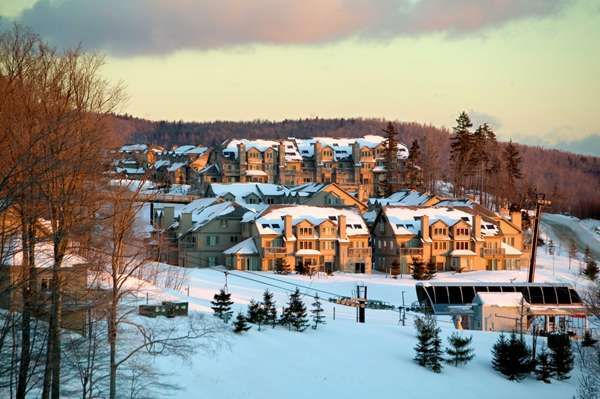
Overdevelopment is not pretty, Okemo, VT
It makes one wonder how some can be so incredibly out of touch with reality, out of touch with the wishes of the locals and the natural environment. I just watched the movie Avatar, (I still have a headache from the Imax 3-D version three days later) and the Muellers’ insatiable appetite for land and profit remind me of the miners in Avatar and their lust for the precious “unobtainium” mineral at all costs.
My dad was a developer. He built one of the first “funnel developments” on Lake Sunapee called Fisher’s Bay. (more…)
Tags:Avatar, Backcountry Magazine, Bob Bell, Catherine Bushueff, CBMR, Charles Richmond, Crested Butte, Crested Butte Mountain Guides, Crested Butte Weekly, Dexter Richards, Edward Abbey, Fisher's Bay, Friends of Mount Sunapee, Friends of Snodgrass Mountain, Governor John Lynch, Jay Gamble, Jayson Simons-Jones, land protection, Mark Reaman, Mountain Reach, Mt. Sunapee, National Environmental Policy Act, Ridgeline protection, Sunapee, Tim and Diane Mueller, United States Forest Service, unobtainium
Posted in Conservation, Environment, Focus on MSI People, Leadership, Power of Place, Room For Improvement, Sustainable Living/Communities | Leave a Comment »
04/01/2010
The Real Story

Too many bottles, The new faux pas
I recently received a flyer in the mail from Food and Water Watch, with the title: “America’s water should belong to each of us, not the companies that bottle and sell it. Not the corporations that want to privatize is. Take the pledge to protect your right to clean safe drinking water. Here’s what I’ve learned.
American consumers drink more bottled water every year, in part because they think it is somehow safer or better than tap water. They collectively spend hundreds or thousands of dollars more per gallon for water in a plastic bottle than they would for the H20 flowing from their taps.
Rather than buying into this myth of purity in a bottle, consumers should drink from the tap. Bottled water generally is no cleaner, or safer, or healthier than tap water. In fact, the federal government requires far more rigorous and frequent safety testing and monitoring of municipal drinking water. Read more
Bottled Water: Illusions of Purity :
Not safer than tap water
Bottled water manufacturers are good at implying things. With glossy ads and labels depicting quiet mountain streams, a consumer is led to believe what they’re drinking is healthier than what comes from the tap. But chances are it’s not. In fact, municipal water is more tightly regulated than bottled water.
(more…)
Tags:bottled water, Environment, Food and Water Watch, Mountain Spirit, take back the tap
Posted in Climate Change, Conservation, Environment, Health, Holistic Living, Sustainable Living/Communities | 1 Comment »
27/12/2009
By Amanda Richards

An Eco-fable about planting trees
I picked up an excellent book on the week-end – one that I hope you will read. It’s an oldie but a goodie. This book is a magical and inspiring tale about a man who planted trees. It is also known as The Story of Elzéard Bouffier, The Most Extraordinary Character I Ever Met.
It was first published in 1953 and is a timeless eco-fable about what one person can do to restore the earth. The hero of the story, Elzéard Bouffier, spent his life planting one hundred acorns a day in a desolate, barren section of Provence in the south of France. The result was a total transformation of the landscape-from one devoid of life, with miserable, contentious inhabitants, to one filled with the scent of flowers, the songs of birds, and fresh, flowing water.
Tags:Amanda Richards, Elzéard Bouffier he Most Extraordinary Character I Ever Met, Mountain Spirit, Provence
Posted in Books, Conservation, Environment, Sustainable Living/Communities | Leave a Comment »
24/12/2009
A Plastic Soup That Stretches from Hawaii to Japan
From: The Independent

Image: The Independent
By Kathy Marks, Asia-Pacific Correspondent, and Daniel Howden
A “plastic soup” of waste floating in the Pacific Ocean is growing at an alarming rate and now covers an area twice the size of the continental United States, scientists have said.
The vast expanse of debris – in effect the world’s largest rubbish dump – is held in place by swirling underwater currents. This drifting “soup” stretches from about 500 nautical miles off the Californian coast, across the northern Pacific, past Hawaii and almost as far as Japan.
Charles Moore, an American oceanographer who discovered the “Great Pacific Garbage Patch” or “trash vortex”, believes that about 100 million tons of flotsam are circulating in the region. Read the rest of this story
Tags:Dexter R. Richards, Garbage in Ocean, Mountain Spirit, Ocean pollution, Plastic Soup, Rubbage Dump
Posted in Environment, Sustainable Living/Communities | Leave a Comment »
22/12/2009
Rooibos Tea farmers on the Front Line of Cimate Change
By Amanda Richards
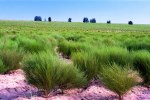
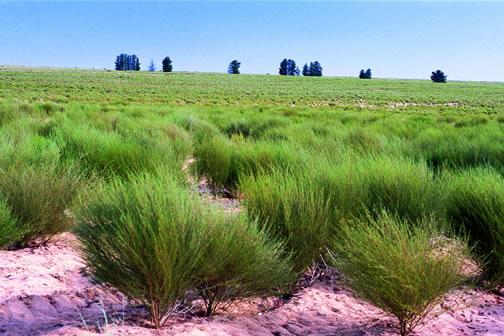
Rooibos - The Frontline of Climate Change
I was born in South Africa, and we all grew up with Rooibos or, red bush tea. I was saddened to see this recent article covering this important plant being threatened by environmental and man-made factors.
In this article in The Independent newspaper, Virginia Marsh explores how this valuable plant is threatened by climate change – and with it the independent farmers that depend upon it for their livelihoods.
By Virginia Marsh
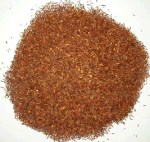
"Red Bush" or Rooibos Tea
Unusually, the entire global supply of rooibos comes from a single production area in the west of South Africa that measures just 200 x 100 kilometres. Efforts to cultivate it outside of the Suid Bokkeveld have not been successful: it draws on the region’s unique soils and climate and needs to grow alongside other components of its ecosystem.
Read the rest of this article:
Tags:Climate Change, Mountain Spirit, Red bush tea, Rooibos, South Africa, The Independent Newspaper, Virginia Marsh
Posted in Climate Change, Conservation, Environment | 1 Comment »
16/12/2009
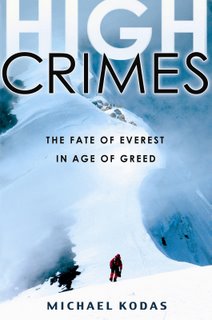
Mt. Everest, Dramas and Ticklists..And, Another Way
By R. Richards

Drama in the Mountains
I probably would have had the opportunity when mountain guiding for Alpine Ascents International, to eventually guide on Mt. Everest. Had I the interest to do so, or stayed with the company, that opportunity might have arisen. But I moved away from the classical “guiding life” to return back to my experiential education roots, and started Mountain Spirit Institute.
There seem to be a few **main types of characters in the mountains. The tribe with which I’m most comfortable is the Outward Bound experiential group of students and instructors, who are willing to step out of their comfort zones, “stretch” and allow the place and experience to change them.
Then there’s the N.O.L.S. (National Outdoor Leadership School) student or graduate who tends to be more pragmatic in wanting an experience in just the mountain skills with a touch of “expedition behavior” mixed in and important “leave no trace”.
Then there’s a third group, usually professionals, but not always, who want to tick off another peak, whether it’s one of the seven summits, or Mt. Rainier. They want to say they’ve done it. They’re more interested in the trophy than the experience. (more…)
Tags:Alpine Ascents International, best practices, Communication, Ethics and Guiding, Expedition behavior, Expeditions, Experiential Education, Health in the mountains, High Crimes, Kurt Hahn, Michael Kodas, mountain crimes, Mountain Spirit, Mt. Everest, NOLS, Outward Bound, Willie Prittie
Posted in Books, Climb/Ski/Mntneering, Environment, Experiential Education, Focus on MSI People, Holistic Living, Inner Work, Leadership, Peru, Power of Place, Room For Improvement, Spiritual, Traveling | 2 Comments »








 Mountain Spirit's Blog