Expedition 2012: From Vermont to James Bay by Canoe Paddling Forward, Giving Back
Expedition 2012's Route
By R.Richards
Family friend, Tom Bloch is one of ten crew members of Expedition 2012, an epic 1,200 mile canoe trip from Lake Dunmore Vermont to James Bay in Northern Canada, which is underway as we post this.
The expedition is an effort to support the Keewaydin Foundation in its ongoing mission to preserve “the Keewaydin Way”, and extend its benefits to an ever-greater range of today’s youth. The Foundation has three summer camps: Keewaydin Temagami (Ontario, Canada), Keewaydin Dunmore (Salisbury, Vermont), and Songadeewin of Keewaydin (Salisbury, Vermont).
To accomplish their goal, Expedition 2012 is committed to establish a new scholarship endowment for the Foundation. Expedition 2012 is using the extended wilderness canoe trip, which is a tradition at Keewaydin’s as a fundraising platform, . They are paddling the long route over the course of 65 days in wood and canvas boats hand-crafted by the expedition members. During the course of this project, expedition members are additionally dedicated to environmental advocacy towards the preservation of the wilderness we hold dear. To learn more about the progress of the expedition, and to follow the the paddlers go here, or head over to their blog
Keewaydin states on their website, “To live for a summer in a world largely unstructured and shaped only by nature itself… this is an adventure few are privileged to know.” and adds, “Through these programs, Keewaydin builds strong, independent character while exposing young men and women to a bygone lifestyle. Since 1893, Keewaydin has withstood the temptation of change, holding firm to what is dear of the past and leaving it untouched. Keewaydin’s simplicity and special link to the undisturbed wilderness set our programs apart from traditional camp experiences. This is the Keewaydin Way.” To learn more about the camp, visit their website.
The map, drawn up by Johnny Clore, shows the full itinerary of Expedition 2012 from Lake Dunmore down Otter Creek to Lake Champlain, then down the Richelieu River to the St. Lawrence Seaway. From Montreal, we’ll head upstream on the Ottawa River for over three hundred miles and cut west for our resupply at Temagami by following the fabled “Trip In.” From there the route leads over a swift succession of smaller lakes and rivers to the Abitibi River, where we will restock and head for the bay at Moosonee. Resupply locations are indicated with yellow stars. Click the “Itinerary” tab on the left to get a more detailed look at our itinerary.
Tom Bloch, On Expedition 2012
Tom Bloch has written a personal mission statement and essay, as have the other members of the team), which starts out…”I never went to summer camp. Instead of big canvas tents and shiny green canoes, my childhood summers were filled with soccer camps and family hiking trips. Now, here’s the shocker: I turned out just fine. As of my college graduation last May, I was a reasonably well-adjusted, mild-mannered young man with sensible career aspirations and even a few healthy hobbies. The world is rife with friendly, successful people who have never paddled a canoe. In light of this, what is the value of Keewaydin? Why this grand expedition? Read the rest of Tom’s entry here..
By R. Richards,
Lama* Willa Miller, head of a Tibetan sect of Buddhism, based in Cambridge Mass, continues the interview on the new Wonderwell Refuge, the importance of being in nature, as well as her own early influences and experiences being in the wilderness with her father in Idaho. We also talked about Richard Louv’s concept of Nature Deficit Disorder, a term the author coined in his book, The Last Child in the Woods.
The early teachings of Buddhism emphasized the refuge of wilderness, the mountain top, the cave. Lama Miller sees this as a return to the traditional ways of Buddhism by encouraging her visitors to the refuge, to get out on mindfulness walks in nature. See Part I here. *(Lama: A title given in Tibetan Buddhism to a venerated spiritual master, a monk/priest of high rank) Mountain Spirit Institute is planning a collaborative effort with The Wonderwell Refuge to offer a Mindfulness in the Mountains retreat in the fall of 2012.
The meditation hall at Wonderwell Refuge, Springfield, New Hampshire
Lama Willa Miller, the spiritual leader of a Natural Dharma Fellowship branch in Massachusetts, talks about a new refuge center, and the importance of mindfulness in the mountains. Part 1
Lama Willa Miller
By R. Richards Mountain Spirit Institute
The Dartmouth Lake Sunapee region of New Hampshire, USA has the good fortune of seeing a new Tibetan Buddhist Refuge open in the tiny town of Springfield. After a recent open house, we learned about what Lama Willa Miller, the leader of the Cambridge Mass based branch of The Natural Dharma Fellowship, has in mind for the new retreat center called Wonderwell, as well as the link between Buddhism and the mountains. Learn more, check out this first in series of interviews we conducted on location. See Part II
Mountain Spirit Institute names Ken Wylie to Board of Directors
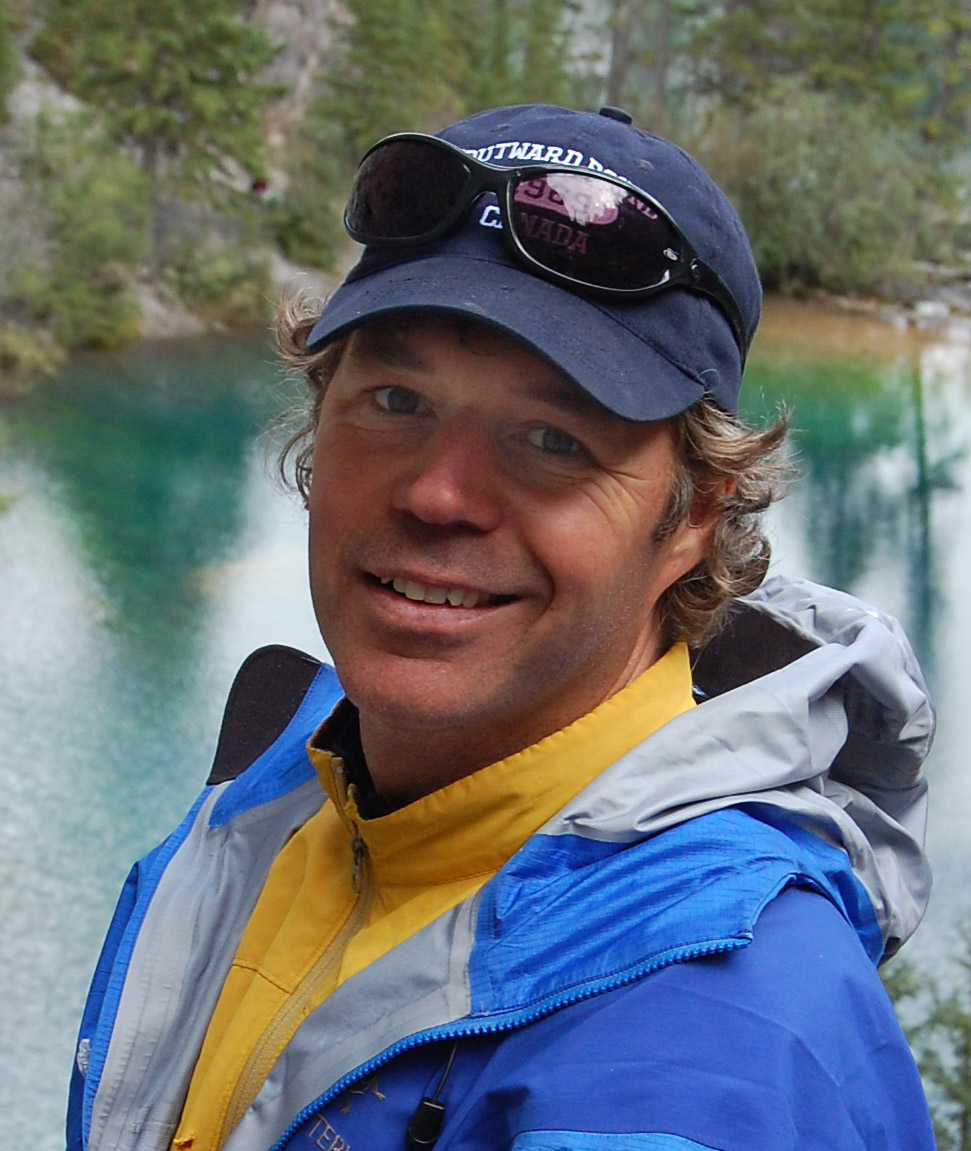
Ken Wylie
Ken Wylie, a veteran certified mountain guide from Cochrane Alberta, Canada with years as an experiential educator and program manager at Canadian universities as well as Outward Bound Canada and the Outward Bound USA, has recently been named to the board of directors at Mountain Spirit Institute based in the U.S. and New Zealand. In addition to helping guide the U.S. organization, Wylie has plans to launch a Mountain Spirit Institute Canada where he will create mountain programs based on the mission statement. Mr. Wylie and founder Randall Richards along with fellow board members are in discussions about also collaborating on mountain programs in the U.S, New Zealand and possibly the Alps.
Says Wylie, “I am drawn to Mountain Spirit Institute because of the organization’s vision. MSI has the vision for the 21st century in my estimation, and is what I have been searching for in my career.” Adds Wylie, “The mountains are an experience that can change people’s lives, but are more often than not just another consumable, another peak to check off the list. What people need now more than ever, is to connect and MSI helps them do that.” (more…)
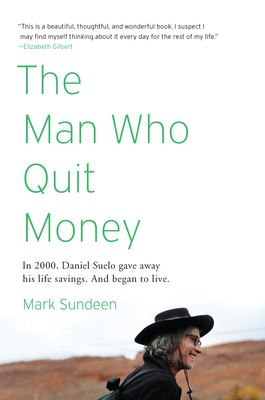
What Money Is & What Money Is Not – Living Without Money
A Walden for the 21st century, the true story of a man who has radically reinvented “the good life”.
In 2000, Daniel Suelo left his life savings-all thirty dollars of it-in a phone booth. He has lived without money-and with a new-found sense of freedom and security-ever since.
The Man Who Quit Money is an account of how one man learned to live, sanely and happily, without earning, receiving, or spending a single cent. Suelo doesn’t pay taxes, or accept food stamps or welfare. He lives in caves in the Utah canyonlands, forages wild foods and gourmet discards. He no longer even carries an I.D. Yet he manages to amply fulfill not only the basic human needs-for shelter, food, and warmth-but, to an enviable degree, the universal desires for companionship, purpose, and spiritual engagement. In retracing the surprising path and guiding philosophy that led Suelo into this way of life, Sundeen raises provocative and riveting questions about the decisions we all make, by default or by design, about how we live-and how we might live better. Editor’s note: It sounds like we have another Outward Bound success story here. I read that Suelo has been an OB instructor. Good to see he’s living the dream, and it looks like some of the OB values rubbed off, but I’m sure he had influences from more than just Outward Bound.
Alex shares what he likes about his role at head of Thompson Island Outward Bound Center just outside of Boston, MA. USA.
The center is located on a beautiful island reachable by shuttle boat for students and the public. Go check it out, meanwhile here’s what Alex has to say about TIOBC.
Rachael Umbriano is Taking a Big Bite Out of Life
I met Rachael at a recent wilderness emergency medicine refresher course in North Conway, NH where we were both participants. Rachael just finished a year-long stint studying in Italy and traveling to 40 countries in her spare time while in Europe. A rock climber and go-getter, Rachael has some cool ambitions – see her vid below.
Learn how getting out of the U.S. for an extended period can shift your perspective. The Aussie’s and Kiwi’s call it an O.E. (overseas expedition). Most Americans, due to our work and study schedules, plus our limited work reciprocity with other countries only take short visits abroad. Rachael doesn’t fit that stereotype.
The wonder of a palm frond in the morning sun, nz.
I’ve often been thinking how having a child is like teaching an 18-yr Outward Bound course, for the parents. The bus arrives when the baby is born and it may leave when the teen turns 18, but maybe not. Of course, no one wants to hear the worn our phrase, “you learn through your children” but I’m reminded of the Kogi tribe (see the BBC film Elder Brother’s Warning) in the Colombian Sierra Nevada mountains who hide their shamans-in-training in a darkened hut, never seeing the light of day until their 18th birthday. Then, after years of preparation, after telling them what the world looks like, they see their world for themselves, for the first time with their own eyes. As the wonder of a baby, with new eyes, but with training, so they can see their world more clearly to do their shamanic work.
Seeing our baby boy look with glee at the morning sunrise, and the light shining through some palm leaves this morning is an eye opener. I felt “more aware” after I survived being tossed around in a van roll-over in 1988. “Everything looked new and pristine”, as Eckhart Tolle put it after his awakening experience. I felt like lucky to still be on the planet. That default feeling subsided after a few weeks, and now I have to work at being present by doing what I call “remembering my spiritual practice”. For me it’s meditating and listening to Eckhart Tolle’s Power of Now. Reminders can take almost any form as long as it helps
An Eye Catcher - Are you watching though?
bring one back to their center. In recent talks with newly elected Mountain Spirit Instituteboard member and mountain guide/instructor Ken Wyle, he’s been relating how writing his book on being buried in an avalanche which killed seven people, is a catharsis. Tolle says that people who are more conscious in their lives have usually had some tragic loss in their life that shook them out of the dream state we call normal life.
Our baby boy, laughing as he looks out the window of our van whizzing down main street in Kingston New Zealand, is a reminder to me – “What am I missing? I want to see like he sees!” The good news, it’s wholly possible. I’ve been seeing, more than dreaming during the last ten years. And it’s obivous when I’m not present. I might go a whole morning or day and realize I’ve not been present until something catches my eye, like a detail of a stem in a vase, or the bustle in supermarket, or of course, a sunset.
Learning to see and live in the moment sure beats the alternative, and I’m not going back. When you beat your head against a wall long enough, you finally decide you’ve had enough of that, and make the choice to stay in peace, no matter what happens. A side benefit of being at peace is your mind isn’t filled with crap, so you are free to see such things as the morning light shining through some palm fronds.
Check out the South Coast Environmental Society, and stay tuned for the video, “Welcome to the Food Forest”. There are tons of volunteer opportunities as well.
YOUR FOOD SUPPLY #31: A Modest Kiwi Environmental Centre Note: (This video series started in 2010, while listening to the audio version of the book, “The Omnivore’s Dilemma”, when Amanda and I were driving across the U.S. and were seeing the effects of industrial farming in real time while listening to the book.Here’s that first entry Your Food Supply #1To see the whole series, click on the category “Your Food Supply” in the category section of this blog on the right of your screen.
Graeme Dingle is fast becoming one of my role models, and I’ve never met the man. I intend to though. Maybe if I’m fortunate, we may collaborate on a co-venture project helping to connect people to the mountains, who knows. The more I learn about Mr. Dingle, the more I like and respect who he is, what he stands for, and what he’s accomplished in outdoor education.
Here’s an article from the Directions Magazine By Laura Crooks
Inspiring New Zealand teenagers to reach their potential was a plan born during a trip to the Arctic by adventurer Graeme Dingle and partner Jo-anne Wilkinson in the early ’90s.
Why did you think New Zealand needed a specific programme to help the country’s youth?
I set up the Sir Edmund Hillary Outdoor Pursuits Centre (OPC) in 1972 and I thought that was my contribution to New Zealand in terms of young people. But it was really just the start, because I learnt so much about youth development through it and I got to thinking about the business of dealing with harder kids than those we met at OPC. I felt that for kids who had low confidence and low self-esteem, a one week experience in the wilderness wasn’t enough – it needed to be a continuum of things that really built on what had been learnt in that first period. I then set out to do the first continuous circumnavigation of the Arctic and in the Arctic you get a lot of very unusual communities – they’re very isolated and they live in such extraordinary circumstances where it’s light half the year, then continuously dark the other half of the year. They have very high rates of suicide, the kids don’t have too much to look forward to, and that started us thinking. But it didn’t really hit home until we got back to New Zealand – that here we lived in paradise and yet we had one of the highest rates of youth suicide, youth incarceration, dropouts from school unplanned teenage pregnancy – the works. The main catalyst was going to see Once Were Warriors – that was the thing that finally made us say: “Let’s do something about this”. So, Jo-anne and I invented Project K. basically. The Project K Trust grew into the Foundation for Youth Development (FYD) with nearly 20,000 young people in programmes each year. The FYD runs programmes for kids aged 5 – 18, and Project K is one of these. (more…)




 Mountain Spirit's Blog