By: R. Richards
We continue our interview with Lama Miller of Wonderwell Refuge in Springfield, NH, USA
See Part I or Part II
Archive for the ‘Holistic Living’ Category
Buddhism & Mindfulness in the Mountains: Part III
10/04/2012THE HUNGER GAMES: Dystopian fiction
05/04/2012

Predictive Programming
THE HUNGER GAMES: Dystopian fiction & Predictive Programming
The following piece is by Richard Louv, Author of Last Child in the Woods. I’m glad he’s weighed in on the Hunger Games. One might also google Predictive Programming to learn more about why such movies are made. (ed.)
Stuck Inside Apocalypse with Dystopic Blues Again
By Richard Louv
“The Hunger Games,” the book, is a page-turner and the movie is gripping. Some of my colleagues, working hard to reconnect young people to nature, believe the popularity of the book and movie will, like the film “Avatar,” stimulate a deeper interest in the natural world. I hope they’re right, but after leaving the movie theater on Friday (having already read the book), I was, well, ambivalent.
In this story, there are two forests. The first forest is as natural as a forest can be with an electrified fence to keep the largest carnivores out of District 12, Katniss Everdeen’s starving Appalachian homeland.
At the beginning of the book, she describes sitting in a nook in the rocks with her hunting partner, Gale, looking out at a forest that sustains them: “From this place we are invisible but have a clear view of the valley, which is teeming with summer life, greens to gather, roots to dig, fish iridescent in the sunlight.” This forest keeps her family alive. (more…)
9 Reasons Why You Shouldn’t Ride to Work
05/04/2012
Commuting by bike: dangerous
From: The Adventure Journal
I have biked everywhere within 4 miles of my apartment in the past 5 years, including every job I’ve had — I’ve never had to drive to work in Denver. I find riding a bicycle exhilarating, but that’s no reason for you to think you should. In fact, here are 9 reasons you shouldn’t bike to work. I’m sure you can think of others.
1. It’s too dangerous.
Can you imagine being out there on a bicycle with all these crazy drivers flying past you, nothing to protect you except a plastic and styrofoam shell on your head? You could get killed. The absolute best thing is to stay in the protective cage of your car, because no one’s ever been killed when they’re inside an automobile. Driving is safe.
2. You have to wear a tie to work. Or a suit. Or a skirt.
Not only that, it’s important to wear your tie/suit/business casual attire from the moment you leave your house in the morning until the moment you get home. There is no conceivable way you could leave some clothes at your office, and change into them after you ride your bike to work, two or three days a week. Plus, your suit/tie combination is so dialed, you can’t just spread your tie collection out over two locations. Where the hell is my cornflower blue tie? I need to see if it looks good with these shoes. And like there’s some way to ride a bike in skirt or a dress?
Read the rest of this story..
Thanks to Justin Canny for the post on FB.
Buddhism & Mindfulness in the Mountains: Part II
03/04/2012
A walk in the woods at Wonderwell Refuge
By R. Richards,
Lama* Willa Miller, head of a Tibetan sect of Buddhism, based in Cambridge Mass, continues the interview on the new Wonderwell Refuge, the importance of being in nature, as well as her own early influences and experiences being in the wilderness with her father in Idaho. We also talked about Richard Louv’s concept of Nature Deficit Disorder, a term the author coined in his book, The Last Child in the Woods.
The early teachings of Buddhism emphasized the refuge of wilderness, the mountain top, the cave. Lama Miller sees this as a return to the traditional ways of Buddhism by encouraging her visitors to the refuge, to get out on mindfulness walks in nature. See Part I here.
*(Lama: A title given in Tibetan Buddhism to a venerated spiritual master, a monk/priest of high rank)
Mountain Spirit Institute is planning a collaborative effort with The Wonderwell Refuge to offer a Mindfulness in the Mountains retreat in the fall of 2012.

The meditation hall at Wonderwell Refuge, Springfield, New Hampshire
Buddhism & Mindfulness in the Mountains
01/04/2012Lama Willa Miller, the spiritual leader of a Natural Dharma Fellowship branch in Massachusetts, talks about a new refuge center, and the importance of mindfulness in the mountains. Part 1

Lama Willa Miller
By R. Richards
Mountain Spirit Institute
The Dartmouth Lake Sunapee region of New Hampshire, USA has the good fortune of seeing a new Tibetan Buddhist Refuge open in the tiny town of Springfield. After a recent open house, we learned about what Lama Willa Miller, the leader of the Cambridge Mass based branch of The Natural Dharma Fellowship, has in mind for the new retreat center called Wonderwell, as well as the link between Buddhism and the mountains. Learn more, check out this first in series of interviews we conducted on location. See Part II
The Power of Vulnerability
27/03/2012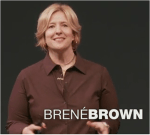
Brené Brown:TED Talk
Vulnerability and Connecting, A TED Talk with Brené Brown
Mountain Spirit Institute’s newest board member Ken Wylie has been expressing the vital requirement of vulnerability in which to build a foundation of compassion and connection (which is our mission) to the natural world, each other and a deeper connection to ourselves. It appears that like great minds think alike – Brené Brown states in her TED talk: The power of vulnerability.
Brown studies human connection – our ability to empathize, belong, love. In a poignant, funny talk at TED in Houston, she shares a deep insight from her research, one that sent her on a personal quest to know herself as well as to understand humanity. See Brene’s talk here or click on the image at right.
Special thanks to Lindy Roberts in Auckland, NZ for sending this our way.
Playing in the Dirt: Good for Kids
24/03/2012
Stopping Crohn's Disease by getting dirty
Why Playing in the Dirt is Good for Kids
By Preeti Sunil
From: buzzle.com
Parents are at their wit’s end trying to teach children lessons in hygiene only to find them indulging in their favorite hobby, yet again! Dirty, mud covered clothes and bodies are symbolic of childhood. However, new research suggests that this is an evolutionary instinct, which must not be curbed
It is no secret that most children have an insatiable urge to grab the dirtiest looking things and put them into their mouth. Even a child who is less than a year old is hardly able to do much except drink milk and sleep all day, experiences a personality change the moment it is put down on the ground, out in the open. The exploration begins and everything including dirt, mud and even poop finds its way into the tiny mouths. (more…)
Meditation Helps the Brain
23/03/2012Researchers Build Evidence that Meditation Strengthens the Brain
By Science Daily

Meditation strengthens Brain
Earlier evidence out of UCLA suggested that meditating for years thickens the brain (in a good way) and strengthens the connections between brain cells. Now a further report by UCLA researchers suggests yet another benefit.
Eileen Luders, an assistant professor at the UCLA Laboratory of Neuro Imaging, and colleagues, have found that long-term meditators have larger amounts of gyrification (“folding” of the cortex, which may allow the brain to process information faster) than people who do not meditate. Further, a direct correlation was found between the amount of gyrification and the number of meditation years, possibly providing further proof of the brain’s neuroplasticity, or ability to adapt to environmental changes.
The article appears in the online edition of the journal Frontiers in Human Neuroscience.
The cerebral cortex is the outermost layer of neural tissue. Among other functions, it plays a key role in memory, attention, thought and consciousness. Gyrification or cortical folding is the process by which the surface of the brain undergoes changes to create narrow furrows and folds called sulci and gyri. Their formation may promote and enhance neural processing. Presumably then, Read the rest of this story…
Does Death Exist? New Theory Says ‘No’
16/01/2012Many of us fear death. We believe in death because we have been told we will die.
Editor’s Note:
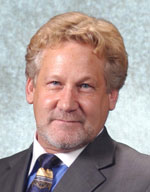
Dannion Brinkley
For some reason, death has not been a stranger in my life. Western society is almost totally ignorant of death, it is something to be brushed under the rug, and feared. Stay tuned for a posting on “Death, The Funny Side” a talk by Dannion Brinkley, author of Saved by the Light. I heard Brinkley speak at a Whole-Life Expo in Seattle in the late ’80’s – he was promoting his book. I liked his half-hour talk so much that I bought a copy of it andeventually converted it mp3 format. I plan on posting it here, once I have Brinkley’s permission of course. It’s a classic, that has changed my understanding of what death is, and what it means to be fully alive. His sense of humor perspective, depth and compassion, after having died more than once and come back to talk about it, is remarkable, especially after having been a hit man for the U.S. government. Ykes.
At Mountain Spirit Institute, one of our core values is addressing our “ultimate concerns”. We believe that by helping to reconnect people to the natural environment, each other and a deeper connection to one’s self, we can help participants start looking beyond the veil. Eckhart Tolle writes” The secret to death is to die before you die, and realize there is no death.” Hmm. Maybe he’s onto something. Dannion Brinkley is, as well.
R. Richards
Does Death Exist? New Theory Says ‘No’
From: KipNews (Open your mind, Prepare)

A case for staying no death - Biocentrism
We associate ourselves with the body, and we know that bodies die. But a new scientific theory suggests that death is not the terminal event we think.
One well-known aspect of quantum physics is that certain observations cannot be predicted absolutely. Instead, there is a range of possible observations each with a different probability. One mainstream explanation, the “many-worlds” interpretation, states that each of these possible observations corresponds to a different universe (the ‘multiverse’).
A new scientific theory – called biocentrism – refines these ideas. There are an infinite number of universes, and everything that could possibly happen occurs in some universe. Death does not exist in any real sense in these scenarios.
All possible universes exist simultaneously, regardless of what happens in any of them. Although individual bodies are destined to self-destruct, the alive feeling – the ‘Who am I?’- is just a 20-watt fountain of energy operating in the brain. But this energy doesn’t go away at death. One of the surest axioms of science is that energy never dies; it can neither be created nor destroyed. But does this energy transcend from one world to the other?
Consider an experiment that was recently published in the journal Science showing that scientists could retroactively change something that had happened in the past.
Particles had to decide how to behave when they hit a beam splitter. Later on, the experimenter could turn a second switch on or off. It turns out that what the observer decided at that point, determined what the particle did in the past. Regardless of the choice you, the observer, make, it is you who will experience the outcomes that will result. The linkages between these various histories and universes transcend our ordinary classical ideas of space and time. Think of the 20-watts of energy as simply holo-projecting either this or that result onto a screen. Read the rest of this story…
A “Modest” Kiwi Environmental Centre
14/01/2012Check out the South Coast Environmental Society, and stay tuned for the video, “Welcome to the Food Forest”. There are tons of volunteer opportunities as well.
YOUR FOOD SUPPLY #31: A Modest Kiwi Environmental Centre Note: (This video series started in 2010, while listening to the audio version of the book, “The Omnivore’s Dilemma”, when Amanda and I were driving across the U.S. and were seeing the effects of industrial farming in real time while listening to the book. Here’s that first entry Your Food Supply #1 To see the whole series, click on the category “Your Food Supply” in the category section of this blog on the right of your screen.
 Mountain Spirit's Blog