Searching for Suger Man – The Life and Times of Sixto Rodriguez By R. Richards, Mountain Spirit Institute Founder
It’s been said that happiness and sorrow are different sides of the same coin, and that presence is the razor’s edge one walks to weather life’s ups and downs in peace. This comes to mind when I think of Sixto Rodriguez‘s life story, told in the Oscar winning documentary, Searching for Sugar Man directed by Sweden’s Malik Bendjelloul.
Director and Subjects of Searching for Sugar Man
For those unfamiliar with this documentary, it’s the story of a folk singer/songwriter with a powerful gift of prose and music who never “made it” in the U.S. when he released two albums in the early ’70’s. When the releases never took off, he just went back to work in his home town of Detroit, doing construction and remodels. He and his promotional agents couldn’t believe his albums never became popular. (more…)
The Amazing Transformation of a Guy Who Never Gave Up
This veteran was a paratrooper, he jumped out of airplanes and all the stress from the landings added up. All the doctors said there was no hope for him to walk again. They all turned him down on his request to attempt the impossible, except one. An inspiring story.
I happened by the Kittery Trading Post last month, and there was climber, Ed Webster doing a book signing. I had never met him, but certainly knew of him. I was instantly drawn to his book-signing table, as he talked with a family of four who wanted to know more about getting started in the sport of rock climbing. He seemed engaged and affable. Ed authored a rock climbing guidebook to the the White Mountains area which I carried with me on my early climbs in New Hampshire. It sits on my bookshelf, beat up from use. He’s also got quite a reputation as a climber.
Ed was recently in the Dartmouth/Lake Sunapee region presenting his slide show, Everest the Hard Way. His 1988 Everest Kangshung Face new route, (more…)
Edward Abbey: Action outdoorsman and author of Desert Solitaire, *The Monkey Wrench Gang and 17 other popular novels and essay collections, was one of America’s most powerful and relentless spokesmen for the environment and certainly its most uninhibited. Here, at Abbey’s curmudgeonly bat, is his introduction to The Backcountry Handbook, of which I thought I’d post the first half. I doubt many fans of Edward Abbey would find this little gem, buried in an outdoor handbook.
There’s one thing that gripes me in my lurching about in America’s blessed but overcrowded backcountry, it’s those androids from the moronic inferno of contemporary techno culture who apparently
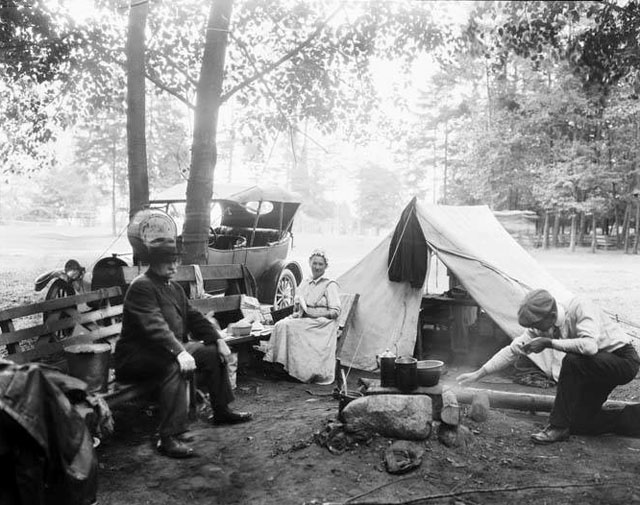
Learned outdoors etiquette from The Boy Scout Handbook of I928.I mean the cretins who build their campfires with green logs laboriously chewed from living trees with dull hatchets. And then erect a corral of rocks to enclose a fire about l0 times bigger than even a White Man needs. And then,
upon departure from the scene of their felonies, pile all their garbage upon the smoldering remains-including such non-combustibles as tinfoil and wet tin cans, wet condoms and Pampers-let it smoke and black- en and stink for while and conclude the infamy by heaping this mess with a pile of mud and stones. Everywhere we go in what’s left of natural America, we find these miniature trash dumps. The intention, no doubt, was to prevent forest fires, as Smokey the Bore has been instructing us for 50 years. But fires are natural, inevitable and good for the forest; Any Native American can tell you that, if you can find one. (The true terror of the modern forest is not the wildfire but the logger with his chain saw, the road builder with his bulldozer, the cowboy with his cow. These types wreak far more destruction upon our forests than any wildfire ever did or could. And wreak it at our expense, financed by our tax dollars.) Why do these Ralph Lauren he-man Campfire Girls build giant fire rings filled with half-baked rubbish? I don’t know. No one knows. They are the product not of thought but of ritual, spastic reflex, ancient ideologies conceived in sin and whelped by bureaucrats. One discovers such mementos even in the sand and rock of the desert, where the nearest tree may be a scrubby juniper four feet tall, l0 feet away. Mysteries of the Wild. But irksome. There are many things that irk, actually, not only me but you, but this is not the place for a complete listing.
Editor’s Note: Did you know that The Monkey Wrench Gang was blacklisted from the east coast booksellers during its first printing? Maybe the east coast establishment didn’t want to disturb the goings-on, as this book surely tends to do. I have a well-read family member, that has an incredible breadth of education and reading behind him. What’s more he was a hut ranger in the White Mountains of New Hampshire. He had never heard of Edward Abbey. I’m not sure if he’s read him yet. I’ll have to loan him my tattered copy of The Gang.
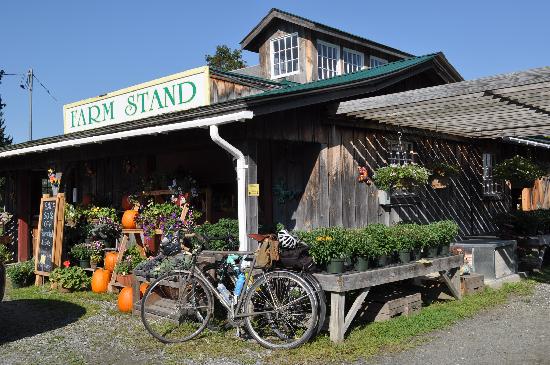
Yesterday we had an interesting and serendipitous discovery of Cedar Circle Farms in East Thetford, Vermont. We had planned to stop by the Lebanon Coop after a spontaneous ride in our little Boston Whaler where we put in just south of Lyme, NH and headed north to where we didn’t know on Connecticut River. It was a hot afternoon, and after putting along we decided to give the 25hp Merc all she’d do, and skimmed along the calm waters. Never having been on the river before, we thought we’d do a little exploring, complete with our 1-yr old on board.
After about ten miles, we happened upon a boat landing on the Vermont side of the river, and decided to hop out and find out where we were. We met someone in the little village who told us we were in North Thetford. We happened to mention we were starting a juicing fast, and had to get back to Hanover, NH before the Coop closed. She responded with, “ Hey, why don’t just get back in your boat and head south again a few minutes to Cedar Circle Farm. They have a small boat landing and (more…)
Expedition 2012: From Vermont to James Bay by Canoe Paddling Forward, Giving Back
Expedition 2012's Route
By R.Richards
Family friend, Tom Bloch is one of ten crew members of Expedition 2012, an epic 1,200 mile canoe trip from Lake Dunmore Vermont to James Bay in Northern Canada, which is underway as we post this.
The expedition is an effort to support the Keewaydin Foundation in its ongoing mission to preserve “the Keewaydin Way”, and extend its benefits to an ever-greater range of today’s youth. The Foundation has three summer camps: Keewaydin Temagami (Ontario, Canada), Keewaydin Dunmore (Salisbury, Vermont), and Songadeewin of Keewaydin (Salisbury, Vermont).
To accomplish their goal, Expedition 2012 is committed to establish a new scholarship endowment for the Foundation. Expedition 2012 is using the extended wilderness canoe trip, which is a tradition at Keewaydin’s as a fundraising platform, . They are paddling the long route over the course of 65 days in wood and canvas boats hand-crafted by the expedition members. During the course of this project, expedition members are additionally dedicated to environmental advocacy towards the preservation of the wilderness we hold dear. To learn more about the progress of the expedition, and to follow the the paddlers go here, or head over to their blog
Keewaydin states on their website, “To live for a summer in a world largely unstructured and shaped only by nature itself… this is an adventure few are privileged to know.” and adds, “Through these programs, Keewaydin builds strong, independent character while exposing young men and women to a bygone lifestyle. Since 1893, Keewaydin has withstood the temptation of change, holding firm to what is dear of the past and leaving it untouched. Keewaydin’s simplicity and special link to the undisturbed wilderness set our programs apart from traditional camp experiences. This is the Keewaydin Way.” To learn more about the camp, visit their website.
The map, drawn up by Johnny Clore, shows the full itinerary of Expedition 2012 from Lake Dunmore down Otter Creek to Lake Champlain, then down the Richelieu River to the St. Lawrence Seaway. From Montreal, we’ll head upstream on the Ottawa River for over three hundred miles and cut west for our resupply at Temagami by following the fabled “Trip In.” From there the route leads over a swift succession of smaller lakes and rivers to the Abitibi River, where we will restock and head for the bay at Moosonee. Resupply locations are indicated with yellow stars. Click the “Itinerary” tab on the left to get a more detailed look at our itinerary.
Tom Bloch, On Expedition 2012
Tom Bloch has written a personal mission statement and essay, as have the other members of the team), which starts out…”I never went to summer camp. Instead of big canvas tents and shiny green canoes, my childhood summers were filled with soccer camps and family hiking trips. Now, here’s the shocker: I turned out just fine. As of my college graduation last May, I was a reasonably well-adjusted, mild-mannered young man with sensible career aspirations and even a few healthy hobbies. The world is rife with friendly, successful people who have never paddled a canoe. In light of this, what is the value of Keewaydin? Why this grand expedition? Read the rest of Tom’s entry here..
Lama Willa Miller, the spiritual leader of a Natural Dharma Fellowship branch in Massachusetts, talks about a new refuge center, and the importance of mindfulness in the mountains. Part 1
Lama Willa Miller
By R. Richards Mountain Spirit Institute
The Dartmouth Lake Sunapee region of New Hampshire, USA has the good fortune of seeing a new Tibetan Buddhist Refuge open in the tiny town of Springfield. After a recent open house, we learned about what Lama Willa Miller, the leader of the Cambridge Mass based branch of The Natural Dharma Fellowship, has in mind for the new retreat center called Wonderwell, as well as the link between Buddhism and the mountains. Learn more, check out this first in series of interviews we conducted on location. See Part II
Vulnerability and Connecting, A TED Talk with Brené Brown
Mountain Spirit Institute’s newest board member Ken Wylie has been expressing the vital requirement of vulnerability in which to build a foundation of compassion and connection (which is our mission) to the natural world, each other and a deeper connection to ourselves. It appears that like great minds think alike – Brené Brown states in her TED talk: The power of vulnerability.
Brown studies human connection – our ability to empathize, belong, love. In a poignant, funny talk at TED in Houston, she shares a deep insight from her research, one that sent her on a personal quest to know herself as well as to understand humanity. See Brene’s talk here or click on the image at right.
Special thanks to Lindy Roberts in Auckland, NZ for sending this our way.
Mountain Spirit Institute names Ken Wylie to Board of Directors
Ken Wylie
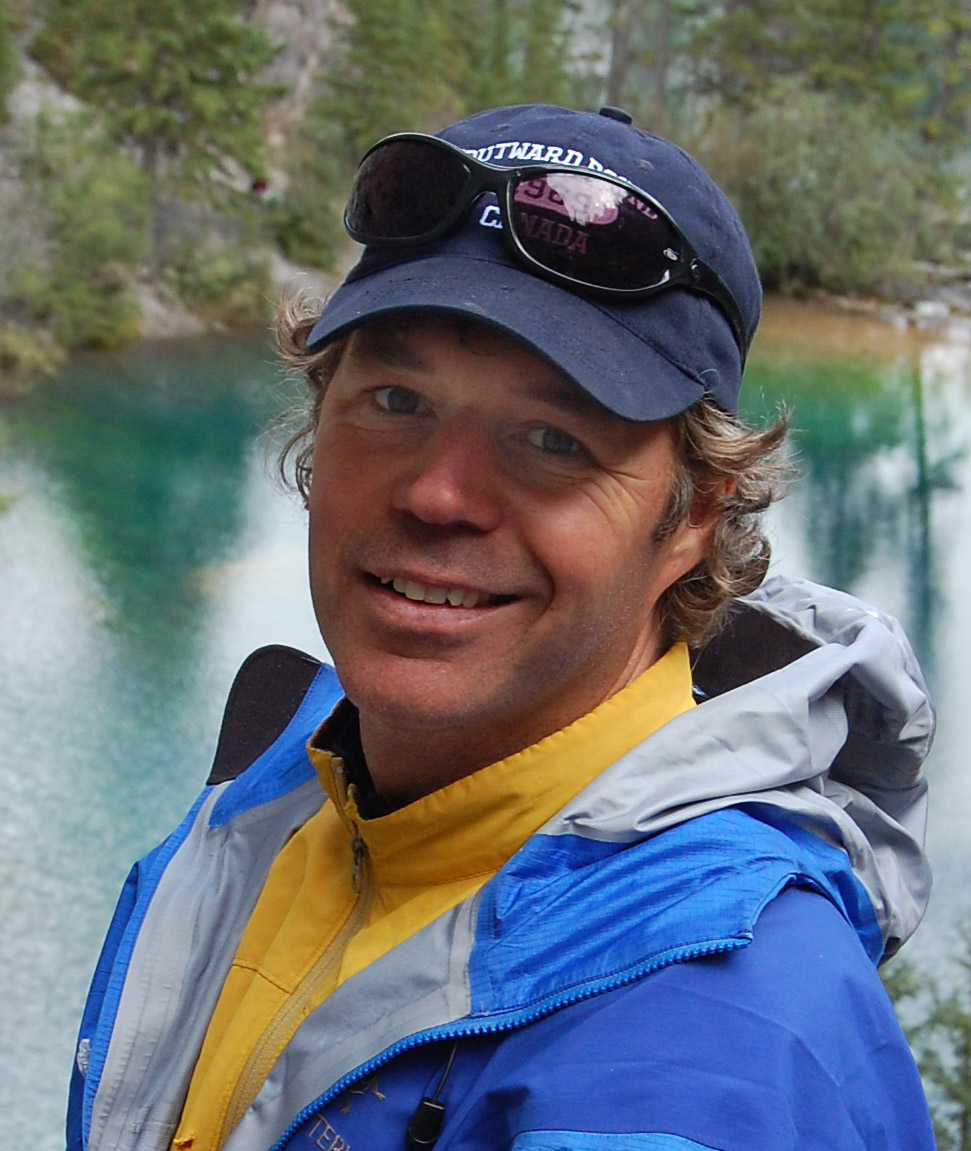
Ken Wylie, a veteran certified mountain guide from Cochrane Alberta, Canada with years as an experiential educator and program manager at Canadian universities as well as Outward Bound Canada and the Outward Bound USA, has recently been named to the board of directors at Mountain Spirit Institute based in the U.S. and New Zealand. In addition to helping guide the U.S. organization, Wylie has plans to launch a Mountain Spirit Institute Canada where he will create mountain programs based on the mission statement. Mr. Wylie and founder Randall Richards along with fellow board members are in discussions about also collaborating on mountain programs in the U.S, New Zealand and possibly the Alps.
Says Wylie, “I am drawn to Mountain Spirit Institute because of the organization’s vision. MSI has the vision for the 21st century in my estimation, and is what I have been searching for in my career.” Adds Wylie, “The mountains are an experience that can change people’s lives, but are more often than not just another consumable, another peak to check off the list. What people need now more than ever, is to connect and MSI helps them do that.” (more…)
What Money Is & What Money Is Not – Living Without Money
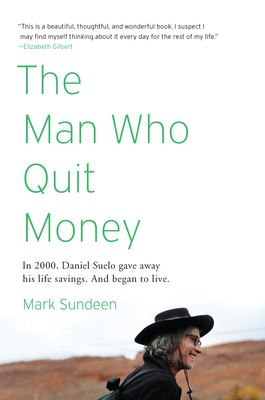
A Walden for the 21st century, the true story of a man who has radically reinvented “the good life”.
In 2000, Daniel Suelo left his life savings-all thirty dollars of it-in a phone booth. He has lived without money-and with a new-found sense of freedom and security-ever since.
The Man Who Quit Money is an account of how one man learned to live, sanely and happily, without earning, receiving, or spending a single cent. Suelo doesn’t pay taxes, or accept food stamps or welfare. He lives in caves in the Utah canyonlands, forages wild foods and gourmet discards. He no longer even carries an I.D. Yet he manages to amply fulfill not only the basic human needs-for shelter, food, and warmth-but, to an enviable degree, the universal desires for companionship, purpose, and spiritual engagement. In retracing the surprising path and guiding philosophy that led Suelo into this way of life, Sundeen raises provocative and riveting questions about the decisions we all make, by default or by design, about how we live-and how we might live better. Editor’s note: It sounds like we have another Outward Bound success story here. I read that Suelo has been an OB instructor. Good to see he’s living the dream, and it looks like some of the OB values rubbed off, but I’m sure he had influences from more than just Outward Bound.





 Mountain Spirit's Blog