It saves trees and the presentation is amazing, and great images. I’m quite impressed with Black Diamond’s reach-out with their new online catalog. Check it out.
A Panorama from the new Black Diamond online catalog. Hmm..worth the price of admission.
What Money Is & What Money Is Not – Living Without Money
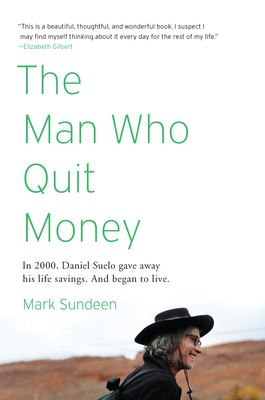
A Walden for the 21st century, the true story of a man who has radically reinvented “the good life”.
In 2000, Daniel Suelo left his life savings-all thirty dollars of it-in a phone booth. He has lived without money-and with a new-found sense of freedom and security-ever since.
The Man Who Quit Money is an account of how one man learned to live, sanely and happily, without earning, receiving, or spending a single cent. Suelo doesn’t pay taxes, or accept food stamps or welfare. He lives in caves in the Utah canyonlands, forages wild foods and gourmet discards. He no longer even carries an I.D. Yet he manages to amply fulfill not only the basic human needs-for shelter, food, and warmth-but, to an enviable degree, the universal desires for companionship, purpose, and spiritual engagement. In retracing the surprising path and guiding philosophy that led Suelo into this way of life, Sundeen raises provocative and riveting questions about the decisions we all make, by default or by design, about how we live-and how we might live better. Editor’s note: It sounds like we have another Outward Bound success story here. I read that Suelo has been an OB instructor. Good to see he’s living the dream, and it looks like some of the OB values rubbed off, but I’m sure he had influences from more than just Outward Bound.
Helping to keep Climbers, Skiers and Hikers Safer on Mt. Washington, NH, USA
Chris Josen of the US Forest Service is one of a small group of avalanche forecasters and safety personnel on Mount Washington’s east side, where Tuckerman’s Ravine sees thousands of backcountry skiers per season. Not all come well equipped or knowledgeable about how to safely travel in the winter snow-scape. Learn more about what Chris does on Mt. Washington, the highs and lows, and what motivates him.
A New Zealand Farmer Does Good by Following His Passion
Tom O'Brien of High Country Walks
Tom O’Brien, owner of Blackmore Farm and founder of High Country Walks has followed his passion by offering up a little hut on the back side of his 5000 acre farm. Called the Chinaman’s Hut, it was restored some years ago, by local volunteers, Tom and his father. The hut is situated on the rolling mountains of the Slate Range, just south of the Remarkables Mountains, on the border of Otago and Southland. Tom took the afternoon to show me his farm, the backcountry and the Chinaman’s Hut. below is a short piece on the hut, and a chat with Tom about his philosophy and passion of sharing this part of the world with others.We’re in hopes, here at Mountain Spirit Institute of collaborating with Tom by running some programs on the Slate Range and Blackmore Farm. We chatted about providing Solo’s and other types of programs.
Thanks for the time you took to show me around Tom!
Note: I’ve met one of the volunteers who helped restore the Chinaman’s Hut, a neighbor of ours here in Kingston named Dusty, who I’ll see if I can get on tape in the next few days. He has an interesting story to tell of not only this restoration project by many others.
Graeme Dingle is fast becoming one of my role models, and I’ve never met the man. I intend to though. Maybe if I’m fortunate, we may collaborate on a co-venture project helping to connect people to the mountains, who knows. The more I learn about Mr. Dingle, the more I like and respect who he is, what he stands for, and what he’s accomplished in outdoor education.
Here’s an article from the Directions Magazine By Laura Crooks
Inspiring New Zealand teenagers to reach their potential was a plan born during a trip to the Arctic by adventurer Graeme Dingle and partner Jo-anne Wilkinson in the early ’90s.
Why did you think New Zealand needed a specific programme to help the country’s youth?
I set up the Sir Edmund Hillary Outdoor Pursuits Centre (OPC) in 1972 and I thought that was my contribution to New Zealand in terms of young people. But it was really just the start, because I learnt so much about youth development through it and I got to thinking about the business of dealing with harder kids than those we met at OPC. I felt that for kids who had low confidence and low self-esteem, a one week experience in the wilderness wasn’t enough – it needed to be a continuum of things that really built on what had been learnt in that first period. I then set out to do the first continuous circumnavigation of the Arctic and in the Arctic you get a lot of very unusual communities – they’re very isolated and they live in such extraordinary circumstances where it’s light half the year, then continuously dark the other half of the year. They have very high rates of suicide, the kids don’t have too much to look forward to, and that started us thinking. But it didn’t really hit home until we got back to New Zealand – that here we lived in paradise and yet we had one of the highest rates of youth suicide, youth incarceration, dropouts from school unplanned teenage pregnancy – the works. The main catalyst was going to see Once Were Warriors – that was the thing that finally made us say: “Let’s do something about this”. So, Jo-anne and I invented Project K. basically. The Project K Trust grew into the Foundation for Youth Development (FYD) with nearly 20,000 young people in programmes each year. The FYD runs programmes for kids aged 5 – 18, and Project K is one of these. (more…)
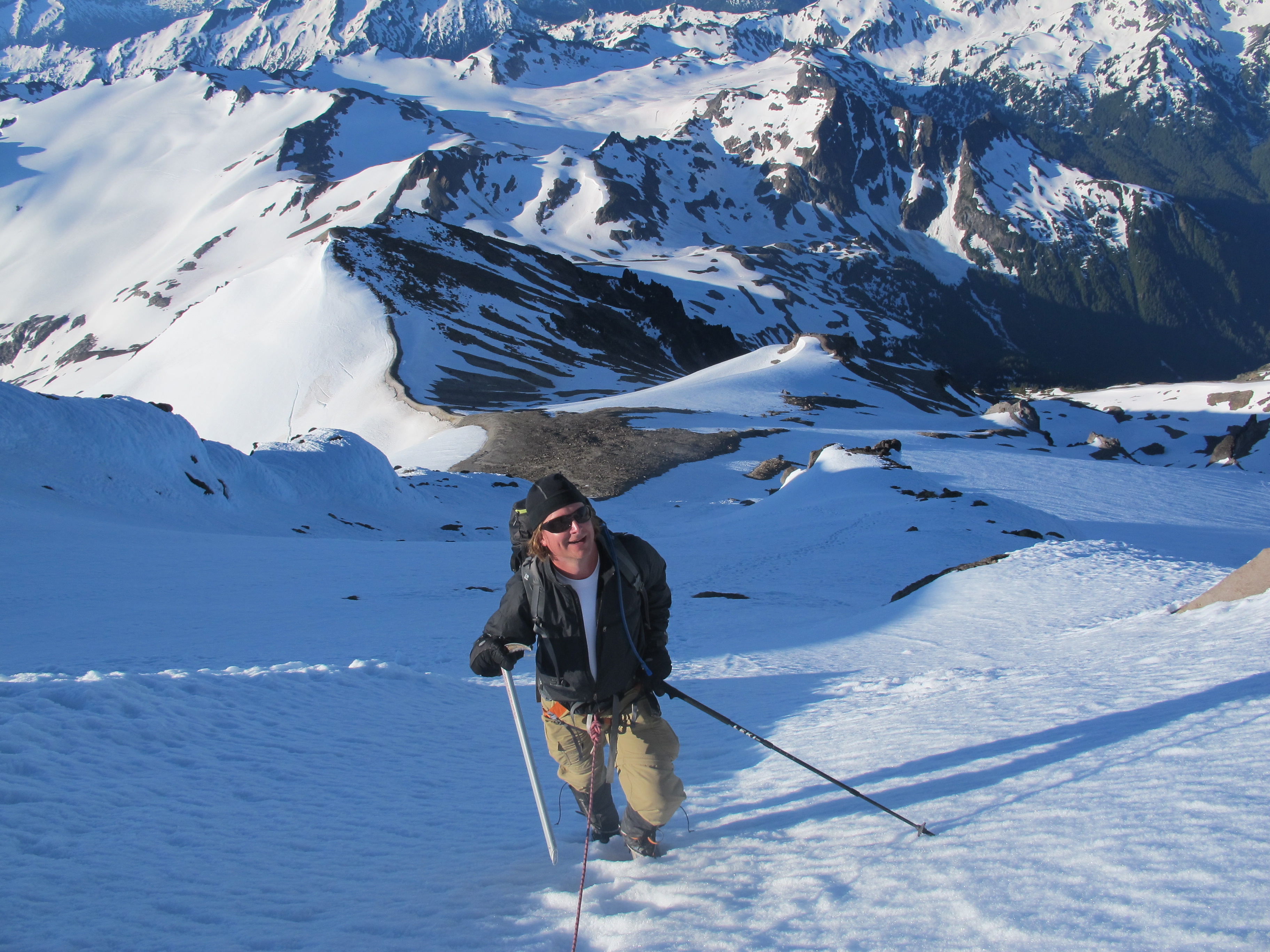
Glacier Peak should be on every Cascade mountaineer’s tick list. While folks averse to walking might complain about the long approach (about 15 miles each way), it is perhaps the most scenic and ecologically
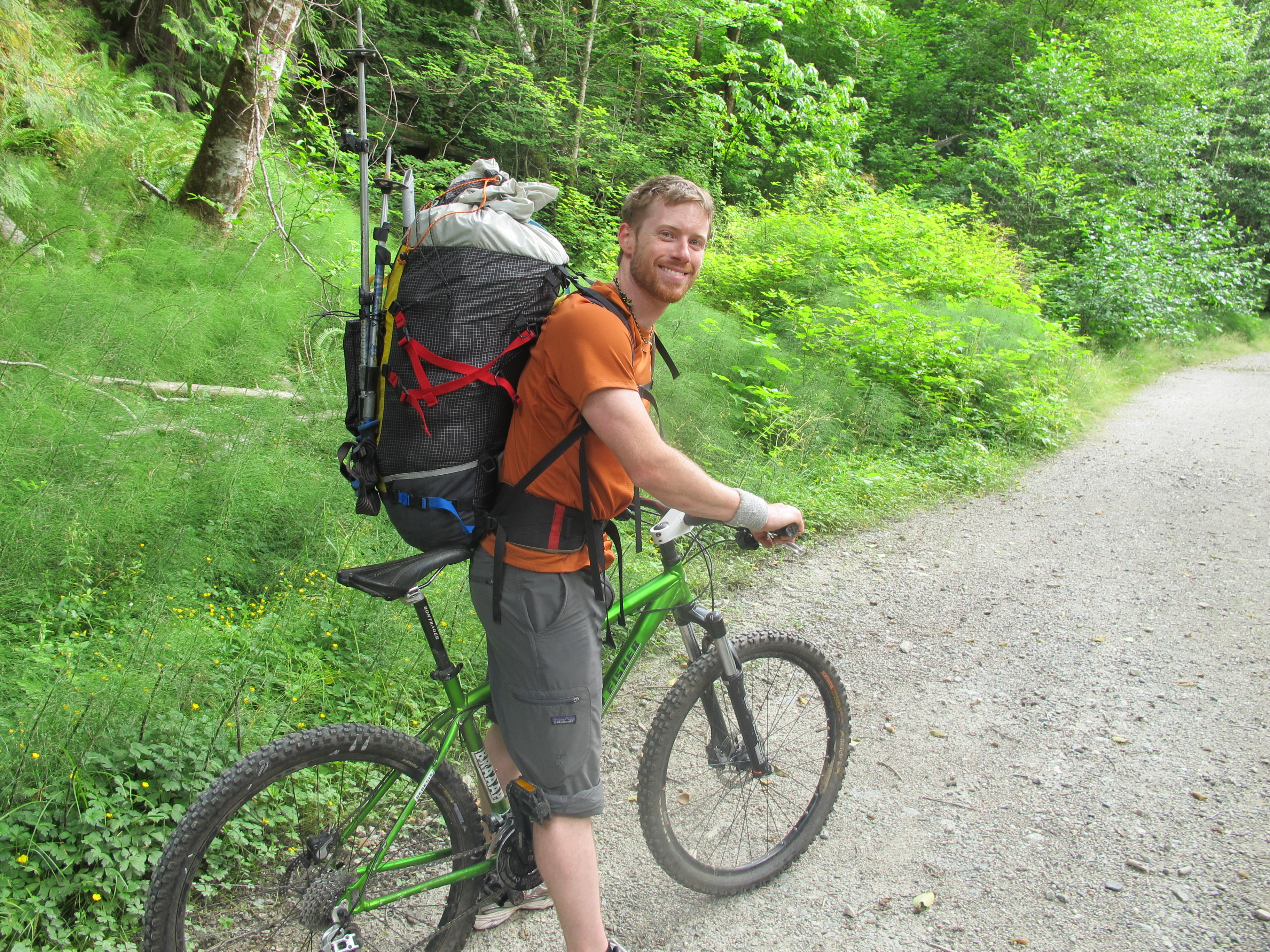
One of Kurt's clients en route
diverse that I’ve ever done in the Cascades. Our trip began with a seven mile bike ride up the closed USFS 49 road, since it was temporarily closed due to a miniscule washout. The biking was quite reasonable and went quickly with mountain bikes and pull-behind trailers. Read the rest of Kurt’s story…
When the Mountain Bites Back, And What Are the Lessons To Be Learned
Mountain guide, writer and longtime friend from Outward Bound days, Ken Wyle is writing a book about his accounts the day he was caught in the La Traviata avalanche in Canada that killed seven people. I had heard through the grapevine that Ken had been caught in a big one, and I felt a wrench in my gut. Mountaineering accidents, in which friends are involved affect me more than most things in life. Alan Bard was one of my ski-guiding mentors, and he goes and dies on the Grand Teton. One’s teacher isn’t supposed to do that. There was a cloud over me for a time after I had heard the news, and I did’t feel comfortable on the rock for a time too. There have been other friends too that are no longer with us, and I ask myself the same questions that we all do about events like this, and the meaning of it all.
Reading a few of Ken’s Facebook posts and on his blog, give me the impression, he too has been asking some questions. And while the answers are secondary, the questions he’s asking have weight, at least from my humble perspective. While compassion is one of outcomes of teaching an Outward Bound course, it looks like Ken is living it.
I caught up with Ken on Facebook last week, and he suggested I check out his blog The Energies of Adventure. Some glimpses of what will most likely be included his book can be seen on his blog.
Here’s the lead-in to his first post on that blog:
Seven Cairns
Chapter 1, “Lost in the Fog”
January 20th 2003, deep in the Selkirk mountains of Canada’s British Columbia. It is overcast and white out. Snow flakes are lightly falling from the clouds. The air is moving softly out of the southeast. Two groups of backcountry ski tourers collect at the frozen, snow covered, Tumbledown Lake for our first tea break of the day. My smaller group of read the rest of this story..
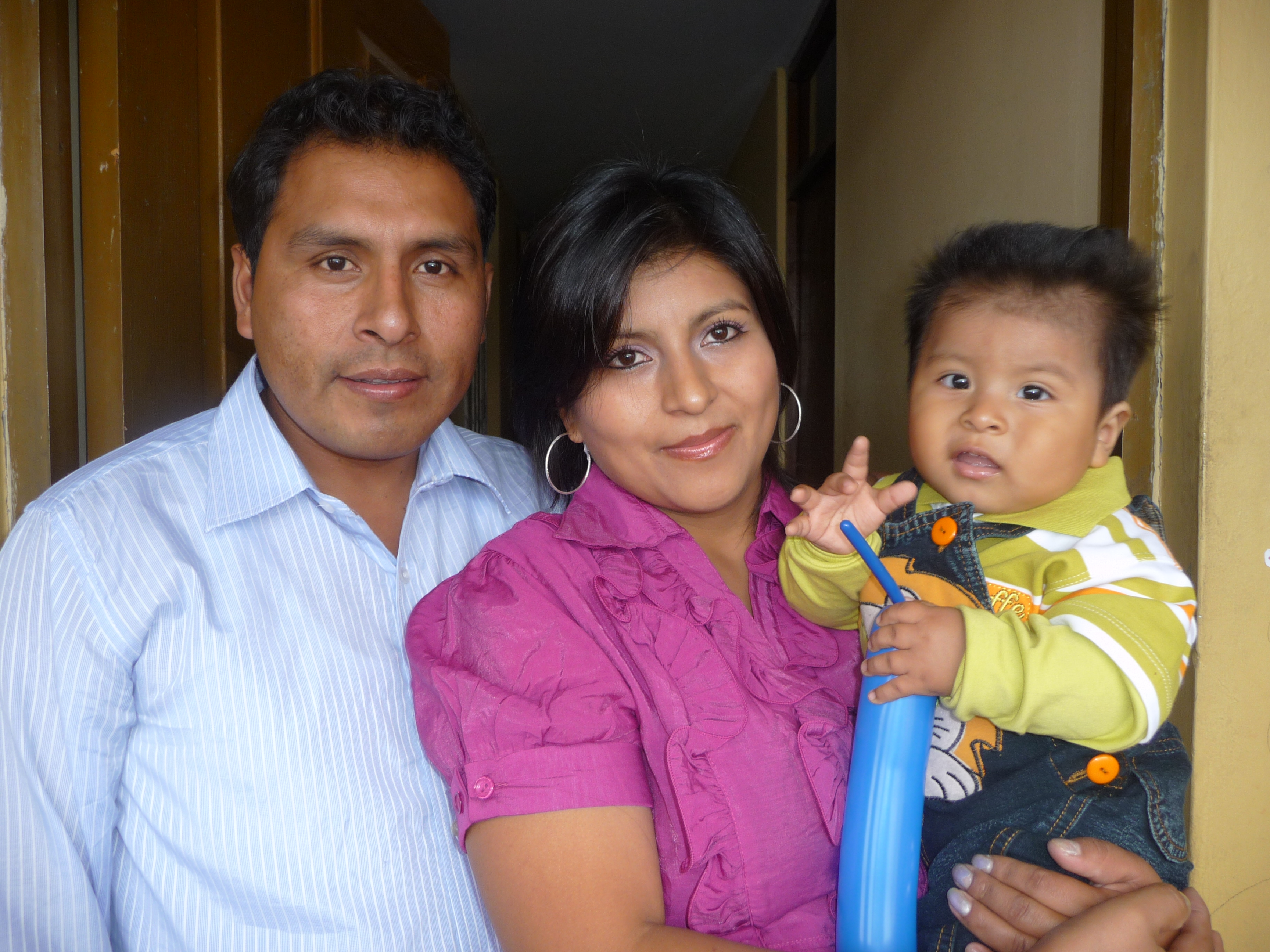
Guillermo Seminario, leader of the Peruvian band, Chimu Inka, with is wife Lourdes and their new son, born in Trujillo, Peru about 8 months ago. They just sent us this shot, which we wanted to share with you. Congrats to Familia Seminario. Chimu Inka has come to the U.S. under sponsorship from MSI in the past and will be visiting again in 2012.
From: Alpinist
Working his bare-feet up the face, the climber takes a knotted sling from his shoulder and places it around a stone horn. He takes a second sling, deftly unknots it and feeds the cord carefully around his hempen lead rope and the slung rock. With the rope now connected to his natural protection he ties the second cord back into a sling and climbs on….
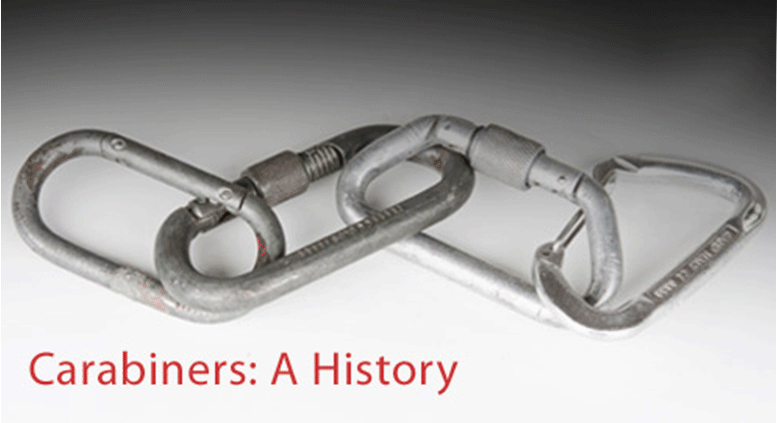
Before Otto “Rambo” Herzog first conceived using carabiners, climbers had only two options for connecting their ropes to protection: tie the rope and protection together, or untie and run the rope directly through the gear. Neither option was quick or especially safe.
In Alpinist 35 we examine the history of the carabiner; why Otto “Rambo” Herzog first thought of using the device, how it was modified over the last century and how the carabiner got its name.
Rambo Herzog
Rambo
Otto “Rambo” Herzog earned his nickname seventy years before the Sylvester Stallone movies. “Ramponieren” in German means “to batter” or “to bash,” and Herzog got his nickname, “Rambo,” not for flailing up climbs but for the hours he spent ramponieren specific problems. Today, Herzog is remembered for introducing the carabiner and breaking Hans Dülfer’s grading system. In 1913, he climbed the south wall of the Schüsselkarspitze (2537m) with Hans Fiechtl, a route that reached the limit of grade V (5.8/9), the highest grade in Dülfer’s I-V scale. In 1921, Herzog, together with Gustav Haber, climbed the “Ha-He Verschneidung” on the Dreizinkenspitze (2306m). Today rated 5.10, Herzog and Haber’s climb was so difficult that grade VI had to be added onto the I-V grading scale.
Today all climbing carabiners are made from solid metal. But in the 1970s SALEWA introduced a hollow design, that weighed only forty grams. This model was not only revolutionary because of its form but also because of the safety testing done on every unit. For the first time, each carabiner was individually tested before hitting the market. The slight indent on the curve of the pictured ‘biner, is the mark left by the 1000kg test. Many climbers will look at the empty interior and imagine that hollow carabiners were unsafe. However, in a recent interview with Alpinist, SALEWA’s former General Manager Hermann Huber said the hollow designs were abandoned because of breakthroughs in cold forging that allowed for lighter and stronger designs from solid aluminum. Read the rest of this story…
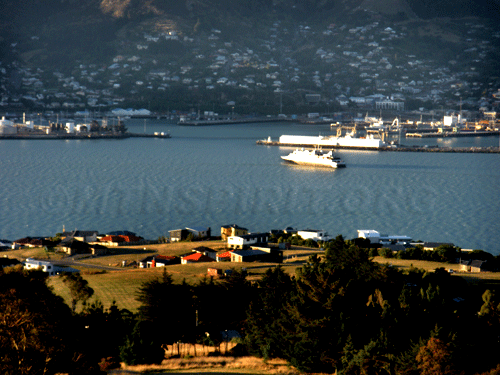
Epicenter: Lyttelton from above our house, a day before the quake
Amanda and I escaped. We were in Christchurch about 19 hours before the earthquake hit, just in front of the main church , which is now collapsed, in the square dropping off my passport and work visa application at New Zealand immigration, We also ran some errands, and split up in the afternoon, Amanda stopping by a store, and I picking up our van at the bus depot.
When the earthquake did hit we were both at home. I was in the hallway, and all of sudden, I was being thrown about. I was disoriented for a few seconds, then ran down the hallway to grab my pregnant wife’s hand. She looked as confused as I, as we ran for the door. We had just experienced the earthquake 1km from the epicenter. Our rental home is just across the Lyttelton Inlet in Diamond Harbor’s Charteris Bay. As I grabbed Amanda’s hand and we ran out of the back door of the steel-framed house, I thought, “This isn’t good for Christchurch.”
Little did I know how bad it was. Just over the crest of Port Hills, 20 min away, it was Hell. (more…)




 Mountain Spirit's Blog