By: R. Richards
We continue our interview with Lama Miller of Wonderwell Refuge in Springfield, NH, USA
See Part I or Part II
Archive for the ‘MSI News’ Category
Buddhism & Mindfulness in the Mountains: Part III
10/04/2012Buddhism & Mindfulness in the Mountains: Part II
03/04/2012
A walk in the woods at Wonderwell Refuge
By R. Richards,
Lama* Willa Miller, head of a Tibetan sect of Buddhism, based in Cambridge Mass, continues the interview on the new Wonderwell Refuge, the importance of being in nature, as well as her own early influences and experiences being in the wilderness with her father in Idaho. We also talked about Richard Louv’s concept of Nature Deficit Disorder, a term the author coined in his book, The Last Child in the Woods.
The early teachings of Buddhism emphasized the refuge of wilderness, the mountain top, the cave. Lama Miller sees this as a return to the traditional ways of Buddhism by encouraging her visitors to the refuge, to get out on mindfulness walks in nature. See Part I here.
*(Lama: A title given in Tibetan Buddhism to a venerated spiritual master, a monk/priest of high rank)
Mountain Spirit Institute is planning a collaborative effort with The Wonderwell Refuge to offer a Mindfulness in the Mountains retreat in the fall of 2012.

The meditation hall at Wonderwell Refuge, Springfield, New Hampshire
The Power of Vulnerability
27/03/2012
Brené Brown:TED Talk
Vulnerability and Connecting, A TED Talk with Brené Brown
Mountain Spirit Institute’s newest board member Ken Wylie has been expressing the vital requirement of vulnerability in which to build a foundation of compassion and connection (which is our mission) to the natural world, each other and a deeper connection to ourselves. It appears that like great minds think alike – Brené Brown states in her TED talk: The power of vulnerability.
Brown studies human connection – our ability to empathize, belong, love. In a poignant, funny talk at TED in Houston, she shares a deep insight from her research, one that sent her on a personal quest to know herself as well as to understand humanity. See Brene’s talk here or click on the image at right.
Special thanks to Lindy Roberts in Auckland, NZ for sending this our way.
Ken Wylie Named to MSI Board
24/03/2012Mountain Spirit Institute names Ken Wylie to Board of Directors
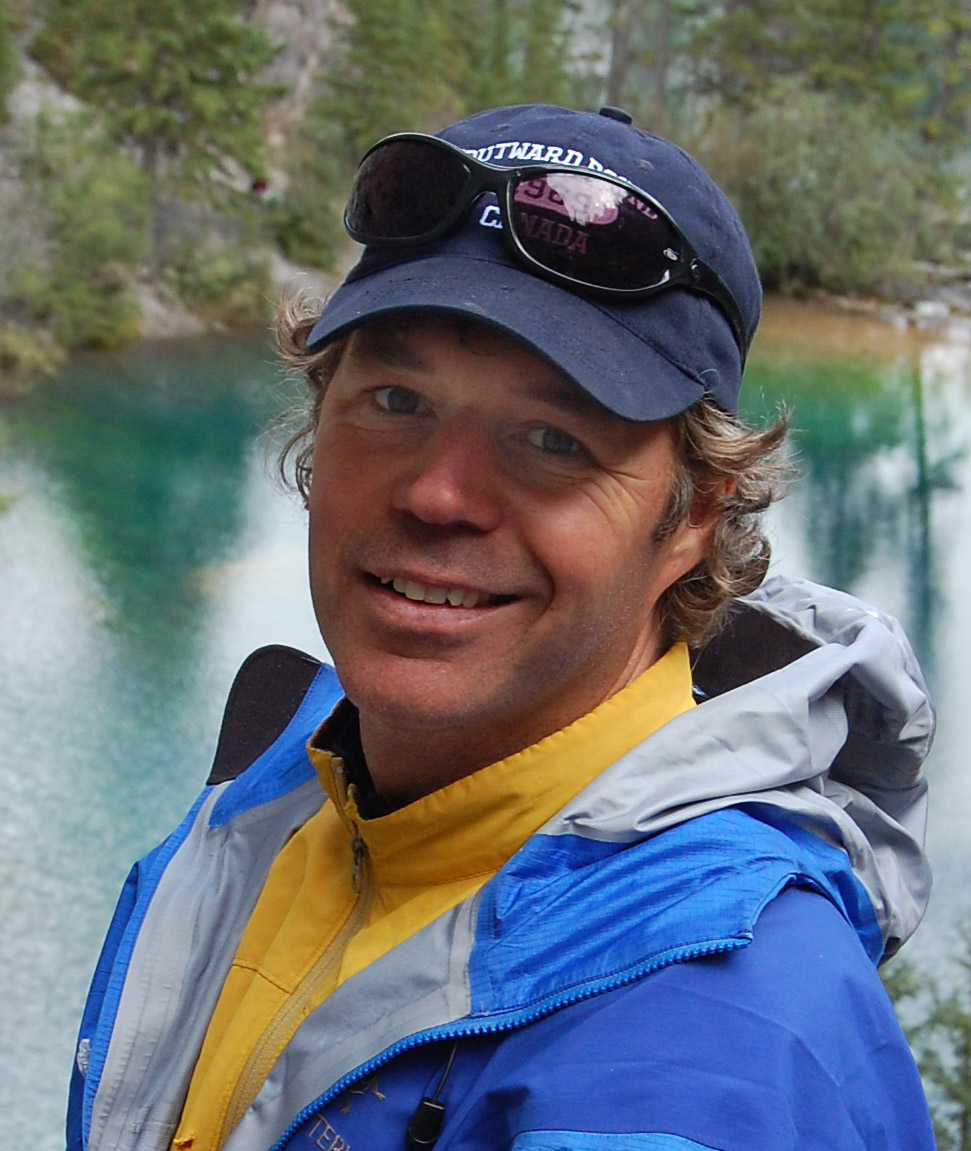
Ken Wylie
Ken Wylie, a veteran certified mountain guide from Cochrane Alberta, Canada with years as an experiential educator and program manager at Canadian universities as well as Outward Bound Canada and the Outward Bound USA, has recently been named to the board of directors at Mountain Spirit Institute based in the U.S. and New Zealand. In addition to helping guide the U.S. organization, Wylie has plans to launch a Mountain Spirit Institute Canada where he will create mountain programs based on the mission statement. Mr. Wylie and founder Randall Richards along with fellow board members are in discussions about also collaborating on mountain programs in the U.S, New Zealand and possibly the Alps.
Says Wylie, “I am drawn to Mountain Spirit Institute because of the organization’s vision. MSI has the vision for the 21st century in my estimation, and is what I have been searching for in my career.” Adds Wylie, “The mountains are an experience that can change people’s lives, but are more often than not just another consumable, another peak to check off the list. What people need now more than ever, is to connect and MSI helps them do that.” (more…)
SOLO, After All These Years
03/02/2012Dr. Frank Hubbell started SOLO, (Stonehearth Open Learning Opportunities) in the mid-’70’s and is still going strong. I was recently at SOLO’s base in New Hampshire, renewing my Wilderness Emergency Medical Technician qualifications and thought I’d share some footage of the place that many outdoor professionals know so well. SOLO offers a wide variety of programs. I met some interesting folks attending this re-cert, and will post an interview or two here in the coming days.
From their website: SOLO took root in the early 1970s and grew out of the vision of its founders Frank Hubbell and Lee Frizzell (husband and wife). As Frank recalls, pre-hospital care  was in its infancy, and an organized EMS system didn’t exist yet in New Hampshire. The concept of providing emergency care to the sick and injured revolved around what is today referred to as the “Golden Hour.” “As skiers, climbers, and EMTs in the White Mountains of New Hampshire, we would respond to the call for injured hikers and climbers,” Frank remembers. “It very quickly became apparent that the skills that we had learned as “street EMTs” did not work in the wilderness environment. We had to learn how to provide care outside the golden hour. But, that information was not available—we had to learn it through experience.” Frank’s frustration with the lack of an appropriate “wilderness” standard led to the creation of one of the first, if not the first, wilderness emergency medicine courses in the country. By 1975, a basic “Mountain/Woods First Aid” course was taken on the road by Frank, and taught to the few folks who could see its value.. Read more..
In addition to SOLO, there are also a number of organizations offering Wilderness First Responder and EMT trainings. I’ll probably cover a few of them in this blog at some point
A Restored Mountain Hut Getaway with Good Energy
11/01/2012A New Zealand Farmer Does Good by Following His Passion

Tom O'Brien of High Country Walks
Tom O’Brien, owner of Blackmore Farm and founder of High Country Walks has followed his passion by offering up a little hut on the back side of his 5000 acre farm. Called the Chinaman’s Hut, it was restored some years ago, by local volunteers, Tom and his father. The hut is situated on the rolling mountains of the Slate Range, just south of the Remarkables Mountains, on the border of Otago and Southland. Tom took the afternoon to show me his farm, the backcountry and the Chinaman’s Hut. below is a short piece on the hut, and a chat with Tom about his philosophy and passion of sharing this part of the world with others.We’re in hopes, here at Mountain Spirit Institute of collaborating with Tom by running some programs on the Slate Range and Blackmore Farm. We chatted about providing Solo’s and other types of programs.
Thanks for the time you took to show me around Tom!
Note: I’ve met one of the volunteers who helped restore the Chinaman’s Hut, a neighbor of ours here in Kingston named Dusty, who I’ll see if I can get on tape in the next few days. He has an interesting story to tell of not only this restoration project by many others.
Staying the Course
28/11/2011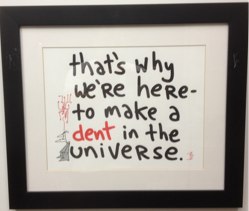
Why are you here?
This post refers more to for-profit ventures, but it applies to anyone wanting to make a difference. I started Mountain Spirit Institute over 12 years ago, and still keep the fire burning.
Ed.
Startups Are Hard. So Work More, Cry Less, And Quit All The Whining
“I slept at work again last night; two and a half hours curled up in a quilt underneath my desk, from 11am to 1:30pm or so. That was when I woke up with a start, realizing that I was late for a meeting…But it was no big deal, we just had the meeting later. It’s hard for someone to hold it against you when you miss a meeting because you’ve been at work so long that you’ve passed out from exhaustion.”
Suddenly everyone’s complaining about how unfair things are in Silicon Valley. How hard everyone has to work so darn hard, and how some people don’t get venture capital or a nice sale to Facebook or Google even though lots of other people are getting those things.
Silicon Valley is an unfair place, say all the headlines. The CNN racism documentary was just one piece of this. Another are the cries from the press that Zynga would actually consider renegotiating contracts with highly compensated employees no longer pulling their weight. Expect more articles soon about the woes of being asked to work hard at a startup. People are working so hard, they’re crying themselves to sleep!
As if all of this was new. The quote above isn’t from some overworked Zynga engineer. It was written in 1994 by Jamie Zawinski, an early engineer at Netscape. Here’s more: Read the rest of this story..
Machu Picchu’s Capacity to Withstand Tourism
21/11/2011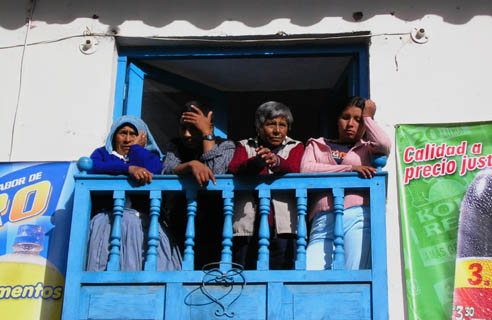
Peruviians on a Balcony - In the '90's
I took my first clients to Peru, on our first program ever for Mountain Spirit Institute in 1998. Who would have thought there would be the numbers at Machu Picchu that there are now. Who would have imagined the wholesale tour companies, that have transformed sleepy little islands such as Amantani, could change things so much. Being there in ’98 was sure different that it is today. It was right after the Shining Path and been put down. Back then, one didn’t need guides to do the Inca Trail, and the prices were affordable. So what to do? Hmmm. I love Peru, but I think we’ll have to go more into the bush, back beyond the hordes, shy away from the beaten path, or “Gringo Hiway” as they call it. There is much to see in Peru and like any popular place, go an hour or two off the beaten path, and you’re in “no-man’s land”. Also, see my post on Amantani in this blog.
R. Richards, Editor
One Million Tourists Visit Machu Picchu in 2011
by Andean Air Mail & PERUVIAN TIMES
The ancient Inca citadel of Machu Picchu, uncovered from overgrowth and obscurity 100 years ago by U.S. explorer Hiram Bingham, will have received at least one million tourists by the end of this year, according to Percy Canales, president of the National Chamber of Tourism, Canatur.
The number of visitors represents a 30 percent hike over last year — when 660,000 people visited the site— and is undoubtedly due in part to the mass promotional campaign surrounding the centennial. Of the total, 70 percent will have been foreign travelers and the remainder Peruvians, particularly school groups. The larger number of foreigners were visitors from the United States, Spain and Japan.
Canales said that the number of tourists was expected to increase read the rest of this story..
We Need Your Help, Spread the Word!
08/09/2011Mountain Spirit Institute’s Blog – Reader’s Appeal to Google News
If you like what you’ve been reading on Mountain Spirit’s blog since 2008, please help us spread the news by suggested they list us on their search site. Here’s how you can help.

Help our Non-Profit org, Suggest: blog.mtnspirit.org - Thanks!
Since we at Mountain Spirit Institute started our blog, 64,000 people have stopped by to read our posts and see our videos. By helping us build a broader base, we’ll not only get more readership and exposure, but possible needed revenue from advertising like-minded organizations on our site, as well as exposure to potential donors.
Started in 1998, Mountain Spirit’s mission is to facilitate one’s connection to the natural world, each other and a deeper connection to one’s self, through a wide variety of programs in the U.S. and abroad, ranging from wilderness programs to workshops.
The Nature Principle
07/09/2011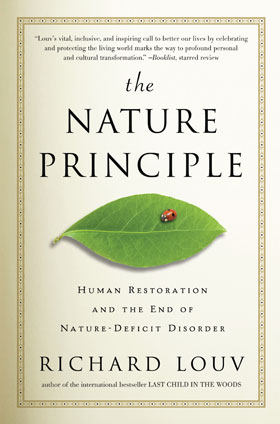
Louv's second book
“The future will belong to the nature-smart—those individuals, families, businesses, and political leaders who develop a deeper understanding of the transformative power of the natural world and who balance the virtual with the real. The more high-tech we become, the more nature we need.”
—Richard Louv
The immediacy of Richard Louv’s message in Last Child in the Woods: Saving Our Children from Nature-Deficit Disorder galvanized an international movement to reconnect children with nature. We’ve touched base about his first book here on MSI’s blog.
Now, in The Nature Principle, Louv reaches even further with a powerful call to action for the rest of us.
Our society, says Louv, has developed such an outsized faith in technology that we have yet to fully realize or even adequately study how human capacities are enhanced through the power of nature. Supported by groundbreaking research, anecdotal evidence, and compelling personal stories, Louv shows us how tapping into the restorative powers of the natural world can boost mental acuity and creativity; promote health and wellness; build smarter and more sustainable businesses, communities, and economies; and ultimately strengthen human bonds. As he says in his introduction, The Nature Principle is “about the power of living in nature—not with it, but in it. We are entering the most creative period in history. The twenty-first century will be the century of human restoration in the natural world.”
Richard Louv makes a convincing case that through a nature-balanced existence—driven by sound economic, social, and environmental solutions—the human race can and will thrive. This timely, inspiring, and important work will give readers renewed hope while challenging them to rethink the way we live.
Editor’s note: I saw Mr. Louv speak in Park City about three years ago. He was a down-to-earth, (one would hope with a subject such as he covers) and passionate speaker. If you get a chance, go hear him speak, you can see his schedule on his website’s Appearances Page and if you can hear him speak, do so. Better yet, read his three books.
We’re honored to see that Mr. Louv has started to follow Mountain Spirit Institute‘s Twitter account. We’ve been at it since 1998, and started this blog in 2008 with 64,000 views since. We feel a kindred spirit with Louv, with our mission “to facilitate one’s connection to the natural environment, to each other and a deeper connection to one’s self”. Mr. Louv has had great success in spreading the word about getting kids of all ages outside, and we’re effectively joining him in that cause.
 Mountain Spirit's Blog