Archive for the ‘Health’ Category

Is your social network sabotaging your health?

10/04/2012

With whom do you hang out?

Choose your friends carefully, your health depends on it.
By: Deborah Kotz, Boston Globe, Daily Dose

MSI Editor’s Note: Eckhart Tolle mentions in the Power of Now that negative emotions can spread more easily than a cold. Holding one’s center, being the fire of peace, in an insane world, is part of the function of those who are truly interested in making the world a better place.   Krishnamurti said, “It is no measure of health to be well adjusted to a profoundly sick society.” What I get from that declaration is that most people one comes across will be still be acting out their lives relatively unconsciously. So don’t be surprised when you encounter unconscious behavior as you go about your day, and seek to be with people that support your being. R. Richards
———————-

Let’s say you want to adopt some healthier habits: start biking to work, give up the 300-calorie Starbucks Frappuccinos, quit smoking once and for all. All it takes is a little willpower, right?

Or perhaps you need to take a good hard look at your social network, the friends, family, and co-workers that influence how you eat, spend leisure time, and prioritize what’s important in life. Both good habits and bad can spread like the flu through that circle of your closest connections, and research suggests this network could be the single biggest predictor of your overall state of health.

The Social Network

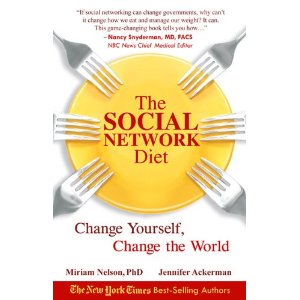
“It definitely seems like there’s a contagion effect,” said Miriam Nelson, a Tufts University nutrition professor and author of The Social Network Diet. “Once you move in certain circles, it’s tough to change habits unless you make an effort to join a new network.”

Friends who make friends with others trying to lose weight have a higher likelihood of losing weight themselves — something Weight Watchers discovered back in the 1960’s.

Nelson, herself, relied on social networks to get her back to marathon running after having three babies in quick succession. “I hadn’t been active for almost 10 years until Tufts started a marathon team,” she said. She joined in 2003 and has been running with the group weekly. “It got me back on track and kept me there.”

After a landmark 2007 Harvard study found that Read the rest of this story…

THE HUNGER GAMES: Dystopian fiction

05/04/2012


Predictive Programming

THE HUNGER GAMES: Dystopian fiction & Predictive Programming
The following piece is by Richard Louv, Author of Last Child in the Woods. I’m glad he’s weighed in on the Hunger Games. One might also google Predictive Programming to learn more about why such movies are made. (ed.)
Stuck Inside Apocalypse with Dystopic Blues Again
By Richard Louv

“The Hunger Games,” the book, is a page-turner and the movie is gripping. Some of my colleagues, working hard to reconnect young people to nature, believe the popularity of the book and movie will, like the film “Avatar,” stimulate a deeper interest in the natural world. I hope they’re right, but after leaving the movie theater on Friday (having already read the book), I was, well, ambivalent.

In this story, there are two forests. The first forest is as natural as a forest can be with an electrified fence to keep the largest carnivores out of District 12, Katniss Everdeen’s starving Appalachian homeland.

At the beginning of the book, she describes sitting in a nook in the rocks with her hunting partner, Gale, looking out at a forest that sustains them: “From this place we are invisible but have a clear view of the valley, which is teeming with summer life, greens to gather, roots to dig, fish iridescent in the sunlight.” This forest keeps her family alive. (more…)

9 Reasons Why You Shouldn’t Ride to Work

05/04/2012

Commuting by bike: dangerous

From: The Adventure Journal
I have biked everywhere within 4 miles of my apartment in the past 5 years, including every job I’ve had — I’ve never had to drive to work in Denver. I find riding a bicycle exhilarating, but that’s no reason for you to think you should. In fact, here are 9 reasons you shouldn’t bike to work. I’m sure you can think of others.

1. It’s too dangerous.
Can you imagine being out there on a bicycle with all these crazy drivers flying past you, nothing to protect you except a plastic and styrofoam shell on your head? You could get killed. The absolute best thing is to stay in the protective cage of your car, because no one’s ever been killed when they’re inside an automobile. Driving is safe.

2. You have to wear a tie to work. Or a suit. Or a skirt.
Not only that, it’s important to wear your tie/suit/business casual attire from the moment you leave your house in the morning until the moment you get home. There is no conceivable way you could leave some clothes at your office, and change into them after you ride your bike to work, two or three days a week. Plus, your suit/tie combination is so dialed, you can’t just spread your tie collection out over two locations. Where the hell is my cornflower blue tie? I need to see if it looks good with these shoes. And like there’s some way to ride a bike in skirt or a dress?
Read the rest of this story..

Thanks to Justin Canny for the post on FB.

Buddhism & Mindfulness in the Mountains: Part II

03/04/2012

A walk in the woods at Wonderwell Refuge

By R. Richards,
Lama* Willa Miller, head of a Tibetan sect of Buddhism, based in Cambridge Mass, continues the interview on the new Wonderwell Refuge, the importance of being in nature, as well as her own early influences and experiences being in the wilderness with her father in Idaho.  We also talked about Richard Louv’s concept of Nature Deficit Disorder, a term the author coined in his book, The Last Child in the Woods.
The early teachings of Buddhism emphasized the refuge of wilderness, the mountain top, the cave. Lama Miller sees this as a return to the traditional ways of Buddhism by encouraging her visitors to the refuge, to get out on mindfulness walks in nature.  See Part I here.
*(Lama: A title given in Tibetan Buddhism to a venerated spiritual master, a monk/priest of high rank)
Mountain Spirit Institute is planning a collaborative effort with The Wonderwell Refuge to offer a Mindfulness in the Mountains retreat in the fall of 2012.

The meditation hall at Wonderwell Refuge, Springfield, New Hampshire

Buddhism & Mindfulness in the Mountains

01/04/2012

Lama Willa Miller, the spiritual leader of a Natural Dharma Fellowship branch in Massachusetts, talks about a new refuge center, and the importance of mindfulness in the mountains. Part 1

Lama Willa Miller

By R. Richards
Mountain Spirit Institute
The Dartmouth Lake Sunapee region of New Hampshire, USA has the good fortune of seeing a new Tibetan Buddhist Refuge open in the tiny town of Springfield. After a recent open house, we learned about what Lama Willa Miller, the leader of the  Cambridge Mass based branch of The Natural Dharma Fellowship, has in mind for the new retreat center called Wonderwell, as well as the link between Buddhism and the mountains. Learn more, check out this first in series of interviews we conducted on location. See Part II

Playing in the Dirt: Good for Kids

24/03/2012

Stopping Crohn's Disease by getting dirty

Why Playing in the Dirt is Good for Kids
By Preeti Sunil
From: buzzle.com
Parents are at their wit’s end trying to teach children lessons in hygiene only to find them indulging in their favorite hobby, yet again! Dirty, mud covered clothes and bodies are symbolic of childhood. However, new research suggests that this is an evolutionary instinct, which must not be curbed

It is no secret that most children have an insatiable urge to grab the dirtiest looking things and put them into their mouth. Even a child who is less than a year old is hardly able to do much except drink milk and sleep all day, experiences a personality change the moment it is put down on the ground, out in the open. The exploration begins and everything including dirt, mud and even poop finds its way into the tiny mouths. (more…)

Meditation Helps the Brain

23/03/2012

Researchers Build Evidence that Meditation Strengthens the Brain
By Science Daily

Meditation strengthens Brain

Earlier evidence out of UCLA suggested that meditating for years thickens the brain (in a good way) and strengthens the connections between brain cells. Now a further report by UCLA researchers suggests yet another benefit.

Eileen Luders, an assistant professor at the UCLA Laboratory of Neuro Imaging, and colleagues, have found that long-term meditators have larger amounts of gyrification (“folding” of the cortex, which may allow the brain to process information faster) than people who do not meditate. Further, a direct correlation was found between the amount of gyrification and the number of meditation years, possibly providing further proof of the brain’s neuroplasticity, or ability to adapt to environmental changes.

The article appears in the online edition of the journal Frontiers in Human Neuroscience.

The cerebral cortex is the outermost layer of neural tissue. Among other functions, it plays a key role in memory, attention, thought and consciousness. Gyrification or cortical folding is the process by which the surface of the brain undergoes changes to create narrow furrows and folds called sulci and gyri. Their formation may promote and enhance neural processing. Presumably then,  Read the rest of this story…

The Man Who Quit Money

19/02/2012

What? Quit Using Fed Notes??

What Money Is & What Money Is Not – Living Without Money
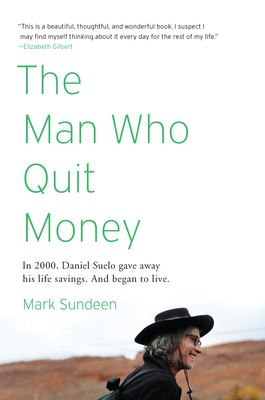
A Walden for the 21st century, the true story of a man who has radically reinvented “the good life”.

In 2000, Daniel Suelo left his life savings-all thirty dollars of it-in a phone booth. He has lived without money-and with a new-found sense of freedom and security-ever since.

The Man Who Quit Money is an account of how one man learned to live, sanely and happily, without earning, receiving, or spending a single cent. Suelo doesn’t pay taxes, or accept food stamps or welfare. He lives in caves in the Utah canyonlands, forages wild foods and gourmet discards. He no longer even carries an I.D. Yet he manages to amply fulfill not only the basic human needs-for shelter, food, and warmth-but, to an enviable degree, the universal desires for companionship, purpose, and spiritual engagement. In retracing the surprising path and guiding philosophy that led Suelo into this way of life, Sundeen raises provocative and riveting questions about the decisions we all make, by default or by design, about how we live-and how we might live better.
Editor’s note: It sounds like we have another Outward Bound success story here. I read that Suelo has been an OB instructor. Good to see he’s living the dream, and it looks like some of the OB values rubbed off, but I’m sure he had influences from more than just Outward Bound.

Taking Time to Enjoy Life..And Music

18/02/2012

A concert, but do you have the time to listen?

I play music professionally, and I too have noticed that the only population that really is open, I mean REALLY open to the music are the little kids. They stop,  stare, dance and get enthralled, no matter where, or who’s watching, or even what music it might be..

A man sat at a metro station in Washington DC and started to play the violin; it was a cold January morning. He played six Bach pieces for about 45 minutes. During that time, since it was rush hour, it was calculated that 1,100 people went through the station, most of them on their way to work.

Three minutes went by, and a middle aged man noticed there was musician playing. He slowed his pace, and stopped for a few seconds, and then hurried up to meet his schedule.

A minute later, the violinist received his first dollar tip: a woman threw the money in the till and without stopping, and continued to walk.

A few minutes later, someone leaned against the wall to listen to him, but the man looked at his watch and started to walk again. Clearly he was late for work.

The one who paid the most attention was a 3 year old boy. His mother tagged him along, hurried, but the kid stopped to look at the violinist. Finally, the mother pushed hard, and the child continued to walk, turning his head all the time. This action was repeated by several other children. All the parents, without exception, forced them to move on.

In the 45 minutes the musician played, only 6 people stopped and stayed for a while. About 20 gave him money, but continued to walk their normal pace. He collected $32. When he finished playing and silence took over, no one noticed it. No one applauded, nor was there any recognition.

No one knew this, but the violinist was Joshua Bell, one of the most talented musicians in the world. He had just played one of the most intricate pieces ever written, on a violin worth $3.5 million dollars.

Two days before his playing in the subway, Joshua Bell sold out at a theater in Boston where the seats averaged $100.

This is a real story. Joshua Bell playing incognito in the metro station was organized by the Washington Post as part of a social experiment about perception, taste, and priorities of people. The outlines were: in a commonplace environment at an inappropriate hour: Do we perceive beauty? Do we stop to appreciate it? Do we recognize the talent in an unexpected context?

One of the possible conclusions from this experience could be:

If we do not have a moment to stop and listen to one of the best musicians in the world playing the best music ever written, how many other things are we missing?

Thanks to Mills Chapman for the post

Pepsico: You’re On Your Own Re: GMO’s

07/02/2012

Pepsico, Quaker Oats & GMO: You’re On Your Own
From: Corporate Greed Chronicles

Pepsico...Just to Big for its Own Good

PepsiCo Inc. is a Fortune 500 global conglomerate with interests in the manufacturing, marketing and distribution of grain-based snack foods, beverages and other products.  PepsiCo was formed in 1965 with the merger of the Pepsi-Cola Company and Frito-Lay, Inc.  PepsiCo has since expanded from its namesake product Pepsi to a broader range of food and beverage brands, the largest of which include an acquisition of Tropicana in 1998 and a merger with Quaker Oats in 2001 – which added the Gatorade brand to its portfolio as well.
Since 1989 Pepsico has contributed more than $10 million to federal and state political campaigns, and since 1997 they have spent an additional $28 million on lobbying.  Topping their politician recipient list is former Pennsylvania House Speaker John M. Perzel, the alleged mastermind of the $13 million “Computergate” scandal that pled guilty to corruption charges and is currently awaiting sentencing.  Rick Perry comes in number two, with Ed Rendel, Barack Obama and George W. Bush rounding out the top five.
http://tinyurl.com/6ml7q2c
http://tinyurl.com/7ues4sh

http://tinyurl.com/6pwrqa2
We don’t know what Pepsico got from the money they gave to Perzel, but we do know at least one thing they are getting from their lobbying investment:  So far, it has kept GMO warning labels off of their products.
“GMO” stands for “genetically modified organism”, i.e. organisms whose genetic material has been artificially altered using genetic engineering techniques.  The USA is the largest commercial grower of genetically modified crops in the world, and at least 75% percent of the processed foods consumed in America contain GMO ingredients.
http://tinyurl.com/26xkpfd
GMOs are banned or significantly restricted in 30 other countries around the world, including Australia, Japan and all of the nations in the European Union.  But here in the Corporate States of America, consumers aren’t even given the benefit of GMO warning labels.. Read the rest of this story..