Archive for the ‘Sustainable Living/Communities’ Category
24/08/2009

Buy this product!
By Randall Richards
We have been using the Pristine Water Bottle with filter in Peru for about two months now, and we’re ready to endorse this product with no reservations. We have cut our plastic bottle footprint by 95%. We still buy the occasional bottle water con gas, as a treat, but even then we’re about ready to stop that practice.
Another benefit of using this product is, I’ve never had a healthier stay in Peru. I have heard of bottled water sometimes having tampered caps, and this is the first time I’ve not had some sort of stomach upset. I am pulling water right out of the tap here in Cusco, and it’s working well.
Although I like the Katadyn external water filter that I’ve had for years, which works well for high altitude and fail-safe longer trips, I have to say their water bottle filter is too heavy and takes up too much room (within the bottle for any water) for my liking.

This thing works. SteriPen Classic
Another product we’re using, which although is new for us, but is working well, is the SteriPen UV water purifier. It too has been easy to use and working without a hitch, also to purify drinking water from the tap. We recommend the Classic model as it takes standard Lithium or NiMH batteries.
Buy these products, cut out the plastic bottles, whether in South America or anywhere in the world.
Tags:clean water, Environment, garbage, Mountain Spirit, Peru, Plastic water bottle, Pristine Water bottle and filter, reduce, reduce plastic bottles, staying healthy in south America, SteriPen Classic, Sustainability, UV for water Purifying, Water Filters, water purification
Posted in Conservation, Environment, Health, Peru, Sustainable Living/Communities, Traveling | 1 Comment »
20/08/2009
We stumbled upon Maribel Torres Leon’s Museum of Biodiversity in Ollantaytambo, Peru, when we walking on a side street one afternoon. The motto on her business card states, “Trade rightly, Sustainable Tourism, Cultural Identity”. Check out the video, and if you like it, please support Maribel’s work by either visiting the museum (see address and telephone number below), spreading the word about her good work, and/or making a donation. Well done Maribel!
Museum of Biodiversity
Maribel Torres Leon, Director & Founder
Calle La Convencion
Ollantaytambo, Peru
Tel: 51-84-984-962607 or 984-934263
Email: info@biomuseo.org
Tags:Alternative Tourism, Biodiversity, Cultural Identity, Experiential Education in Peru, Fair Trade, Maribel Torres Leon, Mountain Spirit, Museum of Biodiveristy, Ollantaytambo, Randall Richards, Sustainable Travel
Posted in 1- Video Posts, Conservation, Experiential Education, Fair Trade, Holistic Living, Inspirational People, Peru, Service, Spiritual, Sustainable Living/Communities | Leave a Comment »
11/08/2009
By Randall Richards
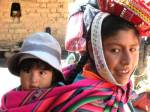
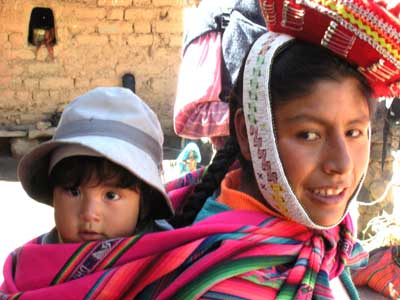
Willoc woman with child
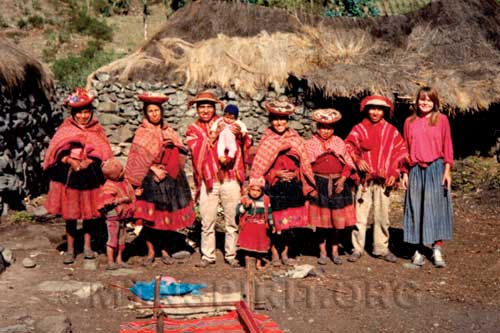
Before I knew it I had a baby on my back. We were being shown how the Peruvian weaving process works from start to finish. We were in the town of Willoc for the afternoon, above Ollantaytambo, the gateway to Machu Picchu. We were being shown how the wool is shorn, carded, and spun, then dyed and weaved on a back-strap loom. The women showing us were wonderful and very gracious. I’d been there a number of times before taking a few MSI participants up to the mountain village, known for its weavings.
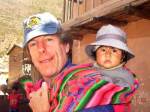
Gringo guide with child
I have always been curious how the woman use the mantas, or clothes to carry everything from children to corn. I had been shown the day before how to fold and tie the knot but still was asking a woman who carried a child how it was done so the baby didn’t fall out. Her idea was to show me by handing over the the whole lot, baby and manta to me. As she helped me tie the knot, I thought, “this knot is as important as any climbing knot I’ve tied over the years. It better be good” The young one hung out with me for about fifteen minutes when he decided he’d had enough and wanted his mom again. I still need to figure out exactly how the folds in the material go, so the baby doesn’t fall out. I’ve got the knot down though!
I highly reccomend losing your stroller for this manta. We sell them at our fair-trade webpage, and I can even post some directions on how you too can carry everything from a child, to corn or even your groceries from Trader Joe’s, Hannaford’s, New World.
Tags:Carying children, Experiential Education, Hannaford's, Manta, Mountain Spirit, New World, Ollantaytambo, Peru, Trader Joes, weaving, Willoc
Posted in Fair Trade, Holistic Living, Mountain People, Peru, South America, Sustainable Living/Communities | Leave a Comment »
06/08/2009
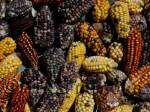
Corn, Peru Style
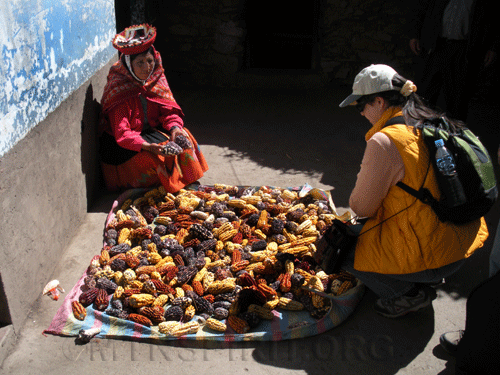
Tomorrow, Amanda and I head back for Anna’s place in Ollantaytambo. I was just there a few weeks ago with our participants. I look forward to our second visit this year. A few weeks ago, we spent an afternoon getting tutored by Anna on how she grows amazing varieties of corn. She took us down to her fields in the Sacred Valley, just a stone’s throw from her home, and showed us the different sorts of corn, and how she plants them. She explained that these are not mono-species. Most of the corn cross-breed every season creating a multitude of colors and styles of corn, used for everything from Chicha to toasting corn. She explained that most times every row will have a mix colors, which in fact makes them stronger against disease and drought. She also explained how all the other neighbors work together to share various tasks such as irrigation and maintaining the fields.
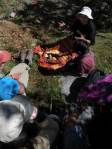
Anna giving a lecture on planting corn
Unlike Monsanto corn, these varieties reproduce and are carried down through generations. Not to say there weren’t problems. Some twenty years ago, there were serious health issues with the villages due to pesticide use in the fields. Cancer rates were high and people were really being affected. Now though, things are mostly if not totally organic. Most of Anna’s corn goes to feed her family and chickens, and doesn’t reach the local market. She also grows grains to feed her guinea pigs which she sells to neighbors and other villagers. We’ll keep you posted on what we learn next at Anna’s.
Tags:Anna, cancer rates and pesticides, Monsanto, Mountain Spirit, non-hybrid corn, Ollantaytambo, organic farming, Peru, Varieties of Corn
Posted in Experiential Education, Health, Inspirational People, Mountain People, Peru, South America, Sustainable Living/Communities, Traveling | 1 Comment »
04/08/2009
By Randall Richards
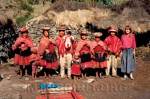
Kate J. at Willoc circa 1980's
The first time I visited the small mountain village of Willoc, near Ollantaytambo was about 12 years ago. Coincidently, my cousin Kate Jones spent a semester from the Lakeside School in Ollantaytambo and spent some time with a family in Willoc about twenty or thirty years before I showed up. This was before I knew where Peru was. She sent a photo of her with her host family in Willoc, which I had on my desk for a number of years. Then when I finally went Willoc, and recognized the local dress, I wondered if Willoc might be the place that Katy ended up. I called her from Peru to solve the issue, and yes it was. Another year in Willoc, I tracked down her family. I’m headed there again in a few days, and will take a copy of the picture with me again to give to them.
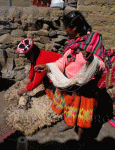
Shearing & Drop Spindle, Willoc
On our Peru’09 program we again visited Willoc, and were shown a demonstration from start to finish of how the weaving is done – from shearing the wool to drop-spindle making the yarn, to dying the wool and finally the back-strap loom weaving.
While there we also were treated to a traditional meal and were shown the varieties of corn that are grown on the surrounding hillsides. The diffierent types are used for the fermented Chicha drink, toasting, cornmeal and other specialties.
As in other places in Peru, visitors are occasionally brought to small mountain villages. Mountain Spirit Institute limits our group size to a maximum of eight participants. Sustainable Travel International has guidelines on how to visit such communities as Willoc.
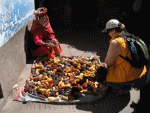
Learning about varieties of corn, Willoc
We feel at this point, there is a benefit to both the visitors and the villages for such visits, but they must be organized and done with care. One example, I always brief my particpants at the program start, and remind them of low-impact travel techniques, such as respectful use of the camera, matching voice volumes to that of local inhabitants, and follow cues from our hosts.
Our good friend, Anna Sequeros, a former president of the woman’s organization in the region has really worked wonders in bringing equality to village women in the area. More on that in another entry.
Tags:Dexter Richards, drop spindle, Kate Jones, Lakeside School, Mountain Spirit, Ollantaytambo, Peru, Randall Richards, shearing wool, Sustainable Living/Communities, weaving, Willoc
Posted in Experiential Education, Fair Trade, Holistic Living, Mountain People, Peru, South America, Sustainable Living/Communities, Traveling | Leave a Comment »
02/08/2009
By R. Richards
In the next few weeks I’ll be journaling the Peru 2009 Cultural Immersion program which lasted 14 days. I won’t chronicle every day but the most important highlights of our experience.
We had 7 participants: Sally R. and her husband Scott S., Gail and Hal B. of Sunapee NH, newlyweds Tim Y. and Amy G. and Betsy S. of Grantham NH. Most were teachers which made for good dynamics. On our first day in Cusco, we hiked up to Sacsayhuaman ruins. After walking the great walls, we had a little meeting as the sun set, setting the tone for open communication and willing to stretch outside of one’s comfort zone. The group all agreed they’d give it their best shot. That night we had dinner at the Retama where Guillermo is the music director of his band Chimu’s/Chimu Inka and plays there almost nightly.

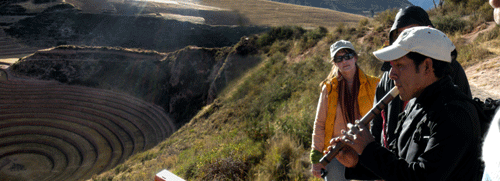
Guillermo plays "Quena" flute at Moray
After a night in Tika Wasi in Cusco, we headed for the Chinchero and the fascinating agricultural terraces of Moray. Here, Guillermo took out his flute and played, setting a surreal tone in the ruins. You could hear the music echo through the terraces below. Then there was a hair-raising ride (not so much much for me, I’m used to the heights) to the Inka salt pans just before the sun set, then off to Anna’s pension. Many thanks goes to Julio of Personal Travel Service for setting up our ride with Ernesto and the Mercedes bus plus all tickets and other logistics in the Sacred Valley.
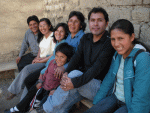
Anna's Family, Guillermo & Ernesto
It had been a few years since I’d seen Anna when I stayed at her pension for night. It was good to see Anna again, her daughter Katey and her other daughter who had been in Italy for four years, who I’d not yet met. Anyway, we all settled in nicely, the participants heading off to stay in nearby homes, down the street. We’d all met up for dinner at Anna’s though. Although it was a bit of a switch from the four star Hotel Antigua in Lima, everyone adjusted well to Anna’s where we’d be basing ourselves over the next few days. Below is a short clip as we arrived at Anna’s. Ernesto our knowledgeable driver, Anna, her godchild, daughter, and Guillermo are featured.
Tags:1- Video Posts, Anna Sequeros, cultural immersion, Dexter Randall Richards, ecospiritual psychology, espiritiential education, Experiential Education, Guillermo Seminario, Holistic Living, Julio Aquila, Mountain Spirit, mtnspirit.org, Ollantaytambo, Personal Travel Service, Peru, Spiritual, Sunapee, Sustainability
Posted in 1- Video Posts, Experiential Education, Mountain People, Peru, South America, Spiritual, Sustainable Living/Communities, Traveling | Leave a Comment »
06/07/2009
Commencement Address to the Class of 2009
University of Portland, May 3rd, 2009
By Paul Hawken

Help Wanted: Good Custodians
When I was invited to give this speech, I was asked if I could give a simple short talk that was “direct, naked, taut, honest, passionate, lean, shivering, startling, and graceful.” Boy, no pressure there.
But let’s begin with the startling part. Hey, Class of 2009: you are going to have to figure out what it means to be a human being on earth at a time when every living system is declining, and the rate of decline is accelerating. Kind of a mind-boggling situation – but not one peer-reviewed paper published in the last thirty years can refute that statement.
Basically, the earth needs a new operating system, you are the programmers, and we need it within a few decades. (more…)
Tags:2009, Commencement Address, May 3rd, Paul Hawken, University of Portland
Posted in Climate Change, Conservation, Environment, Health, Holistic Living, Sustainable Living/Communities | Leave a Comment »
05/07/2009
Reconnecting with a Mentor
By R. Richards, MSI Founder

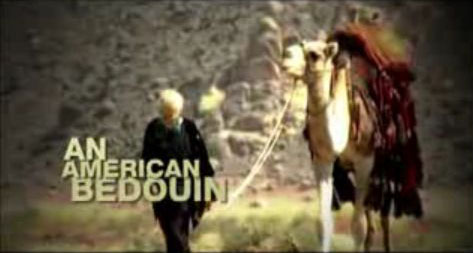
Screen Shot of "American Bedouin"
According to an excellent 2007 Aljazeera Feature video, Erga Rehns has been living the life of a Bedouin in the desert with the Bedouin tribes of Wadi Rum for seven years. I’m not sure if she still does though. I’ll have to do more research in order to contact her again. The last, (and first) time I saw her in person was in 1981, when we first met at her little art studio and home in Obidos, Portugal.
Some people are lucky enough to be a primed for a turning point in their young lives, and come across just the right person at the right time that poses questions, and challenges one’s view of the world – who plants the seed for a paradigm shift. Most people aren’t’ aware they’re ready for that change, until years later, when they realize the shift was primed by those mentors. (more…)
Tags:Aljazeera, Alta Utah, American Bedouin, Chiusa Italy, Dexter Randall Richards, ecospiritual psychology, Erga Rehns, Ex Patriots, Experiential Education, Holistic Living, Jeanne Pickett, Klausen, Living abroad, Luciano Cappella, Martin Strolz, Materialism, Mentors, Mountain Spirit, Mountaineering, mtnspirit.org, New Hampshire, New Zealand, Obidos Portugal, Peru, Simplicity, Spiritual, Strolz GmBH, Strolz Ski Boots, Sud Tirol, Sunapee, Sustainability, Travel, Utah
Posted in Conservation, Environment, Film/DVD, Holistic Living, Inner Work, Inspirational People, Leadership, Power of Place, Spiritual, Sustainable Living/Communities, Traveling | 10 Comments »
27/06/2009
Decisions, Decisions – Motorhomes or Going Light

" Capt'n Fast und Light"
Huge motorhomes rumbling down the Motorways and Interstates are proof that humans have entirely too many non-renewable resources at their disposal. What it takes to move these beasts of burden one kilometer in energy could light the two lightbulbs in my yurt for a week. OK, I actually owned a motorhome when living in Sedona Arizona, as an alternative to apartment living. We’d drive out into the desert at night and base there, while I led trips for Sedona Adventures. And yes, we drove it to Washington state, fully loaded for the Outward Bound summer season. If a motorhome is one’s main residence, it may be “going lighter” on the planet, (I think) – Maybe lighter than owning a MacMansion. If, however, it’s one’s vacation mode of travel, please read on. (more…)
Tags:12 volt showers, Captain Vancouver, Conservation, desert living, Dexter Randall Richards, ecospiritual psychology, Experiential Education, fuel ecomony, going light, Holistic Living, hot showers, Motorhomes, Mountain Spirit, Mountaineering, mtnspirit.org, Natural resources, New Hampshire, New Zealand, Outward Bound, Peru, pulling boats, Spiritual, Sunapee, Sustainability, Utah, vans
Posted in Conservation, Environment, Sustainable Living/Communities, Traveling | Leave a Comment »
20/06/2009

Effective: being put on notice.
I first met Project Laundry List founder Alexander Lee in Manchester at a Going Green Expo a few years ago. I noticed he was passionate about his mission. Since then his passion to make line drying of clothes legal and acceptable has taken off. The mission of PLL is
“making air-drying laundry acceptable and desirable as a simple and effective way to save energy.”
Recently they have received a significant grant for purposes of strategic planning. They plan to strengthen their focus and deliver on their mission.
Vermont just passed its Right to Dry legislation. PLL expects to see a more states pass “right to dry” legislation this year. Lee is writing a book about laundry and planning Project Laundry List’s first Clotheslines Across the Nation Tour (Sept. 7 to Sept. 17). Lee asks people to help him make drying legal and acceptable when he writes in his most recent newsletter – “Will you step up to the line?”
Why, we ask?

Drying Rack
Dryers use ten to fifteen percent of domestic energy in the United States!
Ten top reasons to dry:
10) Save money (more than $25/month off electric bill for many households).
9) Clothes last longer. Where do you think lint comes from?
8) Clothes and linens smell better without adding possibly toxic chemicals to your body and the environment.
7) Conserve energy and the environment, while reducing climate change.
6) It is moderate physical activity which you can do in or outside.
5) Sunlight bleaches and disinfects. (more…)
Tags:Alexander Lee, Clothes Drying, Dexter R. Richards, electricity consumption in USA, Going Green Expos, Mountain Spirit, PLL, Project Laundry List, saving energy, service projects
Posted in Conservation, Environment, Holistic Living, Inspirational People, Leadership, Sustainable Living/Communities | Leave a Comment »










 Mountain Spirit's Blog