Handwoven Fabrics: Living History
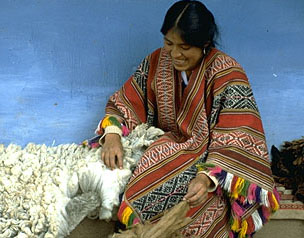
Handwoven fabrics are the living history and cultural treasure of the Peruvian Highlands. The weavers who create these extraordinary textiles are the keepers of the culture and sustainers of a noble but difficult lifestyle in tune with the earth. This book, Weaving in the Peruvian Andes celebrates their authentic, well-crafted work by showing varied and distinctive styles of traditional clothing, the basics of how fabric is created from spinning to dyeing to weaving, the way traditional crafts are passed from one generation to another, the names and meaning of the myriad textile designs that reflect the culture and history of the people, and the rituals and celebrations in which woven fabrics play such an important role.
N.C. Alvarez
Author Nilda Callañaupa Alverez is founder and director of the Center for Traditional Textiles of Cusco. She has established weaving associations through the Andean highlands to preserve a tradition of handmade textiles and to promote economic development. She lives in Cusco and in her native community of Chinchereo, Peru.
Be Here Now
Being in the present moment is all there is. This light-hearted skit by Bob Newhart on MadTV illustrates this message with brevity and humor.
Amanda and I attend a wonderful “Open Hearted Listening” group along with other couples, once per month, facilitated by the wise Don Rosenthal, about whom I’ve written in a prior post. Last night, some of were talking about first, observing our behaviors that are like useless baggage we’re carrying around, and simply drop the behavior, like one would a hot coal. Enjoy..
Editor’s Note: Thought I’d include something: That those with cases of clinical depression and similar diagnosed issues, being told to “stop it” could probably cause quite serious repercussions. I was talking with a friend today who’s a psychologist (it wasn’t an appointment). I mentioned this skit and the premise. She replied, “That’s funny, sometimes I feel like saying “Stop it” to my clients,” adding, “Who would they be without their stories.”, Indeed, who would each one of us be, without our stories.
Tolle states that the there really isn’t that much difference between a stranger wandering down the sidewalk muttering to himself, and the rest of us, only the rest of us don’t do it out loud. We’ve don’t know to find the “off button”. The instrument has taken us over. Similar to an air conditioner making a background hum, the mind makes background noise with endless commentary and thought. Only when we “stop it” do we notice the peace. That’s something to think about.
During their last tour in the U.S., Chimu Inka had some time to check out New England, kick their feet up and have some fun. Here are some images of light moments during their stay with us in Sunapee, NH.
We stopped at a novelty shop in Portsmouth, NH. Guillermo Seminario had time to try on some of of the various headpieces that the U.S. has to offer.
Wachi Taype, stylin'
Wachi Taype also saw some sunglasses that seemed to fit him quite well. At least that’s what we thought.
When we visited the Statue or Liberty, Mario Montalvo was jumping for joy over his opportunity to visit the Big Apple. When we last saw the group in Cuzco, Wachi reflected on his U.S. experience – “Randy, our visit to the U.S. seems like dream”, adding, “Did it really happen?”
Mario, enthusiastic in NYC
I assured him it had, and with providence, it will happen again! We can’t wait to have these bright souls back in the U.S.A., and of course for a tour to New Zealand when we’re there.
I got some shots of this ice climber practicing on the glacier just near the entrance of the Mont Blanc tunnel in Chamonix, France. It’s a great place to practice with good top-rope sites.
There are more images but these two seemed the most dramatic, especially with the gaping circular crevasse below. It reminds me of the threat of circling the drain.
Where do you start? How do you lower to flat ground? Not to worry, there was a good ice ledge where climbers can tie in. Ykes!
Ho’O What?
Old Hawaiian system of communication and engaging with the universe that actually works to make a better world.
I’ve been meaning to write about this book for a while, and a recent email prompted me to follow through. On one hand, while the cover, and some of the book’s precepts are a bit hokey, such as getting the woman and car you want, I doubt I’d be married to the wonderful woman that’s my wife, had I not actively engaged the universe and actually asked for what I want. I was using this technique during the summer just before we met. I was leading a mountaineering course in Alaska at the time, and while in the mountains, practiced the technique about 30 times per day. This book illustrates a technique that has quite a track record and impressive story behind it. Below is an email from a good friend to whom I recommended the book and technique. As Tolle says, “Are you polluting the world or cleaning up the mess?” This technique helps you do your part to clean up the mess.
Hi Randy,
I really enjoyed our conversation today.
Shortly after our conversation, I Googled some reviews of “Zero Limits” as well as several pages of the book itself in the form of a preview. In it are perhaps the most potentially life changing ideas I have ever encountered. I thank you very much for introducing it to me. I am going to order copies for several friends and myself.
Thanks J.M.
Dear J,
Yes, this technique of simply saying “I love you, I’m sorry, Please forgive me, Thank you”, is still working wonders in my life. It’s time to raise the bar for all of us, isn’t it.
Thanks for the link to Meninger. I’ll check it out.
Looking forward to seeing you. Warmest regards,
Randy
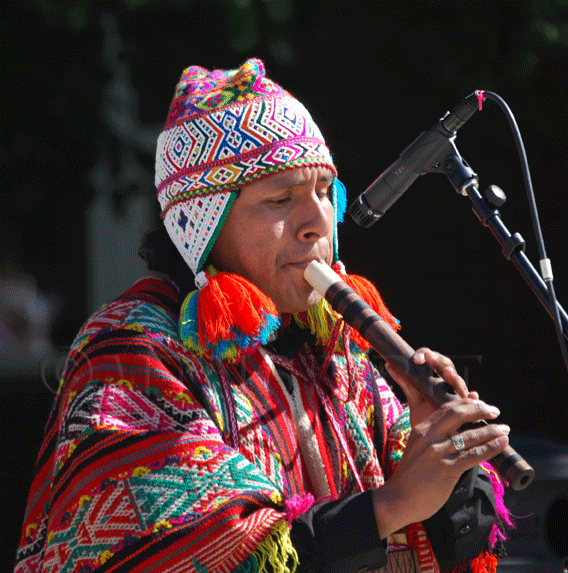
Guillermo Seminario, the director of Chimu Inka, the Peruvian band came to the U.S under invitation from Mountain Spirit Institute to run a program to perform and teach about Peruvian folklore music in 2008. In one Vermont town, we were being housed in a very nice old residence in one of the more ritzy parts of town. At one point during the evening, Guillermo turned to me, shaking his head, saying, “In Peru, there are children without food, and a place to sleep.” He queried, “It confusing me, seeing such wealth in your country when Peru is so poor in many parts of my country.”
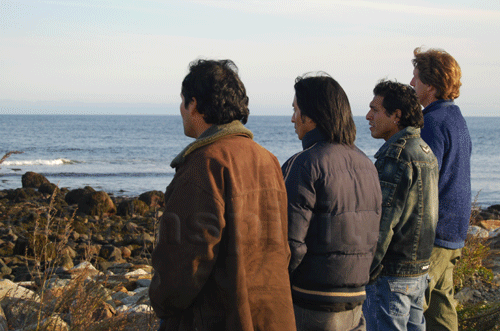
Our Peruvian Guests on the Coast, NH
We have thought and discussed this much since that day. Tearing down a perfectly good house just doesn’t seem right.
It’s more than, “Finish your broccoli, there are people starving in other countries,” but it stems from the same disconnect. It’s true the U.S and other 1st world country’s inhabitants are happily oblivious to our role in contributing to The Empire’s excesses. It’s time to think small, and stop the waste. I have a gut feeling this level of living will not continue, mostly due to peak oil. It’s actually quite obvious.
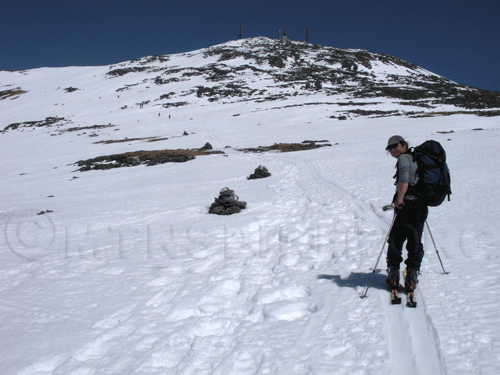
I’d grown up, skiing every spring, on Mt. Washington’s east side – Tuckerman’s, Gulf of Slides, and Great Gulf. Once, I think I took one run, years ago on the west side, but last week Junji Itagaki suggested we head up to his favorite haunt. I don’t often get in ski touring mode when back east, but the west side of Mt. Washington is as close as it gets to a wonderful alpine touring experience on the east coast of the U.S.
We climbed up Munro Gully, then headed to the Lake of the Clouds, then over to the summit of Mt. Washington, for a nice descent down Ammonoosuc Ravine, on thick but great snow. I think we had record-breaking temperatures that day. (See my earlier post on getting kids outside, which was filmed in Ammonoosuc Ravine).
Mt. Washington's West Side
Pictured above, Junji Itagaki, Lake of the Clouds and its Hut, Mt. Washington to the right.
Mountain Family Doesn’t Stop Exploring When Kids Enter the Picture
Junji Itagaki, Mt. Washington, NH, USA
Junji Itagaki and I were backcountry skiing from Mount Washington’s summit last week, and descended down Ammonoosuc Ravine when we passed by family encamped in the base of the ravine. They were still setting up camp in a safe area, off to the side of the avalanche zone, when I asked them for a short interview.
The families in many cultures don’t stop going outside, hiking or backcountry skiing in the mountains when their children are born. They intentionally introduce their children to camping, hiking and skiing. Here’s a great example of that in New England….
The Top 100 April Fool’s Day Hoaxes of All Time
As judged by notoriety, creativity, and number of people duped.
#1: The Swiss Spaghetti Harvest
1957 April Fools' edition of BBC Program
Spaghetti harvest1957: The respected BBC news show Panorama announced that thanks to a very mild winter and the virtual elimination of the dreaded spaghetti weevil, Swiss farmers were enjoying a bumper spaghetti crop. It accompanied this announcement with footage of Swiss peasants pulling strands of spaghetti down from trees. Huge numbers of viewers were taken in. Many called the BBC wanting to know how they could grow their own spaghetti tree. To this the BBC diplomatically replied, “place a sprig of spaghetti in a tin of tomato sauce and hope for the best.” Read the rest of this article…
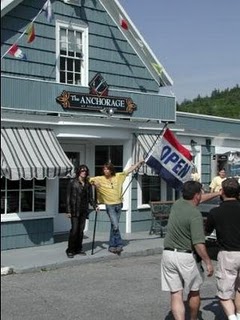
We usually don’t write about big rock bands, but Aerosmith, being somewhat local from Sunapee, NH, USA, and having sold out tickets in Peru, seemed like an odd enough connection that we’re posting it here. If you happen to be in Lima in May, (or in Sunapee at the Anchorage) you might run into them.
by Isabel Guerra LivinginPeru.com
There’s still two months ahead before their arrival in Lima, Peru, but 10,000 tickets for their concert were sold today, during the opening of sales day.
“A new record has been set,” says MVV Asociados, the agency responsible for this concert’s press, adding that “this is the
Popular in Peru
biggest first sale ever made by any band in Peru. It seems that the tickets will be completely sold out in only a few days,” states a press release.
The concert is scheduled for May 22, and will be held at the Monumental Stadium Esplanade.
Ticket’s prices range from 72 to 624 soles (US $24 to US $208)









 Mountain Spirit's Blog