Posts Tagged ‘Randall Richards’

Life & Death in the Mountains

16/08/2013

At What Cost?
By R. Richards

Vinton-Boot in Chamonix

Vinton-Boot in Chamonix

If you live in the Southern Alps of New Zealand, and have anything to do with climbing, the name Jamie Vinton-Boot pops up all the time. New hard routes, and lots of them. The other day, the news that he had been killed in an avalanche sent shock waves through the climbing community, right after the sad news that NZ climbers Marty Schmidt and his son Denali had been swept away by an avalanche at a high camp on K2 in the Himalaya. 

Vinton-Boot was a new father who leaves his new baby and wife behind. And the loss of Schmidt and his son are a one-two punch which seems hard to fathom. I was chatting with a checkout person in the grocery store about these losses, and part of her summation was, “At least he was doing something he loved to do.”  Being a new father myself, I’m trying to balance my adventure goals, (not that I’m a cutting edge climber by any means) with the risk involved. My risk, (subject hazards) seems worlds apart from the climbers’ mentioned here. Vinton-Boot had decided to do easier routes since becoming a dad, so states the article below.  Easy terrain for him might be my upper limit, so it all depends on what you’re comfortable with.  It’s the objective hazards that give you the chop, no matter how easy the terrain.  Whether it’s a ski descent or a mixed route, easy or hard, there are those hazards, and if it’s your time to go,  you get the chop.

As the list of friends, mentors, and famous climbers who’ve gotten the chop grows, the whole thing, for me, comes down to making damn sure I’m stacking the deck in favor of being around for my son. There’s simply no reason not to be. Sure, I could get hit by a car, (as the checkout girl added in her summation), but looking for trouble is a different matter. 

Vinton-Boot in Queenstown's Remarkables Range, NZ

Vinton-Boot in Queenstown’s Remarkables Range, NZ

When it comes right down to it, we have to really evaluate what roles and games we’re playing in the world of mountaineering. Are internal peaks and challenges of the family journey not enough? Or what about being very present in the mountains without having to be on the edge (See Mindfulness in the Mountains). What is the measure of a man, a climber, a father?  I’m just saying…it’s time for me to continue to re-evaluate my everyday decisions as if I were on the end of a lead rope. I have people I’m belaying in life: my wife, my son. And that’s a handful in itself, I don’t want to drop that belay, at any cost.  As my mentor and former boss, Willie Prittie said to me in Peru when we were guiding there, “It’s just as important to get down the mountain, (with all your limbs and digits intact), as it is to make the summit. On second thought, it’s more important.”

The following is from an op-ed ..More food for thought:
Climber not at fault: friend
By Paul Hersey, Climber and friend of Jamie Vinton-Boot
Otago Daily Times
Warrington mountaineer Paul Hersey has attended the funerals of many of his mountaineering mates but he will continue to climb.

Mr Hersey (45) said Christchurch climber Jamie Vinton-Boot (30) was a close friend and the pair had climbed together extensively in New Zealand. Mr Vinton-Boot was swept off his feet by snow on Monday when traversing and fell 500m to his death into a Remarkables ravine. Mr Hersey and Mr Vinton-Boot created the climbing documentary One Fine Day on a Mountain, which won a special jury award at the New Zealand Mountain Film Festival this year.

Mr Hersey said the risks to which Mr Vinton-Boot had exposed himself had been exaggerated and conditions at the Remarkables were reasonable for climbing. The avalanche risk was standard for winter mountaineering and not at high or extreme levels, and the ”snow release” was a ”small, isolated pocket”. ”It’s not an avalanche; more a snow sluff, a small release of snow. It can happen a lot when climbing.”

Mr Vinton-Boot was not anchored up because he was traversing to the route, he said. The more difficult a climb, the safer the climb usually was, because more safety gear was used. ”But on a more moderate climb, or approach, you can’t rope up for those situations because it would take forever and you wouldn’t actually get to the climb. In this case, it was walking across a snow slope.”

Mr Vinton-Boot was a safe climber and the wrong message had been attached to his death. ”He’s a really close mate, one of my best mates, and you stick up for your mates and in this instance, he was taking all the reasonable safety steps … Jamie wasn’t doing anything wrong. It just happened.” Mountaineers seek a challenge, not risk, he said. ”But that’s a consequence of the environment sometimes.”

Christchurch mountaineers Marty and Denali Schmidt, who were killed while climbing K2 in Pakistan last month, were also read the rest of this story..
Living Life, When Life is Short

14/06/2013
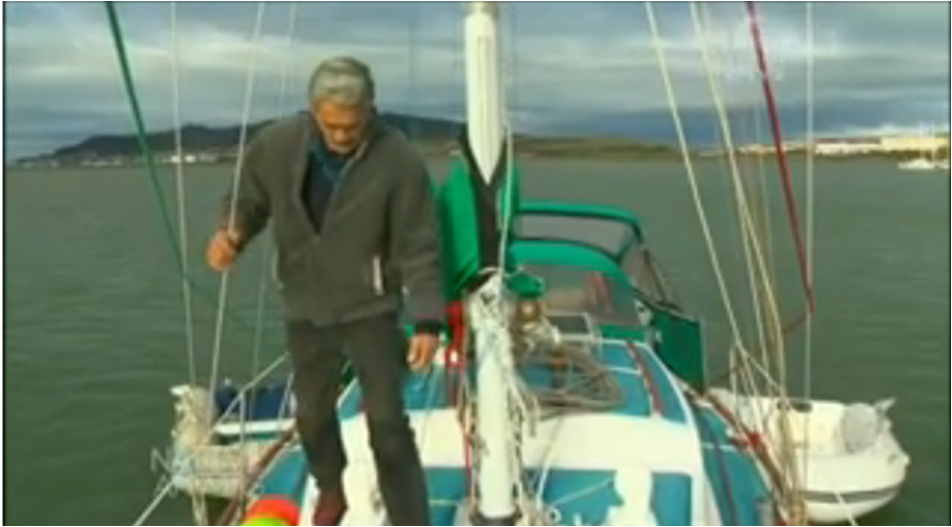
Tom on board his yacht in Bluff, New Zealand

Tom on board his yacht in Bluff, New Zealand

I had the good fortune to meet Tom Shepherd yesterday, here in the little town of Kingston, New Zealand.
Although he won’t admit it, Tom has a remarkable story to tell, which actually isn’t over yet. He’s half way through a “figure-8 circumnavigation” of the North and South Islands of New Zealand – and he’s learning to sail as he goes along. What’s more impressive is he’s approaching his 84th birthday next month, and, he has been diagnosed with cancer. Seven years ago he was given six months to live. Every six months after that, for two years, nothing happened. He finally decided he wasn’t going to sit around to see would happen.  Learn more of his story:

When he sailed in to the docks in Motueka, near Nelson,  people were gathering and walking down the dock to greet him with “You must be Tom Shepherd, the fellow sailing down the coast.”  Word had traveled before his arrival. Since then he’s been interviewed by the Maori Channel here in New Zealand. He was kind enough to grant me the interview (see above), but, half joking, said he was considering going into hiding.

The next leg of his journey would provide an opportunity as a recluse, as he heads from New Zealand’s southern tip into the deep fjords of the the west coast. I want to keep track of this man – who is an inspiration. He’s getting out there and doing something. He’s not posting on Facebook or blogs, he’s just doing it. Tom’s adventure is about being alive as much as it is the uncharted journey on his yacht. It reminds me of the quote by William G.T. Shedd – “A ship is safe in harbor, but that’s not what ships are for.”

Please see the posShepherd, Tomt interview clip, (below) of how Mr. Shepherd “rubbed off” on a bummed out cab driver in the Christchurch area. It’s been said that one of the tenants of a spiritual person is to serve as a fire that helps kindle the soul of another. Tom Shepherd humble, but the results around him seem to be clear. He’s making this place a better world, just by living.


See this great video piece on Maori TV’s Native Affairs about Tom’s Journey

MSI Hosts Adventure Educator’s Sharing Symposium

06/07/2012

Learn and Share at MSI’s Symposium
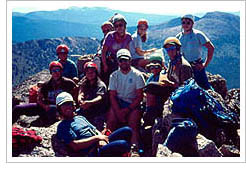
Image: Participants in North Cascades, WA

Mountain Spirit Institute invites educators and interns to attend, share, and learn at the
Adventure Educator’s Sharing Symposium

WHERE: A Quiet, Rural Setting in the Dartmouth/Lake Sunapee Region
WHEN: Sunday, July 22nd, 2012
WHO: Open to Students, Teachers and Outdoor Educators and Interns..See more below.
COST: No charge. The Adventure Education Sharing Symposium is provided as a professional service by Mountain Spirit Institute, its staff, and its donors. If you wish, you are invited to make a contribution to the Mountain Spirit Institute scholarship fund.

WHAT: Experiential educators and adventure facilitators have creative and involving ways to help people bring the adventure home—to make connections between adventure experiences and our lives back at home, work or school. This symposium unites adventure programmers to share, learn, and apply some of our best practices regarding processing, facilitation, and transfer of learning in adventure education.

The Adventure Educator’s Sharing Symposium is responsive to the training and needs of each participant. By sharing, demonstrating, and talking about the processing and facilitation techniques we use in our various settings, the content, outcomes, and much of the structure of this day is co-created by participants, but with a little guidance toward the primary goal of an expanded tools-of-the trade repertoire for all participants. So, take an active role in your own learning and share your knowledge with others. (more…)

Ken Wylie Named to MSI Board

24/03/2012

Mountain Spirit Institute names Ken Wylie to Board of Directors

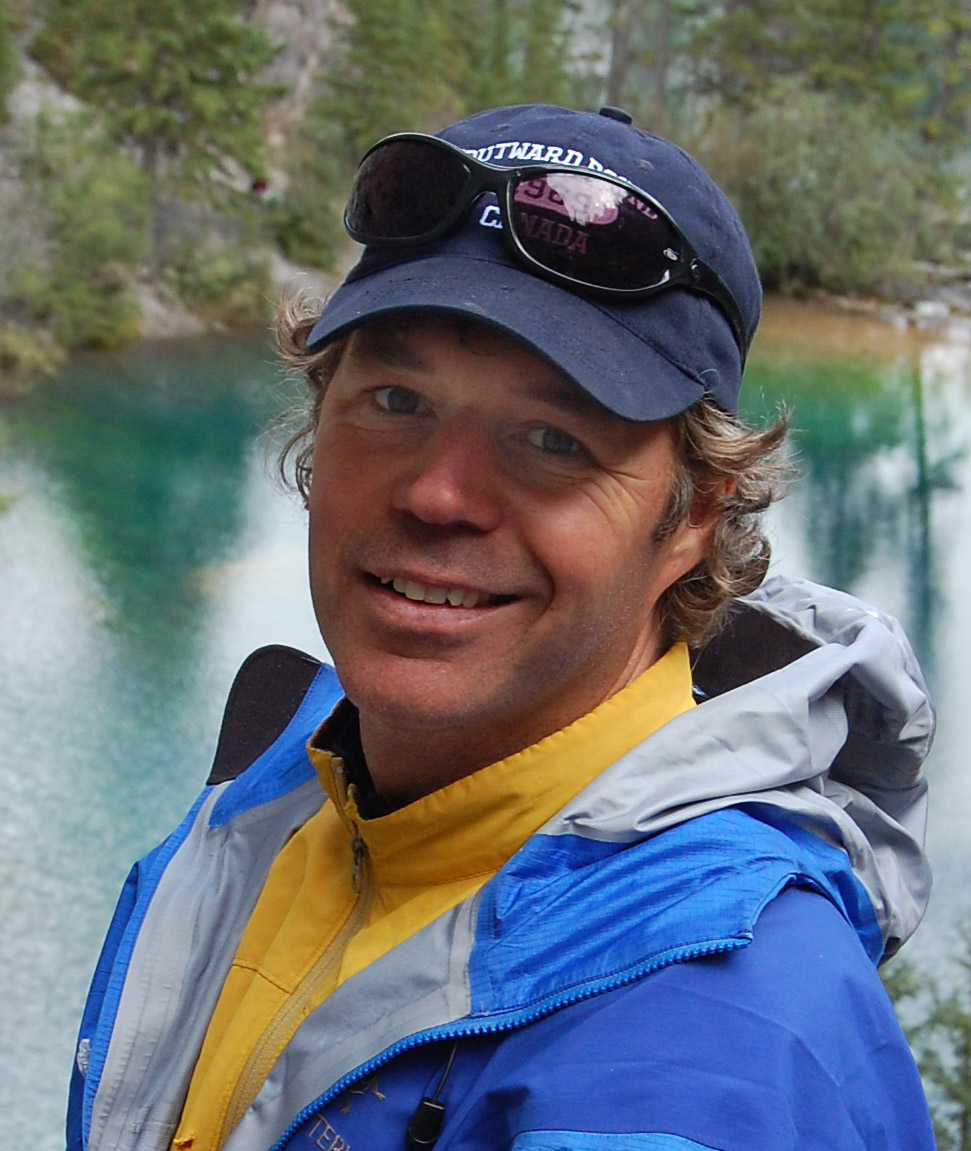
Ken Wylie

Ken Wylie, a veteran certified mountain guide from Cochrane Alberta, Canada with years as an experiential educator and program manager at Canadian universities as well as Outward Bound Canada and the Outward Bound USA, has recently been named to the board of directors at Mountain Spirit Institute based in the U.S. and New Zealand.  In addition to helping guide the U.S. organization, Wylie has plans to launch a  Mountain Spirit Institute Canada where he will create mountain programs based on the mission statement. Mr. Wylie and founder Randall Richards along with fellow board members are in discussions about also collaborating on mountain programs in the U.S,  New Zealand and possibly the Alps.

Says Wylie, “I am drawn to Mountain Spirit Institute because of the organization’s vision. MSI has the vision for the 21st century in my estimation, and is what I have been searching for in my career.” Adds Wylie, “The mountains are an experience that can change people’s lives, but are more often than not just another consumable, another peak to check off the list. What people need now more than ever,  is to connect and MSI helps them do that.” (more…)

A “Modest” Kiwi Environmental Centre

14/01/2012

Check out the South Coast Environmental Society, and stay tuned for the video, “Welcome to the Food Forest”. There are tons of volunteer opportunities as well.

YOUR FOOD SUPPLY #31: A Modest Kiwi Environmental Centre Note: (This video series started  in 2010, while listening to the audio version of the book, “The Omnivore’s Dilemma”, when Amanda and I were driving across the U.S. and were seeing the effects of industrial farming in real time while listening to the book. Here’s that first entry Your Food Supply #1 To see the whole series, click on the category “Your Food Supply” in the category section of this blog on the right of your screen.

Build It & They Will Come

14/01/2012

An Outpost of Sustainability

Robert and Robyn Guyton were determined to start a food forest instead of mowing a front lawn. And a forest did they grow,  when in the mid-’90’s,  they purchased some land and a house in the small coastal town of Riverton, New Zealand. Riverton along with its neighbor, Invercargill rank as one of the southernmost towns in the world, and back then Riverton was an affordable place to buy land. It still is compared to the northern resort towns of Wanaka and Queenstown, the latter which graces its runway with  private jets, rivaling Aspen Colorado.

The Guytons worked  in earnest on their two lots planting trees and plants based on permaculture practices. When they first started, they received some odd looks from the neighbors, as their front yard started to take on the forest look. There were no other like-minded people in Riverton when they arrived, but undeterred, they started a cooperative learning center called the South Coast Environment Society.


YOUR FOOD SUPPLY #30Build it & They Will Come Note: (This video series started  in 2010, while listening to the audio version of the book, “The Omnivore’s Dilemma”, when Amanda and I were driving across the U.S. and were seeing the effects of industrial farming in real time while listening to the book. Here’s that first entry Your Food Supply #1 To see the whole series, click on the category “Your Food Supply” in the category section of this blog on the right of your screen.


Today the organization modestly states on its website it is an umbrella group for a “several” local environmental groups who have information,displays and meetings in the centre. Those several groups include:

Groups working for protection and enhancement of local ecosystems:

  • Riverton Estuary Care Society
  • Aparima Pest Busters
  • Aparima Nursery Enterprise
  • Seed Balls for Restoration projects

Groups working to promote sustainable lifestyles:

  • Riverton Natural Health Group
  • South Coast Permaculture
  • Sustainable Lifestyles project
  • Riverton Organic Food Co-op

Groups promoting sustainable growing methods

  • Riverton Organic Growers Gardeners Group
  • Southland Seed Savers
  • Riverton Organic Farmers Market
  • Riverton Community Orchard
  • Rivertonians for Alternatives to Toxic Substances (RATS)

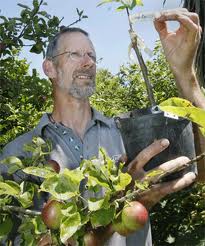
Robert Guyton

My wife and I met the Guytons when they were giving a presentation on sustainability to the ultra small Garston School, (which deserves its own blog post),  New Zealand. We were intrigued with their presentation, which included a movie (to be posted on this blog) called “Welcome to the Food Forest”. We decided to take our chances and take the hour and half drive from our place and show up unannounced. Even though we had a standing invitation, we happened to miss them, when we stopped by to say hi. Nevertheless, I decided to interview Mark Baily while visiting the centre. You can see the video on my adjacent post.  We’ll have to get down there again when Robert and Robyn are home, so we can get the proper tour of their food forest!


YOUR FOOD SUPPLY #30: Build it & They Will Come Note: (This video series started 13 years ago, while listening to the audio version of the book, The Omnivore’s Dilemma, when Amanda and I were driving across the U.S. and were seeing the effects of industrial farming in real time while listening to the book. Here’s that first entry Your Food Supply #1 To see the whole series, click on the category “Your Food Supply” in the category section of this blog on the right of your screen.

R. Richards Onstage

23/03/2010

Interview with Woman from Bhutan

16/12/2009

Punyma Taha from Bhutan was a vendor recently at the 17th Vermont International Festival in Burlington, Vermont, USA.  She shares a bit about her life in the USA and how she came to live in Vermont. Her booth was next to  our Mountain Spirit Institute booth, and we had chatted a bit, so when we asked her if she would be willing to be interviewed for this blog, she gladly accepted the offer.

Gold Mining in Peru

14/11/2009

By Randall Richards

Peru-Barrick Mine

Barrick's Pierina Gold Mine, Peru

I know relatively little about the issues that surround open pit gold mining, but my instincts tell me, aside from what I’ve read over the years, that it’s not a good thing, something similar to  nuclear testing – not the best for the planet,  nor the surrounding communities. There are certainly the headlines about gold mining, about toxic tailings and the havoc wreaked on local rivers and communities.  I debated whether to do more research before writing this post, and decided to simply point you in the direction of two websites, and tell an anecdote of my observations in Peru over the past 12 twelve years.

Peru-Barrack Mine Far

Barrick Mine viewed from our land near Huaraz

We’ve just purchased some land in Huaraz Peru, and within 10 or 15 miles, line of sight, to the north is the Canadian company Barrick Gold open pit gold mining operation. It just looks wrong. A whole mountain on the Corillera Negra side of the Cayllon de Huaylas (Huaylas Valley),  has been transformed into a mammoth sand pit/mound.  Aside from  the blight it produces, all natural grasslands and campasino’s (country farmers), pastures/farms have been eradicated.   I hear consistently that the Japanese are, or are about to run mines in the Cordillera Huayhuash, (scene of Joe Simpson’s Touching the Void).

Peru-Barrick Mine Settlement

Barrick's Planned Community - employee housing, Peru

On the east side of the valley, sits Barrick’s planned employee community. It’s relatively well hidden from the center of Huaraz, over a hill with newly planted pines.  But the whole thing seems abusive, elitist,  and completely out of place, in a country where there are stark differences between classes of the “haves and have nots”. This “suburb looking for a city”, looks like something outside of Toronto, or a development near Montreal, rather than a village in the Andes.

Then, there’s the taking of Peru’s natural resources, for the price paid from the highest bidder. If that’s what the goverments mean by “free trade”, they can have it. (As you may know, Peru and the U.S. have a “free trade” agreement as of a few years ago.) For more information on third world exploitation, be sure to read John PerkinsConfessions of an Economic Hit Man, or see his website, which also has a good bit on Free Trade with Columbia, which might shed some light on free trade agreements.  More on John Perkins in another entry.

As promised, here is the link for Barrick Mines and, one for Mining Watch Canada, with an interesting page entitled, Transnational Mining Tribunal: The Case of Barrick Gold Corporation in Latin America (Chile, Argentina and Peru). Barrick has multiple pages on “Environmental Responsibility, Biodiversity, Rock and waste management”, etc etc..  However, are we being hoodwinked?

For those up to speed on these issues, forgive my lack of knowledge on the subject, but take my observations at face value, especially if you’ve not been to Peru. If you agree with my take, please forward this blog to friends,  and get the word out about the abuse in Peru and other Latin American countries, its people and resources.

MSI’s Blog: Up 700% in 1st Year

03/11/2009

Mountain Spirit Institute celebrates Blog’s 1st year with 700% increase in readership.

By Randall Richards
A blog that started with 2 views in Oct 2008 and 286 one month later has grown 700% in one year to 2000 views per month. The one year anniversary of Mountain Spirit’s Blog has seen posts as diverse as the organization’s mission statement.  Seven months after the blog started the readership rose to 1,540 per month and has been growing steadily since its start.

Blog Stats 11-09

MSI Blog growth: 1 year

Board members have occasionally contributed and are now adding more subject material as well as breadth and type of posts. Says MSI founder Richards of the blog, “It’s been a ball getting this blog going. It’s eclipsing our quarterly newsletter in activity and interest, so I think we’ll continue building it.

Special thanks go to MSI Board members for their contributions, and to executive director Martin Fox of Center for Global Leadership in Park City, Utah for his initial coaching on using WordPress.com as our blog.