Archive for the ‘Climate Change’ Category
18/04/2009
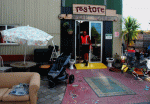
Wanaka ReStart Store
A group of women in Wanaka, New Zealand saw a need for a better way to recycle perfectly good items that were going to the landfill. That’s when they decided to do something about it and started the “ReStore” a number of years ago. The store is a success story in that it serves a vital function in reducing the landfill flow, allows a source for people to purchase used items, and allows the community to re-think their priorities on what happens in the use-cycle of their stuff. The ReStore is actually called Wanaka Wastebusters (www.wanakawastebusters.co.nz) and their store is a feast for the eyes.
(Image: Dan Robertson, an employee of Wanaka Recycling, exits the ReStore to tend the recycle bins)
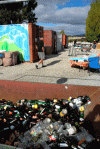
Wanaka Waste-busters Glass
There’s a cult following in Salt Lake City Utah of Deseret Industries stores, operated by the Mormons. Most of the author’s wardrobe comes from high quality used clothes from Deseret Industries. Talking to others who frequent the Deseret Industries stores is like sharing a rock-climbing or alpine adventure story. And all of my favorite clothes are those from “D.I.” as it’s affectionately called amongst Utah locals.
(Image: The glass recycle bin and containers for household items and building materials at Wanaka Wastebusters)
In Wanaka, the ReStore looks like any other thrift store but it’s part of an in the center of the town recycle center. They’ve got recycling down to a fine art. A huge percentage of New Zealanders recycle and it can be seen in the activities at Wanaka Wastebusters.

Wanaka's Angus Ho at "ReStore"
Project Team Member, Angus Ho is soft spoken but talks intensely about his project, Get Real.org.nz which aims at educating people and government in reducing and eventually eliminating plastic bag use at stores throughout the country. Ho has set up an info board and laptop where citizens can sign a petition for legislation on the subject. The following are a few Q&A from the Wastebusters newsletter, (Yes, they have a newsletter):
Angus, what do you do in your job?
Angus Ho: I promote and design projects and campaigns. I set up the green Christmas Presents Campaign and the Recycled Envelope Campaign. I’m also doing waste check-ups for households and businesses. (more…)
Tags:adventure travel, Angus Ho, Dexter R. Richards, ecospiritual psychology, Experiential Education, getreal.org.nz, Holistic Living, Meditation, Mountain Spirit, mtnspirit.co.nz, mtnspirit.org, New Hampshire, New Zealand, Peru, Randy Richards, recycling, Solo, Spiritual, starting a recycle store, Sue Coutts, Sunapee, Sustainability, town dumps, USA, Utah, Wanaka ReStore, Wanaka Wastebusters, wilderness yoga
Posted in Climate Change, Leadership, New Zealand, Sustainable Living/Communities | Leave a Comment »
08/04/2009

Ice Bridge Collapse
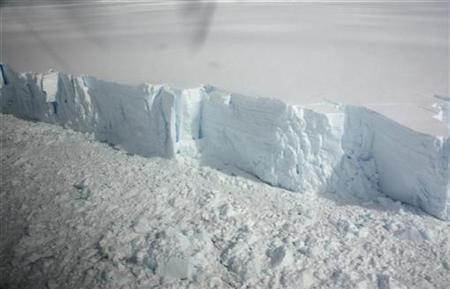
By Alister Doyle, (Reuters) – An ice bridge which had held a vast Antarctic ice shelf in place for hundreds of years at least shattered on Saturday and may herald a wider collapse linked to global warming, a leading scientist said. “It’s amazing how the ice has ruptured. Two days ago it was intact,” David Vaughan, a glaciologist with the British Antarctic Survey, told Reuters of a satellite image of the Wilkins Ice Shelf. “We’ve waited a long time to see this.” The satellite picture, by the European Space Agency (ESA), showed that a 40-km (25 mile) long strip of ice believed to pin the Wilkins Ice Shelf in place had snapped at its narrowest point of about 500 meters wide off the Antarctic Peninsula.
(more…)
Tags:Climate Change, Dexter R. Richards, ecospiritual psychology, Global warming, Ice Bridge Collapses, Mountain Spirit, mtnspirit.org, Peru, Randy Richards, Sunapee, Sustainability
Posted in Climate Change | Leave a Comment »
30/03/2009
Sunapee, New Hampshire, (US), is creating a day dedicated to cleaning up, and education. The mission of the group creating this day, ” is to start a new Sunapee tradition; a town-wide road side clean-up day that fosters community spirit & volunteerism; educates about littering & recycling; and is fun for all”. If you’d like more information on the Green-up Day, head to their website.
Community members present at the first meeting were Tony Bergeron, Rhonda Gurney, Kathy & Steve Gray, Heather Cantagollo, Patricia Halpin, Charlotte Brown, RoseMarie Batto, Scott Blewitt, Diana Wyman, Donna Gazelle, Ron Verblauw, Ellie Goddard, Meagan Reed, Barbara Cooper, Denise & Monica Preston, Greg & Kathy Meyer, David Rowell, and Barbara Chalmers. There seems to be good support by the numbers of people who attended this meeting.
Mountain Spirit and its board members are excited about this new development in Sunapee, and will support this event in some form.
Many thanks to the community members listed above.
Tags:Green-up Day, Mountain Spirit, NH, Sunapee, Sustainability
Posted in Climate Change, Environment, Sustainable Living/Communities | Leave a Comment »
23/02/2009
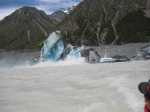
Glacier Calving, NZ
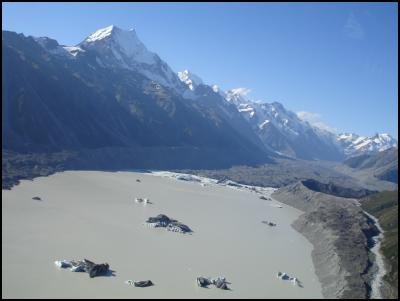
Largest iceberg ‘calved’ in 25 years from Tasman Glacier Terminal Face, Mt. Cook, New Zealand
A three meter tidal wave surging down Aoraki Mount Cook’s Terminal Lake was the first indicator of the largest single iceberg in 25 years calving directly from the Tasman Glacier terminal face yesterday (10 February). The giant slab of ice or ‘calf’, estimated to be 250m long by 250m wide by 80m high, plunged into the Terminal Lake in the early afternoon, the most significant single calving in the lake’s 25-year existence. A second iceberg about quarter of the size calved from the face shortly afterwards.
Glacier Explorers Operations Manager Bede Ward, whose company takes visitors on boat trips to view the Tasman Glacier face from the water, said the calving happened between trips but made quite a splash.
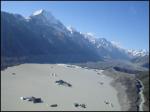
Terminal face calving
Last week passengers onboard Glacier Explorers boat trips witnessed the calving of “The Bomb”, an eight meter wide and 30 meter chunk of turquoise ice.“We thought that took the cake but this new iceberg, is absolutely massive. It supersedes the last significant one named “Sir Edmund Hillary” which calved on January 11, 2008, the same day Sir Edmund Hillary passed away. “We’re getting more and more icebergs now so we’re naming them in order to track and communicate changes and locations. “Since the Terminal Lake began forming in 1973, the Tasman Glacier’s retreat has noticeably quickened because the lake is expanding all the time and is causing a more rapid melt of the terminal face. I think we may be looking at major calving from the terminal face as an annual event now.”
Tags:25 years, adventure travel, Bob Stremba, Brenda Dowst, Calving, Cindy Heath, Craig Cimmons, Dexter R. Richards, ecospiritual psychology, Experiential Education, Holistic Living, Iceberg, Mountain Spirit, Mountaineering, Mt. Cook, mtnspirit.org, New Hampshire, New Zealand, Peru, Randy Richards, Spiritual, Sunapee, Sustainability, Tasman Glacier
Posted in Climate Change, Environment, New Zealand, Sustainable Living/Communities | Leave a Comment »
11/02/2009
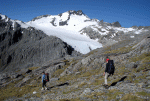
Returning from snow school, Mt. Brewster, NZ
Some friends and I had a great time in the Mt. Brewster area last week. We did the two hour plus verticle hike to the hut from the valley floor, which got us there in the afternoon. As Aspiring Guides Director Martin Hawes writes in their blog, “The track to Brewster Hut wastes no time in saying which way you are going: you leave the car, cross the river and then its straight uphill. At 2575 metres, Mt Brewster is over 2 000 metre above the road and fortunately there is no valley slog to start. There is an honesty to this track. It takes you directly where you want to go – upwards, and no messing about.”
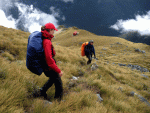
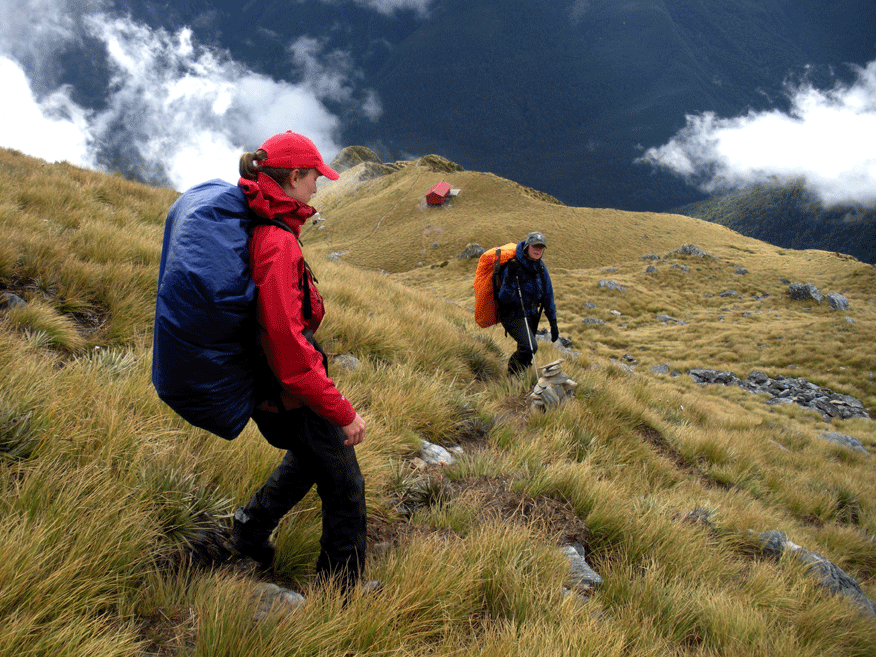
Lisbeth & Amanda headed for Brewster Hut
Amanda is the roving hut ranger for DOC, and her roster took her there to collect hut fees, do maintenance and be a presence at the hut. When we had a bit of free time, she and mutual friend Lizbeth Asserhoj from Denmark, did some basic snow school/ice axe lessons for the afternoon. The following day we worked our way over to Mt. Brewster glacier. But because of poor visiablity rain and slippery glacier polished rock we didn’t make it on the glacier. Even though we were well equipped for glacier travel, we decided to turn back for the hut. Some glaciologist who had earlier in the day been deposited by helicopter also decided to head for the hut. We later caught up with them at the hut, where they described their studies the effects of climate change on the Mt. Brewster Glacier.
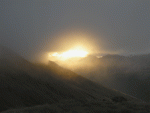
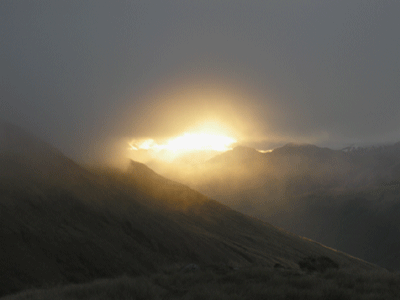
Sunset from Brewster Hut
We based ourselves at the new hut, recently put there by the Department of Conservation in 2007. It replaces a four bunk hut that had been there for years. Even though we didn’t have time to get near the mountain itself, we enjoyed our time doing some ridge walks, snow school and getting towards the base of the mountain. Next time we’re up there we’ll poke around a bit more, time permitting.
Tags:adventure travel, Bob Stremba, Brenda Dowst, Cindy Heath, Craig Cimmons, Dexter R. Richards, ecospiritual psychology, Experiential Education, Glacialogy, Holistic Living, Mountain Spirit, Mountaineering, Mt. Brewster, mtnspirit.org, New Hampshire, New Zealand, Peru, Randy Richards, Snow School, Spiritual, Sunapee, Sustainability
Posted in Climate Change, Climb/Ski/Mntneering, Environment, Mountain People, New Zealand, Power of Place | 1 Comment »
26/11/2008
It’s amazing how easy it can be to do your part to live just a little more sustainably – individuals, institutions and businesses all have the capacity to reduce environmental impact. It’s about making the choice.
A personal choice. Check out this list at You Sustain of actions that don’t require a huge shift in thinking or beliefs, just a minor change in behavior. It could be as simple as saying, “I don’t need a bag, thanks.” Most of the things you can do are free and you just might inspire the next person – a kind of ‘pay it forward’ effect. For further reading, consider Radical Simplicity, by Jim Merkel, or be informed and calculate your ecological footprint.
A choice that inspires others. Barbara Duncan, founder of the Vermont Earth Institute, has been an energetic champion of living simply, consuming less, and building community. Over VEI’s 10 year history, she and her team have have connected with more than 5,000 people and numerous institutions through discussion courses and workshops.
A business choice to use profit and influence for the good. And what about corporate social responsibility? The Conservation Alliance is a group of outdoor related businesses that provide funds to support national conservation and outdoor recreation organizations working to protect natural resources, special outdoor places, and wildlife habitats. And imagine the impact of ‘doing your part’ if you’re the largest company in the world. Consider this – by no means a ‘green company’ by their own admission, yet Wal-Mart Stores, Inc., in a partnership with the National Fish & Wildlife Foundation, has committed $35 million over 10 years to permanently conserve at least one acre of priority wildlife habitat for every developed acre of Wal-Mart Stores’ current footprint, as well as future development.
So what’s your personal sustainability story?
Tags:buying locally, Cindy Heath, Conservation Alliance, ecological footprint, Mountain Spirit, mtnspirit.org, national wildlife federation, natural resource protection, radical simplicity, simple living, Sustainability, Vermont Earth Institute, Wal-Mart, wildlife habitat
Posted in Climate Change, Environment, Sustainable Living/Communities | Leave a Comment »
23/11/2008

Living On Earth, Sunday Mornings: NPR
Living on Earth, the brilliant environmental show on Sunday mornings on NPR had some very interesting and relevent pieces today. If you didn’t get a chance to hear the show, check them out at their website where you may listen to their realplayer or mp3 versions. Here are some of the interviews I found important and worth a listen.
Fire Retardants Stoke Controversy
The wildfires in California have been contained, but controversy over the use of fire retardants continues to blaze. (more…)
Tags:adventure travel, Andrew Winston, Andy Stahl, Bruce Gellerman, Dexter R. Richards, ecospiritual phsychology, EcoStrategies, Experiential Education, Fire Retardants, Food and Water Watch, Forest Service Employees for Environmental Ethics, Holistic Living, Living on Earth, Mountain Spirit, mtnspirit.org, Peru, Randy Richards, Spiritual, Sunapee, Sustainability, Wal-Mart
Posted in Climate Change, Environment, Leadership, Sustainable Living/Communities | Leave a Comment »
22/11/2008
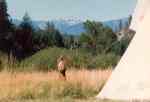
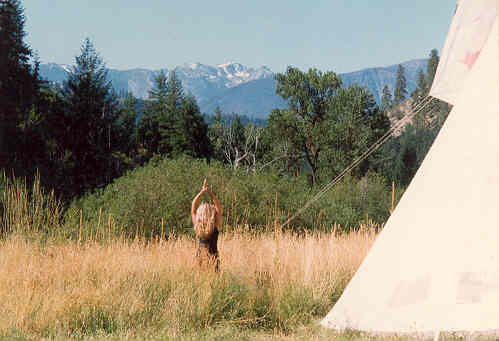
Yoga at the Tipi, North Cascades, Leavenworth, WA
By Randy Richards, Founder
Executive Director
Mountain Spirit Institute
Images: R Richards
Alternative structures are getting more attention these days, especially with the spector of dwindling non-renewable petroleum products for building and heating materials. Simple living is more than an idealist notion. Cody Michaels, a longtime friend and solo pianist extradonaire, just swung by my town for a performance at our local CoffeeHouse. His performance is a reminder that we actually need to live and breath outdoors more. He and I went for a walk to the top of a hill overlooking Lake Sunapee just before his gig. We wer just in time to catch the sunset too. It seemed bitterly cold, (read, There is no bad weather, just bad clothes), but it was worth it. Cody shared his appreciation of the wind whipping through the bare branches, and the artist’s light that cuts through the landscape at an obtuse angle this time of year.
Living outside has become a lost art for the majority of Americans. In my tipi days, I always enjoyed the circular living structure. Occasionally, when a visitor might bring a dog, often times, the a dog would go walk nerveously round and round along the inner walls of the tipi looking for a corner in which to sit. To no avail. Even our domestic pets are used to the square structures in which we all live.

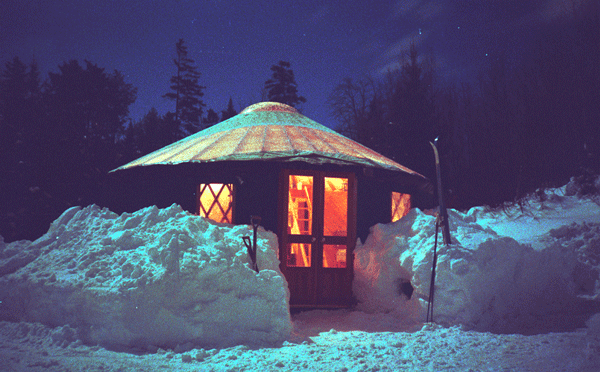
Home base, warm yurt, Sunapee, NH
My tipi has been put up every year though, for the Sunapee SunFest, but I don’t live in it any more. My yurt, now that is a cool structure. It’s toasty warm, and clean living off the grid with solar panels, gravity feed shower, composting toilet and a hand dug well. I’ll write more on yurt living in another post. I had it up for 5 years in Sunapee, NH on Ryder Corner Road. The different reactions I received from different neighors was worth noting. The old time locals, who grew up on local farms thought it was the best thing, a great addition to the neighborhood. Ohers were less clear about their feelings of the thing.

Yurt interior w/loft
Reactions varied from polite disdain, a blank stare, or possibly a somewhat condescending chuckle. It’s only worth mentioning because as illustrated in the movie “Escape from Suburbia” we may be headed for voluntary simplicity whether we want to or not. I’m not a Chicken Little thinker, however, watching the aformentioned movie made me sit up and take more notice. It might be worth your time.
A confession is due here. I’m not living as close to the land as I’d like. I’m not growing my own food, (although I do eat from friend’s gardens once in a while.) And I’m not in my yurt. However I forsee my partner and I taking action on this. I’m glad I have the background I do, having lived in my tipi and yurt. As Richard Louv says in his lecture and book “Last Child in the Woods”, my past experiences give me a touchstone, a reference point that helps me know my place in the natural world. My life is still more green than most, but I’ve still got goals to reach. I suggest you do the same.
Living closely to the earth not only makes sense, it can be much more fun than being in the rut of spending all those non-renewables.
Tags:adventure travel, Cody Michaels, Dexter R. Richards, ecospiritual phsychology, Experiential Education, Holistic Living, Last Child in the Woods, Leavenworth, Mountain Spirit, mtnspirit.org, NH, Peru, Randy Richards, Richard Louv, Spiritual, Sunapee, Sunapee Community CoffeeHouse, Sustainability, Tipis, Voluntary Simplicity, WA, Washington State, Yurts
Posted in Climate Change, Environment, Focus on MSI People, Holistic Living, MSI News, Power of Place, Sustainable Living/Communities | 1 Comment »
02/11/2008
Mountain Spirit Blog Post #1…
The concept of Prajna, or ‘the best knowledge’, is sometimes known as a state in which wisdom prevails over needs and desires. It also has many deeper layers of meaning and practice, all worth exploring.
Climate change is a fairly large global challenge, with a number of great minds working on the problem, but we can all do our part to minimze our individual impact on the environmnent. The practice of “Sustainable Living” can mean many different things, but for many, it’s a call to action, which can be simply applied…
You are cordially invited to learn about climate change, reflect on your current practices, and experience a change in how you make simple everyday choices. (This invitation is loosely based on the three prajnas, of which I know very little, and inspired by a passage in the book, “Buddha Is As Buddha Does”, by Lama Surya Das).
The Global Living Project, a program of author and lecturer Jim Merkel (Radical Simplicity), promotes the value and practice of a sustainable, low impact lifestyle.
To explore your ecological footprint, take a simple quiz which measures your transportation, housing, energy and food consumption practices, then consider possibilities for making changes toward a more sustainable lifestyle.
Finally a challenge with a sweet reward – homemade apple crisp to the first blogger who can identify the source of the following:
“It is not enough just to meditate and pray, which are always good things to do, but we also must take positive action in this world.”
Tags:Cindy Heath, Climate Change, ecological footprint, global living project, low impact lifestyle, Mountain Spirit, prajna, Sustainable Living/Communities
Posted in Climate Change, Environment, Inner Work, Sustainable Living/Communities | 2 Comments »







 Mountain Spirit's Blog