Posts Tagged ‘Peru’
08/04/2009

Guillermo Seminario
We have one or two more spots for our July 12th trip to Peru.
MSI starting running programs to Peru in 1998 and R. Richards had been high altitude guiding for some years prior to that on Aconcogua and Huascaran and Ecuador’s volcanoes for Alpine Ascents International. Although there are some mountaineering and glacier experience programs on the books, (keep an eye out for New Zealand and Peru), this trip will be a cultural exploration and connection with the local people and areas of Cusco, Machu Picchu, Lake Titicaca and Nazca.
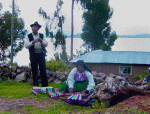
Family Cari - Amantani
We will be staying with Richard Cari and his folks on the Island of Amantani at the Kantuta Lodge. Guillermo Seminario will be our host for most of the trip. This will be our tenth year in Peru, and are grateful of all the wonderful friends and family we now have in this soulful country. Says R. Richards, “I’m also looking forward to getting back to Huaraz to visit with my godchild and his family at Restaurant Salud Y Vida.
Tags:Aconcagua, adventure travel, Alpine Ascents International, Amantani, Dexter R. Richards, ecospiritual psychology, Ecuador, Experiential Education, Guillermo Seminario, Holistic Living, Huascaran, Mountain Spirit, Mountaineering, mtnspirit.org, Peru, Richard Cari, Spiritual, Sunapee, Sustainability
Posted in Experiential Education, Mountain People, Peru, Spiritual, Traveling | 1 Comment »
08/04/2009

Ice Bridge Collapse
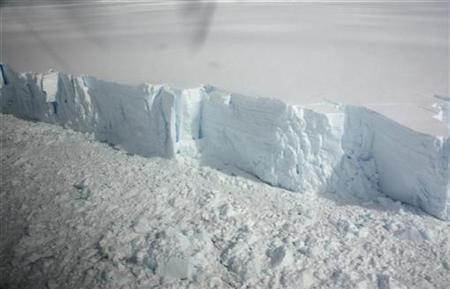
By Alister Doyle, (Reuters) – An ice bridge which had held a vast Antarctic ice shelf in place for hundreds of years at least shattered on Saturday and may herald a wider collapse linked to global warming, a leading scientist said. “It’s amazing how the ice has ruptured. Two days ago it was intact,” David Vaughan, a glaciologist with the British Antarctic Survey, told Reuters of a satellite image of the Wilkins Ice Shelf. “We’ve waited a long time to see this.” The satellite picture, by the European Space Agency (ESA), showed that a 40-km (25 mile) long strip of ice believed to pin the Wilkins Ice Shelf in place had snapped at its narrowest point of about 500 meters wide off the Antarctic Peninsula.
(more…)
Tags:Climate Change, Dexter R. Richards, ecospiritual psychology, Global warming, Ice Bridge Collapses, Mountain Spirit, mtnspirit.org, Peru, Randy Richards, Sunapee, Sustainability
Posted in Climate Change | Leave a Comment »
18/03/2009
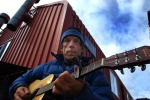
Animal-Guitar Lover
Another Study proves it, animals like music. Well, it’s not an official study, but an observation over the years. Watching birds come to the watering hole outside of Sedona Arizona years ago when I played my Native American Flute, and most recently-
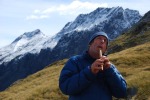
Pied Kea Piper
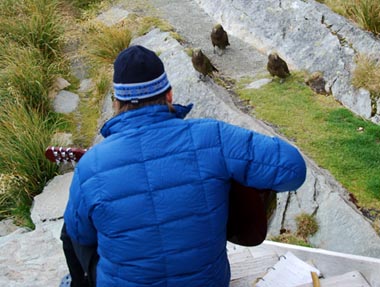
I was playing my little Indian flute, which cost all of two dollars, and a Kea at French Ridge starting coming around, and singing on the off beat. He was perched on the roof for the longest time while I stood below, outside the hut looking up at him as I played.
I brought my “glacier guitar” up the crazy French Ridge Trail. (Maybe it was me that was crazy).
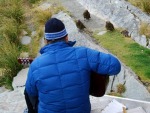
My Alpine Parrot Audience
So I put it to good use, and attracted three kea who stood and listened for about 15 minutes. Again they would caw on the off beats when I’d hold a measure or two for them. We all had a grand time.
Tags:adventure travel, Dexter R. Richards, ecospiritual psychology, Experiential Education, Guitars in the mountains, Holistic Living, Kea, Mountain Spirit, Mountaineering, mtnspirit.org, Music Therapy, New Hampshire, New Zealand, Peru, Randy Richards, Spiritual, Sunapee, Sustainability
Posted in Climb/Ski/Mntneering, Holistic Living, Music | 1 Comment »
07/03/2009
Wet Socks in the Backcountry
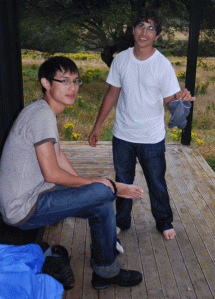
The adventurers from Singapore, Shaun Lee and Karan Puri, (see earlier post) took me up on my offer in joining me in New Zealand’s backcountry. I don’t think the two would have ventured out in this territory on their own, in fact they mentioned the whole concept of “backcountry” didn’t exist in their country. Singapore is compact. Their eyes were wide when they first came up on the Rob Roy Glacier after a few miles up a steep trail, after a small swinging bridge. They then made the two hour trek to the Aspiring Hut with me. Their shoes were a bit wet after the hike, but after a warm meal they were feeling great. The following morning, they were on their way back to the trailhead, as they had reservations on the mountain shuttle. They were a bit nervous, heading out in the rain, but I assured them they would make it. I assume they did! I’ve not heard from them.
Tags:adventure travel, Aspiring Hut, Bob Stremba, Brenda Dowst, Cindy Heath, Craig Cimmons, Dexter R. Richards, ecospiritual psychology, Experiential Education, Holistic Living, Karan Puri, Mountain Spirit, Mountaineering, Mt. Aspiring National Park, mtnspirit.org, New Hampshire, Peru, Randy Richards, Shaun Lee, Singapore, Spiritual, Sunapee, Sustainability
Posted in Health, New Zealand, Traveling | Leave a Comment »
07/03/2009

Three cups of Tea
A Mountain Spirit Board member, plus a few others, have been telling me I need to read “Three Cups of Tea” by Greg Mortenson and David Oliver Relin. It’s a great story about persevering a dream of building a school for the children of Korphe, Pakistan. One passage, quoted below, reminds me of how gravitating back to sustainable cultures can make our lives saner. If you’ve not read Three Cups of Tea, I suggest you pick up a copy.
An excerpt from the book that caught my eye:
“A book he’d read , Ancient Futures, by Helena Norberg-Hodge, was much on Mortenson’s mind. Norberg-Hodge has spend seventeen years living just south of these mountains in Ladakh, a region much like Baltistan, but cut off from Pakistan by the arbitrary borders colonial powers drew across the Himalaya. After almost two decades studying Ladakhi culture, Norberg Hodge has come to believe that preserving a traditional way of life in Ladakh-extended families living in harmony with the land- would bring about more happiness than “improving” Ladakhis’ standard of living with unchecked development.
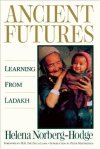
Ancient Futures
“I used to assume that the direction of ‘progress was somehow inevitable, not to be questioned,” she writes. “I passively accepted a new road through the middle of the park, a steel-and-glass bank where a 200-year-old church had stood…and the fact that life seemed to get harder and faster with each day. I do not anymore. In Ladakh I have learned that there is more than one path into the future and I have had the privilege to witness another, saner, way of life- a pattern of existence based on the co-evolution between human beings and the earth.”
Norberg-Hodge continues to argue not only that Western development workers should not blindly impose modern “improvements” on ancient cultures, but that industrialized countries had lessons to learn from people like Ladakhis about building sustainable societies. “I have seen,” she writes, “that community and close relationship with the land can enrich human life beyond all comparison with material wealth or technological sophistication. I have learned that another way is possible.”
Norberg-Hodge admiringly quotes the king of another Himalayan country, Bhutan, who say the true measure of a nations success is not gross national product, but ‘gross national happiness.”
Tags:adventure travel, Ancient Futures, Bob Stremba, Brenda Dowst, Cindy Heath, Craig Cimmons, Dexter R. Richards, ecospiritual psychology, Experiential Education, Greg Mortenson, Helena Norberg-Hodge, Holistic Living, Ladakh, Mountain Spirit, Mountaineering, mtnspirit.org, New Hampshire, Peru, Randy Richards, Spiritual, Sunapee, Sustainability, Three Cups of Tea
Posted in Books, Mountain People, Sustainable Living/Communities, Traveling | 2 Comments »
07/03/2009

The Bagers in their "mountain classroom"
The Danish family of five had headlamps but had decided they didn’t need them. The moonlight illuminated their way. They left the trailhead around dark and rode their mountain bikes on the single, sometimes double track up the valley, being sure to keep the Matuktuki River on their right. Dennis, the father, aside from briefly looking at the map, was going on memory. He had been in this place some 15 or twenty years prior, but that time he was high above this place, and almost slid off Cascade Pass on snow covered wet grass, losing his fingernails while self arresting with hands and nose. This return trip had a different sense of adventure. He was returning with his wife Birgette and his three children Manus 10, Rasmus, and their little sister Frederikke, 7. And this trip was part of a bigger adventure. He and Birgette were about a third of their way through a two year round-the-world educational odyssey with their kids. They pedaled into Aspiring Hut around 11pm, tip toeing into the hut with their gear, careful not to disturb sleeping climbers and hikers. I had heard they had just arrived , and what’s more that they had shipped their 1990 VW oversized camper complete with school books and bikes from Denmark through Asia, Australia, and were headed to South America after a good long stint in New Zealand I had to find out more. The next morning I asked if I could interview them. Dennis jokingly said no but later agreed and even said I could get more info off their website.
MSI: Do you mind if I ask? How are you able to afford to take two years off with your whole family?
Dennis Bager: In Denmark there has been a law that allows either a man or a woman to take a family leave before their child is nine years old. This law has existed for two reasons. (more…)
Tags:adventure travel, Alternative Learning, Bager Family, Bob Stremba, Brenda Dowst, Cindy Heath, Craig Cimmons, Dennis Bager, Dexter R. Richards, ecospiritual psychology, Experiential Education, Holistic Living, Home Schooling, Mountain Spirit, Mountaineering, mtnspirit.org, New Hampshire, New Zealand, Peru, Randy Richards, Spiritual, Sunapee, Sustainability
Posted in Health, Holistic Living, Inspirational People, New Zealand, Peru, South America, Sustainable Living/Communities, Traveling | Leave a Comment »
26/02/2009

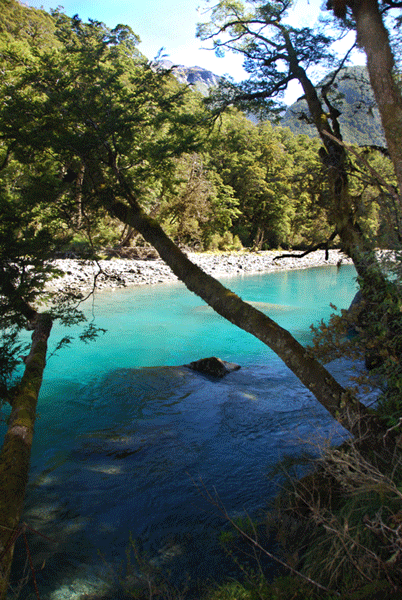
Wilken River, Makarora BC, NZ
Kerin Folks Flat on the Wilkin River is about an hour into an eight-hour trek to the Top Forks Hut area. I’ll include more images of that area soon, but felt I had to post this image ASAP. “Rock flour” colours the water the brilliant turquoise blue that is visible in this image. Rock flour is a result of the glacier a few miles upriver, dragging and grinding rocks and stones between the bottom of the glacier and the ground. The curious color of the fine powder that comes out of the glacier’s terminus is the subject of many a tourist’s query. So I’ve been told, rock flour is simply mud that hasn’t been exposed to the air. Once exposed, after a number of years, it turns brown. In any event it sure makes for good images. This is probably one of my favorite, even after being a professional photographer for a number of years.
Top Forks is a remote part of Aspiring National Park, right in the center of the park, accessible from the Makarora West village area. The highlight of the Top Forks valley is Mt. Castor and Mt. Pollux from which hanging glaciers drop house-sized ice blocks throughout the day and night, making a roaring sound heard from the hut.
Tags:adventure travel, Bob Stremba, Brenda Dowst, Cindy Heath, Dexter R. Richards, ecospiritual psychology, Experiential Education, Glaciology, Kerin Forks Hut, Makarora, Mountain Spirit, Mountaineering, mtnspirit.org, New Zealand, Peru, Rock Flour, Spiritual, Sunapee, Sustainability, Top Forks Hut, Wilkin River
Posted in Environment, Glaciology, New Zealand | 5 Comments »
26/02/2009
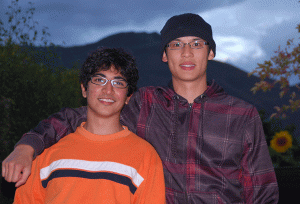
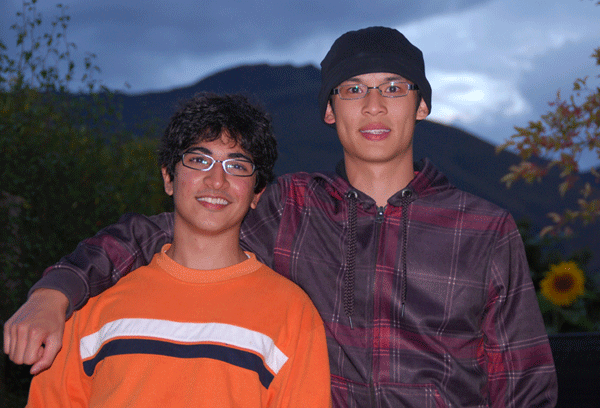
Karan Puri & Shaun Lee, Adventurers from Singapore
Karan Puri, 18 of Katong Province and Shaun Lee, 19 of Bedok province, Singapore, are not only really nice guys, they’re also inspiring. I’ve run into them here at the the Wanaka Hostel. Right now there currently out biking around town somewhere. I found their motivation to travel New Zealand so inspiring I thought I’d share it with you. I interviewed them last night over a beer, out here on the porch from where I write this piece.
Both Karan and Shawn have just finished high school and have about three months off, before they report for the mandatory 2-year military stint that all young men are required to do in Singapore. When Karan first walked into the hostel I noticed he had a sense of inquiry and interest, not to mention compassion and friendliness. Later, upon meeting Shawn it I got the same sense of adventure and excitement. They are now on day 6 of their adventure. So here’s some insight as to what brought them to Wanaka, New Zealand.
MSI: So what motivated you two to come to New Zealand?
Karan: To do something before the military. This is the first time on vacation without my parents, and I had been here in Wanaka when I was a child. Something about the place stuck with me. So I wanted to come back.
You see, one never really gets a break to travel if you’ve been brought up in Singapore. (more…)
Tags:adventure travel, Bob Stremba, Brenda Dowst, Cindy Heath, Craig Cimmons, Dexter R. Richards, ecospiritual psychology, Experiential Education, Holistic Living, Karan Puri, Mountain Spirit, Mountaineering, mtnspirit.org, New Hampshire, New Zealand, Peru, Randy Richards, Shaun Lee, Singapore, Spiritual, Sunapee, Sustainability, Wanaka, Youth Hostel
Posted in Health, Holistic Living, Inner Work, Inspirational People, Leadership, Mountain People, New Zealand, Traveling | Leave a Comment »
24/02/2009

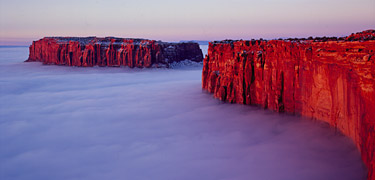
Looking W on Island in the Sky, Utah
Although I was graduated from the University of Utah, and spent as much time in Utah, as in any other state, I had never been to CanyonlandsNational Park. I recently had the opportunity to kill some time while in Salt Lake waiting for a car repair, and decided to spend a few days and nights in the desert near Moab. My first stop was the Island in Sky. I spent a day exploring the plateau, taking pics, and scrambling among the sandstone outcrops. I miss the Utah desert, although New Zealand is hard to beat.
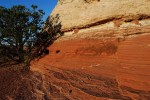
Navajo Sandstone: Canyonlands, Utah
As an aside, I was driving here in New Zealand from Christchurch to Wanaka, and passed through canyon that reminds me of American Fork Canyon in Utah. Anyway, after a couple of days on the Island, I did some work in Moab on MSI’s portable office, (the laptop) then moved on to the Needles area in the southern portion of the park. Here one can day hike or spend the night in the backcountry, and even drive around the park, although the latter is not high on my list. Along those lines, read Edward Abbey’s The Monkeywrench Gang, or Desert Solitaire on brilliant views about America’s relationship to wilderness. Oddly, I’m not sure his books have made it here downunder. I’ll keep you posted.

Island in the Sky, Image:Steve Mulligan/USPS
The Utah desert has a power all its own. So, if you’ve not been I suggest you get there before you die. Put it on your bucket list. For more information on the MSI’s Utah Solo and Wilderness programs, please contact us. The US Park Service has some great resources for Canyonlands
Tags:adventure travel, Bob Stremba, Brenda Dowst, Canyonlands, Cindy Heath, Craig Cimmons, Dexter R. Richards, ecospiritual psychology, Edward Abbey, Experiential Education, Holistic Living, Mountain Spirit, Mountaineering, mtnspirit.org, New Hampshire, Peru, Power of Place, Randy Richards, Solo, Spiritual, Sunapee, Sustainability, Utah, Vision Quests, Wilderness Programs
Posted in Environment, Inner Work, Power of Place, Spiritual, Traveling | Leave a Comment »
23/02/2009
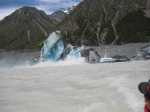
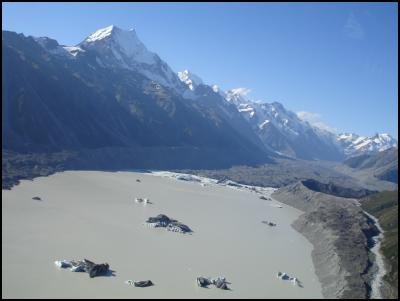
Glacier Calving, NZ
Largest iceberg ‘calved’ in 25 years from Tasman Glacier Terminal Face, Mt. Cook, New Zealand
A three meter tidal wave surging down Aoraki Mount Cook’s Terminal Lake was the first indicator of the largest single iceberg in 25 years calving directly from the Tasman Glacier terminal face yesterday (10 February). The giant slab of ice or ‘calf’, estimated to be 250m long by 250m wide by 80m high, plunged into the Terminal Lake in the early afternoon, the most significant single calving in the lake’s 25-year existence. A second iceberg about quarter of the size calved from the face shortly afterwards.
Glacier Explorers Operations Manager Bede Ward, whose company takes visitors on boat trips to view the Tasman Glacier face from the water, said the calving happened between trips but made quite a splash.
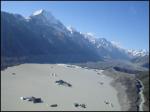
Terminal face calving
Last week passengers onboard Glacier Explorers boat trips witnessed the calving of “The Bomb”, an eight meter wide and 30 meter chunk of turquoise ice.“We thought that took the cake but this new iceberg, is absolutely massive. It supersedes the last significant one named “Sir Edmund Hillary” which calved on January 11, 2008, the same day Sir Edmund Hillary passed away. “We’re getting more and more icebergs now so we’re naming them in order to track and communicate changes and locations. “Since the Terminal Lake began forming in 1973, the Tasman Glacier’s retreat has noticeably quickened because the lake is expanding all the time and is causing a more rapid melt of the terminal face. I think we may be looking at major calving from the terminal face as an annual event now.”
Tags:25 years, adventure travel, Bob Stremba, Brenda Dowst, Calving, Cindy Heath, Craig Cimmons, Dexter R. Richards, ecospiritual psychology, Experiential Education, Holistic Living, Iceberg, Mountain Spirit, Mountaineering, Mt. Cook, mtnspirit.org, New Hampshire, New Zealand, Peru, Randy Richards, Spiritual, Sunapee, Sustainability, Tasman Glacier
Posted in Climate Change, Environment, New Zealand, Sustainable Living/Communities | Leave a Comment »








 Mountain Spirit's Blog