Do you know how many different cows are in one hamburger? Feed Lots in Kansas, USA
Question #1: When you are eating a hamburger, you’re not eating beef from one cow, you’re eating a beef mixture from how many cows? Let us know your answer and we’ll tell you after we get 20 responses.
Question #2: Why do you think there is a hedgerow of trees along the feedlot bordering the highway?
The first in a series of video posts about Your Food Supply
#1 The Trip West: An Experiential Rude Awakening By Randy and Amanda Richards
This was Amanda’s first trip across the U.S., so we thought we’d drive. Destination? Colorado, where we would house-sit for a fellow Mountain Spirit board member. We thought we’d stay off the interstates, instead, crossing rural routes, starting with Indiana Route 24, then Missouri Route 36 west of Macon. Shortly after departing we decided to listen to The Omnivore’s Dilemma, a book on tape by Michael Pollan.
Want to know what’s in your food?
As we traveled through Indiana, Missouri, and then Kansas, the book narrated our trip with views of tightly packed cornfields, and more corn, and then more corn. It turns out, about the only thing the U.S. is growing is corn, at least from what we saw. Sure there are apples in Washington, and spinach, avocados etc, in California, but in the Midwest, there’s corn, and a lot of it. We did see some soybean fields, but nothing much else than corn. We certainly didn’t see many pastoral scenes of cows grazing on open pastures. But we did see lots and lots of corn. As we listened to Pollan’s book, we were shocked to learn where all this corn is ending up in the food supply, plus how many bushels per acre of corn the farmers were squeezing out of the land. Read his book for the stark details of our homogenized food supply, and as you do, imagine seeing it in front of your eyes, passing by the window of your car. It was eery for us. I’ve driven across the U.S. probably over 45 or 50 times, and each time I’ve felt grateful to do so, and very cognizant of my impact by doing so.
I won’t go into detail about all we learned in Pollan’s book. Buy his book. However, one of the major topics he covered was how corn is not only a food, but a commodity, that is in almost all our food in a wide variety of forms. Corn drives the modern industrial food machine, being sent to beef feedlots where cows are forced to eat corn. Grass is their natural diet. Monsanto’s Roundup Ready genetically Modified Corn was another scary thing we learned about, plus how our farmers are forced work for fewer and fewer dollars, while ADM and the other monopolies make the money.
So starts our video series, rows and rows of corn, somewhere in Kansas on Route 36, but it could be anywhere in the Midwest. Stay tuned for Your Food Supply #2, for a feedlot and processing plant scene west of Dodge City Kansas, which may shock you.
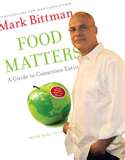
In this book, Mark Bittman explores the links among global warming and other environmental challenges, obesity and the so-called lifestyle diseases, and the overproduction and overconsumption of meat, simple carbohydrates, and junk food. It offers a plan for responsible eating that’s as good for the planet as it is for your weight and your health.
Sustainable Eating
With over 75 recipes and meal plans, this book will help you became accustomed to a style of eating that will cut back on your greenhouse gas production and teach you how to become less reliant on animal products and nutritionally worthless food.
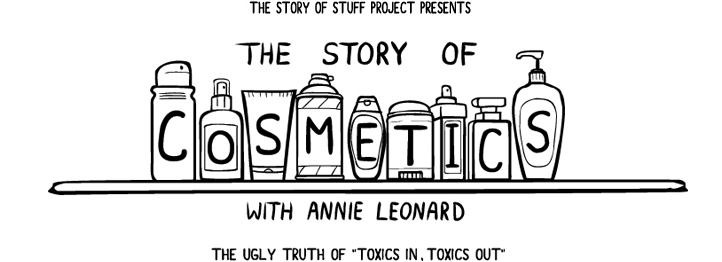
The Story of Cosmetics, to be released on 21 July 2010, examines the pervasive use of toxic chemicals in everyday personal care products, from lipstick to baby shampoo. It explores the health implications for consumers, workers, and the environment, and shows how we can move the industry away from hazardous chemicals and toward safer alternatives.
Major loopholes in U.S. federal law allow the $50 billion beauty industry to put unlimited amounts of chemicals into personal care products with no required testing, no monitoring of health effects and inadequate labeling requirements—making cosmetics among the least-regulated consumer products on the market.
Skin Deep
The Story of Cosmetics is co-produced with the trailblazing environmental health activists at the Campaign for Safe Cosmetics. The release will support the introduction of groundbreaking national legislation to regulate personal care product ingredients.
Coming soon: New series of blog posts will open your eyes.
Keep an eye out for a new series of video and text posts starting here in a few days. We think you’ll like it.
We’ve just traveled across the U.S.A, listening to an Omnivore’s Dilemma by Micheal Pollan. It was experiential education at its best, and a sobering experience.
What’s more it led to some great footage and interviews here in Durango, CO with local farmers and restaurateurs. Stay tuned for this informative series of blog posts on your food supply.
I have read this to many a program participant around camp in the mountains, and thought I’d share it here.
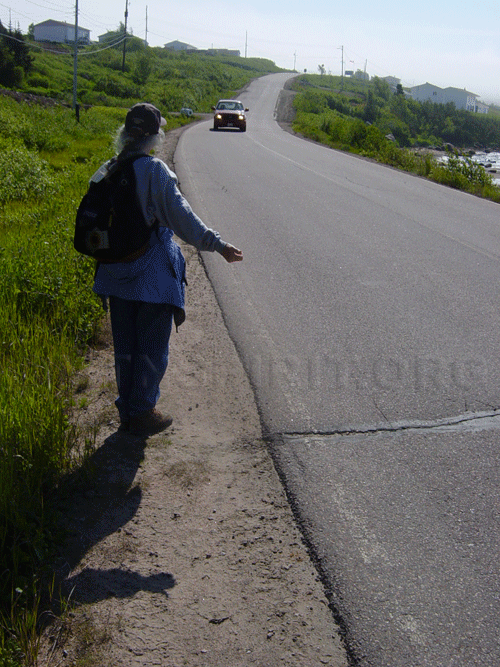
Hitchhiking in Labrador
The Invitation, By Oriah
It doesn’t interest me
what you do for a living.
I want to know
what you ache for
and if you dare to dream
of meeting your heart’s longing.
It doesn’t interest me
how old you are.
I want to know
if you will risk
looking like a fool
for love
for your dream
for the adventure of being alive. (more…)
Dutton has published Americans Who Tell The Truth, the book of the first fifty portraits in this series printed in beautiful color with short biographies and an essay by Robert Shetterly about the intent of the project. The book is suitable for all ages, but its target audience is middle and high school. We have published a free curriculum here on this website for teachers to be able to teach American history through the lives of these people.
This book has won the 2006 award of the International Reading Association for intermediate non-fiction. The Children’s Book Council has named Americans Who Tell the Truth a 2006 Notable Social Studies Trade Book for Young People. Read more here
David Korten hit a chord with Agenda for a New Economy and its call for abolishing Wall Street. In his new revised and greatly expanded edition, David fleshes out his vision for a replacement—a decentralized economy based on resilient communities, local businesses, and ecological systems.
Greed is Out - Localism, In
Global greed is out. Local sharing is in. The Wall Street system failed us; this book is a great guide as we build the alternatives.
“… our economic crisis is, at its core, a moral crisis. Our economic institutions and rules, even the indicators by which we measure economic performance, consistently place financial values ahead of life values. They are brilliantly effective at making money for rich people. Our children, families, and communities, and natural systems of Earth have paid an intolerable price.” Read more on Korten at Yes Magazine
Ragged Mountain Equipment Leads the Way in Giving for the Environment
Donating for the Environment
Ragged Mountain Equipment in Intervale, NH is doing good work. When I was climbing in the North Conway area, Rob Nadler and Cort Hansen were just starting the store in a small space behind the Intervale post office. They made their own chalk bags, ice axe leashes and a few polypro pullovers. Since then, they’ve grown the business to one of the best outdoor and retail outlets in the nation. They might not be the biggest, but in my opinion, one of the best. There’s always a good feeling when you go into their store.
In line with their values, there now contributing .50 cents from every sale of a Ragged Mountain made product over $25.00 retail cost to the Upper Saco Valley Land Trust (USVLT).
USVLT’s mission is to protect the cultural and scenic values of the Upper Saco River Valley by preserving land for farming, forestry, recreation and education. Founded in 2000, USVLT has helped preserve nearly 4,000 acres of open space here in the area. The same program is being used by some of the restaurants and B&B’s in the valley.
Says Cort, “I think we are the only retail/manufacturer doing this at this time. I think it is a great program to raise the awareness of local land conservation issues. ” He adds, “The customer has the choice at the register to opt out and save $.50. Very few have done so.”
Every garment has a hang tag explaining their mission. Says Cort, “We are in the process of expanding hang tags to all our existing inventory which is a major task I can inform you. New styles come through with the tags already on them.”
They’re up to more good. Adds Cort, “We also enrolled the Mount Washington Valley Ski Touring Foundation in the program as well. All ski trail passes sold here at the Touring Center include a $.50 contribution the USVLT. We are the only XC ski touring center participating in this program currently. I think this is vital to making all nordic skiers aware that almost 100% of the valley XC trails use private land which is not protected from development or alternative uses.”
Climber Henry Barber approached Ragged Mountain late last fall about their participating in this this program.
If you’d like to donate and help owners Rob and Cort with this worthwhile project, contact Cort at cort(at)raggedmountain.com
A Message From The Hopi Elders For 2010: By R. Richards
Important Reading for Open Minds
When I was studying Native American philosophy and prophecy in the early ’80’s , there was talk of a Hopi prophecy, written on a rock face/tablet. From my understanding at the time, it was kept from the public and reserved for the Hopi Elders. Their important address at the United Nations in the ’70’s did give some insight into the *wisdom of this sovereign nation.
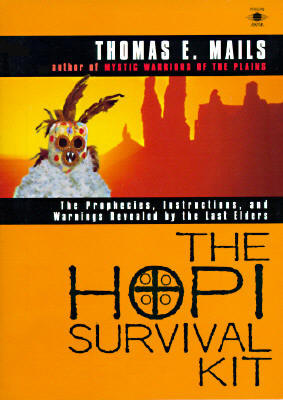
Then, with the release of the book **Hopi Survival Kit, the prophecy went public. The Elders, realizing the importance of their message, made even the drawing of the inscription available. Below is some text from an email I recently received. It’s been a while since I’ve read the book, and I can’t seem to lay my hands on it, so I can’t cross reference to check for accuracy. Whether it’s exactly from the book or not, doesn’t matter. I recognized the important points of the prophecy, and was impelled to post it here. Before the prophechy is a recent letter from the Elders of the Hopi Nation at Oraibi, on the third mesa in Arizona. ** We recommend picking up a copy.
A Message from The Hopi Elders for 2010:
“You have been telling people
that this is the Eleventh Hour.
Now you must go back and tell the people
that this is THE HOUR.”
Here are the things that must be considered:
Where are you living?
What are you doing?
What are your relationships?
Are you in right relation?
Where is your water?
Know your garden.
It is time to speak your Truth.
Create your community.
Be good to each other.
And do not look outside yourself for the leader.
This could be a good time!
There is a river flowing now very fast.
It is so great and swift
that there are those who will be afraid.
They will try to hold on to the shore.
They will feel like they are being torn apart,
and they will suffer greatly.
Know the river has its destination.
The elders say we must let go of the shore,
push off toward the middle of
the river, keep your eyes open,
and our heads above the water.
See who is here with you and celebrate.
At this time in history,
we are to take nothing personally,
least of all ourselves!
For the moment we do,
our spiritual growth and journey comes to a halt.
The time of the lonely wolf is over.
Gather yourselves!
Banish the word “struggle” from your attitude and vocabulary.
All that we do now must be done
in a sacred manner and in celebration.
We are the ones we have been waiting for.” The Elders, Oraibi, Arizona
Hopi Nation
Dolphins under Oil
He will bring with him the symbols, and the missing piece of that sacred tablet now kept by the elders, given to him when he left, that shall identify him as our True White Brother.
“The Fourth World shall end soon, and the Fifth World will begin. This the elders everywhere know. The Signs over many years have been fulfilled, and so few are left.
“This is the First Sign: We are told of the coming of the white-skinned men, like Pahana, but not living like Pahana men who took the land that was not theirs. And men who struck their enemies with thunder.
“This is the Second Sign: Our lands will see the coming of spinning wheels filled with voices. In his youth, my father saw this prophecy come true with his eyes — the white men bringing their families in wagons across the prairies.”
“This is the Third Sign: A strange beast like a buffalo but with great long horns, will overrun the land in large numbers. These White Feather saw with his eyes — the coming of the white men’s cattle.”
“This is the Fourth Sign: The land will be crossed by snakes of iron.”
“This is the Fifth Sign: The land shall be criss-crossed by a giant spider’s web.”
“This is the Sixth sign: The land shall be criss-crossed with rivers of stone that make pictures in the sun.”
“This is the Seventh Sign: You will hear of the sea turning black, and many living things dying because of it.”
“This is the Eight Sign: You will see many youth, who wear their hair long like my people, come and join the tribal nations, to learn their ways and wisdom.
“And this is the Ninth and Last Sign: You will hear of a dwelling-place in the heavens, above the earth, that shall fall with a great crash. It will appear as a blue star. Very soon after this, the ceremonies of my people will cease.
“These are the Signs that great destruction is coming. The world shall rock to and fro. The white man will battle against other people in other lands — with those who possessed the first light of wisdom. There will be many columns of smoke and fire such as White Feather has seen the white man make in the deserts not far from here. Only those which come will cause disease and a great dying.
The U.S. citizens’ perspective of the world might not be quite as bad as depicted in this map, but I feel it may be close. While although “we are all one”, and Americans have the best of intentions, the road to Hell is paved with good intentions.
In a recent NPR interview, a few large truck and SUV drivers were asked if there were any connection to their driving habits and the Gulf oil spill, and, did they feel any remorse. They said “no”, they still needed “to get to work, and deliver the farm goods”. We’re all part of this problem, even the Amish, most of who don’t drive. They still need and send deliveries sent by truck. As Tolle asks, “Are you cleaning up the mess or contributing to the problem?
Back to the American perspective. This map illustrates the longstanding isolation and provincial perspective that seems unique to the USA. Just across the border in Quebec, the world view is, more worldly. The U.S. is a young country full of many, but not all, who still think we’re on top of the world. It’s understandable. Our continent stands alone, our controlled media* and corporatocracy has perpetuated a tunnel vision for many years that is catching up to us. This narrow vision that has been sold to us, effects not only our global view, but our environmental abuse, and our imperialistic tendencies.
At Mountain Spirit Institute, our mission is to broaden the American perspective. See our programs on Peru and the USA/Peruvian Music Exchange where a bit of Peru was brought into the schools and communities in the Northern U.S.
What do you think about this map? We invite your comments.
*“Cause when they own the information Oh, they can bend it all they want”. John Mayer Thanks to Amanda Richards for sending this map my way. She was a little apprehensive about my posting this, but I thought, “Heck, our readers have a good sense of humor”.









 Mountain Spirit's Blog