Recently, Peru program participant, and former Mountain Spirit board President Elizabeth Sofish, PhD reminded me of a technique that seemed to help her with jet lag. I actually tried it before I left New Zealand for Peru last month. The technique along with the “No Jet Lag” homeopathic pills seemed to really do the trick. Here’s an introduction, then the technique which Betsy described to me. (more…)
Archive for the ‘Traveling’ Category
Technique Helps Relieve Jet Lag
02/08/2009Peru’09: To Ollantaytambo
02/08/2009By R. Richards
In the next few weeks I’ll be journaling the Peru 2009 Cultural Immersion program which lasted 14 days. I won’t chronicle every day but the most important highlights of our experience.
We had 7 participants: Sally R. and her husband Scott S., Gail and Hal B. of Sunapee NH, newlyweds Tim Y. and Amy G. and Betsy S. of Grantham NH. Most were teachers which made for good dynamics. On our first day in Cusco, we hiked up to Sacsayhuaman ruins. After walking the great walls, we had a little meeting as the sun set, setting the tone for open communication and willing to stretch outside of one’s comfort zone. The group all agreed they’d give it their best shot. That night we had dinner at the Retama where Guillermo is the music director of his band Chimu’s/Chimu Inka and plays there almost nightly.
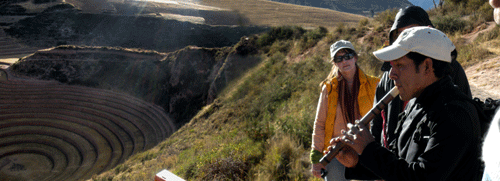
Guillermo plays "Quena" flute at Moray
After a night in Tika Wasi in Cusco, we headed for the Chinchero and the fascinating agricultural terraces of Moray. Here, Guillermo took out his flute and played, setting a surreal tone in the ruins. You could hear the music echo through the terraces below. Then there was a hair-raising ride (not so much much for me, I’m used to the heights) to the Inka salt pans just before the sun set, then off to Anna’s pension. Many thanks goes to Julio of Personal Travel Service for setting up our ride with Ernesto and the Mercedes bus plus all tickets and other logistics in the Sacred Valley.

Anna's Family, Guillermo & Ernesto
It had been a few years since I’d seen Anna when I stayed at her pension for night. It was good to see Anna again, her daughter Katey and her other daughter who had been in Italy for four years, who I’d not yet met. Anyway, we all settled in nicely, the participants heading off to stay in nearby homes, down the street. We’d all met up for dinner at Anna’s though. Although it was a bit of a switch from the four star Hotel Antigua in Lima, everyone adjusted well to Anna’s where we’d be basing ourselves over the next few days. Below is a short clip as we arrived at Anna’s. Ernesto our knowledgeable driver, Anna, her godchild, daughter, and Guillermo are featured.
Peru’09 Program A Success
31/07/2009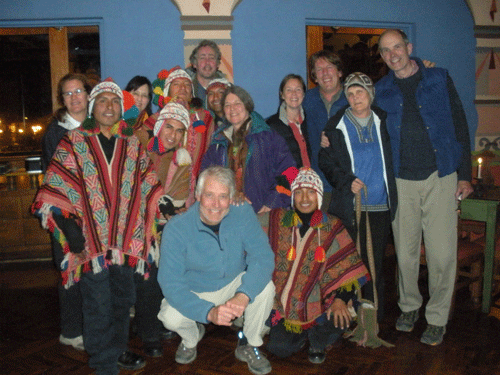
Peru'09 Group in Cuzco with Chimu Inka
Facilitators Guillermo Seminario and Randy Richards are back in Cusco after leading a truly unique 14-day program. “We set out to offer something that connects our participants with the culture, the people and land of Peru, and we did it” says Richards. MSI’s programs and mission are inspired from both: a) Outward Bound experiential education programs, where participants practice community building, self-reliance, compassion and “stretching out of their comfort zones”, and b) a holistic learning center such as the Omega Institute in Reinbeck, NY. However our version of a “holistic learning center” is mobile.
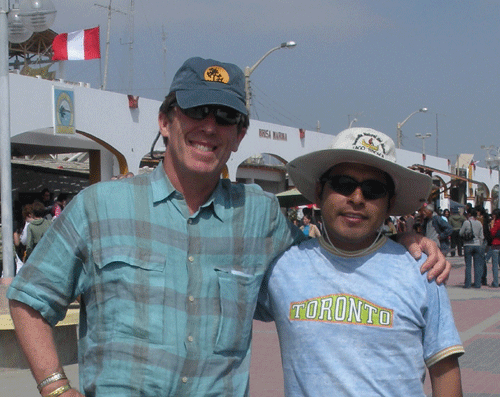
R & G all decked out on the Peruvian coast
The program went off without a hitch, and the participants left feeling like they not only learned immensely about Peru, its people and history, but also something about themselves. The image at right is the group with Guillermo Seminario and fellow band members at the Rettama Restaurant in Cuzco. Guillermo took time off from the band in order to co-facilitate the trip.
Stay tuned – Since Randall didn’t have time to do journal entries while on the program, expect to see details on the program’s stop-overs in upcoming entries. These will be posted on (roughly) a daily basis starting tomorrow. We will cover elements of the program the exemplify the tenets of MSI.
The Enigma of the Nazca Lines
26/07/2009The Enigma of the Nazca Lines
By Amanda Richards

Trapezoid Designs
Peru is an incredibly beautiful, diverse and historically rich country. The Peruvian people are an upbeat, warm and friendly culture, with a sense of optimism. The country is a magical place, considered the spiritual center of the Americas. Cusco, the outlying Sacred Valley, and Machu Picchu all have a special feeling to which no picture can do justice, not to mention the physical beauty of the land and the warmth of its people.
The Mountain Spirit Peru ’09 program is in its 11th day and the group are in Ica, having spent the day at the famous Nazca Lines. The Nazca Lines are an enigma. No one has proof who built them or why.
I came across a great article by Holly Hayes on her website
Sacred-Destinations.
Writes Hayes, “The Nazca Lines are giant sketches drawn in the desert of western Peru by ancient peoples. The drawings were created on such a large scale is such that the shapes can be readily discerned only from the air, leading to a variety of theories about their purpose.”
“Since their discovery, the Nazca Lines have inspired fantastic explanations from ancient gods, a landing strip for returning aliens, a celestial calendar created by the ancient Nazca civilization — putting the creation of the lines between 200 BC and 600 AD, used for rituals probably related to astronomy, to confirm the ayllus or clans who made up the population and to determine through ritual their economic functions held up by reciprocity and redistribution, or a map of underground water supplies. To read the rest of this article on Hayes’s website click here.
The American Bedouin
05/07/2009Reconnecting with a Mentor
By R. Richards, MSI Founder
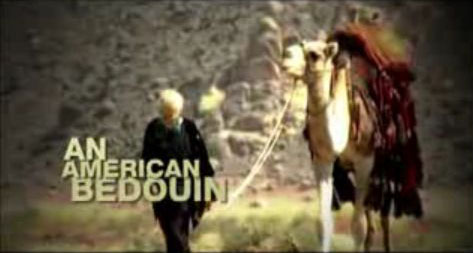
Screen Shot of "American Bedouin"
According to an excellent 2007 Aljazeera Feature video, Erga Rehns has been living the life of a Bedouin in the desert with the Bedouin tribes of Wadi Rum for seven years. I’m not sure if she still does though. I’ll have to do more research in order to contact her again. The last, (and first) time I saw her in person was in 1981, when we first met at her little art studio and home in Obidos, Portugal.
Some people are lucky enough to be a primed for a turning point in their young lives, and come across just the right person at the right time that poses questions, and challenges one’s view of the world – who plants the seed for a paradigm shift. Most people aren’t’ aware they’re ready for that change, until years later, when they realize the shift was primed by those mentors. (more…)
Traveling Lightly
27/06/2009Decisions, Decisions – Motorhomes or Going Light

" Capt'n Fast und Light"
Huge motorhomes rumbling down the Motorways and Interstates are proof that humans have entirely too many non-renewable resources at their disposal. What it takes to move these beasts of burden one kilometer in energy could light the two lightbulbs in my yurt for a week. OK, I actually owned a motorhome when living in Sedona Arizona, as an alternative to apartment living. We’d drive out into the desert at night and base there, while I led trips for Sedona Adventures. And yes, we drove it to Washington state, fully loaded for the Outward Bound summer season. If a motorhome is one’s main residence, it may be “going lighter” on the planet, (I think) – Maybe lighter than owning a MacMansion. If, however, it’s one’s vacation mode of travel, please read on. (more…)
Inbox: Water Bottle/T-Shirts
18/06/2009Pristine Water Bottle & Filter/T-Shirts in Peru’s Winter?
Randy,
How effective do you think the water bottle with filter is? Will it get
warm enough for us to wear T-shirts? I am trying to
sort out what to bring .
S. Reid
Hi S,
Yes a couple of T-shirts will come in handy, as it will be warm enough, in the sun,…especially when walking or hiking. You can find fun T-shirts in Peru too, but the cotton is usually of a bit thinner quality. Just don’t forget a good poly-pro or fine-spun wool under layer regardless of the T-shirt decision.

Pristine Water Bottle/Filter
Water Bottle: According to the doctor*, (*see previous post on Travel Essentials) the water bottle is his front line of defense. He has used it daily in India, Peru etc. as has his wife, who I also met at the office. Both he and the water bottle have a good reputation.
The beauty of this device is it frees one up from purchasing tons of bottled water, and thus, reduces the plastic purchased. When we do purchase bottled water, we can also pour that into the bottle/filter, which is really doubling up on protection, however I’ve drunk bottled water for years and never had a problem as long as I check the seal to make sure it’s a new factory sealed bottle.
Travel Essentials
17/06/2009I’ve been on the road for a considerable time, vagabonding from Brittany France to Hawaii, and Patagonia or working as a guide. Either in between jobs, and most times, because of them, I’ve been fortunate enough to see some wonderful sites. My wife recently visited an excellent travel clinic here in New Zealand called….The Travel Clinic headed by Dr Anwar Hoosen. Their website is brilliant, which has tons of information for the traveler and the doctor knows his stuff. Dr. Hoosen is only an email away for clients who have had an initial consult before their trip.

Pristine Bottle
Not only did Amanda receive excellent advice, but the clinic had an array of products that I had to recommend here. All items can be purchased through Travel Clinic, or if your elsewhere, which is more than likely, simply do a Google search for the item, which is listed below by brand name .
Top on the list is the Pristine water bottle with built in charcoal filter. While climbing or trekking in the backcountry warrants a regular filter, this item is perfect for traveling. The doctor at the Travel Clinic takes this with him to India and beyond for use with tap water and clear sources.

Enerlyte
Enerlyte is used to treat and prevent dehydration due to diarrhoea and traveller’s gastroenteritis in adults and children. While there are a number of products available, the packets/sachets are a good size for individual use and easy to pack. Some found abroad are larger doses.
HandClens is a foaming sanitizer and lotion which is alcohol-free. Most sanitizers contain alcohol. They come in 50ml sizes and can go a long way in prevention of germs.
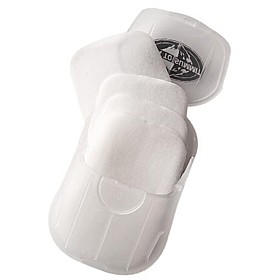
Paper Soap
Pocket or Paper Soap leaves are cool. They are a quick way to get soap in your hands without carrying a bar of soap in your pocket. Who would have thunk? The brand we picked up in NZ are made by Sea to Summit.
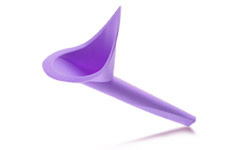
"Whiz Freedom"
Whiz Freedom, or similar brand items have helped many a female client over the years, become more comfortable peeing outside or at public toilets. I’ve recommended this sort of thing on our mountain trips, but will also recommend them on front-country expeditions as well.
"GSE"
Grape Fruit Seed Extract or GSE, by Nutribiotic, has been recommended for years as a bacteriacide and health supportive supplement. I’ve washed my veggies in a concentration for years, and taken it internally when sick at home or abroad. It kicks butt. If you’ve not heard of it, I highly recommend doing your own research on it. Available at most health food stores stateside.
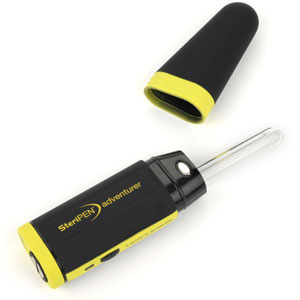
SteriPEN
SteriPEN makes hand-held water purifiers with ultraviolet light as the medium. Although I’ve not used them, I plan on purchasing one soon. The price is very affordable, and great for travel to places like Peru or India. They make a few different models, one for packing, traveling and a new version with digital read-out capability.
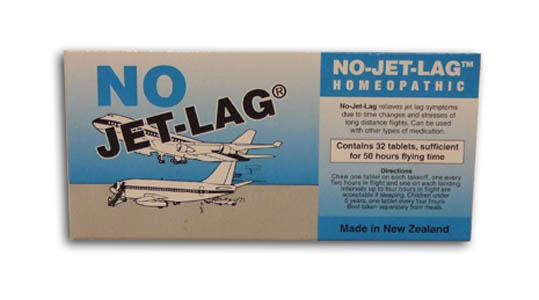
No-Jet-Lag
No-Jet-Lag is a homeopathic jet lag prevention pill with no side effects or drug interactions and is natural. While I’ve not used them, they have good reports. Made in New Zealand. Their packaging is now cooler than the image on left, if that sways you in any way.
Coca leaves for altitude sickness? Hmmm. Stay tuned, I’ll tell you what I’ve learned in another post.
From Mt. Hood to Russia
16/06/2009
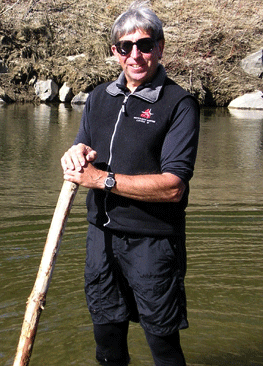
Bob Stremba
M.S.I. VP/Board member and fellow spirit adventurer Bob Stremba, EdD, is heading for Oregon and Washington State tomorrow to take a bit of time off between semesters running the Adventure Education Department at Fort Lewis College in Durango, Colorado. He’s also headed north to climb on Mt. Hood’s southern route again. He’ll be climbing the route with fellow board members of the Association of Experiential Education. Over the years, Bob has also summited Mt. Rainer twice, as well as Mt. Baker and Mt. Adams.
After his trip to the Northwest, Bob will be flying to Russia where he’ll be going into classrooms, facilitating group team building initiatives for Russian students. When I asked how his conversational Russian was coming along, he said he’ll have a translator. However he is working on the written language a bit, I assume so he can write a bit on blackboards and flip-charts. Stremba applied for, and was selected to be the lead (and solo) facilitator for this program. At program’s end, Bob will finish in western Russian – which is only a two hour train ride to Finland, so he figured he might as well leave Russia from the western border. If we’re lucky, we’ll get some updates on this blog during his travels. We wish him the best on his program and further travels to Finland after program’s end.
The Global Student
11/06/2009
Global Student Alyssa Lanz*
Forget the SATs. Forget the “top college” rat race and high-priced American schools.
Writer Maya Frost says it’s time for American students to go global, look abroad, and get a global education, for less. Everybody knows the straight and narrow, up-and-out formula for American success: good grades, good scores, good college, big debt … good luck.
Many in countries throughout the world know the value of thinking and behaving in terms of “global community” as evidenced by the numbers of foreign students, but American’s have tended to be more insular compared with our global neighbors.
Recent guests on NPR’s On Point in WBUR in Boston with Tom Ashbrook’s, were Maya and Tom Frost, who say “Forget it. There’s a better way. And the path leads abroad — early.”
Stay home studying for SATs and taking on college debt, and you’re guaranteed nothing in this topsy-turvy economy. Go abroad — as early as high school, especially for college, they say — and you’ll find low tuitions, big adventures, and the future.
Listen to the interview: A new American way in the world. Going global, right from the start.

- Global Student
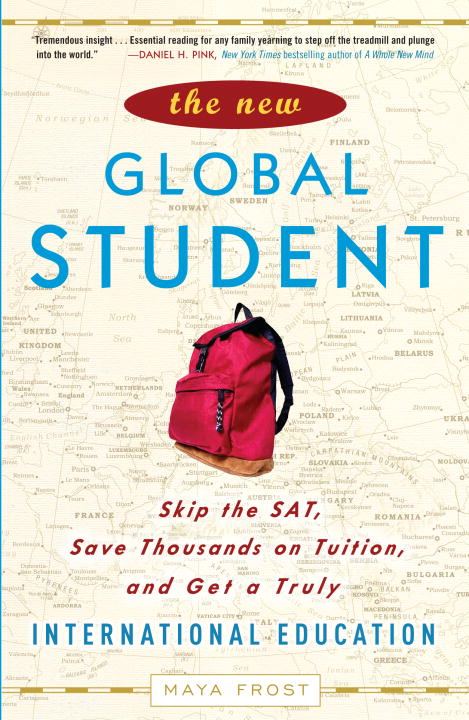
The book is called: The New Global Student: Skip the SAT, Save Thousands on Tuition, and Get a Truly International Education
Chapter One’s title is: “Creative, Not Crazy, Our Family’s Story”,
It starts with a quote from Thomas A. Edison – “If we did all the things we are capable of, we would literally astound ourselves.”
Frost’s opener starts, “In the summer of 2005 my husband and I decided to sell everything and move abroad. There’s nothing too unusual about that these days-except that we had four teenage daughters at the time, and the youngest of three were about to enter their freshman, junior and senior years of high school. This book is about the lessons they learned, and the loopholes we discovered –while shepherding our kids through high school, into college and beyond.” She goes on, “Luckily, we stumbled upon a number of affordable, accessible, and stunningly advantageous strategies that American parents anywhere can use to help their kids get both an enriching education and perspective-shifting international experience. Sweet bonus: they add, “We saved a couple hundred thousand dollars in the process.”
She writes, “We’re not on a crusade of any kind and our exodus wasn’t spurred by fear, exasperation or legal problems; it was simply a matter of following our instincts in order to give our kids what we felt would be a series of amazing opportunities for learning and creativity.” Frost says that when others hear their story, “they can’t help but make assumptions about us. Some we found hilarious.” She adds, “We had a ton of money and/or serious connections.” Their answer..”Hoo-boy! That’s a good one.” They had “no bonus, corporate cushion, windfall or an uncle who died.”

- Mt Spirit students in Peru
Another assumption was that “we were oddball parents”, Their response is: “Quirky, They think we must have been the kind of people you whisper about at parent meetings or avoid when you run into them in the grocery store.” They add, “The boring truth is that we were nice, normal people, leading ordinary lives.”
Another assumption was that they were disconnected or just plain miserable where they were. Their response: “Well, no more than most people living in suburban America. Another assumption they encountered: “Our girls were enmeshed in a scandal at school that necessitated a quick exit to protect their social standing.” Their response was “Sorry- no gossip here.”
Frost says in her book that they had two “harebrained” ideas.
One, that they needed to become “flexible and innovative in order to be prepared for an exciting future full of all kinds of impossible-to-predict opportunities.” Harebrained idea number two was that “we wanted our daughters to develop empathy and responsibility in order to become upstanding global citizens.”
Mountain Spirit Institute’s experiential programs in the USA, Peru and New Zealand are about getting students out into the world. Our webpages devoted to Peru cultural immersion for university students have information on college credit, logistics, curriculum and connections.
Check out some blogs written by young Americans spending time abroad here.
Read Maya Frost’s special message to students here.
Image#1, Credit: mayafrost.com
Alyssa Lanz poses for a snapshot in Egypt while studying at the American University in Cairo, taking classes in Arabic and political science, and working with New Women’s Foundation, a research center in Cairo focusing on women’s rights.
 Mountain Spirit's Blog